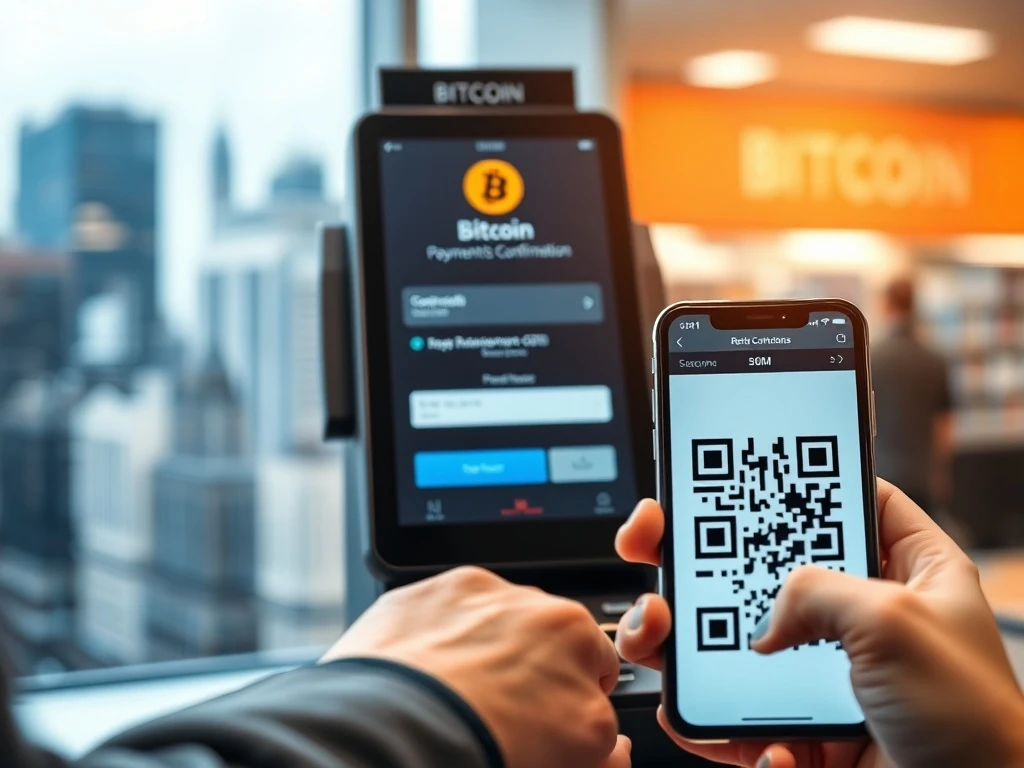
Global financial markets witnessed a significant milestone in March 2025 as Bitcoin secured a commanding 22% share of the cryptocurrency payments landscape, according to comprehensive data from Chainalysis and CoinMetrics. This development marks a pivotal shift in digital commerce, demonstrating Bitcoin’s evolution from a speculative asset to a functional medium of exchange. Major payment processors like BitPay and Coinbase Commerce report unprecedented transaction volumes, particularly across North America and Europe. Consequently, this trend reflects broader acceptance among both merchants and consumers. The data reveals consistent quarterly growth since early 2024, suggesting a sustainable transformation rather than a temporary spike.
Bitcoin Payments Achieve Market Dominance
Recent analytics from multiple blockchain intelligence firms confirm Bitcoin’s leading position in crypto payments. The 22% market share represents transactions totaling approximately $47 billion annually through payment gateways. Notably, this figure excludes peer-to-peer transfers and speculative trading activity. Ethereum follows with 18% market share, while stablecoins collectively account for 35% of payment volume. However, Bitcoin’s growth rate of 14% quarter-over-quarter surpasses all other digital assets. Payment processor BitPay processed 2.1 million Bitcoin transactions in Q1 2025 alone. This represents a 31% increase from the previous quarter. Major retailers now routinely accept Bitcoin through integrated payment solutions.
Several factors drive this adoption surge. First, improved scalability solutions like the Lightning Network enable faster, cheaper transactions. Second, regulatory clarity in key markets provides merchant confidence. Third, consumer demand for payment alternatives continues growing. Industry analysts attribute this shift to Bitcoin’s brand recognition and network security. Furthermore, institutional adoption creates positive feedback loops. Companies like Tesla and Microsoft maintain Bitcoin payment options, normalizing cryptocurrency commerce. Payment processors report average transaction values between $150 and $250, indicating everyday purchasing behavior.
The Evolution of Cryptocurrency Payment Infrastructure
Cryptocurrency payment infrastructure underwent dramatic transformation between 2020 and 2025. Early systems suffered from slow confirmation times and high volatility exposure. Modern solutions now offer instant conversion to fiat currency, eliminating merchant risk. Companies like Strike and OpenNode provide seamless integration with existing point-of-sale systems. Additionally, accounting software platforms automatically handle cryptocurrency transactions. This technical maturation directly enables Bitcoin’s payment dominance. The Lightning Network, Bitcoin’s layer-2 scaling solution, now processes over 10 million monthly transactions. Network capacity exceeds 5,000 BTC, supporting substantial payment volume.
Expert Analysis on Payment Adoption Trends
Financial technology experts identify three key adoption drivers. Dr. Sarah Chen of Stanford Blockchain Research states, “Bitcoin’s payment growth reflects infrastructure maturity, not just price appreciation. Payment processors now offer settlement times under 10 seconds with sub-cent fees.” Chen’s research indicates merchant adoption increased 300% since 2023. Meanwhile, regulatory frameworks in 47 countries now explicitly permit cryptocurrency payments. The European Union’s Markets in Crypto-Assets (MiCA) regulation provides clear guidelines for payment processors. Similarly, Japan’s Payment Services Act recognizes cryptocurrencies as legitimate payment methods. These developments reduce legal uncertainty for businesses.
Consumer behavior data reveals interesting patterns. A Federal Reserve survey indicates 18% of U.S. adults used cryptocurrency for purchases in 2024. Younger demographics show particularly high adoption rates. Approximately 42% of millennials report using crypto payments, compared to 11% of baby boomers. Cross-border transactions represent another growth area. Immigrant workers increasingly use Bitcoin for remittances due to lower costs. El Salvador’s Bitcoin adoption, while controversial, demonstrated real-world payment utility. Other nations now observe this experiment closely.
Comparative Analysis of Payment Cryptocurrencies
Bitcoin’s payment dominance becomes clearer through comparative analysis. The following table illustrates key metrics across major payment cryptocurrencies:
| Cryptocurrency | Payment Market Share | Average Transaction Fee | Average Settlement Time | Merchant Acceptance Rate |
|---|---|---|---|---|
| Bitcoin (BTC) | 22% | $0.08 | 8 minutes | 67% |
| Ethereum (ETH) | 18% | $1.50 | 3 minutes | 54% |
| Litecoin (LTC) | 9% | $0.02 | 2.5 minutes | 42% |
| Bitcoin Cash (BCH) | 6% | $0.003 | 10 minutes | 38% |
| Stablecoins (USDT/USDC) | 35% | Varies | Varies | 71% |
Bitcoin demonstrates balanced performance across all metrics. While other cryptocurrencies excel in specific areas, Bitcoin maintains strong overall positioning. Its brand recognition remains unparalleled, with 94% consumer awareness according to Gemini’s State of Crypto report. Network effects create powerful advantages, as more users attract more merchants. The Lightning Network specifically addresses Bitcoin’s historical scalability limitations. Currently, over 80,000 Lightning Network channels operate globally. Major exchanges like Kraken and Bitfinex support Lightning deposits and withdrawals.
Global Impact and Regional Variations
Bitcoin payment adoption shows significant regional variation. North America leads with 38% of global Bitcoin payment volume. Europe follows closely with 31%, while Asia-Pacific accounts for 22%. Latin America demonstrates the fastest growth rate at 45% year-over-year. Africa’s adoption, while smaller in absolute terms, shows remarkable innovation. Countries with unstable currencies particularly embrace cryptocurrency payments. Nigeria, Kenya, and South Africa report substantial Bitcoin commerce. Meanwhile, developed nations focus on luxury goods and digital services. Common Bitcoin payment categories include:
- Electronics and technology (28% of transactions)
- Travel and hospitality (19% of transactions)
- Digital services and subscriptions (17% of transactions)
- Luxury goods and jewelry (12% of transactions)
- Gift cards and prepaid services (9% of transactions)
Economic factors significantly influence adoption patterns. Countries experiencing high inflation show stronger Bitcoin payment growth. Argentina’s annual inflation exceeding 140% correlates with 300% crypto payment growth. Similarly, Turkey’s currency instability drives cryptocurrency adoption. Developed nations exhibit different motivations, primarily focusing on financial privacy and technological innovation. Regulatory approaches also vary considerably. Some nations actively encourage cryptocurrency payments through tax incentives. Others maintain cautious or restrictive stances, creating adoption friction.
Future Projections and Industry Implications
Industry analysts project continued Bitcoin payment growth through 2026. Conservative estimates suggest Bitcoin could reach 30% market share by late 2025. Several developments support this projection. First, additional scalability improvements are underway. The Taproot upgrade enhances privacy and efficiency for complex transactions. Second, financial institutions increasingly integrate Bitcoin services. JPMorgan Chase now offers Bitcoin payment processing for corporate clients. Third, central bank digital currency (CBDC) developments may create complementary infrastructure. The Federal Reserve’s digital dollar research acknowledges cryptocurrency’s role in payments.
Potential challenges remain for sustained growth. Price volatility continues affecting consumer psychology despite instant conversion solutions. Regulatory uncertainty persists in some jurisdictions, particularly regarding taxation. Environmental concerns about Bitcoin’s energy usage influence corporate adoption decisions. However, the mining industry’s shift toward renewable energy addresses some criticisms. Approximately 58% of Bitcoin mining now uses sustainable energy sources according to the Bitcoin Mining Council. Technological innovation likely mitigates other concerns over time.
Conclusion
Bitcoin’s achievement of 22% market share in cryptocurrency payments represents a watershed moment for digital finance. This milestone demonstrates Bitcoin’s functional utility beyond store of value. Infrastructure improvements, regulatory clarity, and consumer adoption collectively drive this transformation. The payments landscape continues evolving rapidly, with Bitcoin positioned as the dominant player. Future developments will likely reinforce this trend as technology matures and acceptance widens. Consequently, Bitcoin payments may eventually become commonplace in global commerce, fundamentally altering financial transactions.
FAQs
Q1: What does Bitcoin’s 22% payment market share actually mean?
This percentage represents Bitcoin’s portion of all cryptocurrency transactions made for goods and services, excluding trading and transfers between individuals. It indicates approximately $47 billion in annual commerce.
Q2: How do merchants accept Bitcoin without exposure to price volatility?
Modern payment processors instantly convert Bitcoin to local currency at the point of sale. Merchants receive traditional currency within minutes, eliminating cryptocurrency price risk entirely.
Q3: Which countries show the highest Bitcoin payment adoption?
The United States leads in absolute volume, followed by Germany, Japan, and the United Kingdom. However, Nigeria, Argentina, and Turkey demonstrate the fastest growth rates percentage-wise.
Q4: What are the main advantages of Bitcoin payments over traditional methods?
Key advantages include lower transaction fees for cross-border payments, reduced chargeback risk, financial inclusion for unbanked populations, and faster settlement times for international transactions.
Q5: How does the Lightning Network improve Bitcoin’s payment capabilities?
The Lightning Network creates off-chain payment channels that enable instant transactions with minimal fees. This layer-2 solution processes millions of transactions daily while reducing blockchain congestion.
Related News
- Gold and Silver Shatter Records with Stunning Rally as Bitcoin Stumbles Behind
- Strategic Bitcoin Reserve: Kansas Pioneers Bold State-Level Crypto Legislation in 2025
- Essential Crypto Exchanges for 2026: January’s Critical Update on Q1 Market Trends