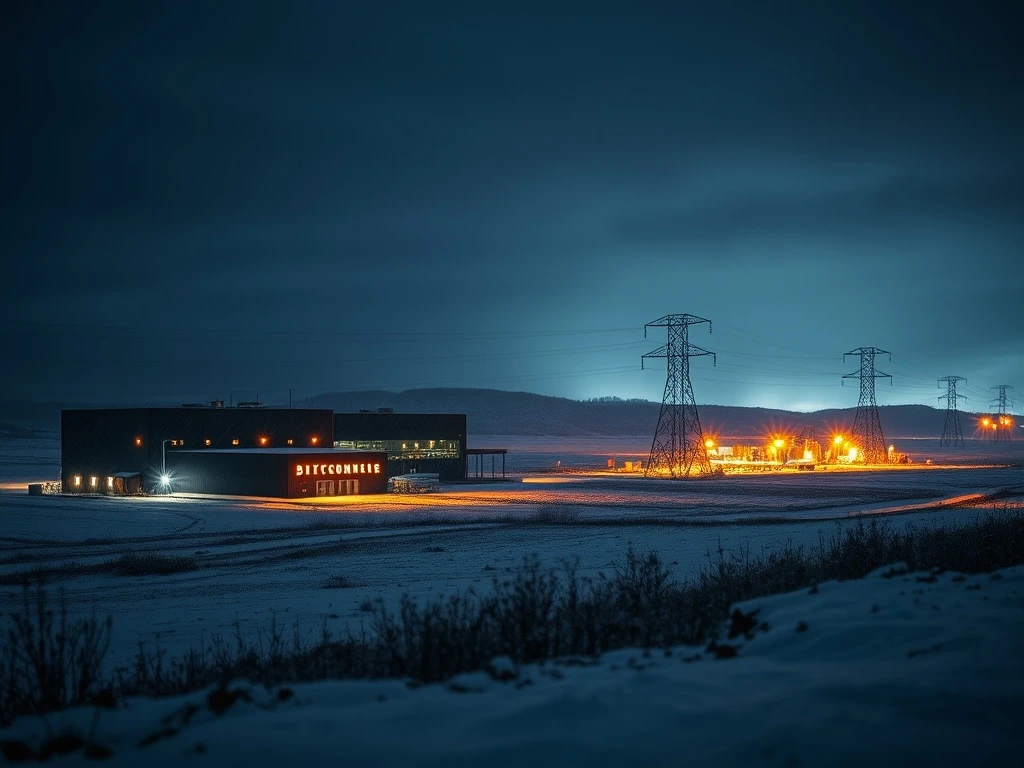
Bitcoin miners across the United States have executed a remarkable strategic pivot during a powerful winter storm, halting cryptocurrency operations to achieve profit margins up to 150% higher than traditional mining. This unprecedented shift occurred as miners redirected their substantial energy resources back to strained power grids, fundamentally altering the economics of cryptocurrency production during extreme weather events in early 2025.
Bitcoin Miners Transform Energy Strategy During Grid Crisis
Cryptocurrency mining operations throughout affected regions temporarily suspended their primary function of validating blockchain transactions. Instead, these facilities leveraged their massive energy infrastructure to support overwhelmed electrical grids. According to analysis from industry experts, this strategic redirection created substantially higher profit margins than conventional Bitcoin mining during peak demand periods.
The financial mechanics behind this shift reveal a sophisticated understanding of energy markets. Miners typically consume electricity to power specialized computers that solve complex mathematical problems. However, during grid emergencies, these same operations can sell their contracted or generated power back to utilities at premium rates. This flexibility creates a dual-revenue model that fundamentally changes mining economics.
Industry analysts note this development represents a maturation of cryptocurrency mining business models. Initially viewed as simple energy consumers, mining operations now demonstrate their potential as grid-stabilizing assets. This evolution comes at a critical time for both the cryptocurrency industry and energy infrastructure facing increasing climate-related challenges.
Winter Storm Triggers Unprecedented Hashrate Decline
The operational shift produced measurable impacts on Bitcoin’s network security metrics. Network data reveals the global Bitcoin hashrate dropped to approximately 663 exahashes per second (EH/s). This represents a seven-month low for the crucial security metric that measures the total computational power securing the Bitcoin blockchain.
Hashrate fluctuations directly correlate with mining profitability and network security. When miners redirect energy away from computational operations, the network’s total processing power naturally decreases. However, Bitcoin’s difficulty adjustment algorithm automatically compensates for such fluctuations over time, maintaining network stability despite temporary reductions in mining participation.
Historical context illuminates the significance of this decline. Previous hashrate drops typically resulted from regulatory changes, energy shortages, or geopolitical events affecting mining concentrations. The current reduction marks the first major instance where economic optimization, rather than external pressure, drove significant miners offline in coordinated fashion.
Expert Analysis Reveals Profit Margin Disparities
Scott Norris, chief mining officer at Bitcoin hashrate tokenization firm Omnes, provided specific financial comparisons that explain miners’ strategic decisions. “During peak demand periods, miners could sell power to the grid for approximately 20 cents per kilowatt-hour,” Norris explained. “This compares favorably to the estimated eight cents per kilowatt-hour they would earn from mining operations under current market conditions.”
This 150% margin improvement demonstrates the economic rationality behind the operational shift. The calculation considers multiple variables including Bitcoin’s price, mining difficulty, transaction fees, and regional electricity pricing structures. When extreme weather creates electricity shortages, spot market prices can spike dramatically, creating temporary arbitrage opportunities for flexible energy consumers like mining operations.
Energy market specialists confirm this analysis aligns with broader grid economics. During winter storms, heating demand surges while generation capacity sometimes decreases due to frozen equipment or fuel supply issues. This supply-demand imbalance creates price volatility that sophisticated market participants can capitalize on through demand response programs or direct energy sales.
Mining Stocks Surge Despite Operational Pause
Public market reactions further validated the strategic wisdom of miners’ decisions. Mining company stocks experienced significant gains despite the temporary halt in their primary revenue-generating activity. TeraWulf shares rose approximately 15% over five trading days, while Iren gained about 18% during the same period.
This counterintuitive market movement reflects investor recognition of enhanced business model flexibility. Rather than punishing companies for reduced Bitcoin production, investors rewarded demonstrated adaptability and diversified revenue potential. The market response suggests a reevaluation of mining companies as energy infrastructure plays with multiple revenue streams rather than simple cryptocurrency producers.
Financial analysts highlight several factors driving this valuation shift:
- Revenue diversification: Demonstrated ability to generate income from energy markets
- Risk mitigation: Reduced exposure to Bitcoin price volatility through alternative income
- Regulatory positioning: Improved relationships with energy regulators and utilities
- Infrastructure value: Recognition of mining facilities as grid-supporting assets
Energy Grid Dynamics and Cryptocurrency Mining Synergy
The winter storm event revealed previously underappreciated synergies between cryptocurrency mining and electrical infrastructure. Mining operations typically maintain substantial power purchase agreements and often invest in on-site generation capacity. This positions them uniquely to provide grid support during emergencies while monetizing their energy assets through alternative channels.
Grid operators increasingly recognize mining operations as potential grid stabilization resources. Unlike traditional industrial consumers that cannot easily reduce consumption, mining facilities can rapidly scale operations up or down based on grid conditions. This flexibility creates value for both miners and utilities, particularly as renewable energy integration increases grid volatility.
The table below illustrates key comparisons between traditional mining revenue and grid support revenue during the storm event:
| Revenue Source | Estimated Rate | Flexibility | Market Conditions |
|---|---|---|---|
| Bitcoin Mining | ~8¢/kWh | Low | Stable |
| Grid Energy Sales | ~20¢/kWh | High | Volatile |
This economic comparison explains why miners made the strategic shift during the storm. The substantially higher revenue potential, combined with the ability to quickly resume mining operations once grid conditions normalized, created an optimal business decision despite temporarily reducing Bitcoin network security.
Broader Implications for Cryptocurrency Industry
The event establishes important precedents for cryptocurrency mining’s evolving role in global energy systems. Mining operations demonstrated they can function as responsive grid assets rather than simply as energy consumers. This development could influence regulatory approaches, energy partnership opportunities, and mining business models moving forward.
Environmental considerations also factor into this evolving relationship. Critics frequently highlight cryptocurrency mining’s substantial energy consumption. However, the ability to redirect that energy to support grids during emergencies presents a potential counter-narrative. Mining operations could theoretically enhance grid reliability and support renewable energy integration through their flexible consumption patterns.
Industry observers will monitor several developments following this event:
- New contractual arrangements between miners and utilities
- Regulatory recognition of mining as grid-supporting activity
- Investment in mining facilities specifically designed for dual-use operation
- Development of financial products hedging energy price volatility for miners
Conclusion
Bitcoin miners achieved a remarkable 150% profit surge by strategically halting operations during a severe US winter storm and selling electricity back to strained power grids. This event demonstrated sophisticated economic optimization within the cryptocurrency mining industry while revealing previously unrecognized synergies between mining operations and energy infrastructure. The temporary hashrate decline to seven-month lows reflected rational business decisions rather than systemic weakness, as evidenced by surging mining stock prices. This development suggests cryptocurrency mining is maturing into a more flexible, grid-integrated industry capable of generating value through multiple channels beyond simple blockchain validation.
FAQs
Q1: Why did Bitcoin miners stop mining during the winter storm?
Bitcoin miners halted operations to sell electricity back to the grid at substantially higher rates than they could earn from mining. During peak demand caused by the storm, electricity prices spiked to approximately 20 cents per kilowatt-hour compared to the estimated 8 cents per kilowatt-hour they would earn from mining.
Q2: How much did profits increase for miners who sold electricity instead of mining?
Analysis indicates miners achieved profit margins up to 150% higher by selling electricity during peak demand periods compared to continuing Bitcoin mining operations. This substantial increase made the temporary operational shift economically rational despite reducing Bitcoin production.
Q3: What happened to Bitcoin’s hashrate during this event?
Bitcoin’s global hashrate dropped to approximately 663 exahashes per second (EH/s), representing a seven-month low. This decline occurred because numerous mining operations redirected their computational resources and energy away from blockchain validation to support electrical grids during the emergency.
Q4: Did mining company stock prices decline when they stopped mining?
Surprisingly, mining stocks surged despite the operational pause. TeraWulf shares rose approximately 15% and Iren gained about 18% over five trading days. Investors rewarded the demonstrated business model flexibility and revenue diversification potential rather than punishing reduced Bitcoin production.
Q5: Could this strategy become common practice for Bitcoin miners?
Industry experts believe similar strategies will likely become more common as mining operations develop more sophisticated energy management capabilities. The event demonstrated that mining facilities can function as flexible grid assets, creating potential for recurring revenue streams beyond traditional cryptocurrency production.
Related News
- Digital Bond Breakthrough: Mirae Asset Securities Pioneers South Korea’s First Private Sector Blockchain Debt Instrument
- BNB ETP Breakthrough: Virtune’s Nasdaq Stockholm Listing Unlocks Regulated Crypto Access for Swedish Investors
- Gemini Zcash Credit Card Launch: A Revolutionary Step for Privacy-Focused Crypto Rewards