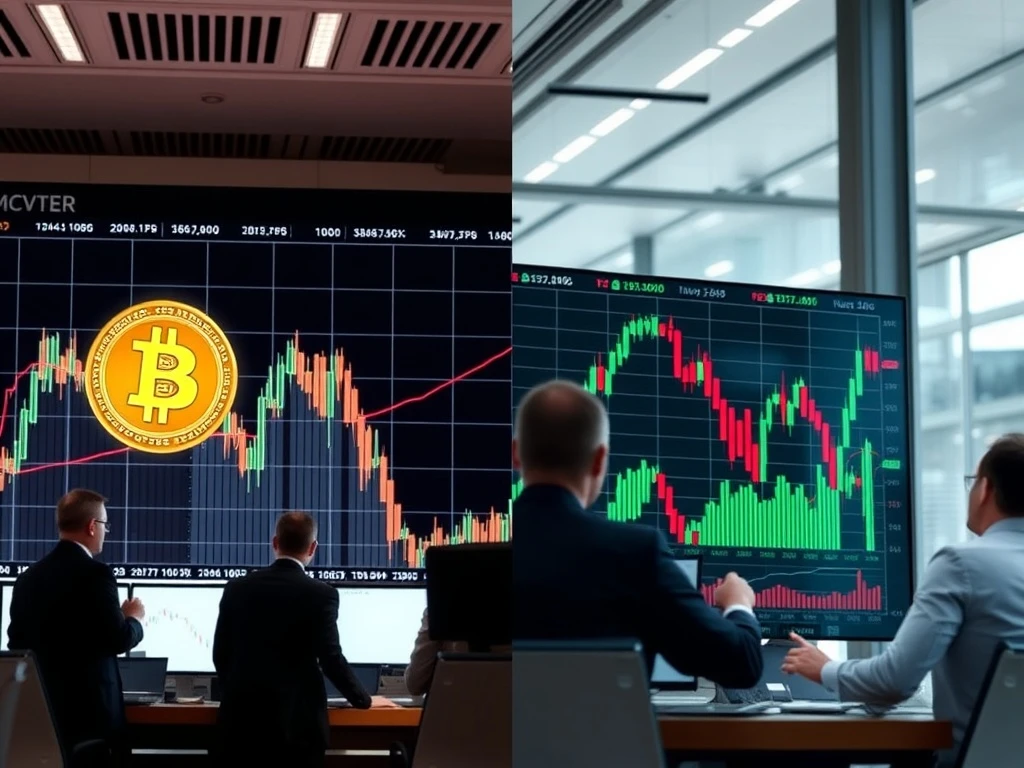
NEW YORK, March 2025 – Procap’s Chief Investment Officer has drawn a compelling parallel between Bitcoin’s current market structure and silver’s legendary trading frenzy of 1980, suggesting the cryptocurrency may be approaching a similar inflection point. This comparison emerges as institutional adoption accelerates and regulatory frameworks mature globally. The analysis examines liquidity patterns, market psychology, and structural similarities between these two distinct asset classes separated by decades but connected by market dynamics.
Bitcoin Market Analysis Reveals Striking Patterns
Procap’s investment team has identified several key similarities between Bitcoin’s 2025 setup and silver’s historic market conditions. First, both assets experienced prolonged accumulation phases before their respective potential breakout periods. Bitcoin has consolidated within a defined range for approximately 18 months, mirroring silver’s extended base-building phase from 1977 to 1979. Additionally, both markets demonstrated decreasing volatility before their significant moves, suggesting potential energy building beneath the surface.
Market liquidity patterns show particular alignment. Silver’s trading volume increased dramatically in the months preceding its historic run, with similar patterns now observable in Bitcoin’s derivatives markets. The Chicago Mercantile Exchange reports Bitcoin futures open interest has reached record levels, while options activity suggests sophisticated positioning for potential volatility expansion. These technical indicators provide objective evidence for the comparison rather than speculative forecasting.
Historical Context of Silver’s Trading Frenzy
The Hunt brothers’ attempt to corner the silver market in 1979-1980 created one of modern finance’s most dramatic episodes. Silver prices surged from approximately $6 per ounce in early 1979 to nearly $50 by January 1980, representing an unprecedented 700% gain within twelve months. This movement occurred amid specific market conditions including high inflation, geopolitical uncertainty, and growing distrust in traditional financial systems – conditions that bear resemblance to current macroeconomic environments.
Several structural factors contributed to silver’s historic move:
- Supply constraints: Industrial demand growth outpaced mining production
- Monetary uncertainty: High inflation eroded confidence in fiat currencies
- Concentrated buying: Large players accumulated significant positions
- Regulatory changes: Exchange rule modifications created technical pressures
These factors created a perfect storm that propelled silver to unprecedented levels before the inevitable collapse. The Procap analysis carefully distinguishes between the specific mechanics of that event and broader market structure similarities observable today.
Institutional Adoption as a Key Differentiator
While surface similarities exist, Procap’s CIO emphasizes crucial differences between the two market environments. Bitcoin benefits from significantly broader institutional participation than silver enjoyed in 1980. Major financial institutions now offer Bitcoin exposure through multiple vehicles including exchange-traded funds, futures contracts, and structured products. This institutional framework provides both stability and potential amplification mechanisms absent from the silver market four decades ago.
Regulatory developments further distinguish the current environment. The Securities and Exchange Commission approved multiple spot Bitcoin ETFs in early 2024, creating regulated pathways for institutional capital. Meanwhile, global regulatory frameworks continue evolving with the European Union’s Markets in Crypto-Assets regulation and similar initiatives in major financial centers. These developments create fundamentally different market structures than those governing silver during its historic run.
Liquidity and Market Depth Comparison
Market liquidity represents another critical area of analysis. Bitcoin’s daily trading volume across regulated exchanges now regularly exceeds $30 billion, with additional volume occurring in over-the-counter markets and through institutional channels. This liquidity depth surpasses silver’s market during its historic move, potentially creating different volatility characteristics. However, the concentration of Bitcoin holdings among large addresses remains a point of monitoring for analysts.
The following table illustrates key market metrics comparison:
| Metric | Silver (1979-1980) | Bitcoin (2024-2025) |
|---|---|---|
| Annual Trading Volume | ~$50B (adjusted) | ~$11T (estimated) |
| Institutional Participation | Limited | Extensive |
| Regulatory Framework | Basic commodity rules | Evolving comprehensive framework |
| Global Accessibility | Exchange-based primarily | Multiple channels globally |
These quantitative differences highlight both the similarities and distinctions between the two market environments. Analysts must consider these factors when evaluating potential market trajectories.
Macroeconomic Parallels and Divergences
Macroeconomic conditions provide additional context for the comparison. The late 1970s featured stagflation – high inflation combined with economic stagnation – which drove investors toward hard assets like silver. Current environments show elevated inflation readings but within different economic growth contexts. Central bank policies also differ significantly, with modern monetary authorities possessing more sophisticated tools and communication frameworks than their 1970s counterparts.
Geopolitical uncertainty represents another area of potential similarity. The Cold War tensions of the late 1970s created global uncertainty, while current multipolar geopolitical dynamics generate their own forms of instability. However, the nature of these uncertainties differs substantially, potentially creating different investor responses. Digital assets like Bitcoin may respond differently to modern geopolitical tensions than physical commodities like silver responded to Cold War dynamics.
Technological Infrastructure as Game Changer
Bitcoin’s technological infrastructure creates fundamental differences from silver’s market structure. Blockchain technology enables transparent settlement, verifiable scarcity, and programmable features absent from traditional commodities. The Bitcoin network’s security model, based on proof-of-work consensus, provides cryptographic certainty about supply schedules and transaction finality. These technological foundations create different risk-reward profiles than those available to silver investors in 1980.
Furthermore, Bitcoin’s integration with developing financial technologies creates additional pathways for adoption and utility. Lightning Network development enables microtransactions and payment applications, while institutional custody solutions provide security frameworks for large-scale adoption. These technological layers add complexity to the comparison with historical commodity markets.
Risk Management Considerations
Procap’s analysis emphasizes risk management as a crucial component of any market comparison. While historical patterns can inform understanding, they never guarantee future outcomes. The silver market ultimately experienced a dramatic collapse following its historic run, with prices declining approximately 80% from their peak within months. This historical precedent underscores the importance of disciplined risk management regardless of bullish or bearish market perspectives.
Modern risk management tools provide advantages unavailable during silver’s historic move. Sophisticated derivatives, portfolio insurance strategies, and real-time monitoring systems enable more nuanced position management. Institutional investors particularly benefit from these tools, potentially moderating extreme market movements compared to historical precedents. However, these same tools can sometimes amplify risks through complexity and interconnectedness.
Conclusion
Procap’s CIO comparison between Bitcoin’s current setup and silver’s historic trading frenzy provides valuable analytical perspective rather than predictive certainty. The analysis highlights structural similarities in accumulation patterns, liquidity developments, and market psychology while acknowledging crucial differences in institutional participation, regulatory frameworks, and technological foundations. Bitcoin market analysis must consider both historical parallels and unique contemporary factors as digital assets continue evolving within global financial systems. This comparison ultimately serves as a framework for understanding potential market dynamics rather than forecasting specific price outcomes.
FAQs
Q1: What specific metrics does Procap’s CIO use to compare Bitcoin to silver’s historic move?
The analysis examines accumulation patterns, volatility compression, liquidity developments, options positioning, and institutional participation metrics. Quantitative comparisons include trading volumes, open interest, and market concentration measures across both historical and current data sets.
Q2: How does institutional participation differ between current Bitcoin markets and silver in 1980?
Bitcoin benefits from extensive institutional participation through ETFs, futures, options, and structured products offered by major financial institutions. Silver’s 1980 move involved more concentrated positions among fewer players with limited institutional framework support.
Q3: What are the key risk factors in drawing historical comparisons between different asset classes?
Historical comparisons risk overlooking unique contemporary factors including technological differences, regulatory frameworks, market structure evolution, and global economic conditions. Each market environment contains both universal human behavioral patterns and specific contextual elements.
Q4: How does Bitcoin’s technological infrastructure change the comparison with physical commodities?
Blockchain technology enables transparent settlement, verifiable scarcity, and programmable features absent from traditional commodities. Bitcoin’s proof-of-work consensus provides cryptographic certainty about supply schedules, creating different fundamental characteristics than physically settled commodities.
Q5: What lessons from silver’s eventual collapse might apply to Bitcoin markets?
Risk management remains paramount regardless of market direction. Position sizing, diversification, and exit strategies require careful consideration. Extreme price movements often correct dramatically, underscoring the importance of disciplined investment approaches rather than speculative excess.
Related News
- Australian Crypto Regulation Crackdown: Federal Court Slams BPS Financial With Landmark Fine for Misrepresentation
- Cryptocurrency Scam Exposed: Chinese National Receives 46-Month Sentence for $37M Devastating Fraud Scheme
- Base Network Active Addresses Plunge to 18-Month Low Despite Alarming Token Issuance Surge