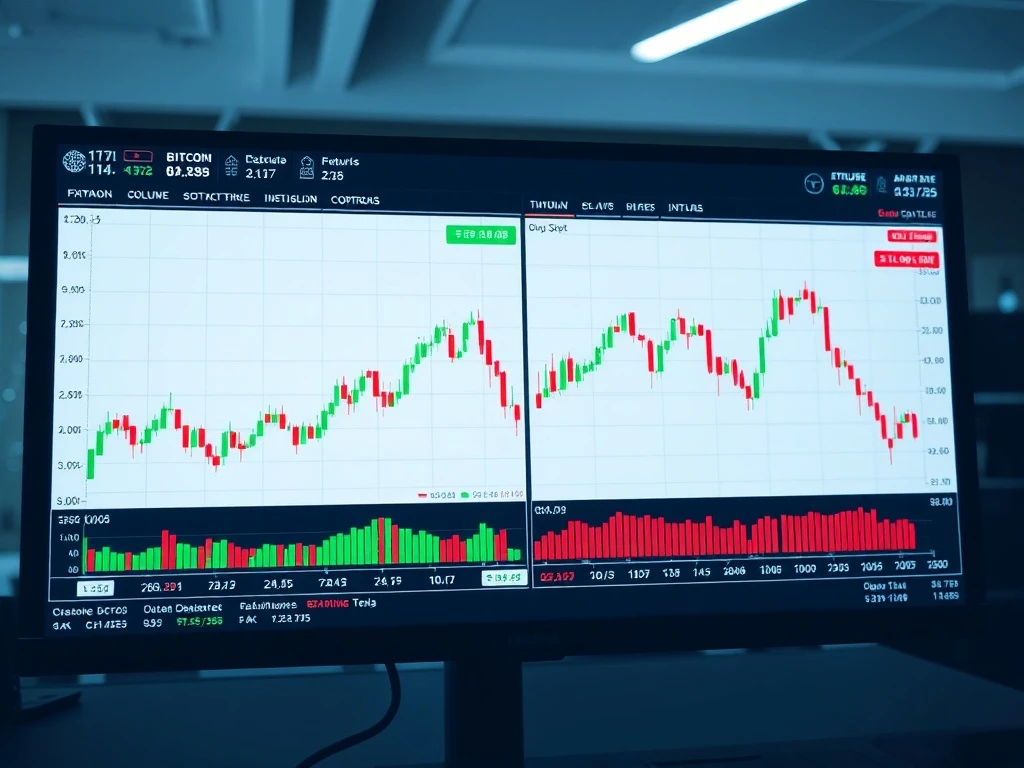
In the dynamic cryptocurrency markets of early 2025, a significant trend has emerged that reveals fundamental shifts in Bitcoin investment behavior. Analysis from multiple data providers indicates that Bitcoin’s current price appreciation from $90,000 to $97,000 is primarily driven by spot market demand rather than futures speculation. This development represents a crucial market evolution that suggests more sustainable growth patterns for the world’s leading cryptocurrency. Market analysts globally are now examining whether this spot-driven momentum indicates a maturation of Bitcoin’s market structure.
Bitcoin Spot Demand Signals Market Maturation
Recent market data presents compelling evidence of changing Bitcoin investment patterns. According to analysis by CoinDesk, Bitcoin’s rally throughout early 2025 demonstrates a distinct shift toward spot market participation. This transition from futures-led to spot-driven growth represents a potentially healthier market indicator because spot demand typically reflects genuine investment interest rather than speculative positioning. The cryptocurrency market has historically experienced cycles dominated by futures trading and leverage, making the current spot-driven movement particularly noteworthy for long-term market observers.
Checkonchain data specifically highlights this transition during Bitcoin’s recent price movement between $90,000 and $97,000. The analytics platform documented decreasing futures market influence alongside increasing spot market activity. This pattern suggests that investors are increasingly taking direct ownership of Bitcoin rather than engaging in derivative contracts. Consequently, this behavior may indicate stronger conviction among market participants who prefer actual asset ownership over synthetic exposure.
Supporting evidence comes from CoinGlass data showing remarkably stable Bitcoin futures open interest despite significant price appreciation. Typically, substantial price movements correlate with increased futures activity as traders seek leveraged positions. However, the current stability in open interest alongside rising prices suggests that spot market participants are driving the momentum. This divergence from historical patterns warrants attention from both institutional and retail investors monitoring market health indicators.
The Mechanics of Spot Versus Futures Markets
Understanding the distinction between spot and futures markets is essential for interpreting current Bitcoin market dynamics. The spot market involves immediate transactions where buyers and sellers exchange Bitcoin at current prices with nearly instant settlement. In contrast, futures markets involve contracts to buy or sell Bitcoin at predetermined prices on future dates, often employing significant leverage. These derivative instruments enable speculation on price movements without requiring actual Bitcoin ownership.
- Spot Market Characteristics: Direct ownership, immediate settlement, lower leverage typically
- Futures Market Characteristics: Contractual agreements, future settlement dates, higher leverage common
- Market Impact: Spot buying creates direct price pressure, futures trading creates synthetic exposure
Historical analysis reveals that futures-led rallies often precede increased volatility and sharper corrections. The 2017 Bitcoin bull market demonstrated how excessive futures speculation could amplify price movements in both directions. More recently, the 2021 market cycle showed similar patterns where futures and options markets significantly influenced price discovery. The current shift toward spot dominance may therefore indicate evolving market maturity and potentially more sustainable price appreciation.
Analyzing the Short Squeeze Risk Factor
Despite the positive implications of spot-driven growth, market analysts have identified a potentially concerning variable in current market conditions. The analysis highlights negative perpetual futures funding rates as a key factor requiring monitoring. Perpetual futures contracts, unlike traditional futures with expiration dates, use funding rates to maintain contract prices close to spot prices. Negative funding rates typically indicate that short positions are paying long positions, suggesting bearish sentiment among futures traders.
This creates a potentially volatile scenario where spot prices continue rising while futures traders maintain bearish positions. If this divergence persists, the risk of a short squeeze increases substantially. A short squeeze occurs when rising prices force traders with short positions to buy back Bitcoin to cover their positions, creating additional upward price pressure. This cascading effect can accelerate price movements as liquidations trigger further buying activity.
| Indicator | Current Status | Market Implication |
|---|---|---|
| Spot Trading Volume | Increasing | Suggests genuine investment demand |
| Futures Open Interest | Stable | Indicates reduced speculative leverage |
| Funding Rates | Negative | Shows futures market skepticism |
| Price Momentum | Upward | Reflects spot market dominance |
Market participants should understand that short squeezes can create rapid, sometimes unsustainable price spikes. The cryptocurrency market has witnessed several notable short squeeze events in recent years, including the January 2023 rally that liquidated over $300 million in Bitcoin shorts within 24 hours. Current market conditions suggest similar dynamics could develop if spot buying pressure continues overwhelming futures market skepticism.
Historical Context and Market Evolution
The current market structure represents a significant evolution from previous Bitcoin cycles. During the 2017 bull market, retail-driven futures speculation on unregulated platforms significantly amplified price movements. The 2020-2021 cycle saw increased institutional participation through regulated futures products like CME Bitcoin futures. The emerging 2025 pattern of spot market dominance suggests yet another phase in Bitcoin’s market maturation.
Several factors may be driving this transition toward spot market dominance. Increased institutional adoption through spot Bitcoin ETFs has created substantial direct buying pressure. Regulatory clarity in major markets has encouraged traditional financial institutions to hold Bitcoin directly rather than through derivatives. Additionally, growing recognition of Bitcoin as a legitimate asset class has prompted more investors to seek direct ownership for portfolio diversification purposes.
The global macroeconomic environment of early 2025 also contributes to these market dynamics. With persistent inflation concerns and currency volatility in several regions, investors increasingly view Bitcoin as a potential hedge against traditional financial system risks. This fundamental investment thesis naturally favors spot market participation over speculative futures trading. The current market behavior may therefore reflect deeper structural changes in how investors perceive and utilize Bitcoin within broader financial portfolios.
Expert Perspectives on Market Health
Financial analysts specializing in cryptocurrency markets emphasize the importance of monitoring these evolving dynamics. While spot-driven rallies generally indicate healthier market conditions, the interplay with futures markets creates complex risk-reward scenarios. Market observers note that sustainable bull markets typically feature balanced participation across both spot and derivatives markets, with neither sector dominating excessively.
The current divergence between spot buying and futures skepticism presents both opportunities and risks. On one hand, genuine investment demand provides stronger foundation for price appreciation. On the other hand, the potential for a sharp short squeeze could create volatility that undermines market stability. Experienced traders monitor these conditions carefully, adjusting position sizes and risk management strategies accordingly.
Conclusion
The analysis of Bitcoin spot demand reveals crucial insights about current market health and potential future developments. The shift from futures-led to spot-driven growth represents a positive development for market stability and suggests increasing maturity among Bitcoin investors. However, the negative funding rates in perpetual futures markets introduce short squeeze risks that could amplify volatility. Market participants should monitor these dynamics closely as Bitcoin continues its 2025 price appreciation. The evolving balance between spot and derivatives markets will likely determine whether current momentum represents sustainable growth or sets the stage for increased volatility. Understanding these Bitcoin spot demand dynamics provides valuable perspective for investors navigating the complex cryptocurrency landscape.
FAQs
Q1: What is the difference between spot and futures Bitcoin trading?
The spot market involves immediate Bitcoin purchases at current prices, while futures trading involves contracts to buy or sell Bitcoin at predetermined future prices. Spot trading represents direct ownership, whereas futures provide synthetic exposure often using leverage.
Q2: Why is spot demand considered healthier for Bitcoin’s price growth?
Spot demand typically indicates genuine investment interest and direct asset ownership, suggesting more sustainable buying pressure. Futures-led growth often involves higher leverage and speculative positioning that can amplify volatility in both directions.
Q3: What is a short squeeze in cryptocurrency markets?
A short squeeze occurs when rising prices force traders with short positions to buy back assets to limit losses, creating additional upward price pressure. This cascading effect can accelerate price movements as liquidations trigger further buying activity.
Q4: How do negative funding rates affect Bitcoin’s market?
Negative funding rates in perpetual futures markets indicate that short positions are paying long positions, suggesting bearish sentiment among futures traders. When combined with rising spot prices, this creates conditions ripe for potential short squeezes.
Q5: What factors are driving increased Bitcoin spot demand in 2025?
Several factors contribute, including institutional adoption through spot Bitcoin ETFs, regulatory clarity encouraging direct ownership, macroeconomic concerns about inflation and currency volatility, and growing recognition of Bitcoin as a legitimate asset class for portfolio diversification.
Related News
- BNB Chain Token Burn Executes Monumental $1.3B Deflation in 34th Quarterly Event
- Fogo Mainnet Ignites: SVM Layer 1 Blockchain Launches with Stunning 40ms Block Times
- JustLend DAO’s Strategic $21M JST Buyback Signals Powerful Confidence in DeFi Future