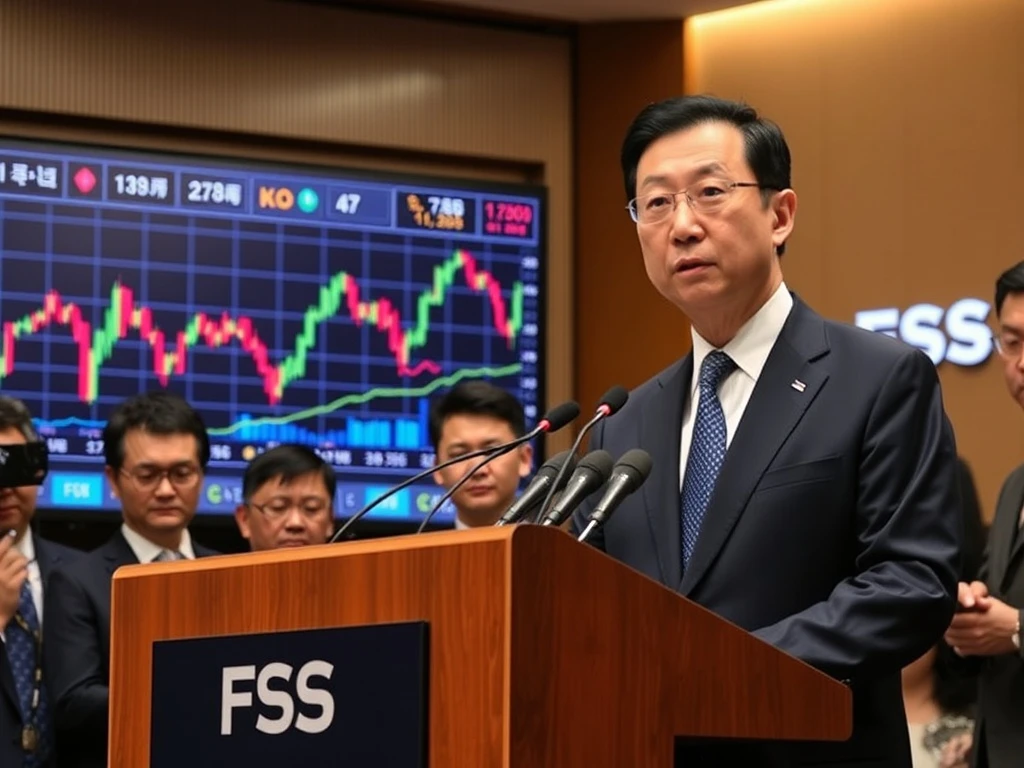
SEOUL, South Korea – March 2025 – A significant regulatory storm has erupted in South Korea’s cryptocurrency sector following a major distribution error by exchange giant Bithumb. Financial Supervisory Service (FSS) Governor Lee Chan-jin has delivered a stark warning, describing the situation for investors who sold mistakenly distributed Bitcoin as potentially “catastrophic.” This Bithumb Bitcoin error represents a critical test case for digital asset regulation and consumer protection laws in one of the world’s most active crypto markets.
The Bithumb Bitcoin Distribution Error Explained
Bithumb, South Korea’s second-largest cryptocurrency exchange, recently conducted a promotional “random box” event. The company clearly announced it would award participants 2,000 won (approximately $1.50) per person. However, due to what appears to be a technical or administrative error, the exchange distributed Bitcoin instead of the promised Korean won to numerous users. The exact number of affected users and the total Bitcoin value distributed in error remain undisclosed, though industry analysts estimate the figure could reach millions of dollars.
This incident immediately raised complex legal questions about ownership and liability in the digital asset space. Governor Lee Chan-jin addressed these concerns directly during a press briefing covered by KBS and other major Korean media outlets. He emphasized that the mistakenly sent Bitcoin represents a clear case of “unjust enrichment” under South Korean civil law. Consequently, recipients have a legal obligation to return the assets to Bithumb.
Understanding Unjust Enrichment in Cryptocurrency Context
Unjust enrichment, a fundamental principle in civil law systems including South Korea’s, prevents individuals from retaining benefits they received without legal justification. The principle applies when someone gains an advantage at another’s expense without proper legal grounds. In traditional finance, similar cases might involve bank transfer errors. However, cryptocurrency presents unique challenges due to its pseudonymous nature and irreversible transactions.
Legal experts note several key factors in this Bithumb case:
- Clear Mistake: Bithumb publicly advertised a specific reward amount in Korean won
- Disproportionate Value: Bitcoin’s value significantly exceeds the promised 2,000 won
- Identifiable Error: The exchange can demonstrate the distribution was unintended
FSS Governor’s “Catastrophic” Warning and Legal Framework
Governor Lee’s characterization of the situation as “catastrophic” for certain investors stems from specific legal requirements. He asserted that the obligation to return mistakenly sent assets is “indisputable” under South Korean law. More importantly, he clarified that the law typically requires returning the “original assets”—in this case, the exact Bitcoin distributed—not their cash equivalent.
This creates severe complications for investors who immediately sold the Bitcoin they received. Since cryptocurrency transactions are irreversible on-chain, these investors cannot retrieve the specific Bitcoin units they sold. They would need to repurchase equivalent Bitcoin at current market prices to return the original assets. Given Bitcoin’s notorious price volatility, this could result in substantial financial losses if prices have risen since the sale.
| Investor Action | Legal Status | Potential Consequence |
|---|---|---|
| Held Bitcoin untouched | Must return original Bitcoin | No financial loss if returned promptly |
| Sold Bitcoin immediately | Must return original Bitcoin | Must repurchase at potentially higher price |
| Confirmed with Bithumb first | May not need to return assets | Protected if acting in good faith |
| Transferred to cold wallet | Must return original Bitcoin | Technical return possible |
The Good Faith Exception in Digital Asset Cases
Governor Lee did identify one potential exception to the return requirement. Investors who contacted Bithumb to confirm the deposit’s legitimacy before taking any action might avoid the obligation to return the original assets. This “good faith” protection recognizes that consumers shouldn’t bear responsibility for an exchange’s error when they take reasonable steps to verify transactions.
However, legal analysts caution that this exception has narrow application. Investors would need to provide clear evidence of their verification attempts, such as customer service chat logs or email correspondence with Bithumb. Mere assumptions about the deposit’s legitimacy would not satisfy the good faith requirement under South Korean law.
Broader Implications for South Korea’s Cryptocurrency Ecosystem
This Bithumb incident occurs amid South Korea’s ongoing efforts to establish comprehensive cryptocurrency regulations. The country has implemented several significant measures in recent years:
- Real-name verification requirements for exchange accounts
- Strict anti-money laundering protocols for crypto transactions
- Enhanced consumer protection measures for digital asset investors
- Taxation frameworks for cryptocurrency gains
The FSS’s firm stance on this Bitcoin distribution error signals regulators’ commitment to applying traditional financial principles to the cryptocurrency sector. This approach aims to protect consumers while maintaining market integrity. However, it also highlights the tension between cryptocurrency’s decentralized nature and established legal frameworks designed for traditional finance.
Historical Context: Previous Crypto Exchange Errors
This is not the first time a cryptocurrency exchange has made a significant distribution error. In 2019, Binance experienced a technical glitch that allowed some users to purchase Bitcoin at incorrectly low prices. The exchange ultimately reversed the trades. Similarly, in 2020, Crypto.com accidentally sent millions of dollars in Ethereum to a user instead of a $100 refund. The user eventually returned the funds after legal pressure.
What distinguishes the Bithumb case is the explicit regulatory intervention and the application of specific civil law principles. The FSS’s public position establishes an important precedent for how South Korean authorities will handle similar incidents in the future. This could influence exchange operations, user agreements, and dispute resolution processes across the industry.
Technical and Operational Challenges for Exchanges
Cryptocurrency exchanges face unique operational challenges that can lead to distribution errors. These include complex automated systems, integration issues between different platforms, and the irreversible nature of blockchain transactions. Bithumb’s error highlights the need for robust internal controls and verification processes before executing large-scale distributions.
Industry experts suggest several preventive measures exchanges could implement:
- Multi-signature verification for substantial asset transfers
- Test transactions with small amounts before full distribution
- Enhanced monitoring systems to detect anomalous distributions
- Clear communication protocols for addressing errors promptly
These technical considerations become particularly important as exchanges handle increasingly complex products and services, including staking, lending, and various promotional activities.
Conclusion
The Bithumb Bitcoin distribution error has evolved into a significant regulatory and legal test case for South Korea’s cryptocurrency industry. FSS Governor Lee Chan-jin’s characterization of the situation as “catastrophic” for some investors underscores the serious consequences of exchange errors in the digital asset space. This incident reinforces the application of traditional legal principles like unjust enrichment to cryptocurrency transactions while highlighting the unique challenges posed by blockchain technology’s irreversible nature. As regulators worldwide grapple with digital asset oversight, the resolution of this Bithumb Bitcoin case will likely influence future approaches to exchange accountability and consumer protection in the global cryptocurrency ecosystem.
FAQs
Q1: What exactly happened with Bithumb’s Bitcoin distribution?
Bithumb intended to distribute 2,000 won per participant in a promotional event but mistakenly distributed Bitcoin instead due to a technical or administrative error. The exact value and number of affected users remain undisclosed.
Q2: Why does the FSS consider this situation “catastrophic” for some investors?
Investors who sold the mistakenly sent Bitcoin must return the original assets under South Korean law. If Bitcoin prices have increased since the sale, they would need to repurchase at higher prices, potentially incurring significant losses.
Q3: Are all recipients required to return the Bitcoin?
Most recipients must return the assets under unjust enrichment principles. However, investors who contacted Bithumb to verify the deposit’s legitimacy before acting might be protected under good faith exceptions.
Q4: How does this incident affect South Korea’s cryptocurrency regulations?
This case establishes important precedents for applying traditional financial regulations to cryptocurrency exchanges. It signals regulators’ commitment to consumer protection and could influence future exchange operations and user agreements.
Q5: What should cryptocurrency users do if they receive unexpected assets from an exchange?
Users should immediately contact the exchange’s customer service to verify the transaction’s legitimacy. They should avoid transferring or selling the assets until receiving official confirmation, as acting on mistaken transfers could create legal obligations.
Related News
- USDC Minted: Stunning 250 Million Stablecoin Injection Signals Major Crypto Liquidity Shift
- Bitcoin Price Prediction: Bernstein’s Unwavering $150K Target Defies Recent Market Panic
- Ethereum ETF Outflow Crisis: U.S. Spot Funds Bleed $16.8M as BlackRock Leads Third Day of Withdrawals