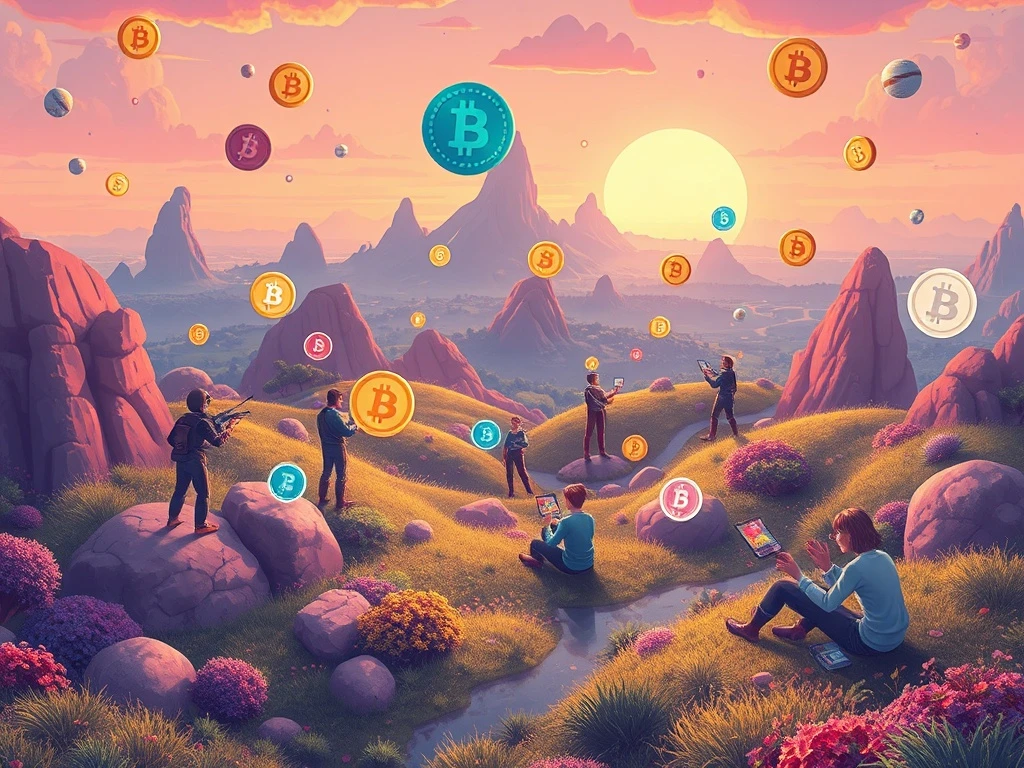
The gaming world is undergoing a significant transformation. For years, players invested countless hours into virtual realms, yet they owned little within those digital spaces. However, a powerful shift is now underway, driven by the emergence of blockchain games. This innovative technology is fundamentally reshaping how we interact with and benefit from our gaming experiences. Indeed, the industry is moving from traditional models towards a future where digital ownership and player-driven economies take center stage. This evolution promises a more equitable and engaging environment for millions of gamers worldwide.
The Rise of Blockchain Games and Digital Ownership
Blockchain games introduce a revolutionary concept: true digital ownership. Unlike conventional games where developers control all in-game assets, blockchain technology allows players to genuinely own their virtual items. This ownership is verifiable and immutable, recorded on a decentralized ledger. Consequently, items like unique skins, powerful weapons, or virtual land become non-fungible tokens (NFTs). Players can then trade, sell, or even use these assets across different compatible games.
Historically, gamers spent money on items that remained locked within a specific game’s ecosystem. These items often had no real-world value outside of the game. Furthermore, if a game shut down, all player investments typically vanished. Blockchain technology addresses this core issue. It empowers players by giving them unprecedented control over their digital possessions. Therefore, this shift represents a significant departure from the centralized models that have long dominated the gaming industry.
Unlocking Value with Play-to-Earn Gaming Models
A key driver of mainstream adoption for blockchain games is the play-to-earn gaming model. This innovative approach allows players to earn tangible value through their in-game activities. Essentially, players can generate cryptocurrency or NFTs simply by playing, completing quests, winning battles, or contributing to the game’s ecosystem. This model directly contrasts with traditional gaming, where monetization primarily benefits developers and publishers.
For example, games like Axie Infinity popularized the P2E model, enabling players to earn tokens that held real-world monetary value. Similarly, other titles offer opportunities to earn rare NFTs by achieving specific milestones. Players can then sell these earned assets on open marketplaces, converting their gaming efforts into income. This economic incentive has attracted a vast new audience, including individuals in developing economies seeking alternative income streams. As a result, P2E has proven to be a powerful catalyst for growth.
NFTs in Gaming: True Asset Ownership
Non-fungible tokens, or NFTs in gaming, are the backbone of digital ownership within blockchain ecosystems. Each NFT is a unique digital identifier recorded on a blockchain. This ensures its authenticity and verifiable scarcity. In games, NFTs can represent almost anything: character avatars, unique cosmetic items, virtual real estate, or even entire game levels. Players acquire these NFTs through gameplay, purchases, or by trading with other players.
The true power of NFTs lies in their transferability and interoperability. Players can move their NFT assets out of one game and potentially use them in another, provided both games support the same NFT standard. Furthermore, these assets can be freely traded on secondary marketplaces outside the game’s direct control. This creates a vibrant, player-driven economy where supply and demand dictate value. Ultimately, NFTs grant players unprecedented control and financial agency over their in-game achievements and investments.
Web3 Gaming: Building Decentralized Worlds
The broader concept of Web3 gaming encompasses the principles of decentralization, user ownership, and community governance. It represents the next iteration of the internet, where users, not large corporations, control their data and digital assets. In the context of gaming, Web3 means creating virtual worlds that are owned and governed by their communities. This shift empowers players to have a direct say in the game’s development and future direction.
Many Web3 games integrate Decentralized Autonomous Organizations (DAOs). DAOs allow token holders (players) to vote on critical game decisions, such as new features, economic policies, or treasury management. Consequently, this fosters a stronger sense of community and investment among players. Developers often release core game mechanics and then allow the community to build upon them, creating a truly collaborative development environment. This approach promises more dynamic and resilient gaming ecosystems, driven by collective player input.
The GameFi Revolution: Bridging Finance and Fun
The term GameFi revolution describes the convergence of gaming and decentralized finance (DeFi). It represents a significant innovation within the blockchain space. GameFi projects integrate financial incentives and mechanisms directly into gameplay. This allows players to not only earn assets but also to engage in sophisticated financial activities within the game’s ecosystem. Players can stake their in-game tokens, participate in liquidity pools, or even lend out their NFTs for passive income.
This integration transforms games into dynamic economic platforms. Players become active participants in a virtual economy that mirrors aspects of the real financial world. For instance, some GameFi platforms allow players to farm tokens, contributing to the game’s liquidity while earning rewards. This innovative blend of entertainment and financial opportunity has attracted both gamers and crypto enthusiasts. It showcases the vast potential for creating entirely new economic paradigms within virtual environments.
Overcoming Hurdles and Scaling Up
Despite rapid growth, blockchain games face several challenges on their path to widespread mainstream adoption. Scalability remains a significant hurdle. Many blockchains struggle to process the high transaction volumes required for complex gaming experiences. High transaction fees, or ‘gas fees,’ can also deter players. Furthermore, the user experience often proves complex for newcomers, requiring knowledge of crypto wallets and blockchain transactions.
However, developers are actively addressing these issues. Layer-2 scaling solutions, sidechains, and new blockchain architectures are emerging to improve transaction speeds and reduce costs. User interfaces are also becoming more intuitive, simplifying the onboarding process for non-crypto users. Additionally, regulatory clarity and environmental concerns related to energy consumption are ongoing discussions. Continuous innovation and collaborative efforts within the industry are vital for overcoming these obstacles and ensuring sustainable growth.
The Future Landscape of Blockchain Games
The trajectory for blockchain games points towards continued expansion and innovation. As the technology matures, we can expect more sophisticated and immersive gaming experiences. Traditional gaming studios are increasingly exploring blockchain integration, signaling a broader industry acceptance. New genres and gameplay mechanics will emerge, leveraging the unique capabilities of decentralized ledgers and NFTs.
Moreover, advancements in metaverse development will likely intertwine closely with blockchain gaming. This will create interconnected virtual worlds where player assets and identities are persistent and portable. The focus will shift towards creating truly open economies and player-owned ecosystems. Ultimately, blockchain games are not just a fleeting trend; they represent a fundamental paradigm shift. They are empowering players, fostering new economic models, and truly breaking into the mainstream gaming consciousness.
Related News
- Noble EVM Launches: The Strategic Pivot from Cosmos to a Standalone Layer 1 Blockchain
- Decentralized Validator Technology: Vitalik Buterin’s Critical Push for Native Ethereum Integration
- Sui Launches Transformative LAUNCH Career Internship Program to Cultivate Next-Generation Blockchain Talent