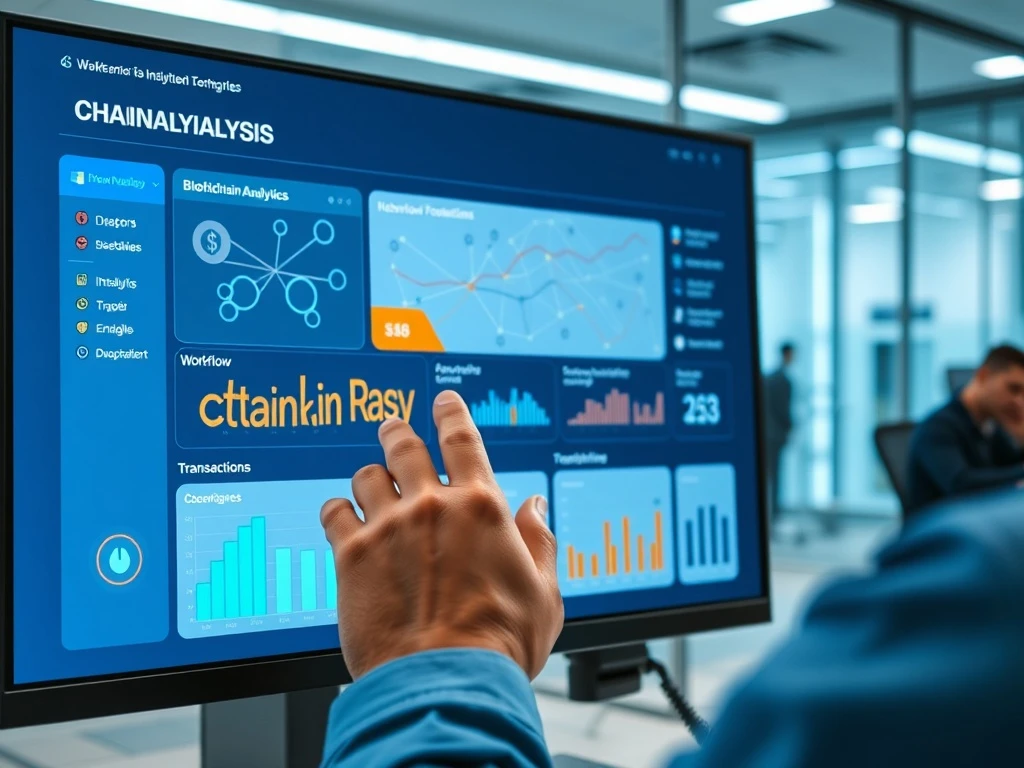
NEW YORK, March 2025 – Chainalysis, the leading blockchain intelligence platform, has launched a groundbreaking ‘Workflows’ platform that democratizes access to sophisticated blockchain analytics. This innovative solution enables compliance teams, investigators, and financial institutions to perform data-scientist-level analysis without writing a single line of code. The platform represents a significant evolution in blockchain transparency tools, potentially transforming how organizations monitor cryptocurrency transactions and combat illicit activities.
Chainalysis Workflows Revolutionizes Blockchain Investigation
The newly launched Chainalysis Workflows platform fundamentally changes how organizations access blockchain intelligence. Traditionally, sophisticated blockchain analysis required specialized programming skills and deep technical expertise. However, this no-code solution now empowers compliance officers, law enforcement investigators, and financial analysts to conduct complex investigations independently. The platform integrates seamlessly with Chainalysis’s existing data infrastructure while providing an intuitive visual interface for building investigation sequences.
According to industry experts, this development addresses a critical gap in blockchain compliance technology. Financial institutions increasingly face regulatory pressure to monitor cryptocurrency transactions effectively. Meanwhile, they often lack the specialized technical staff needed for traditional blockchain analysis tools. Chainalysis Workflows bridges this divide by translating complex data science operations into drag-and-drop visual components. Consequently, organizations can now scale their blockchain monitoring capabilities without expanding their technical teams.
Technical Architecture and Core Capabilities
The Chainalysis Workflows platform operates on a modular architecture that simplifies complex blockchain analysis. Users can assemble investigation sequences using pre-built components for transaction tracing, entity clustering, risk scoring, and pattern recognition. Each component represents sophisticated algorithms developed by Chainalysis’s data science team over years of blockchain research. The platform automatically handles data processing, API calls, and computational requirements behind the scenes.
Key Platform Features and Functionality
Chainalysis Workflows offers several distinctive features that set it apart from traditional blockchain analytics tools:
- Visual Investigation Builder: Drag-and-drop interface for creating custom investigation sequences
- Pre-built Analysis Templates: Ready-to-use workflows for common compliance scenarios
- Real-time Data Integration: Direct connection to Chainalysis’s live blockchain data streams
- Collaboration Tools: Team sharing and version control for investigation workflows
- Automated Reporting: Generate compliance-ready documentation automatically
- Risk Scoring Integration: Built-in risk assessment algorithms for transaction evaluation
The platform supports analysis across multiple blockchain networks, including Bitcoin, Ethereum, and major altcoins. It incorporates Chainalysis’s proprietary clustering algorithms that identify wallet relationships and entity connections. These capabilities previously required manual coding and data science expertise. Now, users simply configure parameters through visual controls while the platform executes the underlying complex computations.
Industry Impact and Regulatory Context
The launch of Chainalysis Workflows arrives during a period of intensified regulatory focus on cryptocurrency compliance. Global financial authorities have implemented stricter anti-money laundering (AML) requirements for digital assets throughout 2024 and early 2025. The Financial Action Task Force (FATF) updated its guidance on virtual asset service providers, emphasizing transaction monitoring capabilities. Similarly, the European Union’s Markets in Crypto-Assets (MiCA) regulation establishes comprehensive compliance frameworks.
Financial institutions face increasing pressure to demonstrate effective cryptocurrency transaction monitoring. Traditional banks expanding into digital asset services particularly need robust compliance tools. Chainalysis Workflows addresses these requirements by making sophisticated analytics accessible to existing compliance teams. The platform reduces training time and technical barriers while maintaining analytical rigor. Early adopters report significant improvements in investigation efficiency and regulatory reporting capabilities.
Market Response and Adoption Patterns
Initial industry response to Chainalysis Workflows has been overwhelmingly positive. Major financial institutions participating in the beta program reported reducing investigation time by approximately 65%. Compliance teams previously dependent on data science departments now conduct preliminary analyses independently. This shift allows specialized technical staff to focus on more complex analytical challenges rather than routine monitoring tasks.
Law enforcement agencies represent another significant adoption segment. Cryptocurrency-related investigations have increased dramatically in recent years, straining specialized technical resources. Chainalysis Workflows enables detectives and financial crime units to conduct initial blockchain analysis without waiting for specialized technical support. This capability accelerates investigation timelines and improves resource allocation across law enforcement organizations.
Comparative Analysis with Traditional Tools
Chainalysis Workflows represents a paradigm shift from traditional blockchain analytics approaches. Conventional tools typically require users to write custom queries, understand data structures, and interpret raw blockchain data. The new platform abstracts these complexities while preserving analytical depth. This comparison highlights the platform’s transformative potential:
| Analysis Aspect | Traditional Blockchain Tools | Chainalysis Workflows |
|---|---|---|
| Technical Requirements | Programming skills, data science expertise | Domain knowledge, basic computer literacy |
| Investigation Setup | Days to weeks for custom development | Minutes to hours with visual builder |
| Team Collaboration | Limited, technical barrier dependent | Built-in sharing and version control |
| Analysis Depth | Potentially unlimited with expertise | Data-scientist level without coding |
| Regulatory Reporting | Manual documentation creation | Automated report generation |
The platform maintains Chainalysis’s established analytical rigor while dramatically improving accessibility. Underlying algorithms continue to evolve based on the company’s ongoing blockchain research. Regular updates ensure the platform incorporates the latest techniques for entity clustering, pattern recognition, and risk assessment. This combination of accessibility and sophistication distinguishes Chainalysis Workflows from both traditional tools and simpler no-code alternatives.
Future Development and Industry Implications
Chainalysis plans continuous enhancement of the Workflows platform throughout 2025. The development roadmap includes expanded blockchain coverage, additional pre-built investigation templates, and enhanced visualization capabilities. The company also intends to introduce more advanced machine learning components for predictive analysis and anomaly detection. These developments will further reduce the technical expertise required for sophisticated blockchain monitoring.
The platform’s launch potentially signals broader industry transformation. Other blockchain analytics providers may develop similar no-code solutions, increasing competition and innovation. Financial institutions might accelerate cryptocurrency service offerings with improved compliance capabilities. Regulatory bodies could establish new standards referencing these advanced but accessible monitoring tools. Ultimately, Chainalysis Workflows could contribute to mainstream cryptocurrency adoption by addressing critical compliance concerns.
Expert Perspectives on Platform Significance
Industry analysts recognize Chainalysis Workflows as a significant advancement in blockchain technology accessibility. According to financial technology experts, the platform addresses a fundamental adoption barrier for traditional institutions. Compliance represents a primary concern for banks and financial services exploring cryptocurrency offerings. Accessible analytics tools reduce implementation risks and regulatory uncertainty. Consequently, more institutions may enter the digital asset space with confidence in their monitoring capabilities.
Blockchain researchers note the platform’s potential impact beyond compliance applications. Academic institutions and research organizations could utilize Chainalysis Workflows for blockchain studies without extensive technical infrastructure. Journalists investigating cryptocurrency stories might employ the tools for basic transaction tracing. The platform essentially democratizes access to blockchain intelligence that was previously restricted to technical specialists.
Conclusion
Chainalysis Workflows represents a transformative development in blockchain analytics and cryptocurrency compliance. The no-code platform successfully bridges the gap between sophisticated data science and practical investigation needs. Financial institutions, law enforcement agencies, and compliance teams now access data-scientist-level insights without technical barriers. This advancement arrives at a critical moment of regulatory evolution and institutional cryptocurrency adoption. Chainalysis Workflows potentially accelerates mainstream blockchain integration while enhancing transparency and security across the ecosystem. The platform’s impact will likely extend throughout 2025 as organizations implement these powerful but accessible analytics tools.
FAQs
Q1: What exactly is Chainalysis Workflows?
Chainalysis Workflows is a no-code platform that enables users to perform sophisticated blockchain analysis without programming skills. The visual interface allows compliance teams and investigators to build custom analysis sequences using drag-and-drop components representing complex data science algorithms.
Q2: Who can benefit from using Chainalysis Workflows?
The platform primarily serves compliance officers, financial investigators, law enforcement agencies, and regulatory professionals. Financial institutions monitoring cryptocurrency transactions particularly benefit from the accessible analytics capabilities. The tool also supports academic researchers and journalists investigating blockchain activities.
Q3: How does Chainalysis Workflows differ from traditional blockchain analysis tools?
Traditional tools typically require programming expertise and manual data processing. Chainalysis Workflows abstracts these complexities through a visual interface while maintaining analytical depth. Users achieve data-scientist-level insights through configuration rather than coding, dramatically reducing technical barriers and investigation setup time.
Q4: What blockchain networks does Chainalysis Workflows support?
The platform supports major blockchain networks including Bitcoin, Ethereum, and numerous altcoins. It integrates with Chainalysis’s comprehensive data infrastructure, providing access to transaction data, wallet clustering information, and risk scoring across supported networks. The company regularly adds support for additional blockchain protocols.
Q5: How does Chainalysis ensure the platform’s analytical accuracy?
Chainalysis Workflows utilizes the same proven algorithms and data infrastructure as the company’s professional tools. The platform components represent sophisticated analysis techniques developed through years of blockchain research. Regular updates incorporate the latest methodologies while maintaining compatibility with evolving blockchain protocols and regulatory requirements.
Related News
- Solana Policy Institute Demands Urgent Legal Shields for Blockchain Developers
- Crypto Whale’s Stunning $4.09M Bitcoin Loss Precedes Massive $73.5M Ethereum Short Bet
- Bitcoin Price Showdown: The Fierce $88K Battle Between Bulls and Bears