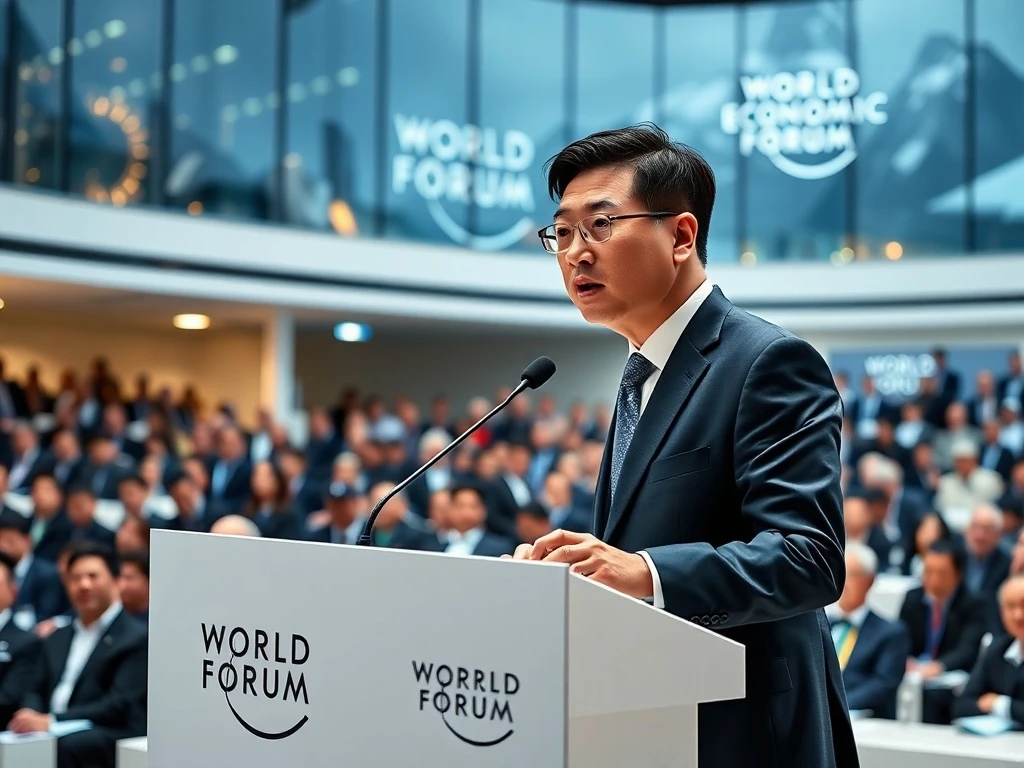
In a significant declaration that signals a new chapter for one of cryptocurrency’s most influential figures, Binance founder Changpeng ‘CZ’ Zhao has confirmed he will not launch new ventures but will instead channel his expertise into strategic investing. Zhao made this pivotal announcement during a panel discussion at the 2026 World Economic Forum in Davos, Switzerland, on January 18, 2026, citing the immense personal toll of entrepreneurship in the current regulatory and market climate.
Changpeng Zhao’s Strategic Shift from Founder to Investor
Changpeng Zhao’s statement marks a deliberate and calculated career transition. Furthermore, his decision stems from a firsthand understanding of the monumental effort required to build a global enterprise from the ground up. Specifically, Zhao referenced the “arduous process” of founding and scaling Binance, which grew under his leadership to become the world’s largest cryptocurrency exchange by trading volume. Consequently, he expressed that repeating such an endeavor in today’s complex environment would be exceptionally challenging. This shift from operator to capital allocator represents a common evolution for successful founders, yet it carries unique weight within the volatile crypto sector.
Industry analysts immediately began parsing the implications of Zhao’s new focus. For instance, his move mirrors patterns seen in traditional tech, where visionary founders like Marc Andreessen and Peter Thiel transitioned to venture capital after their initial successes. However, Zhao’s deep, network-specific knowledge of blockchain infrastructure, decentralized finance (DeFi), and Web3 applications positions him as a uniquely qualified investor. His capital and endorsement will likely serve as a powerful signal for early-stage projects, potentially shaping the next generation of crypto innovation.
The Davos Context: Crypto’s Evolving Narrative
The setting of this announcement is equally noteworthy. The World Economic Forum in Davos has historically been a forum for traditional finance and global policy. Zhao’s presence and comments there underscore cryptocurrency’s continued integration into the mainstream financial dialogue. His pragmatic stance—opting to fund innovation rather than directly create it—may reflect a broader maturation within the industry. It suggests a move away from the frenetic pace of launches and toward more sustained, strategic support for sustainable technological development.
Analyzing the Impact on the Crypto Venture Landscape
Zhao’s pivot to full-time investing will undoubtedly influence the venture capital landscape in blockchain. His approach will likely differ from traditional VC models due to his operational experience. We can anticipate a focus on several key areas:
- Infrastructure and Scalability: Projects addressing blockchain throughput, interoperability, and user onboarding.
- Regulatory Technology (RegTech): Solutions that bridge the gap between decentralized protocols and evolving global compliance frameworks.
- Real-World Asset (RWA) Tokenization: Platforms that bring tangible assets like real estate or commodities onto the blockchain.
- Decentralized Autonomous Organizations (DAOs): Innovative governance models for community-led projects.
This focused strategy could accelerate development in these crucial sectors. Moreover, Zhao’s personal brand and credibility may help attract top-tier talent and co-investors to his chosen ventures, creating a ripple effect throughout the ecosystem.
| Individual | Original Venture | Investment Focus | Key Impact |
|---|---|---|---|
| Changpeng Zhao | Binance (Crypto Exchange) | Cryptocurrency & Blockchain Infrastructure | To be determined; signals sector maturation |
| Marc Andreessen | Netscape (Web Browser) | General Tech (a16z) | Pioneered modern software VC |
| Peter Thiel | PayPal (FinTech) | Tech & Frontier Science (Founders Fund) | Backed breakout companies like Facebook |
The Personal and Market Drivers Behind the Decision
Several converging factors likely informed Zhao’s decision. First, the regulatory scrutiny facing global crypto exchanges has intensified significantly since 2023. Navigating this landscape requires immense resources and constant adaptation. Second, the personal commitment needed to run a company like Binance is all-consuming. Transitioning to an investor role offers a different type of engagement—one that leverages pattern recognition and strategic insight without the day-to-day operational burdens.
Market timing also plays a role. The crypto industry has moved past its initial speculative boom and is now in a phase demanding robust, usable technology. This environment favors careful investment in foundational projects over rapid, consumer-facing launches. Zhao’s move aligns with this industry-wide shift toward substance and sustainability. His capital can now provide the patient, long-term funding that deep-tech blockchain projects often require.
Expert Perspectives on the Move
Financial commentators have largely viewed Zhao’s announcement as a rational next step. “CZ’s operational experience gives him an unparalleled lens for evaluating what makes a crypto project viable in the long term,” noted a fintech analyst from a major consulting firm, speaking on background. “His shift to investing isn’t a retirement; it’s a redeployment of his most valuable asset—his judgment—into a broader array of companies.” This perspective highlights how founder-led investing often brings a hands-on, mentorship-oriented approach that can be crucial for early-stage startups navigating complex product and market challenges.
Conclusion
Changpeng Zhao’s declaration at Davos 2026 is more than a personal career update; it is a bellwether for the cryptocurrency industry’s evolution. By choosing to focus exclusively on investing, the Binance founder is leveraging his hard-won experience to nurture the next wave of blockchain innovation. This strategic pivot underscores a maturation within the sector, where capital and guidance from seasoned operators become critical drivers of sustainable growth. The market will now watch closely to see which sectors and projects attract Zhao’s capital, as his investments will serve as a key indicator of the technological frontiers he believes will define crypto’s future.
FAQs
Q1: What exactly did Changpeng Zhao announce at the World Economic Forum?
Changpeng Zhao announced that he has no personal plans to launch new startup projects. Instead, he stated his primary focus is now on investing in existing companies and initiatives within the cryptocurrency and blockchain space.
Q2: Why did Zhao decide to stop launching new projects?
Zhao cited the extremely arduous process of building a global company like Binance. He suggested that the current regulatory and market environment makes repeating such an entrepreneurial journey particularly difficult, leading him to prefer the investor role.
Q3: Does this mean Zhao is leaving the cryptocurrency industry?
No, not at all. His shift to investing represents a continued and deep involvement in the industry. He plans to use his expertise and capital to support and guide other entrepreneurs and projects, remaining a central figure in the ecosystem.
Q4: What types of companies or projects is Zhao likely to invest in?
Based on his background, likely investment areas include blockchain scaling infrastructure, regulatory compliance technology (RegTech), decentralized finance (DeFi) protocols, and projects focusing on real-world asset (RWA) tokenization.
Q5: How might this affect the broader crypto venture capital landscape?
Zhao’s entry as a full-time, experienced founder-investor could bring more strategic, operationally-informed capital to the market. His involvement may validate certain technological niches and attract additional investment from traditional funds looking for credible signals in the complex crypto space.
Related News
- BTC Perpetual Futures Long/Short Ratio Reveals Stunning Market Equilibrium Across Major Exchanges
- Crypto Startups Defy Uncertainty, Securing a Staggering $1 Billion in Early 2025 Funding
- Ethereum Foundation Launches Urgent Quantum Defense Team with $2M Research Funding to Protect Blockchain Future