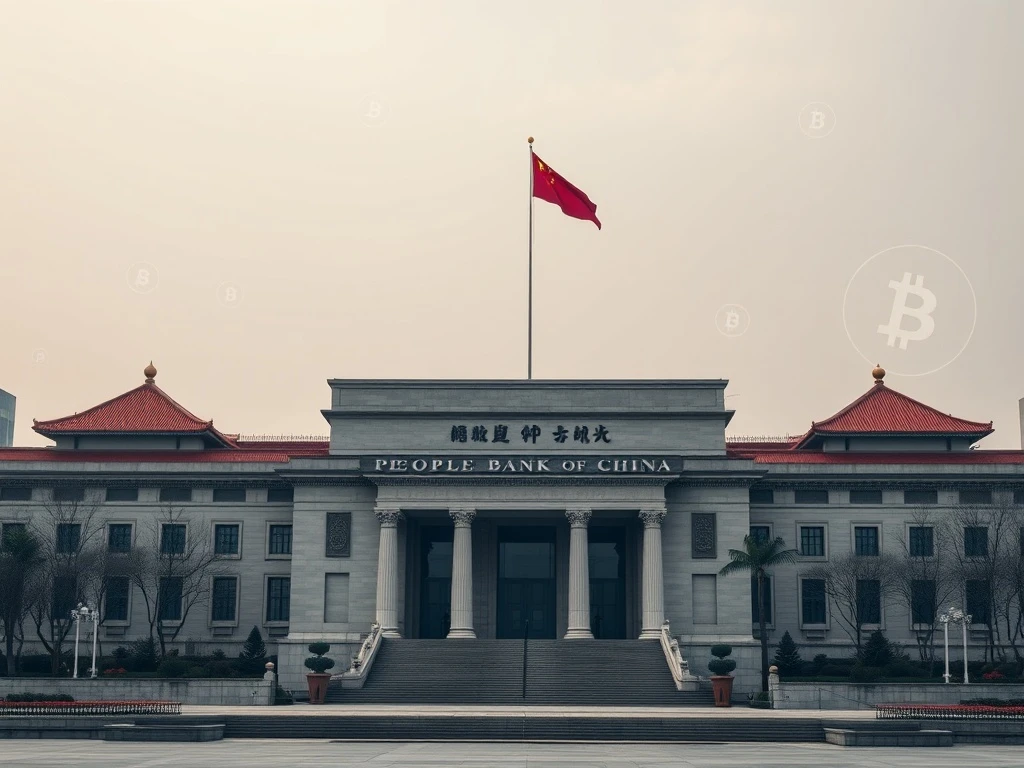
BEIJING, March 2025 – The People’s Bank of China (PBOC) has initiated a comprehensive regulatory enforcement campaign targeting cryptocurrency operations, stablecoin activities, and offshore token trading platforms. This latest crackdown represents the most significant coordinated action since China’s 2021 blanket ban on cryptocurrency transactions and mining operations. Financial analysts and regulatory experts confirm the central bank’s intensified focus on eliminating remaining cryptocurrency channels within Chinese jurisdiction.
PBOC’s 2025 Crypto Crackdown Strategy
The People’s Bank of China has deployed multiple regulatory mechanisms simultaneously. First, the central bank coordinates with financial institutions to monitor cryptocurrency-related transactions. Second, authorities target payment channels facilitating crypto transactions. Third, regulators pursue offshore platforms serving Chinese users. This three-pronged approach demonstrates systematic enforcement planning.
Financial technology experts note the timing coincides with China’s digital yuan expansion. The central bank reportedly accelerates digital currency adoption while restricting alternatives. Consequently, regulatory actions create market conditions favoring the official digital currency. International observers monitor these developments closely for global implications.
Stablecoin Regulatory Framework Intensification
Chinese regulators specifically target stablecoin operations in their latest enforcement actions. Stablecoins, which peg their value to traditional currencies, present particular regulatory concerns. The PBOC identifies these digital assets as potential threats to monetary sovereignty and financial stability. Therefore, authorities implement stricter monitoring of stablecoin-related activities.
Expert Analysis of Stablecoin Risks
Financial regulation specialists highlight several concerns driving China’s stablecoin crackdown. First, stablecoins potentially circumvent capital controls through cross-border transactions. Second, these digital assets might compete with the digital yuan in domestic payments. Third, stablecoin issuers operate outside traditional banking supervision frameworks. These factors collectively justify regulatory intervention according to central bank officials.
Comparative analysis reveals China’s approach differs from other jurisdictions. For instance, the European Union implements structured stablecoin regulations through MiCA framework. Meanwhile, the United States develops congressional legislation for stablecoin oversight. In contrast, China pursues prohibition rather than regulation for most stablecoin activities.
| Jurisdiction | Regulatory Stance | Key Features |
|---|---|---|
| China | Prohibition | Complete ban on stablecoin transactions and issuance |
| European Union | Licensing Framework | MiCA regulations with capital and reserve requirements |
| United States | Legislative Development | Congressional bills proposing federal oversight |
| Singapore | Risk-Based Regulation | Licensing with strict reserve and disclosure rules |
Offshore Token Trading Platform Enforcement
Chinese authorities intensify efforts against offshore cryptocurrency exchanges serving domestic users. The PBOC coordinates with technology companies to block platform access and identify users. Additionally, financial institutions receive directives to report suspicious transactions involving offshore platforms. These measures aim to eliminate remaining access points for Chinese cryptocurrency traders.
Technology analysts observe sophisticated detection methods emerging. Internet service providers implement advanced traffic analysis to identify cryptocurrency-related activities. Meanwhile, payment processors deploy transaction monitoring algorithms for crypto-related patterns. Consequently, regulatory enforcement becomes increasingly technical and comprehensive.
The offshore platform crackdown follows several high-profile cases in 2024. Chinese authorities previously pursued legal actions against exchange operators facilitating domestic access. These cases established legal precedents for current enforcement actions. International legal experts note jurisdictional challenges in pursuing offshore entities.
Digital Yuan Integration Strategy
China’s cryptocurrency crackdown coincides with accelerated digital yuan deployment. The central bank expands pilot programs across additional cities and use cases. Simultaneously, authorities restrict competing digital payment alternatives. This strategic alignment supports national digital currency adoption objectives.
Financial technology adoption data reveals significant digital yuan progress. Pilot programs now cover major metropolitan areas and selected rural regions. Furthermore, the central bank explores cross-border digital yuan applications with partner countries. These developments position China’s digital currency as a potential international payment instrument.
Key digital yuan implementation milestones include:
- Infrastructure Expansion: Payment acceptance points exceed 10 million nationwide
- User Adoption: Digital wallet registrations surpass 300 million accounts
- Transaction Volume: Monthly settlement exceeds 2 trillion yuan ($280 billion)
- Internationalization: Cross-border pilot programs with 15 partner countries
Historical Context of China’s Crypto Regulation
China’s current cryptocurrency crackdown continues established regulatory patterns. Initial restrictions emerged in 2013 when authorities prohibited financial institutions from Bitcoin transactions. Subsequently, 2017 regulations banned initial coin offerings and cryptocurrency exchanges. The 2021 comprehensive prohibition extended to mining operations and all cryptocurrency transactions.
Each regulatory phase addressed specific market developments and risks. For example, the 2017 ICO ban responded to fundraising concerns and investor protection issues. Meanwhile, the 2021 mining prohibition addressed energy consumption and financial stability considerations. Current enforcement actions focus on remaining market activities and technological innovations.
Regulatory Evolution Timeline
China’s cryptocurrency regulation has evolved through distinct phases. The initial period (2013-2016) established basic restrictions on financial institution involvement. The intermediate phase (2017-2020) expanded prohibitions to exchanges and fundraising activities. The comprehensive phase (2021-present) addresses mining, transactions, and technological workarounds.
International regulatory observers note China’s consistent approach despite market fluctuations. Unlike some jurisdictions that adjust policies based on market conditions, China maintains prohibition as the default position. This consistency reflects fundamental concerns about financial sovereignty and systemic risk management.
Global Regulatory Implications
China’s cryptocurrency crackdown influences international regulatory discussions. Other jurisdictions consider similar measures for stablecoin oversight and offshore platform regulation. However, most countries pursue regulatory frameworks rather than outright prohibitions. This divergence creates regulatory fragmentation in global cryptocurrency markets.
Financial stability authorities monitor China’s enforcement effectiveness. Successful restriction of cryptocurrency activities might encourage similar approaches elsewhere. Conversely, persistent market activity despite prohibitions could validate alternative regulatory models. International standard-setting bodies track these developments for policy guidance.
The Financial Stability Board and Bank for International Settlements both address cryptocurrency regulation. These organizations develop international standards while respecting national sovereignty. China’s approach provides important case study material for global regulatory discussions. Consequently, other jurisdictions analyze China’s experience for policy insights.
Market Impact and Industry Response
China’s latest cryptocurrency crackdown immediately affects market dynamics. Trading volumes decline for platforms with significant Chinese user bases. Meanwhile, cryptocurrency prices experience volatility following regulatory announcements. Industry participants adjust operations in response to enforcement actions.
Cryptocurrency businesses implement various adaptation strategies. Some platforms completely exit Chinese markets to avoid regulatory risks. Others enhance compliance measures for remaining international operations. Additionally, technology developers explore privacy-enhancing features for user protection. These responses demonstrate industry resilience despite regulatory pressures.
Market data reveals several immediate effects:
- Trading Volume Reduction: Major exchanges report 15-25% declines in Asian trading
- Price Volatility: Bitcoin experiences 8% price fluctuation following announcements
- Geographic Shifts: Mining operations continue relocation from Chinese territory
- Technology Development: Increased focus on privacy and decentralization features
Conclusion
China’s central bank maintains rigorous cryptocurrency enforcement through its 2025 crackdown on stablecoins and offshore tokens. The People’s Bank of China coordinates comprehensive regulatory actions targeting remaining cryptocurrency activities. These measures align with digital yuan expansion and financial stability objectives. International observers monitor China’s regulatory approach for global cryptocurrency policy implications. The cryptocurrency crackdown demonstrates China’s consistent prohibition stance despite market evolution and technological innovation.
FAQs
Q1: What specific measures does China’s 2025 crypto crackdown include?
The crackdown involves monitoring cryptocurrency transactions through financial institutions, blocking access to offshore trading platforms, and targeting stablecoin operations. Authorities coordinate with technology companies and payment processors to identify and restrict cryptocurrency activities.
Q2: Why does China specifically target stablecoins in its regulatory actions?
Chinese regulators view stablecoins as threats to monetary sovereignty and financial stability. These digital assets potentially circumvent capital controls, compete with the digital yuan, and operate outside traditional banking supervision frameworks.
Q3: How does China’s cryptocurrency regulation differ from other countries?
China pursues comprehensive prohibition while most other jurisdictions develop regulatory frameworks. The European Union implements licensing through MiCA regulations, the United States develops congressional legislation, and Singapore employs risk-based regulation with strict requirements.
Q4: What is the relationship between China’s crypto crackdown and digital yuan development?
The crackdown coincides with accelerated digital yuan deployment, creating market conditions favoring the official digital currency. Authorities restrict competing digital payment alternatives while expanding digital yuan pilot programs and infrastructure.
Q5: How effective have China’s previous cryptocurrency restrictions been?
Previous restrictions significantly reduced visible cryptocurrency activities but didn’t eliminate all transactions. Some users employ technological workarounds and offshore platforms, prompting the current enforcement focus on these remaining channels.
Q6: What are the global implications of China’s cryptocurrency regulatory approach?
China’s approach influences international regulatory discussions, with other jurisdictions considering similar measures for stablecoin oversight. Regulatory fragmentation emerges as different countries pursue varying approaches to cryptocurrency regulation.
Related News
- Long-Dormant Wallets Reactivate to Buy ETH: Strategic Accumulation Signals Hidden Confidence
- Ark Invest’s Strategic $19M Coinbase Stock Sale Reveals Calculated Portfolio Rebalancing
- Bitcoin Soars: BTC Price Surges Past $70,000 Milestone in Major Rally