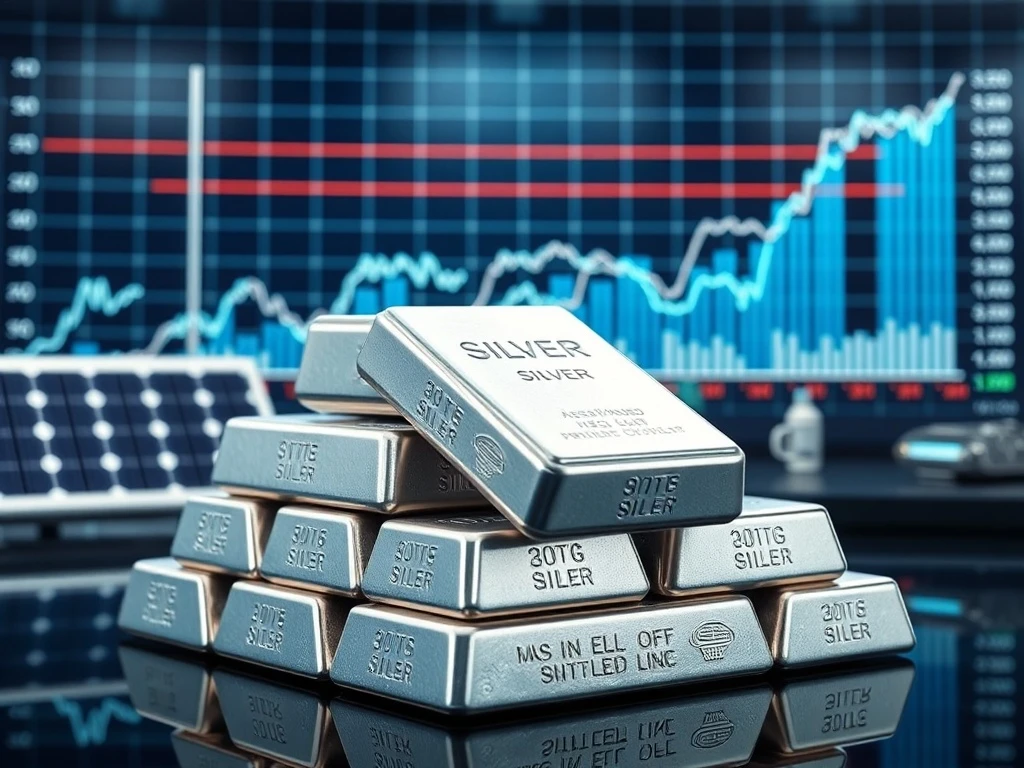
Global financial markets witnessed a seismic shift today as Citigroup dramatically revised its silver price target upward to $150 per ounce, sending shockwaves through commodity trading floors from London to Shanghai. This unprecedented forecast arrives as silver prices have already surged past previous analyst expectations at a pace not seen in modern financial history. The banking giant’s bold prediction fundamentally reshapes the investment landscape for precious metals in 2025, reflecting profound changes in both industrial demand and monetary systems.
Citi’s $150 Silver Price Target Reshapes Market Expectations
Citigroup’s commodities research team released their updated analysis on March 15, 2025, marking the most aggressive silver forecast among major global banks. The $150 target represents a staggering 400% increase from current trading levels and follows months of accelerating price movements that have consistently outpaced even the most optimistic projections. Market analysts immediately noted that this revision comes amid what many describe as a perfect storm for silver: surging industrial consumption, monetary policy shifts, and supply constraints. Consequently, trading volumes in silver futures contracts spiked by 85% within hours of the announcement.
The banking institution based its revised target on three primary factors. First, industrial demand from renewable energy sectors has exceeded all projections. Second, monetary authorities in several emerging economies have increased their silver reserves. Third, mining production faces significant constraints. These converging factors create what Citi analysts describe as “structural market tightness.”
Industrial Demand Accelerates Beyond Previous Forecasts
Silver’s remarkable price performance directly correlates with explosive growth in industrial applications. The photovoltaic industry alone now consumes approximately 180 million ounces annually, representing 15% of total supply. Moreover, electric vehicle manufacturers have increased silver usage in power electronics by 40% year-over-year. This industrial consumption creates what market experts call “inelastic demand”—requirements that continue regardless of price fluctuations.
Several key sectors drive this unprecedented demand:
- Solar Energy Expansion: Global solar installations reached 450 GW in 2024, each requiring significant silver for photovoltaic cells
- 5G Infrastructure: Rollout continues across developing nations, increasing silver use in electronic components
- Medical Technology: Antimicrobial applications in healthcare settings have expanded post-pandemic
- Automotive Electrification: Every electric vehicle contains approximately 1 ounce of silver in various components
Supply Constraints and Mining Challenges
While demand surges, silver mining faces substantial obstacles. Primary silver mines represent only 30% of total production, with the remainder coming as byproducts from zinc, lead, and copper mining. This production structure creates inherent supply limitations. Additionally, declining ore grades at major deposits in Mexico and Peru have reduced output efficiency. Environmental regulations in key producing regions have further constrained expansion plans. These factors collectively contribute to what analysts describe as a “structural deficit” in the silver market.
| Category | 2023 | 2024 | 2025 Projection |
|---|---|---|---|
| Industrial Demand | 510M oz | 580M oz | 650M oz |
| Investment Demand | 250M oz | 320M oz | 400M oz |
| Mine Production | 820M oz | 810M oz | 790M oz |
| Market Balance | -60M oz | -90M oz | -260M oz |
Monetary Policy Shifts and Silver’s Investment Appeal
Central bank policies have increasingly influenced precious metal markets throughout 2024 and into 2025. Several Asian and Middle Eastern central banks have diversified reserve holdings beyond traditional gold allocations. This strategic shift recognizes silver’s dual role as both monetary metal and industrial commodity. Furthermore, persistent inflationary pressures in Western economies have renewed investor interest in tangible assets. Retail investment in silver bullion and coins reached record levels in Q4 2024, according to industry reports.
The monetary landscape for silver contains several transformative elements. First, blockchain-based silver tokens have created new investment channels. Second, exchange-traded products have attracted institutional capital. Third, geopolitical uncertainties have increased safe-haven demand. These developments collectively enhance silver’s investment profile beyond its industrial fundamentals.
Historical Context and Price Trajectory Analysis
Silver’s current price trajectory bears similarities to historical bull markets but with distinct modern characteristics. The 1979-1980 rally saw prices increase approximately 700% over 12 months, driven primarily by monetary factors. Today’s movement combines monetary and industrial drivers, potentially creating more sustainable momentum. Technical analysts note that silver has broken through multiple resistance levels that held for over a decade. This technical breakout suggests fundamental repricing rather than speculative excess.
Market participants should consider several historical parallels and differences. Previous rallies often featured extreme volatility and rapid corrections. Current market structure includes more diversified participation. Exchange inventories have declined steadily for eighteen consecutive months. Futures market positioning shows increased commercial hedging activity. These indicators suggest institutional recognition of changing fundamentals.
Comparative Analysis with Other Precious Metals
Silver’s performance significantly outpaces gold and platinum in the current market cycle. The gold-silver ratio, a closely watched metric, has compressed from 85:1 to 45:1 in just nine months. This rapid compression indicates silver’s relative strength. Platinum group metals have shown more modest gains, constrained by automotive sector uncertainties. Palladium, previously the strongest performer among industrial precious metals, has ceded leadership to silver.
Several factors explain silver’s outperformance. Its lower price point attracts broader retail participation. Industrial applications provide fundamental support absent in other metals. Supply constraints are more pronounced than in gold mining. Investment products have proliferated, increasing accessibility. These advantages position silver uniquely within the precious metals complex.
Market Implications and Risk Considerations
Citi’s revised forecast carries significant implications across financial markets. Mining equities have already responded with substantial gains, particularly among primary silver producers. Streaming and royalty companies have announced new financing arrangements. Industrial users have increased forward purchasing to hedge against potential price increases. These developments suggest market participants are adjusting to a new price paradigm.
Investors should nevertheless consider several risk factors. Technological substitution remains possible in some applications. Economic slowdown could temporarily reduce industrial demand. Monetary policy normalization might reduce investment flows. Mining innovation could eventually alleviate supply constraints. These factors warrant careful monitoring despite the overwhelmingly bullish current sentiment.
Conclusion
Citigroup’s $150 silver price target represents a watershed moment for commodity markets, reflecting profound shifts in both industrial demand and monetary dynamics. The convergence of renewable energy expansion, supply constraints, and investment diversification creates unprecedented fundamentals for the white metal. While risks persist in any commodity forecast, the structural changes supporting silver’s revaluation appear both substantial and enduring. Market participants across industries must now recalibrate their expectations and strategies for what may become one of the defining commodity stories of the decade. The silver price target revision signals not merely a price adjustment but a fundamental reassessment of this critical industrial and monetary metal’s role in the global economy.
FAQs
Q1: What specifically caused Citi to raise its silver price target to $150?
Citi’s revised silver price target reflects three primary factors: unprecedented industrial demand from solar and electric vehicle sectors, supply constraints in mining production, and increased monetary demand from both investors and central banks diversifying reserves.
Q2: How does silver’s current rally compare to previous bull markets?
The current silver rally combines elements of previous bull markets but with stronger industrial fundamentals. While the 1979-1980 surge was primarily monetary, today’s movement benefits from both investment demand and structural industrial consumption that provides more sustainable support.
Q3: What are the main industrial uses driving silver demand?
Solar photovoltaic panels represent the largest industrial use, consuming approximately 15% of annual supply. Additional significant applications include electrical contacts in 5G infrastructure, antimicrobial coatings in medical equipment, and power electronics in electric vehicles.
Q4: How might higher silver prices affect renewable energy development?
Industry analysts suggest photovoltaic manufacturers will accelerate research into silver-thrifting technologies and alternative materials. However, current technological constraints mean significant substitution remains years away, giving silver producers substantial pricing power in the interim.
Q5: What risks could derail the bullish silver price forecast?
Potential risks include technological substitution in key applications, global economic slowdown reducing industrial demand, monetary policy changes decreasing investment flows, and mining innovations that alleviate supply constraints more rapidly than anticipated.
Related News
- Grayscale Bitcoin Mini Trust ETF Secures Pivotal E*Trade Listing, Unlocking Trillions in Advisor-Managed Assets
- Bitcoin Outlook Soars as Dollar Index Plunges to 2022 Lows, Signaling Potential Rally
- South Korea Crypto Licensing: FSC Chairman Proposes Transformative Shift to Strengthen Market Integrity