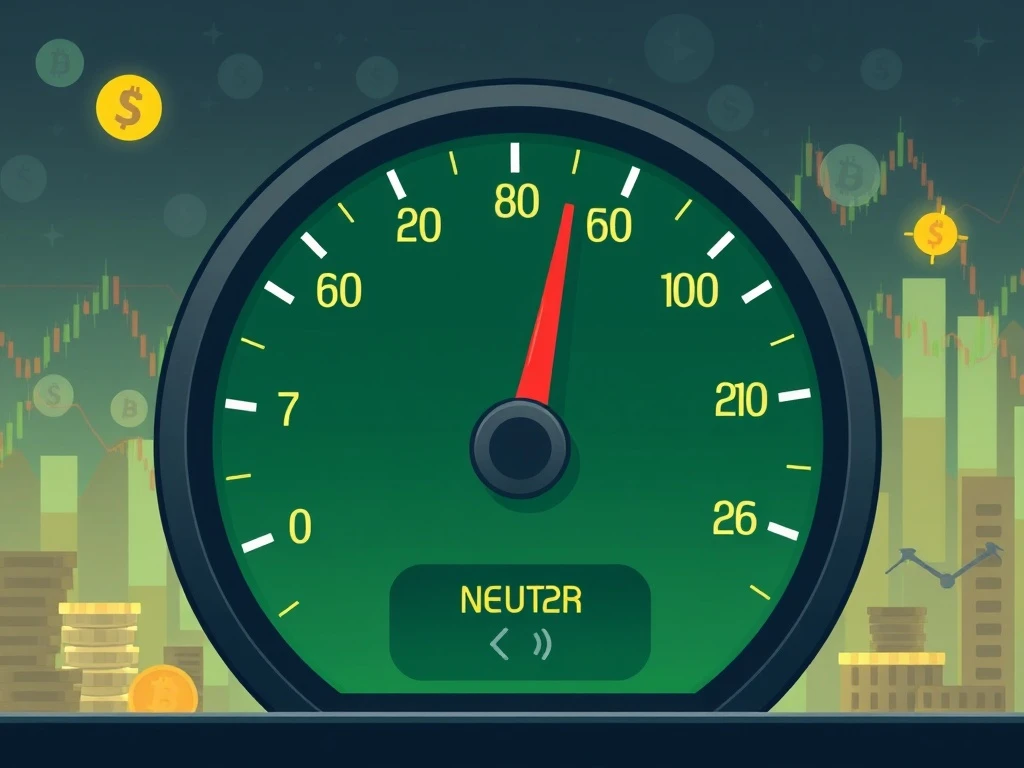
The cryptocurrency market constantly evolves, and understanding its underlying psychology is crucial. The Crypto Fear & Greed Index serves as a vital barometer for this very purpose. Currently, this influential indicator sits at 52, maintaining a neutral stance. This score suggests a balanced outlook among investors, a significant shift from periods of extreme fear or rampant greed. For anyone involved in digital assets, grasping what this neutrality signifies is paramount. It offers a snapshot of the collective emotional state driving market movements.
Understanding the Crypto Fear & Greed Index at 52
The Crypto Fear & Greed Index, provided by Alternative.me, offers a unique perspective on market psychology. It distills complex market data into a single, easily digestible number. This index ranges from 0, representing extreme fear, to 100, indicating extreme greed. A score of 52, as observed recently, firmly places the market in a neutral position. This means neither overwhelming panic nor excessive exuberance dominates investor behavior. Instead, a wait-and-see approach seems to prevail.
The index’s methodology is quite comprehensive. It synthesizes several key factors, each weighted to reflect its importance in gauging overall sentiment. These factors collectively paint a detailed picture of the market’s mood. Consequently, investors often consult this index to inform their strategies. A neutral reading, therefore, encourages careful observation rather than impulsive decisions. It highlights a period where the market lacks a strong directional bias, prompting participants to consider various possibilities.
Decoding Market Sentiment in Crypto
Market sentiment is the overall attitude of investors toward a particular financial market or asset. In the volatile world of cryptocurrencies, sentiment can shift rapidly. High fear typically signals that prices are too low, potentially presenting buying opportunities. Conversely, extreme greed often suggests prices are overvalued, possibly indicating a looming correction. A neutral score, however, suggests equilibrium. It implies that investors are not acting on strong emotions but rather evaluating fundamentals and technical indicators more cautiously. This balance can be a precursor to significant moves in either direction or a period of consolidation. Therefore, understanding this delicate balance is essential for making informed choices.
The index helps investors avoid emotional trading. For instance, when the index flashes ‘extreme fear,’ many retail investors panic-sell. Conversely, ‘extreme greed’ often leads to FOMO (Fear Of Missing Out) buying. A neutral reading allows for more rational decision-making. It encourages a deeper analysis of individual assets rather than broad market reactions. Thus, interpreting market sentiment accurately becomes a valuable skill for all crypto participants.
Key Factors Influencing the Index: Crypto Volatility and Beyond
The calculation of the Crypto Fear & Greed Index is not arbitrary. It relies on a sophisticated blend of six distinct market indicators. Each indicator contributes a specific percentage to the final score, reflecting its perceived impact on investor sentiment. These factors offer a holistic view of the market’s emotional state. Understanding each component provides deeper insight into how the index arrives at its neutral reading of 52.
The primary components include:
- Volatility (25%): This measures the current volatility and maximum drawdowns of Bitcoin. High volatility often signals a fearful market.
- Trading Volume (25%): This assesses the current trading volume and market momentum. High, consistent volume often accompanies bullish sentiment.
- Social Media Mentions (15%): This analyzes sentiment from various social media platforms, including Twitter. Positive sentiment on social media can drive greed.
- Surveys (15%): This involves weekly polls of thousands of crypto investors. These direct insights capture prevailing attitudes.
- Bitcoin’s Market Capitalization Dominance (10%): This measures Bitcoin’s share of the total crypto market cap. Increasing dominance can indicate a flight to safety, or a strong market leader.
- Google Search Volume (10%): This tracks search queries related to cryptocurrencies. Spikes in fear-related searches can indicate panic.
These elements combine to provide a comprehensive and nuanced picture. A neutral score suggests that these factors are largely balanced, preventing extreme readings. Therefore, analyzing each component individually can offer further clarity on the market’s underlying dynamics.
The Role of Bitcoin Dominance in Sentiment
Bitcoin dominance plays a critical, albeit smaller, role in the Fear & Greed Index calculation. This metric represents Bitcoin’s market capitalization as a percentage of the total cryptocurrency market capitalization. Historically, when Bitcoin dominance rises, it can sometimes signal a ‘flight to safety’ during uncertain times. Investors often move funds from altcoins into Bitcoin, which is perceived as less risky. Conversely, a declining Bitcoin dominance might suggest an ‘altcoin season,’ where investors are more willing to take risks on smaller, potentially higher-growth assets.
At 10% weighting, changes in Bitcoin dominance contribute to the overall sentiment. A stable or moderately fluctuating dominance during a neutral index reading indicates that this factor is not pushing the market toward either extreme fear or greed. Instead, it suggests a balanced distribution of capital across the crypto ecosystem. This stability reinforces the overall neutral outlook currently reflected by the index score of 52.
Analyzing Trading Volume and Social Buzz
Trading volume is a fundamental indicator of market activity and conviction. When the Fear & Greed Index incorporates trading volume (25% weighting), it looks for sustained high volumes accompanying price movements. Strong buying volume often indicates bullish sentiment and confidence, pushing the index towards greed. Conversely, high selling volume can signal panic and fear. A neutral index reading suggests that while trading activity exists, it is not overwhelmingly skewed towards either aggressive buying or panic selling. This balanced volume contributes to the overall equilibrium.
Social media mentions, with a 15% weighting, also provide real-time insights into public sentiment. Platforms like Twitter are hotbeds for crypto discussions. The index analyzes keywords, hashtags, and overall sentiment expressed in these conversations. A surge in positive, bullish discussions can push the index higher. Conversely, widespread negative or fearful posts can drive it lower. A neutral index at 52 implies that social media chatter is also balanced, lacking a dominant emotional tone. This blend of moderate trading activity and balanced social sentiment helps maintain the index in its current neutral zone.
What a Neutral Stance (52) Means for Investors
A Crypto Fear & Greed Index score of 52 indicates a neutral market. This specific reading carries several implications for investors. It signifies a period where extreme emotional reactions are largely absent. Neither euphoria nor panic dictates market movements. Instead, investors are likely exercising caution and conducting more thorough due diligence. This neutral zone can be a fascinating period, as it often precedes significant market shifts or extended consolidation phases. Investors should view this as an opportunity for strategic planning rather than reactive trading.
Historically, neutral periods have sometimes served as accumulation zones for savvy investors. They use this time to research projects, understand market fundamentals, and position themselves for future trends. Furthermore, a neutral index allows for a clearer assessment of individual asset performance, free from the noise of widespread fear or greed. Therefore, this 52 score suggests a moment for deliberate action, rather than impulsive reactions. It encourages a rational approach to investment decisions, prioritizing analysis over emotion.
Strategies for Navigating Current Market Sentiment
Given the current neutral market sentiment, investors might consider several prudent strategies. First, a dollar-cost averaging (DCA) approach can be highly effective. This involves investing a fixed amount of money at regular intervals, regardless of the asset’s price. DCA helps mitigate risks associated with market timing, especially during uncertain or neutral periods. It ensures participation without being overly exposed to short-term fluctuations. This disciplined strategy can be particularly beneficial when the market lacks clear direction.
Second, focusing on fundamental analysis becomes even more critical. Researching projects with strong use cases, robust development teams, and clear roadmaps can yield long-term benefits. During neutral times, undervalued assets might emerge as attractive opportunities. Third, maintaining a diversified portfolio remains essential. Spreading investments across different cryptocurrencies and asset classes can reduce overall risk. Finally, staying informed about macroeconomic factors and regulatory developments is always important. These external elements can quickly shift market sentiment, even from a neutral position. By adopting these strategies, investors can navigate the current neutral market effectively and prepare for future shifts.
Conclusion: The Enduring Value of the Crypto Fear & Greed Index
The Crypto Fear & Greed Index remains an invaluable tool for understanding the psychological undercurrents of the cryptocurrency market. Its current reading of 52, signifying neutrality, offers a period of calm reflection for investors. This state is derived from a careful aggregation of factors including crypto volatility, trading volume, social media trends, surveys, Bitcoin dominance, and Google searches. While it does not predict future prices, it provides crucial insights into prevailing investor emotions. Therefore, monitoring this index helps individuals make more rational decisions, avoiding the pitfalls of extreme emotional responses. As the market continues its evolution, the index will undoubtedly remain a key reference point for anyone seeking to navigate the complex world of digital assets with greater awareness and strategic foresight.
In conclusion, the index’s neutral stance underscores a market that is currently assessing its options. This presents an opportunity for informed analysis and calculated moves. Investors who understand and utilize this metric effectively can better position themselves for whatever market shifts may lie ahead.
Frequently Asked Questions (FAQs)
What does a Crypto Fear & Greed Index score of 52 mean?
A score of 52 indicates a neutral market sentiment. This means investors are neither overly fearful nor excessively greedy. They are taking a balanced, cautious approach, evaluating market conditions without strong emotional biases.
How is the Crypto Fear & Greed Index calculated?
The index is calculated using six weighted factors: volatility (25%), trading volume (25%), social media mentions (15%), surveys (15%), Bitcoin’s market capitalization dominance (10%), and Google search volume (10%).
Why is Bitcoin dominance included in the index?
Bitcoin dominance reflects Bitcoin’s share of the total crypto market. Changes in this metric can signal shifts in investor confidence, such as a ‘flight to safety’ towards Bitcoin during uncertain times, or increased risk appetite for altcoins.
How can investors use the Crypto Fear & Greed Index?
Investors use the index to gauge overall market psychology. It helps them avoid emotional trading decisions. For example, extreme fear might signal a buying opportunity, while extreme greed could suggest an impending correction. A neutral score prompts careful analysis.
Does the index predict future price movements?
No, the Crypto Fear & Greed Index does not predict future price movements. Instead, it provides a snapshot of current market sentiment. It indicates whether the market is driven by fear, greed, or a neutral outlook, which can help investors understand the psychological backdrop of price action.
What strategies are suitable during a neutral market sentiment?
During neutral sentiment, strategies like dollar-cost averaging (DCA), focusing on fundamental analysis, diversifying portfolios, and staying informed about macro factors are often recommended. These approaches help mitigate risk and prepare for potential future market shifts.
Related News
- Bitmine’s Bold $110 Million Ethereum Purchase Signals Unwavering Institutional Confidence
- Bitcoin Institutional Strategy Unveiled: Bold Move Acquires 22,305 BTC as Blackrock Scrutinizes Corporate Credit
- STKESOL Launch: SOL Strategies’ Revolutionary Liquid Staking Token Transforms Solana DeFi Landscape