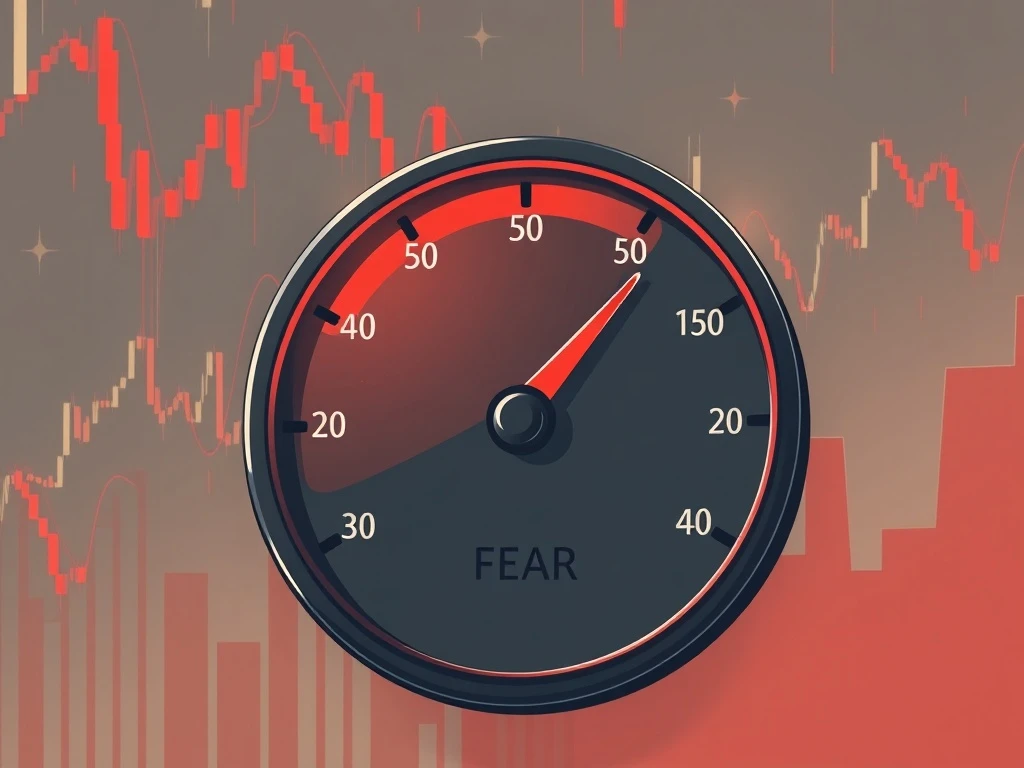
Global cryptocurrency markets entered another week of profound uncertainty as the widely-watched Crypto Fear & Greed Index registered just 14 points, maintaining its ‘Extreme Fear’ classification despite a seven-point improvement from previous readings. This crucial sentiment indicator, published by data provider Alternative, continues to signal deep market distress as it approaches its theoretical zero-point minimum. Market analysts now scrutinize whether this persistent fear represents a buying opportunity or signals further declines ahead.
Crypto Fear & Greed Index Methodology and Current Reading
The Crypto Fear & Greed Index provides a quantitative measure of market sentiment through six weighted components. Each component contributes differently to the final score. First, market volatility accounts for 25% of the calculation, measuring price fluctuations relative to historical averages. Second, market momentum and trading volume contribute another 25%, indicating whether transactions support current price movements. Social media sentiment analysis comprises 15%, while surveys of market participants add another 15%. Bitcoin’s dominance within the total cryptocurrency market cap contributes 10%, and finally, Google search trends for cryptocurrency terms complete the remaining 10%.
Currently, the index sits at 14, representing a slight recovery from yesterday’s 7-point reading but remaining firmly in ‘Extreme Fear’ territory. Historically, readings below 20 have correlated with market bottoms, though duration varies significantly. For context, the index reached its all-time low of 5 during the March 2020 COVID-19 market crash, while it peaked at 95 during Bitcoin’s November 2021 all-time high. This historical perspective helps investors understand current conditions within a broader market cycle framework.
The Six Components Driving Extreme Fear
Market analysts identify specific factors contributing to the current extreme reading. Volatility metrics show elevated fluctuations across major cryptocurrencies, particularly Bitcoin and Ethereum. Trading volume data reveals reduced activity compared to bullish periods, suggesting investor hesitation. Social media analysis detects predominantly negative sentiment across platforms like Twitter and Reddit. Survey responses indicate widespread caution among both retail and institutional participants. Bitcoin’s market dominance has increased slightly as investors seek relative safety. Finally, Google search volume for ‘cryptocurrency crash’ and related terms has spiked significantly in recent weeks.
Historical Context of Extreme Fear Periods
Previous ‘Extreme Fear’ periods provide valuable context for understanding current market conditions. The index first entered this territory during the 2018 bear market, remaining below 20 for approximately eleven months. Subsequently, the March 2020 crash produced the index’s lowest-ever reading of 5, though recovery began within weeks. More recently, the 2022 bear market saw multiple extended periods below 20, with the longest continuous stretch lasting nearly four months. Each historical instance featured unique catalysts but shared common characteristics including regulatory uncertainty, macroeconomic pressures, and declining retail participation.
Market recovery patterns following extreme fear periods show considerable variation. Sometimes, rapid V-shaped recoveries occur, as witnessed in early 2020. Alternatively, prolonged basing patterns can develop, similar to 2018-2019. Current conditions most closely resemble the latter scenario according to several technical analysts. However, important differences exist, particularly regarding institutional adoption levels and regulatory frameworks that have evolved significantly since previous cycles.
Market Impact and Sector Analysis
The persistent extreme fear reading affects different cryptocurrency sectors unevenly. Bitcoin, as the market leader, typically shows relative stability during such periods, though still experiences significant volatility. Major altcoins like Ethereum often demonstrate higher beta, meaning they amplify both upward and downward movements. Smaller capitalization cryptocurrencies frequently suffer disproportionate losses as risk appetite diminishes. Meanwhile, decentralized finance (DeFi) protocols face additional challenges including reduced total value locked and increased scrutiny of their economic models.
Several market segments show particular vulnerability under current conditions. Meme cryptocurrencies experience especially severe sentiment-driven declines. Newer layer-1 blockchain platforms struggle to maintain developer activity and user adoption. Non-fungible token (NFT) markets face collapsing volumes and valuations. Conversely, some sectors demonstrate relative resilience. Stablecoins continue seeing steady usage for transactions and as temporary safe havens. Established blockchain infrastructure projects maintain development roadmaps despite market conditions. Privacy-focused cryptocurrencies sometimes benefit from increased interest during uncertain periods.
Institutional Response to Market Sentiment
Institutional investors typically respond differently to extreme fear conditions compared to retail participants. Many institutional strategies incorporate sentiment indicators like the Fear & Greed Index into their decision frameworks. Some quantitative funds use extreme readings as contrarian signals, gradually accumulating positions when others panic. Other institutions implement strict risk management protocols that mandate position reduction during high-volatility periods. Publicly-traded cryptocurrency companies often face additional pressure as their stock prices correlate strongly with broader digital asset sentiment.
Technical Analysis and Price Action Correlation
Technical analysts observe consistent patterns between the Fear & Greed Index and price action across multiple timeframes. On daily charts, extreme fear readings frequently coincide with oversold conditions on momentum indicators like the Relative Strength Index (RSI). Weekly charts sometimes show divergences where prices make new lows while sentiment indicators fail to reach corresponding extremes, potentially signaling exhaustion. Monthly analysis reveals that prolonged periods below 20 often precede significant trend changes, though timing remains unpredictable.
Current technical patterns warrant careful examination. Bitcoin’s price sits approximately 60% below its all-time high, a drawdown comparable to previous bear markets. The 200-week moving average, historically a strong support level, continues to provide a potential floor. Trading volume profiles show characteristic bear market structure with occasional spikes during sharp declines. Derivatives markets indicate reduced leverage across both futures and options platforms, suggesting deleveraging has progressed substantially.
Macroeconomic Factors Influencing Sentiment
Broader economic conditions significantly impact cryptocurrency sentiment beyond internal market dynamics. Central bank policies, particularly interest rate decisions by the Federal Reserve and other major institutions, directly affect risk asset valuations. Inflation metrics influence investor preferences between perceived inflation hedges like Bitcoin and traditional assets. Geopolitical tensions can drive both safe-haven flows and risk-off sentiment simultaneously. Traditional equity market performance often correlates with cryptocurrency movements, especially during periods of systemic stress.
Several specific macroeconomic developments contribute to current extreme fear conditions. Persistently high inflation in major economies continues prompting aggressive monetary policy responses. Recession concerns across multiple regions dampen risk appetite broadly. Currency volatility, particularly in emerging markets, creates complex cross-currents for global digital asset markets. Regulatory developments, including proposed legislation in the United States and European Union, introduce additional uncertainty about future operating environments.
Psychological Aspects of Market Sentiment
Behavioral finance principles help explain why sentiment indicators like the Fear & Greed Index matter beyond mere statistics. Cognitive biases including loss aversion and recency bias amplify emotional responses during market extremes. Herding behavior causes investors to follow crowd psychology rather than independent analysis. Confirmation bias leads market participants to seek information supporting their existing fears during downturns. Understanding these psychological factors enables more disciplined decision-making when sentiment reaches extremes.
Comparative Analysis with Traditional Fear Indicators
The cryptocurrency Fear & Greed Index parallels similar indicators in traditional finance. The VIX index, measuring stock market volatility expectations, serves as an equity market fear gauge. Bond market sentiment indicators track Treasury yield movements and credit spreads. Commodity markets have their own sentiment measures based on positioning data. Comparing these indicators reveals that cryptocurrency markets typically demonstrate higher sensitivity to fear signals but also faster mean reversion. This characteristic creates both additional risk and potential opportunity for informed participants.
Current readings across asset classes show interesting divergences. Traditional fear indicators have moderated from 2022 peaks despite ongoing economic concerns. Cryptocurrency sentiment remains disproportionately negative by comparison. This divergence might reflect sector-specific issues including exchange vulnerabilities, regulatory uncertainty, or simply the asset class’s higher inherent volatility. Alternatively, it could signal that cryptocurrency markets lead traditional markets in pricing certain risks, a pattern observed during previous cycles.
Practical Implications for Investors and Traders
Extreme fear conditions present distinct challenges and opportunities for different market participants. Long-term investors might view such periods as accumulation opportunities, though timing remains difficult. Dollar-cost averaging strategies can mitigate timing risk during volatile periods. Active traders might implement range-bound strategies or wait for clearer trend signals. Risk management becomes particularly crucial when sentiment indicators reach extremes, as volatility often increases before direction becomes clear.
Several specific approaches merit consideration under current conditions. Portfolio rebalancing toward higher-quality assets with proven fundamentals often makes sense during fear-driven selloffs. Position sizing should account for potentially increased volatility. Diversification across uncorrelated assets provides protection during systemic stress. Education and research become particularly valuable when market noise reaches peak levels. Finally, maintaining perspective about market cycles helps prevent emotional decision-making during extreme conditions.
Conclusion
The Crypto Fear & Greed Index reading of 14 confirms that extreme fear continues dominating cryptocurrency market sentiment despite a modest seven-point improvement from previous levels. This quantitative measure, incorporating volatility, volume, social sentiment, surveys, Bitcoin dominance, and search trends, provides valuable insight into market psychology. Historical analysis reveals that such extreme readings have preceded both short-term rebounds and prolonged basing patterns. Current conditions reflect a complex interplay of technical, fundamental, and macroeconomic factors affecting digital asset valuations. While extreme fear presents significant challenges, it also creates potential opportunities for disciplined investors who maintain perspective about market cycles and risk management principles. The Crypto Fear & Greed Index will continue serving as a crucial barometer as markets navigate ongoing uncertainty.
FAQs
Q1: What does a Crypto Fear & Greed Index reading of 14 mean?
The reading of 14 indicates ‘Extreme Fear’ in cryptocurrency markets. This quantitative score, on a scale from 0 (maximum fear) to 100 (maximum greed), suggests widespread pessimism among investors. The index incorporates multiple data sources including volatility, trading volume, social media sentiment, surveys, Bitcoin dominance, and search trends.
Q2: How often does the Crypto Fear & Greed Index update?
Alternative updates the index daily, typically reflecting data from the previous 24-hour period. The provider also offers historical data dating back to February 2018, allowing for long-term analysis of sentiment patterns across multiple market cycles.
Q3: Has the index ever been lower than 14?
Yes, the index reached its all-time low of 5 during the March 2020 COVID-19 market crash. Other notable lows include readings below 10 during portions of the 2018 bear market and the 2022 downturn following multiple cryptocurrency company failures.
Q4: Does extreme fear always indicate a buying opportunity?
Not necessarily. While extreme fear readings have frequently coincided with market bottoms historically, timing remains uncertain. Some periods of extreme fear have prolonged for months before recovery began. Investors should consider multiple factors beyond sentiment alone when making decisions.
Q5: How reliable is the Crypto Fear & Greed Index as a market indicator?
The index provides valuable sentiment data but shouldn’t serve as a standalone timing tool. It works best when combined with fundamental analysis, technical indicators, and macroeconomic assessment. Like all indicators, it has limitations and occasionally produces false signals during unusual market conditions.
Related News
- Crypto Scam Developer Faces Indictment in South Korea After Defrauding Victims of $615,000
- WLFI Token Attracts Massive $10M Investment as Cryptocurrency Whale Reveals Stunning Accumulation Strategy
- XRP Native Lending Strategy Transforms DeFi as Evernorth’s Pivotal Protocol Adoption Accelerates