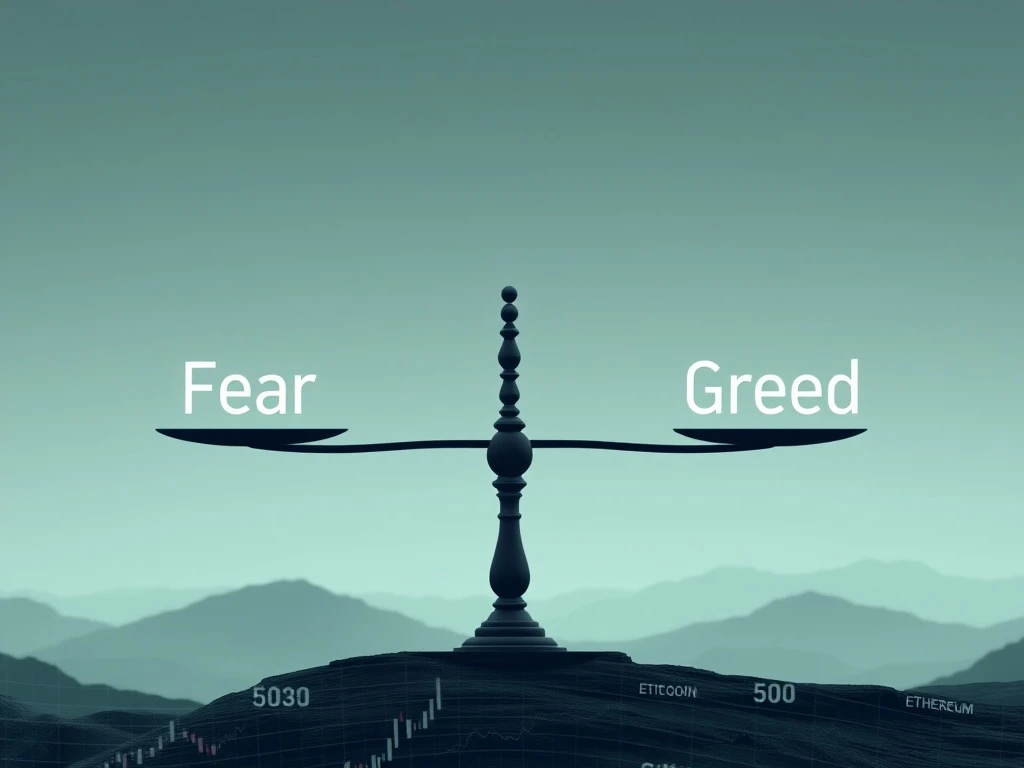
The cryptocurrency market often feels like a rollercoaster, driven by rapid shifts in emotion. Understanding these underlying currents is crucial for participants. Currently, the **Crypto Fear & Greed Index** provides a snapshot of this collective mood. It holds steady at 50, indicating a neutral stance among investors. This specific reading offers valuable insights into the present state of **market sentiment**.
Understanding the Crypto Fear & Greed Index: A Key Indicator
The **Crypto Fear & Greed Index** serves as a vital barometer for the cryptocurrency market. It aggregates various data points to quantify the prevailing emotional state of investors. Essentially, it translates complex market dynamics into a single, understandable number. A higher number signals greed, suggesting potential overvaluation. Conversely, a lower number indicates fear, often pointing to potential buying opportunities.
The index operates on a simple scale. Zero (0) represents extreme fear, while one hundred (100) signifies extreme greed. A score of 50, therefore, sits precisely in the middle. This midpoint suggests neither overwhelming optimism nor pervasive pessimism. Instead, it reflects a period of indecision or equilibrium in the market.
The Core Components of Market Sentiment Measurement
Alternative.me, the creator of the index, meticulously calculates this score using several key factors. Each component contributes a specific weight to the final reading. Understanding these elements helps to appreciate the index’s comprehensive nature. These factors include:
- Volatility (25%): This measures the current price fluctuations of Bitcoin and compares them to average values. High volatility often signals a fearful market.
- Market Volume (25%): Strong buying volumes in a rising market indicate greed. High selling volumes in a falling market suggest fear.
- Social Media (15%): Analysis of specific hashtags and mentions on platforms like Twitter gauges public enthusiasm or concern.
- Surveys (15%): Although currently paused, these surveys historically collected direct **investor sentiment**.
- Bitcoin Dominance (10%): An increasing **Bitcoin dominance** often indicates fear, as investors move away from altcoins into the perceived safety of Bitcoin.
- Google Trends (10%): Search queries related to Bitcoin and cryptocurrency can reveal public interest and potential market entry or exit points.
Collectively, these components paint a holistic picture of the market’s emotional landscape. Therefore, the index offers a unique perspective beyond mere price action.
Navigating Neutrality: What Does 50 Mean for Investors?
A neutral reading of 50 on the **Crypto Fear & Greed Index** is particularly noteworthy. It suggests a balanced market, where neither buyers nor sellers hold a distinct advantage. This state can imply several things for investors. Firstly, it indicates a period of consolidation. Prices may move sideways, lacking strong directional momentum. Secondly, it often reflects uncertainty. Investors might be waiting for clearer signals before committing significant capital.
Historically, extreme readings have often preceded market reversals. Extreme fear (scores below 20) frequently presents a buying opportunity. Conversely, extreme greed (scores above 80) can signal an impending correction. A neutral 50, however, does not offer such clear directional cues. It encourages caution and thorough analysis. Investors should consider other technical and fundamental factors in conjunction with this reading. Ultimately, neutrality means the market is taking a breath.
The Role of Crypto Volatility and Trading Volume in Sentiment
Two major components, **crypto volatility** and trading volume, significantly influence the index. High volatility, especially rapid price drops, typically increases the fear component. This is because sudden, large price swings can unnerve investors. Conversely, steady, upward price movements with low volatility might suggest growing confidence, but extreme stability could also lead to complacency.
Trading volume, on the other hand, measures the activity level in the market. When volume is high during a price increase, it confirms strong buying interest, signaling greed. If volume surges during a price decline, it indicates significant selling pressure, highlighting fear. Therefore, observing these two factors in isolation and together provides deeper insights into the current **investor sentiment**. A neutral index reading often implies moderate levels of both, without extreme surges in either direction.
Broader Market Context: Bitcoin Dominance and Social Signals
Beyond price and volume, the index incorporates broader market indicators. **Bitcoin dominance** plays a crucial role. This metric represents Bitcoin’s market capitalization as a percentage of the total cryptocurrency market cap. When Bitcoin dominance rises, it often suggests that investors are shifting funds from altcoins back into Bitcoin. This movement typically occurs during periods of uncertainty or fear, as Bitcoin is perceived as a safer, more established asset. Consequently, a higher Bitcoin dominance can push the index towards fear.
Social media mentions and Google search volume also provide valuable qualitative data. Increased search interest for terms like ‘Bitcoin price prediction’ or ‘buy crypto’ can signal growing public curiosity and potential new money entering the market, contributing to greed. Conversely, a surge in negative sentiment on social media platforms can quickly shift the index towards fear. These social signals offer a glimpse into the collective consciousness of the crypto community, reflecting real-time shifts in **market sentiment**.
Historical Trends and Future Outlook for Investor Sentiment
The **Crypto Fear & Greed Index** has a track record of reflecting significant market events. During the peak of bull markets, the index frequently soared into the ‘extreme greed’ zone. Conversely, bear market bottoms often coincided with ‘extreme fear’ readings. The current neutral stance at 50, however, is less dramatic. It suggests a period of consolidation or equilibrium. This can be a precursor to a decisive move in either direction, but the index itself provides no immediate prediction.
For investors, maintaining awareness of this index is beneficial. It serves as a reminder to avoid making emotional decisions. When the market is neutral, it encourages a balanced approach. It highlights the importance of considering fundamental analysis and technical indicators alongside **investor sentiment**. Future shifts from this neutral zone will signal evolving market dynamics, providing early warnings of potential changes in trend. Ultimately, the index acts as a useful tool for managing expectations and refining investment strategies.
The **Crypto Fear & Greed Index** remains a powerful tool for gauging the emotional pulse of the cryptocurrency market. Its current neutral position at 50 reflects a balanced **market sentiment**, influenced by various factors from **crypto volatility** to **Bitcoin dominance**. For investors, this neutrality underscores the importance of a well-rounded approach, combining sentiment analysis with diligent research. Monitoring this index can help navigate the complex and often unpredictable world of digital assets, promoting more informed decision-making.
Frequently Asked Questions (FAQs)
What is the Crypto Fear & Greed Index?
The Crypto Fear & Greed Index is a tool that measures the current emotional state of the cryptocurrency market. It combines several data points to produce a single score from 0 (extreme fear) to 100 (extreme greed), reflecting overall **market sentiment**.
How is the index calculated?
The index is calculated using six weighted factors: volatility (25%), trading volume (25%), social media mentions (15%), surveys (15%), **Bitcoin dominance** (10%), and Google search volume (10%). These components collectively determine the final score.
What does a neutral score of 50 signify?
A neutral score of 50 indicates a balanced market. It suggests that neither extreme fear nor extreme greed is dominating **investor sentiment**. This often points to a period of indecision, consolidation, or equilibrium.
How can investors use this index?
Investors can use the index as a complementary tool. Extreme fear readings might suggest potential buying opportunities (when others are fearful). Extreme greed readings could signal a time for caution or profit-taking (when others are greedy). A neutral score encourages a balanced and analytical approach.
Does the index only track Bitcoin sentiment?
While Bitcoin’s data heavily influences the index due to its market dominance and liquidity, the index aims to reflect broader cryptocurrency **market sentiment**. Factors like social media mentions and overall market volume indirectly include sentiment for other cryptocurrencies as well.
What are the limitations of the Fear & Greed Index?
The index is a sentiment indicator, not a definitive buy or sell signal. It does not account for fundamental project developments, macroeconomic factors, or individual risk tolerance. It should always be used in conjunction with other forms of analysis for comprehensive decision-making.
Related News
- US Stocks Surge Higher: Major Indices Open with Optimistic Gains as Market Momentum Builds
- Avalanche Policy Coalition Launches Crucial Advisory Council to Forge Global Crypto Regulation Path
- Bitcoin ETFs Shatter Expectations With $562 Million February Inflow Surge