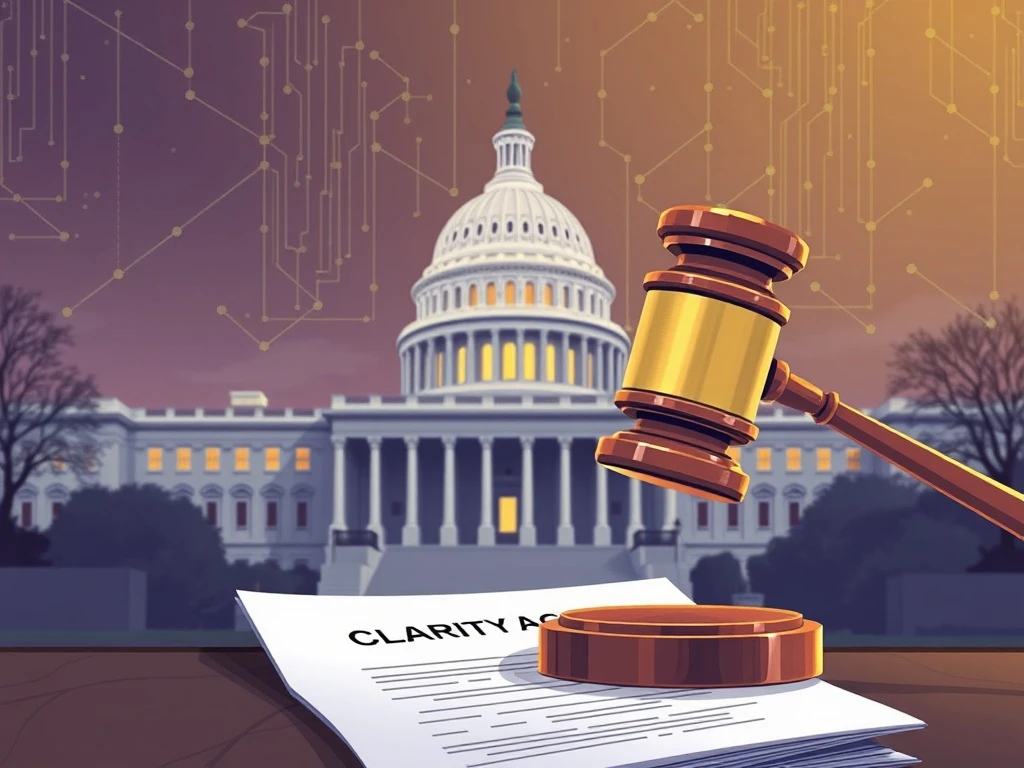
The digital asset world closely watches legislative developments. Recently, a significant event captured industry attention. The planned **Senate vote crypto** on a crucial **Crypto Market Structure Bill** faced an unexpected delay. This news, initially slated for September 30, now impacts the entire cryptocurrency ecosystem.
Understanding the Critical CLARITY Act
At the heart of this legislative effort lies the **CLARITY Act**. This proposed bill aims to establish a much-needed regulatory framework for the burgeoning crypto industry. Lawmakers seek to bring order to a space often characterized by uncertainty. Consequently, the act promises a clearer path forward for digital assets.
Specifically, the **CLARITY Act** proposes a division of oversight. It assigns responsibilities between two key regulatory bodies. These are the Securities and Exchange Commission (SEC) and the Commodity Futures Trading Commission (CFTC). This division is a cornerstone of the bill. It addresses a long-standing debate over which agency holds primary jurisdiction for various digital assets. Furthermore, the legislation would exempt certain digital assets from the stringent registration requirements of the Securities Act of 1933. This move could significantly ease the burden on many crypto projects. It also signals a more nuanced approach to innovation within the sector.
Why the Senate Vote Crypto Faced Delays
The original September 30 deadline for the **Senate vote crypto** on this vital legislation has passed. Several factors contributed to this postponement. Eleanor Terrett, host of Crypto in America, reported these details. She cited congressional sources in her analysis. Firstly, the Democratic Party has not yet provided its feedback on the legislation. This step is crucial for bipartisan consensus. An agreement on procedural matters must precede detailed negotiations. Without this foundational understanding, substantive discussions cannot effectively begin.
Secondly, the looming threat of a federal government shutdown also played a significant role. This possibility created an environment of legislative paralysis. Such shutdowns often disrupt congressional schedules. They make holding important votes nearly impossible. These combined factors effectively pushed the **Senate vote crypto** off its original calendar. However, the delay does not diminish the bill’s importance. Stakeholders remain hopeful for its eventual consideration.
Navigating US Crypto Regulation: SEC and CFTC Jurisdictions
The landscape of US **crypto regulation** remains complex. Currently, both the **SEC and CFTC** exert influence over digital assets. However, their specific roles often overlap or lack clear definitions. The SEC generally views many cryptocurrencies as securities. This classification subjects them to strict registration and disclosure requirements. Conversely, the CFTC primarily oversees commodities markets. It has asserted jurisdiction over certain digital assets, particularly Bitcoin and Ethereum, as commodities.
This dual oversight creates significant ambiguity for crypto businesses. They often face uncertainty about which rules apply to their operations. The **CLARITY Act** aims to resolve this issue. It seeks to draw clear lines of authority. This proposed framework would define which digital assets fall under SEC purview and which are overseen by the CFTC. Such clarity is essential. It could foster greater institutional adoption and innovation within the US market. The **Crypto Market Structure Bill** directly addresses these critical jurisdictional questions. Its passage would represent a monumental step for the industry.
Implications of the Crypto Market Structure Bill’s Setback
The delay of the **Crypto Market Structure Bill** carries notable implications. For the cryptocurrency industry, it means continued regulatory uncertainty. Businesses operating in the US still face a fragmented legal environment. This situation can deter investment and slow innovation. Many projects prefer clear rules to foster growth. Without them, caution often prevails. Consequently, some firms might explore more favorable jurisdictions abroad.
However, this delay is not necessarily a fatal blow. It simply shifts the timeline. The additional time could allow for more comprehensive feedback. Lawmakers can refine the legislation further. This could lead to a stronger, more effective bill in the long run. The industry will closely monitor these developments. They understand the profound impact a well-structured regulatory framework could have. Ultimately, the delay highlights the complex nature of legislating for novel technologies.
The Path Forward for Crypto Regulation in Congress
Despite the recent delay, the legislative process continues. A new target for the **Senate vote crypto** could be the week of October 20. However, this date remains unconfirmed. Stakeholders must understand that legislative timelines often shift. Nevertheless, the delay is not expected to significantly affect the bill’s chances of reaching the Senate floor by year-end. This optimism stems from ongoing parallel efforts. For example, the Senate Agriculture Committee also plans a vote in October. Their legislation focuses on the Commodity Futures Trading Commission (CFTC).
This broader legislative activity underscores a growing consensus. Lawmakers recognize the urgent need for comprehensive **crypto regulation**. They aim to create a stable and predictable environment for digital assets. The ultimate goal is to protect consumers while fostering innovation. Bipartisan cooperation remains key to achieving these objectives. The future of the **Crypto Market Structure Bill** depends on continued dialogue and negotiation among senators. The industry waits patiently for these crucial next steps.
Conclusion
The postponement of the **Senate vote crypto** on the **CLARITY Act** is a temporary setback. It highlights the complexities of establishing comprehensive **crypto regulation** in the US. However, the underlying need for a clear **Crypto Market Structure Bill** remains strong. This legislation is vital for defining the roles of the **SEC and CFTC**. Its eventual passage will shape the future of digital assets in America. The industry continues to advocate for clarity and sensible frameworks. All eyes are on Capitol Hill as the legislative journey unfolds.
Frequently Asked Questions (FAQs)
What is the CLARITY Act?
The CLARITY Act is a proposed US Senate bill. It aims to create a regulatory framework for the crypto industry. It divides oversight responsibilities between the SEC and CFTC. It also exempts certain digital assets from 1933 Securities Act registration requirements.
Why was the Senate vote on the Crypto Market Structure Bill delayed?
The vote was delayed for several reasons. The Democratic Party had not provided feedback on the legislation. An agreement on procedure was also necessary. Additionally, the looming possibility of a federal government shutdown contributed to the postponement.
How does the CLARITY Act affect the SEC and CFTC?
The CLARITY Act seeks to clarify the jurisdictional boundaries between the SEC and CFTC. It defines which digital assets each agency will oversee. This aims to reduce regulatory ambiguity for crypto businesses.
What are the next steps for the Crypto Market Structure Bill?
A new target date for the Senate vote could be the week of October 20. This date is not yet confirmed. However, the delay is not expected to prevent the bill from reaching the Senate floor by the end of the year. Other related legislative efforts are also underway.
What is the overall importance of clear crypto regulation?
Clear crypto regulation provides certainty for businesses and investors. It protects consumers and fosters innovation. A defined framework helps the industry grow responsibly within established legal boundaries.
Related News
- TenX Protocols Secures Landmark $3.25M Tezos Partnership, Acquiring 5.54M XTZ for Strategic Staking
- Bitmine Ethereum Treasury Soars: Strategic 35,000 ETH Acquisition Cements Dominant Position
- Russian Crypto Mining Crackdown: Lawmakers Propose Stiff Fines for Illegal Operations