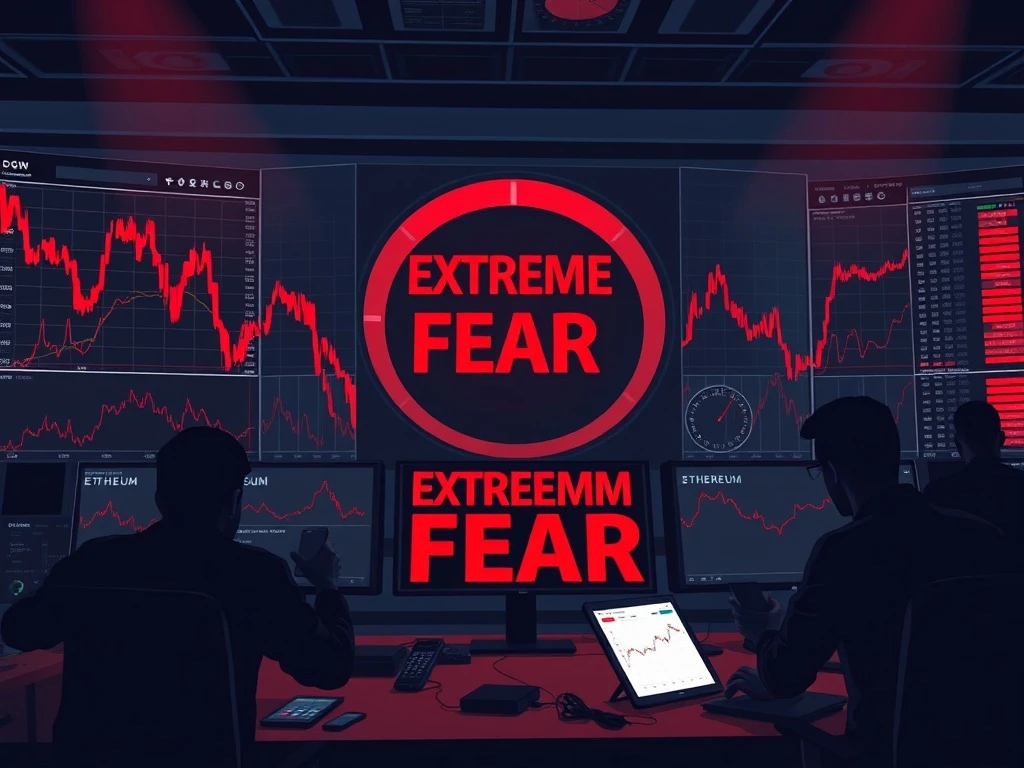
Global cryptocurrency markets have plunged into a state of extreme psychological distress this week, with multiple sentiment indicators flashing red warnings as the widely-followed Crypto Fear and Greed Index registered its lowest reading since the 2022 market collapse. Market analysts report that investor confidence has evaporated across major trading platforms, creating a perfect storm of negative sentiment that threatens to prolong the current downturn. This dramatic shift in market psychology represents a critical turning point for digital asset investors worldwide.
Crypto Sentiment Indicators Signal Market Panic
The Crypto Fear and Greed Index, developed by Alternative.me as a composite measurement of market psychology, has dropped to a reading of 12 out of 100, firmly placing it in the “extreme fear” category. This proprietary index analyzes five different market factors to gauge investor sentiment. These factors include market volatility, trading volume, social media sentiment, market momentum, and Bitcoin dominance. Historically, readings below 20 have signaled potential market bottoms, though they also indicate significant investor distress.
Concurrently, other sentiment indicators confirm the pervasive negative outlook. The Bitcoin Fear and Greed Index, which specifically tracks Bitcoin sentiment, shows similar extreme fear readings. Additionally, put-call ratios for cryptocurrency options have reached their most bearish levels in over two years. Market data reveals that open interest in bearish options positions has increased by 47% month-over-month. This surge in protective positioning demonstrates institutional investors’ growing concerns about further downside risk.
Historical Context of Extreme Fear Periods
Previous extreme fear periods in cryptocurrency markets have typically preceded significant price movements. For instance, during the March 2020 COVID-19 market crash, the index reached a reading of 8. Subsequently, Bitcoin prices rallied approximately 300% over the following six months. Similarly, the June 2022 extreme fear reading of 6 preceded a 40% market recovery within three months. However, market analysts caution that extreme fear can persist for extended periods during structural bear markets.
| Date | Fear & Greed Reading | Duration | Subsequent 90-Day Performance |
|---|---|---|---|
| March 2020 | 8 | 14 days | +42% |
| June 2022 | 6 | 21 days | +18% |
| January 2023 | 11 | 18 days | +52% |
| Current Period | 12 | Ongoing | TBD |
Market Psychology and Behavioral Finance Factors
Behavioral finance experts identify several psychological factors driving the current extreme fear sentiment. First, recency bias causes investors to overweight recent negative price action. Second, loss aversion makes investors particularly sensitive to declining portfolio values. Third, herding behavior amplifies selling pressure as investors follow market trends. These cognitive biases create self-reinforcing cycles of negative sentiment that can persist beyond fundamental justifications.
Market structure also contributes to sentiment deterioration. The increasing correlation between cryptocurrency and traditional equity markets has exposed digital assets to broader financial system stresses. Additionally, regulatory uncertainty in major jurisdictions continues to weigh on institutional adoption prospects. Technical analysts note that Bitcoin’s failure to hold key support levels has triggered algorithmic selling from quantitative trading systems. These automated systems now account for approximately 35% of daily cryptocurrency trading volume.
Expert Analysis of Current Market Conditions
Dr. Eleanor Vance, behavioral economist at Stanford University’s Digital Asset Research Center, explains the psychological dynamics. “When sentiment indicators reach extreme fear levels, we typically see capitulation selling from retail investors,” she states. “This emotional selling often creates attractive entry points for patient, long-term investors. However, distinguishing between temporary panic and fundamental deterioration requires careful analysis of on-chain metrics and macroeconomic conditions.”
Market technicians highlight several concerning technical developments. Bitcoin has broken below its 200-week moving average for the first time since 2020. The total cryptocurrency market capitalization has declined by 28% from its recent highs. Trading volume patterns show increasing selling pressure during market rallies, indicating weak buying interest. These technical factors suggest that sentiment recovery may require significant time or fundamental catalysts.
Fundamental Factors Driving Negative Sentiment
Several fundamental developments have contributed to the deteriorating market psychology. Regulatory pressures have increased across multiple jurisdictions, with enforcement actions against major exchanges creating uncertainty. Macroeconomic conditions remain challenging, with persistent inflation limiting central banks’ ability to provide liquidity support. Additionally, network activity metrics show declining usage across several major blockchain platforms, raising questions about adoption rates.
On-chain data reveals specific concerning trends. Exchange inflows have increased by 22% over the past month, indicating growing selling pressure. The percentage of Bitcoin supply in profit has fallen to 54%, its lowest level since November 2022. Miner revenue has declined significantly, potentially forcing mining operations to sell accumulated coins. These fundamental factors provide context for the extreme fear readings beyond mere price action.
- Regulatory uncertainty in U.S. and European markets
- Macroeconomic headwinds including inflation and rising rates
- Declining network activity across major platforms
- Increased exchange inflows signaling selling pressure
- Miner capitulation risk from reduced revenue
Institutional Perspective and Market Structure
Institutional investors have significantly reduced cryptocurrency exposure according to recent fund flow data. Digital asset investment products experienced outflows of $423 million last week, the largest since June 2022. This institutional retreat reflects both regulatory concerns and portfolio rebalancing amid broader market volatility. However, some contrarian institutions view extreme fear periods as accumulation opportunities, particularly for assets with strong fundamentals.
Market structure analysis reveals changing dynamics in trading behavior. Spot trading volume has declined relative to derivatives activity, increasing market fragility. Liquidity has deteriorated across major trading pairs, exacerbating price volatility. These structural factors can prolong negative sentiment cycles by increasing transaction costs and execution uncertainty for both buyers and sellers.
Potential Catalysts for Sentiment Recovery
Market analysts identify several potential catalysts that could reverse the current extreme fear sentiment. Regulatory clarity, particularly regarding cryptocurrency classification and exchange oversight, would reduce uncertainty. Positive macroeconomic developments, including moderating inflation or dovish central bank signals, could improve risk appetite. Technological breakthroughs or significant adoption announcements might restore confidence in cryptocurrency fundamentals.
Historical analysis suggests that sentiment recovery typically follows specific patterns. First, price stabilization creates conditions for cautious re-entry. Second, improving fundamentals validate the price recovery. Third, positive momentum attracts additional capital. This sequence often requires weeks or months to complete, particularly following extended periods of negative sentiment. Patient investors typically monitor multiple indicators beyond price alone when assessing recovery potential.
Risk Management During Extreme Fear Periods
Professional investors emphasize specific risk management strategies during extreme fear periods. Position sizing becomes particularly important to manage volatility risk. Diversification across uncorrelated assets can reduce portfolio drawdowns. Dollar-cost averaging allows investors to accumulate positions gradually rather than attempting to time market bottoms. These disciplined approaches help investors navigate emotional market environments while maintaining long-term perspectives.
Psychological factors also require management during extreme sentiment periods. Investors should establish clear investment theses before entering positions. Regular portfolio reviews based on fundamentals rather than price action help maintain discipline. Avoiding excessive media consumption reduces emotional reactivity to short-term volatility. These behavioral strategies complement traditional risk management techniques.
Conclusion
Cryptocurrency market sentiment has reached extreme fear levels, reflecting significant investor distress and deteriorating market psychology. Multiple indicators confirm the pervasive negative outlook, with historical precedents suggesting both risks and opportunities. While extreme fear periods often precede market recoveries, fundamental factors including regulatory uncertainty and macroeconomic headwinds may prolong the current sentiment downturn. Investors should approach these conditions with disciplined risk management and careful analysis of both psychological and fundamental factors. The crypto sentiment landscape remains challenging, but historical patterns suggest that extreme fear eventually gives way to more balanced market psychology.
FAQs
Q1: What is the Crypto Fear and Greed Index?
The Crypto Fear and Greed Index is a sentiment indicator that measures market psychology using multiple data sources including volatility, trading volume, social media sentiment, and market momentum. It ranges from 0 (extreme fear) to 100 (extreme greed).
Q2: How reliable are extreme fear readings for predicting market bottoms?
Historical data shows that extreme fear readings often precede market recoveries, but they can persist during extended bear markets. The indicator works best when combined with fundamental and technical analysis rather than as a standalone timing tool.
Q3: What typically causes sentiment to shift from extreme fear to more neutral levels?
Sentiment recovery usually requires price stabilization, improving fundamentals, positive regulatory developments, or macroeconomic improvements. The process often takes weeks or months rather than occurring abruptly.
Q4: How do professional investors use sentiment indicators in their decision-making?
Professional investors use sentiment indicators as contrarian signals within broader investment frameworks. Extreme readings often prompt increased analysis of fundamentals to distinguish between emotional selling and justified price movements.
Q5: Can extreme fear sentiment create investment opportunities?
Historically, extreme fear periods have created attractive entry points for long-term investors, though careful risk management remains essential. The key distinction involves whether negative sentiment reflects temporary panic or fundamental deterioration.
Related News
- Institutional Crypto Adoption: Bybit’s Strategic Blueprint for Trillion-Dollar Market Transformation
- USDT Transfer Stuns Market: 300 Million Moves from HTX to Aave in Strategic Whale Maneuver
- Trump’s Crypto Push Faces Scathing Critique: Economist Nouriel Roubini Warns of Financial Ruin