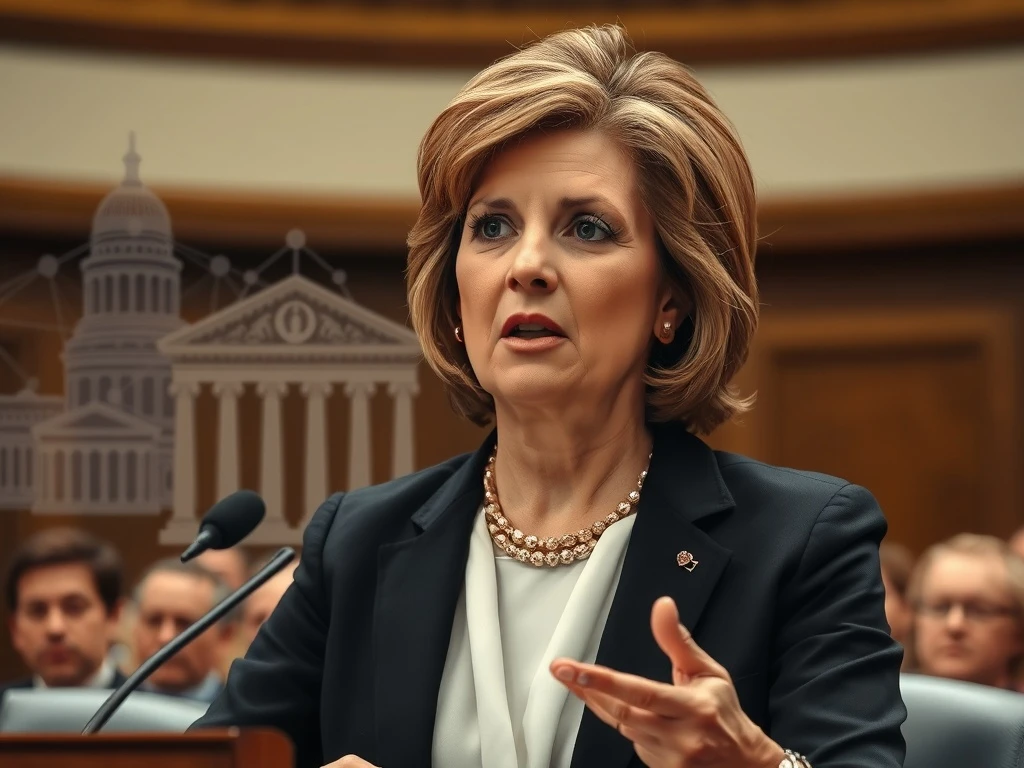
In a pivotal address that could reshape the financial landscape, U.S. Senator Cynthia Lummis (R-WY) has issued a direct challenge to the nation’s banking institutions: stop resisting stablecoins and start integrating them. Delivered in Washington, D.C., in early 2025, her remarks signal a critical inflection point in the long-standing dialogue between traditional finance and digital asset innovation. This call to action comes amid accelerating global competition in payment systems and a concerted push for clearer U.S. regulatory frameworks.
Cynthia Lummis Champions Stablecoin Integration for Banks
Senator Lummis, a prominent advocate for clear cryptocurrency legislation, framed her argument around competitiveness and consumer benefit. She contends that banks possess a unique opportunity to leverage stablecoin technology. Consequently, they can enhance payment speed, reduce transaction costs, and improve financial inclusion. Her perspective is rooted in the operational nature of stablecoins. These digital assets are typically pegged to reserve assets like the U.S. dollar. Therefore, they offer the programmability of crypto with the price stability of fiat currency.
This stance represents a significant evolution from earlier industry tensions. Previously, many financial institutions viewed digital assets with skepticism, focusing on volatility and regulatory uncertainty. However, the maturation of stablecoin technology and its growing use in cross-border settlements and digital finance has shifted the debate. Senator Lummis effectively argues that proactive adoption is a smarter strategy than defensive opposition. Major financial entities like JPMorgan and Citigroup have already explored blockchain-based payment networks. Her comments thus urge the broader sector to accelerate these efforts.
The Regulatory Landscape and Banking Hesitation
The path to bank adoption of stablecoins is not without substantial hurdles. Primarily, regulatory clarity remains the foremost concern. For years, banks have operated under stringent, well-defined rules. The ambiguous classification of stablecoins—as securities, commodities, or a new asset class—has created a compliance gray area. Senator Lummis has been instrumental in advocating for legislation, such as the Lummis-Gillibrand Responsible Financial Innovation Act. This proposed law aims to establish clear federal oversight for stablecoin issuers.
Furthermore, banks face operational challenges. These include integrating legacy systems with blockchain networks, managing custody solutions for digital assets, and meeting anti-money laundering (AML) and know-your-customer (KYC) requirements on-chain. Despite these challenges, the potential rewards are significant. A report from the Bank for International Settlements in 2024 highlighted that blockchain-based wholesale payments could settle in seconds instead of days. This efficiency gain presents a powerful incentive for modernization.
Expert Analysis on the Strategic Shift
Financial technology analysts view Senator Lummis’s comments as a strategic nudge. “She is reframing the narrative from risk to opportunity,” notes Dr. Elena Torres, a fintech policy researcher at Georgetown University. “Banks that master stablecoin infrastructure could capture new revenue streams in tokenization, instant B2B payments, and embedded finance. Conversely, those that delay risk ceding ground to non-bank fintech firms and foreign digital currency initiatives.” This analysis underscores the competitive urgency behind the policy recommendation.
The timeline of this issue is crucial. Following the 2023 market stresses, which exposed vulnerabilities in some algorithmic stablecoins, regulatory momentum for issuer oversight increased. By late 2024, several U.S. states had enacted their own stablecoin laws. Senator Lummis’s 2025 call to banks anticipates federal action and encourages the industry to prepare its technological and strategic roadmap now, rather than react later.
Potential Impacts on the U.S. Financial System
Widespread bank adoption of stablecoins could trigger profound changes. Firstly, domestic payment systems like ACH and wire transfers might face pressure to become faster and cheaper. Secondly, it could streamline international remittances, a market valued in the hundreds of billions annually. Thirdly, it would provide a regulated, dollar-denominated bridge between traditional finance and the broader digital asset ecosystem, including tokenized securities and real-world assets.
The following table contrasts key characteristics of traditional bank transfers and potential bank-issued stablecoin payments:
| Feature | Traditional Bank Transfer | Bank-Issued Stablecoin Payment |
|---|---|---|
| Settlement Time | 1-3 business days | Near-instant (seconds/minutes) |
| Operating Hours | Business hours / banking days | 24/7/365 |
| Cross-Border Cost | High (fees & forex spread) | Potentially significantly lower |
| Transparency | Opaque intermediary chain | Auditable transaction trail (on-chain) |
| Programmability | Limited | High (smart contract enabled) |
However, this transition also introduces new considerations for systemic risk and monetary policy. Central banks, including the Federal Reserve, are actively researching Central Bank Digital Currencies (CBDCs). The relationship between private bank-issued stablecoins and a potential digital dollar will require careful coordination to ensure financial stability.
Conclusion
Senator Cynthia Lummis’s directive to the banking sector marks a forward-looking moment in financial policy. Her argument transcends cryptocurrency advocacy, focusing instead on practical innovation, consumer benefit, and national economic competitiveness. The integration of stablecoin technology by banks promises enhanced efficiency, reduced costs, and new financial products. While regulatory and technical challenges persist, the direction is increasingly clear. The financial institutions that strategically engage with stablecoins, within emerging regulatory frameworks, may well define the next era of the American financial system. The call from Washington is not just to adapt, but to lead.
FAQs
Q1: What exactly is a stablecoin?
A stablecoin is a type of cryptocurrency designed to maintain a stable value by being pegged to a reserve asset, most often the U.S. dollar. This is typically achieved by holding equivalent cash or cash-equivalent reserves, making it less volatile than cryptocurrencies like Bitcoin.
Q2: Why are some banks hesitant about stablecoins?
Banks’ primary hesitations stem from regulatory uncertainty, concerns about compliance with anti-money laundering rules on blockchain networks, the technical complexity of integrating new systems, and potential risks to their traditional business models.
Q3: How could stablecoins benefit everyday banking customers?
Customers could see benefits like instant money transfers at any time (including weekends), dramatically lower fees for sending money internationally, and access to new programmable financial services automated by smart contracts.
Q4: What is the difference between a bank-issued stablecoin and a Central Bank Digital Currency (CBDC)?
A bank-issued stablecoin is a liability of a private commercial bank, backed by its reserves. A CBDC would be a digital form of a nation’s fiat currency, issued directly by the central bank (like the Federal Reserve) and considered a direct liability of the state.
Q5: What legislation is Senator Lummis supporting regarding stablecoins?
Senator Lummis is a key proponent of the Lummis-Gillibrand Responsible Financial Innovation Act, which seeks to create a comprehensive federal regulatory framework for digital assets, including clear rules for stablecoin issuers regarding reserve backing, disclosure, and oversight.
Related News
- USDT Shatters Records as Onchain Transfers Skyrocket to a Staggering $4.4 Trillion
- Prediction Markets Signal Stunning Patriots Loss Ahead of Super Bowl LX Showdown
- Bitcoin’s 21 Million Cap: The Alarming Debate Over Off-Chain Dilution and Synthetic Supply