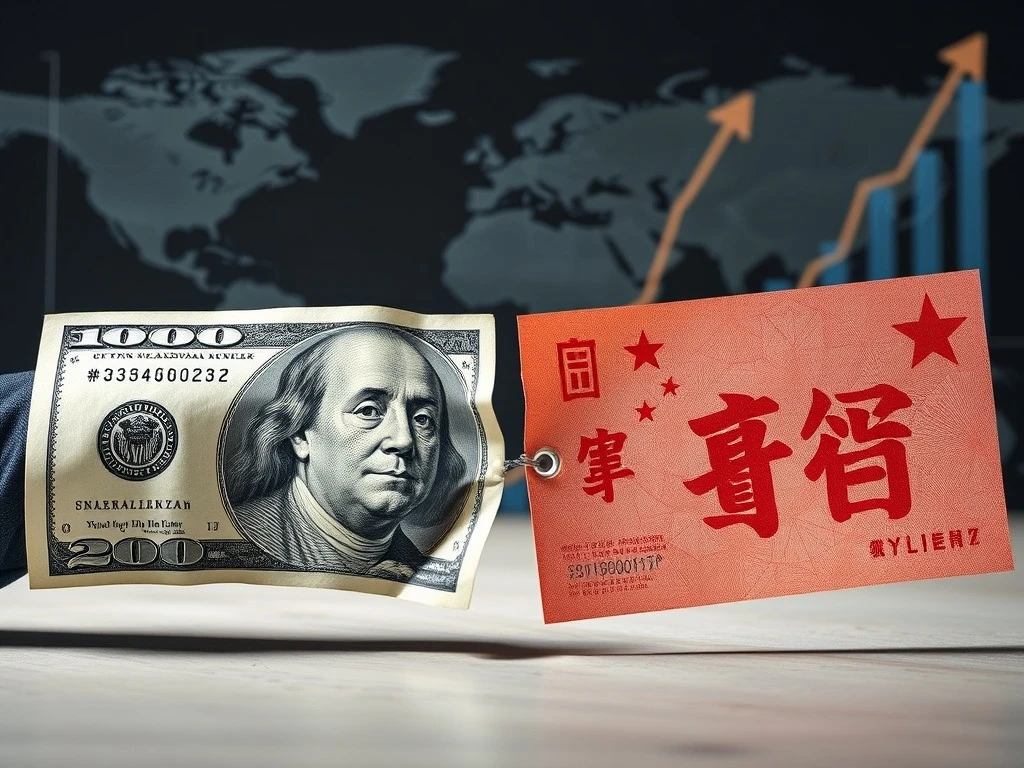
Prominent economist and gold advocate Peter Schiff frequently offers sharp critiques of global economic trends. He consistently challenges conventional wisdom. His latest warning, however, carries significant weight for those watching the stability of the global financial system, including cryptocurrency enthusiasts seeking alternative investments. Schiff argues that any US-China trade agreement will not stop the inevitable trend of de-dollarization. Furthermore, it will fail to curb the nation’s soaring deficits. This perspective suggests deeper systemic issues persist beyond trade negotiations.
Peter Schiff’s Dire De-Dollarization Warning
Peter Schiff, known for his bearish outlook on the US dollar, firmly believes its global dominance is eroding. He contends that various factors contribute to this decline. These include massive government spending and unprecedented national debt. Schiff asserts that other nations are actively seeking alternatives to the dollar for international transactions. This shift marks a significant move away from the current reserve currency status. A US-China trade deal, he suggests, only addresses symptoms, not the underlying economic disease. Consequently, the fundamental pressures pushing countries away from the dollar remain strong. This trend could reshape the entire global economy.
De-dollarization refers to the process of reducing the US dollar’s role in international trade and finance. Several nations are exploring options. They aim to conduct trade in local currencies or other mediums. This move reduces their reliance on the greenback. Schiff sees this as an unstoppable force. He believes it will profoundly impact American economic power. Therefore, he views trade deals as insufficient to reverse this course.
The Illusion of US-China Trade Deal Impact
Many observers hope a comprehensive US-China trade deal could stabilize global markets. They believe it might even alleviate some economic pressures. Peter Schiff, however, offers a contrasting view. He argues that such agreements are largely superficial. They do not address the core problems facing the US economy. Specifically, he points to the nation’s chronic trade imbalances and fiscal irresponsibility. These issues, he claims, are far more influential than any bilateral trade pact. A trade deal might offer temporary relief. Yet, it cannot resolve the deeper structural weaknesses. These weaknesses drive both de-dollarization and growing national debt.
Schiff emphasizes that trade deals often focus on specific goods and tariffs. They rarely tackle broader monetary policy or fiscal health. Nations are increasingly wary of holding large dollar reserves. They seek greater financial independence. This trend transcends the specifics of a trade agreement. Therefore, the deal’s impact on these fundamental shifts will likely be minimal. The world is changing its financial habits. This process continues regardless of trade negotiations.
The Looming Threat of Soaring Deficits
A central tenet of Peter Schiff’s argument concerns the alarming rate of soaring deficits. He consistently highlights the unsustainable nature of US government spending. The national debt continues to climb at an unprecedented pace. This fiscal trajectory, Schiff warns, poses a severe threat. It undermines the dollar’s value and global standing. Trade deals, in his view, do little to address this core issue. They certainly do not compel the US government to curb its spending habits. Thus, the problem persists.
The US government consistently spends more than it collects in revenue. This practice leads to ever-increasing deficits. These deficits require constant borrowing. This borrowing often involves selling US Treasury bonds to foreign investors. As the debt grows, confidence in the dollar can erode. Foreign nations may become less willing to finance US spending. This reluctance could accelerate de-dollarization. Ultimately, the deficits represent a ticking time bomb for the dollar’s stability. Schiff argues this issue is far more critical than any trade agreement.
Global Economy Reactions and Alternative Assets
Schiff’s warnings resonate with a segment of the financial community. They observe growing economic instability. Many investors seek safe havens or alternative assets. Gold has historically served this purpose. More recently, some turn to cryptocurrencies like Bitcoin. They see them as potential hedges against inflation and currency debasement. The concept of de-dollarization directly influences this search. As faith in fiat currencies wanes, interest in decentralized alternatives often rises. This dynamic creates a compelling narrative for digital assets. However, Schiff himself remains skeptical of Bitcoin, preferring gold.
Here are key reasons why investors consider alternatives:
- Inflation Concerns: Persistent government spending often leads to inflation, eroding purchasing power.
- Currency Debasement: Central banks’ quantitative easing policies can weaken national currencies.
- Geopolitical Risks: International tensions can impact currency stability and trade relations.
- Search for Independence: Many desire assets not tied to specific government policies or central banks.
These factors fuel the broader discussion around financial sovereignty. They highlight the vulnerabilities within the traditional financial system. Consequently, the appeal of assets outside conventional control grows. This includes both traditional safe havens and emerging digital currencies.
Examining Peter Schiff’s Historical Predictions
Peter Schiff is a well-known figure for his often contrarian economic predictions. He gained significant recognition for accurately forecasting the 2008 financial crisis. His warnings about housing bubbles and subprime mortgages proved prescient. This track record lends credibility to his current admonitions. However, not all his predictions have materialized exactly as he foresaw. For instance, the US dollar has shown remarkable resilience despite continuous warnings of its imminent collapse. Critics often point to this resilience. They argue that global alternatives to the dollar are not yet robust enough to displace it entirely. Nevertheless, his consistent advocacy for sound money principles keeps him relevant in economic debates. His perspective forces a critical look at ongoing financial practices.
Schiff’s arguments often highlight fundamental economic principles. He focuses on the dangers of excessive debt and monetary expansion. While the timing of his predicted outcomes varies, the underlying concerns often remain valid. His warnings serve as a vital counterpoint to more optimistic economic forecasts. They encourage investors and policymakers to consider worst-case scenarios. This approach fosters a more cautious financial strategy. His consistent voice adds a layer of scrutiny to fiscal policies. It ensures a diverse range of opinions contributes to economic discourse.
The Future of Dollar Dominance and Financial Stability
The debate surrounding de-dollarization and soaring deficits will undoubtedly continue. Peter Schiff’s warnings underscore complex challenges facing the global economy. A US-China trade deal, while potentially beneficial for specific sectors, may not address these deeper structural issues. The world watches closely as nations navigate increasing debt levels and shifting geopolitical landscapes. The future of the dollar’s role remains a critical question. Its trajectory will significantly impact global trade, finance, and investment strategies. Investors must consider these large-scale trends. They should evaluate how they might affect their portfolios. This includes traditional assets and the burgeoning cryptocurrency market. The long-term stability of the financial system hinges on resolving these underlying economic pressures. Therefore, understanding Schiff’s perspective offers valuable insight into potential future scenarios.
The economic landscape is continuously evolving. Policymakers face immense pressure to find sustainable solutions. Addressing deficits and managing trade relations are crucial steps. However, the fundamental strength of a currency depends on broader economic health and trust. As such, the discussions initiated by figures like Peter Schiff are vital. They push for accountability and foresight in economic governance. The coming years will reveal whether these warnings were truly prescient. They will also show if global financial systems can adapt to these profound challenges. The journey towards a more balanced and stable global financial order continues. It involves navigating complex interdependencies and unforeseen shifts.
Related News
- Bitcoin Rebound: A Cautious Technical Bounce, Not a Bullish Trend Reversal, Warns Analyst
- Vitalik Buterin ETH Sale: Decoding the Founder’s Latest 211-ETH Transaction and Its Market Ripple
- ZKsync Price Manipulation: South Korean Regulator Launches Critical Investigation into Upbit’s 1000% Volatility