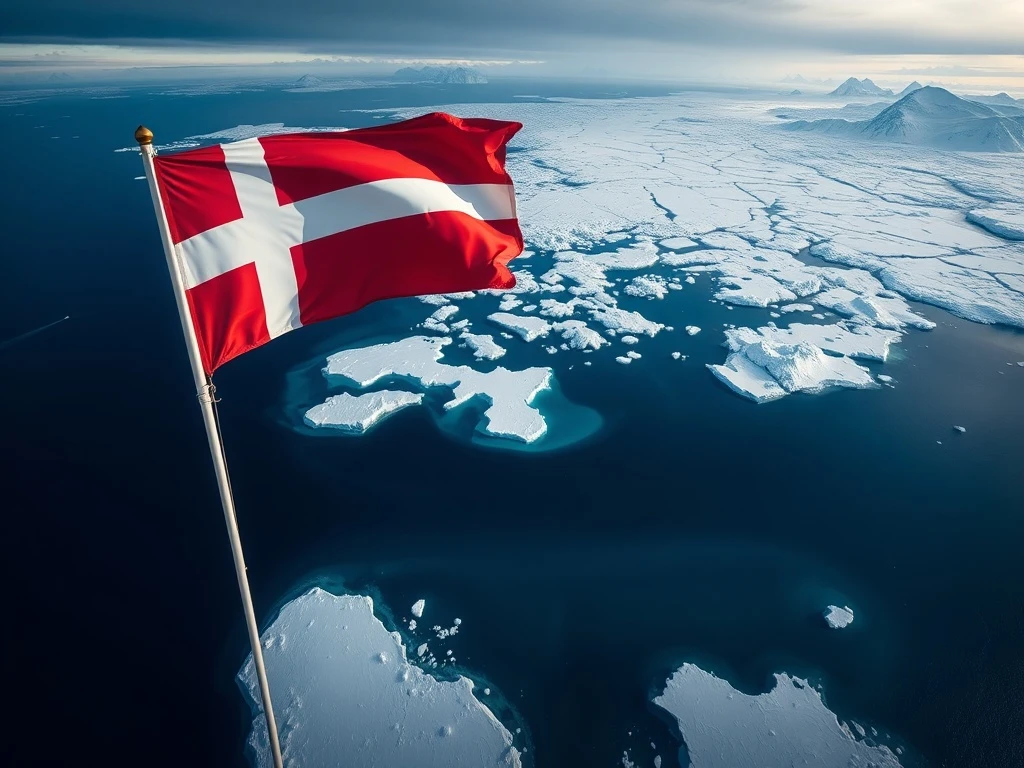
COPENHAGEN, Denmark – In a decisive statement reverberating across international diplomatic circles, Danish Prime Minister Mette Frederiksen has unequivocally declared that Denmark will not relinquish sovereignty over Greenland. This firm position directly addresses renewed geopolitical pressures surrounding the Arctic territory, particularly following previous overtures from the United States administration. The announcement comes at a critical juncture for Arctic governance and transatlantic relations.
Greenland Sovereignty: Historical Context and Modern Realities
Denmark has maintained sovereignty over Greenland since 1814, following the dissolution of the Denmark-Norway union. However, Greenland gained extensive self-governing authority through the 2009 Self-Government Act. This arrangement grants Greenland control over most domestic affairs while Denmark handles foreign policy, defense, and constitutional matters. The territory’s strategic importance has grown exponentially with climate change opening new Arctic shipping routes and revealing substantial natural resources.
Geopolitical analysts note that Greenland possesses approximately:
- Rare earth elements: Estimated 38.5 million metric tons
- Oil reserves: Potential 31.4 billion barrels offshore
- Mineral resources: Significant deposits of zinc, lead, and uranium
- Strategic location: Critical position for Arctic monitoring and defense
Furthermore, Greenland’s ice sheet contains about 8% of the world’s freshwater reserves. This resource alone makes the territory globally significant beyond its mineral wealth. Climate scientists project that continued melting could unlock additional economic opportunities while creating environmental challenges.
Geopolitical Pressure and Diplomatic Responses
The Danish Prime Minister’s statement follows documented interest from the previous U.S. administration in acquiring Greenland. In 2019, then-President Donald Trump publicly confirmed his consideration of purchasing the territory. This proposal generated immediate diplomatic friction between the United States and Denmark. Subsequently, the Trump administration reportedly pressured eight European nations regarding potential negotiations.
International relations experts identify several key factors driving foreign interest in Greenland:
| Factor | Strategic Importance | Timeline |
|---|---|---|
| Arctic Shipping Routes | Reduced transit times between Asia and Europe | Projected 2030-2050 |
| Resource Accessibility | Melting ice reveals previously inaccessible minerals | Ongoing acceleration |
| Military Positioning | Enhanced surveillance and defense capabilities | Immediate strategic value |
| Climate Research | Critical data from warming epicenter | Long-term scientific importance |
Danish foreign policy has consistently emphasized Greenland’s integral status within the Kingdom of Denmark. The territory maintains representation in the Danish Parliament through two elected members. Additionally, Greenland receives substantial annual block grants from Denmark totaling approximately 3.9 billion Danish kroner (about $570 million). This financial support represents nearly one-third of Greenland’s public budget.
Constitutional and Legal Perspectives
Constitutional scholars emphasize that Greenland’s status cannot be altered unilaterally. The Danish Constitution requires any change to Greenland’s relationship with Denmark to receive approval through specific legal processes. These include consent from both the Danish Parliament and Greenland’s own elected government. International law further complicates territorial transfers, requiring consideration of indigenous rights and self-determination principles.
The United Nations Declaration on the Rights of Indigenous Peoples, which Denmark has endorsed, establishes important frameworks. Article 3 specifically affirms indigenous peoples’ right to self-determination. Greenland’s population of approximately 56,000 people includes about 88% Greenlandic Inuit. Any discussion of sovereignty changes must therefore involve meaningful consultation with Greenland’s population and government.
Economic Implications and Regional Stability
Greenland’s economy relies heavily on fishing, which accounts for approximately 90% of exports. The territory also receives significant tourism revenue and hopes to develop mining operations. Denmark’s financial support remains crucial for maintaining public services and infrastructure development. A sudden change in sovereignty could disrupt these economic foundations and create uncertainty for international investors.
Regional experts identify several potential consequences of sovereignty discussions:
- Investment uncertainty: Mining and infrastructure projects might face delays
- Diplomatic strain: Arctic Council cooperation could be affected
- Security concerns: NATO’s northern flank might experience new tensions
- Indigenous rights: Inuit self-determination processes require careful navigation
The Arctic Council, comprising eight member states including Denmark and the United States, has historically maintained cooperative governance. This multilateral approach has successfully managed regional issues despite broader geopolitical tensions. Sovereignty disputes could potentially undermine this collaborative framework.
Military Significance and Security Considerations
Greenland hosts Thule Air Base, the United States’ northernmost military installation. Established in 1951 through a bilateral defense agreement, this facility provides critical early warning capabilities and space surveillance. The base employs approximately 600 personnel and represents significant U.S. investment in Arctic security infrastructure.
Defense analysts note that Greenland’s location offers unparalleled strategic advantages:
- Missile defense: Early detection systems for northern approaches
- Space monitoring: Tracking satellites and space debris
- Arctic presence: Demonstrating commitment to regional security
- Research support: Scientific facilities for polar studies
Denmark and the United States maintain a longstanding defense relationship through NATO. This alliance framework provides security guarantees while respecting Danish sovereignty. Military cooperation continues through joint exercises and intelligence sharing, particularly regarding Arctic monitoring.
Environmental and Climate Dimensions
Greenland’s melting ice sheet contributes significantly to global sea level rise. Scientists estimate that complete melting would raise oceans by approximately 7.4 meters (24 feet). Research stations across Greenland provide crucial climate data informing international policy decisions. The territory’s environmental transformation represents both a scientific priority and a geopolitical concern.
Climate researchers emphasize Greenland’s dual role as both climate change indicator and potential economic opportunity. Reduced ice cover enables resource extraction while creating ecological vulnerabilities. This paradox complicates governance decisions and requires balanced policy approaches.
Conclusion
The Danish Prime Minister’s definitive statement regarding Greenland sovereignty reflects constitutional realities, historical relationships, and contemporary geopolitical calculations. Greenland remains an integral part of the Kingdom of Denmark despite external interest in its strategic resources and location. Future developments will likely involve continued Danish administration with increasing Greenlandic self-governance. The territory’s significance will grow as Arctic accessibility improves, ensuring ongoing international attention to Greenland sovereignty questions. Denmark’s position affirms both legal principles and practical commitments to Greenland’s development within existing constitutional frameworks.
FAQs
Q1: Can Denmark legally sell Greenland to another country?
No. Constitutional provisions require consent from both the Danish Parliament and Greenland’s elected government for any change in sovereignty status. International law further complicates territorial transfers involving indigenous populations.
Q2: What percentage of Greenland’s budget comes from Denmark?
Approximately one-third of Greenland’s public budget comes from an annual Danish block grant. This amounted to about 3.9 billion Danish kroner ($570 million) in recent years, supporting essential services and infrastructure.
Q3: Why is Greenland strategically important?
Greenland offers critical Arctic positioning for military surveillance, emerging shipping routes as ice melts, and substantial natural resources including rare earth elements and potential oil reserves.
Q4: Does Greenland have its own government?
Yes. Greenland gained self-governing authority through the 2009 Self-Government Act. This allows control over most domestic affairs while Denmark handles foreign policy, defense, and constitutional matters.
Q5: What is the historical relationship between Denmark and Greenland?
Denmark has maintained sovereignty since 1814. Greenland was a Danish colony until 1953 when it became an integral part of the Kingdom. The relationship has evolved toward greater Greenlandic autonomy while maintaining constitutional ties.
Related News
- TenX Protocols Secures Landmark $3.25M Tezos Partnership, Acquiring 5.54M XTZ for Strategic Staking
- Bitmine Ethereum Treasury Soars: Strategic 35,000 ETH Acquisition Cements Dominant Position
- Russian Crypto Mining Crackdown: Lawmakers Propose Stiff Fines for Illegal Operations