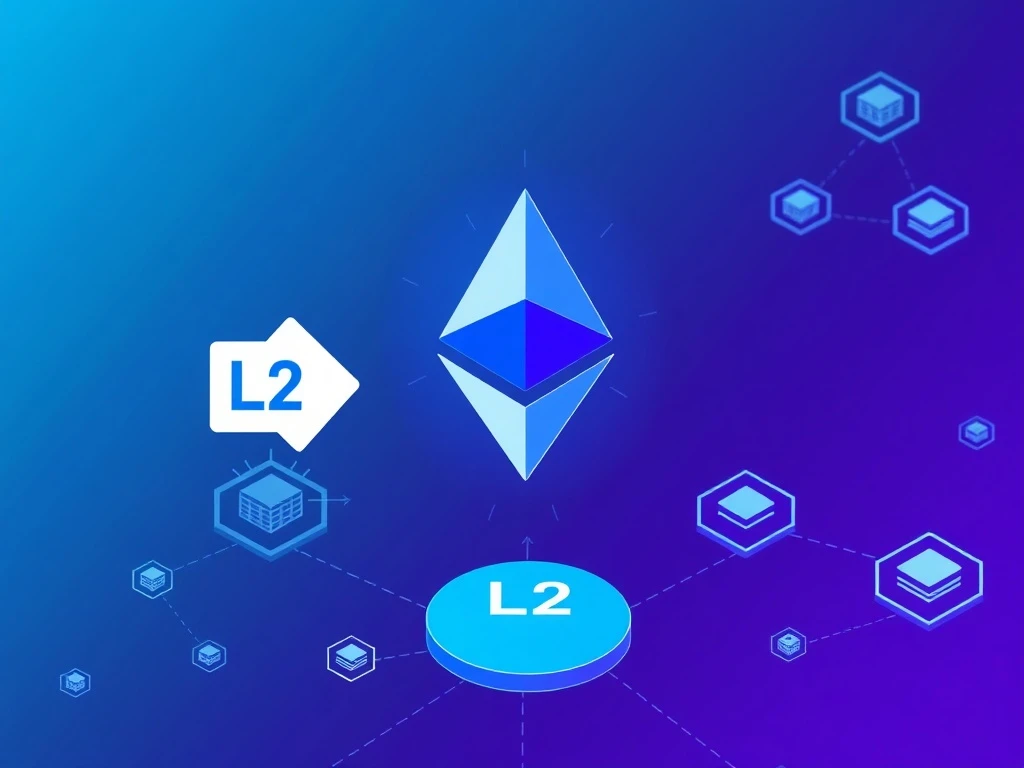
In a significant strategic reversal that underscores the evolving scalability landscape of the world’s leading smart contract platform, ENS Labs has halted development of its proprietary Layer 2 Namechain. The service provider for the Ethereum Name Service (ENS) will now deploy the highly anticipated ENSv2 upgrade exclusively on the Ethereum mainnet (L1), according to a report by The Block. This decision, announced in early 2025, marks a pivotal moment for one of Ethereum’s most widely adopted decentralized applications and reflects broader industry recalibrations around blockchain architecture and decentralization trade-offs.
ENS Labs Halts Namechain Development: The Core Decision
ENS Labs originally conceived the proprietary Namechain as a cornerstone of the ENSv2 update. The Layer 2 solution aimed to reduce transaction costs and improve speed for registering and managing .eth domain names. However, the development team recently made a definitive choice to abandon this path. “Ethereum’s base layer is scaling faster than anticipated, reducing the need to operate a separate L2,” an ENS Labs representative explained. This statement points directly to the successful implementation and adoption of Ethereum’s foundational scaling upgrades, notably the Dencun upgrade and the proliferation of proto-danksharding (EIP-4844), which have drastically reduced data availability costs for all Layer 2 networks.
Consequently, the economic and user experience advantages of running an independent L2 have diminished. The team’s analysis suggests that the existing mainnet, augmented by these core improvements, now provides a sufficiently scalable and cost-effective base for ENS’s future growth. This move consolidates the protocol’s security and liquidity onto a single, maximally decentralized settlement layer.
The Vitalik Buterin Influence and Decentralization Concerns
This strategic pivot follows notable public commentary from Ethereum co-founder Vitalik Buterin, who has recently nuanced his long-standing “rollup-centric roadmap.” Buterin has openly highlighted the decentralization limitations inherent in many current L2 solutions, particularly concerning sequencer centralization, governance, and the security models of alternative data availability layers. His reflections have spurred industry-wide debate about the optimal balance between scalability and the foundational crypto-values of censorship-resistance and trust minimization.
ENS Labs’ decision appears to align with this refined philosophy. By choosing the Ethereum mainnet, ENSv2 will inherit the full security guarantees and decentralized validator set of Ethereum itself. The team is prioritizing sovereignty and resilience over potential short-term efficiency gains from a more centralized L2 stack. This choice reinforces ENS’s role as critical Web3 infrastructure, where reliability and permissionless access are paramount.
Technical and Ecosystem Implications of the Mainnet Move
The technical implications of deploying ENSv2 on L1 are profound. Developers will interact with a single, canonical contract system, simplifying integration and audit processes. Users will benefit from unified security and the elimination of bridging risks associated with moving assets between L1 and a proprietary L2. Furthermore, the entire ENS ecosystem—including wallets, explorers, and marketplaces—can continue operating on familiar infrastructure without supporting an additional network.
This decision also carries significant economic weight. It signals strong confidence in Ethereum’s long-term scaling trajectory via its core protocol upgrades. The table below contrasts the original Namechain vision with the new mainnet-focused approach:
| Aspect | Proprietary Namechain (L2) Plan | Ethereum Mainnet (L1) Deployment |
|---|---|---|
| Primary Goal | Ultra-low cost transactions | Maximum security & decentralization |
| Security Model | Derived from Ethereum, plus L2 sequencer risk | Directly from Ethereum’s ~1 million validators |
| User Experience | Potential for new wallets/bridges | Continuity with existing Ethereum tooling |
| Ecosystem Fragmentation | Would create a new network | Strengthens the existing L1 ecosystem |
| Development Focus | Building and maintaining an L2 stack | Concentrating on core ENS protocol features |
Background and Evolution of the Ethereum Name Service
To fully grasp the importance of this decision, one must understand ENS’s role. Launched in 2017, the Ethereum Name Service provides human-readable names for machine-readable identifiers. It transforms complex cryptocurrency addresses like `0x71C7656EC7ab88b098defB751B7401B5f6d8976F` into simple names like `vitalik.eth`. This service is a fundamental pillar of Web3 usability, with millions of names registered. The planned ENSv2 update, even before this L2 decision, promised major enhancements including:
- Improved Name Hierarchy: Better structure for subdomains and management.
- Enhanced Renewal Logic: More flexible and user-friendly renewal processes.
- Gas Optimizations: Reduced costs for interactions, even on L1.
The project’s journey from considering a dedicated L2 to reaffirming its L1 commitment mirrors Ethereum’s own maturation. It demonstrates a practical application of the “surge” phase of Ethereum’s roadmap, where base-layer scalability improvements are actively changing project economics.
Expert Analysis and Industry Reaction
Industry observers view this move as a bellwether. “ENS’s choice is a powerful endorsement of Ethereum’s base-layer scaling progress,” noted a blockchain infrastructure analyst. “When a top-tier app with massive network effects decides it doesn’t need its own chain, it validates the ‘L1-centric’ scaling narrative. This could influence other dApps considering similar forks in the road.” The decision may slow the trend of every major application launching its own appchain or L2, potentially leading to a more cohesive and interoperable Ethereum ecosystem.
Conversely, some developers focused on hyper-scalability express concern. They argue that for applications requiring millions of micro-transactions, dedicated L2s or app-chains remain essential. ENS, with its model of longer-lived registrations and renewals, may have different requirements than a high-frequency decentralized exchange or gaming platform.
Conclusion
The decision by ENS Labs to halt Namechain development and deploy ENSv2 on the Ethereum mainnet is a landmark event with layered significance. It is a direct response to the accelerated scaling of Ethereum’s base layer, a philosophical alignment with heightened decentralization priorities, and a strategic simplification for the ENS protocol’s future. This move strengthens the security foundation of a critical piece of Web3 infrastructure while reinforcing the value of Ethereum’s core development roadmap. As the ecosystem evolves, ENS’s choice highlights a mature recalibration where the trade-offs between scalability, security, and decentralization are continually reassessed in light of real technological progress.
FAQs
Q1: What is ENSv2?
A1: ENSv2 is the next major upgrade to the Ethereum Name Service protocol. It aims to introduce a more efficient name hierarchy, improved renewal systems, and gas optimizations to enhance the user experience for managing .eth domains and other blockchain naming services.
Q2: Why did ENS Labs cancel the Layer 2 Namechain?
A2: ENS Labs canceled the Namechain primarily because Ethereum’s mainnet (L1) is scaling faster than expected, reducing the cost and performance benefits a separate L2 would provide. The decision also reflects a desire to maximize decentralization and security by building directly on Ethereum’s base layer.
Q3: How does Vitalik Buterin’s recent commentary relate to this decision?
A3: Ethereum co-founder Vitalik Buterin recently discussed the decentralization limitations of some Layer 2 solutions. ENS Labs’ pivot to L1 aligns with this reinforced emphasis on maintaining the highest possible degree of censorship-resistance and trust minimization, which are core to Ethereum’s value proposition.
Q4: Will ENS domain transactions become more expensive on the mainnet?
A4: While mainnet gas fees are higher than on Layer 2s, Ethereum’s core scaling upgrades (like EIP-4844) have significantly reduced costs for all users. Furthermore, the ENSv2 upgrade includes specific gas optimizations, and the elimination of bridging steps may offset costs for many users.
Q5: What does this mean for the future of Ethereum Layer 2 solutions?
A5: This decision does not spell the end for L2s. It indicates a more nuanced landscape. High-throughput applications like gaming and decentralized exchanges may still require L2s, while protocols prioritizing maximal security and decentralization may find a renewed case for building directly on a now more scalable L1.
Related News
- China’s Digital Yuan: Scott Bessent’s Dire Warning About Gold-Backed Financial Revolution
- Bitcoin Price Plummets Below $70,000: Analyzing the Sudden Market Shift
- Hardware Wallets and Secure Elements: The Critical Truth About Your Crypto Security