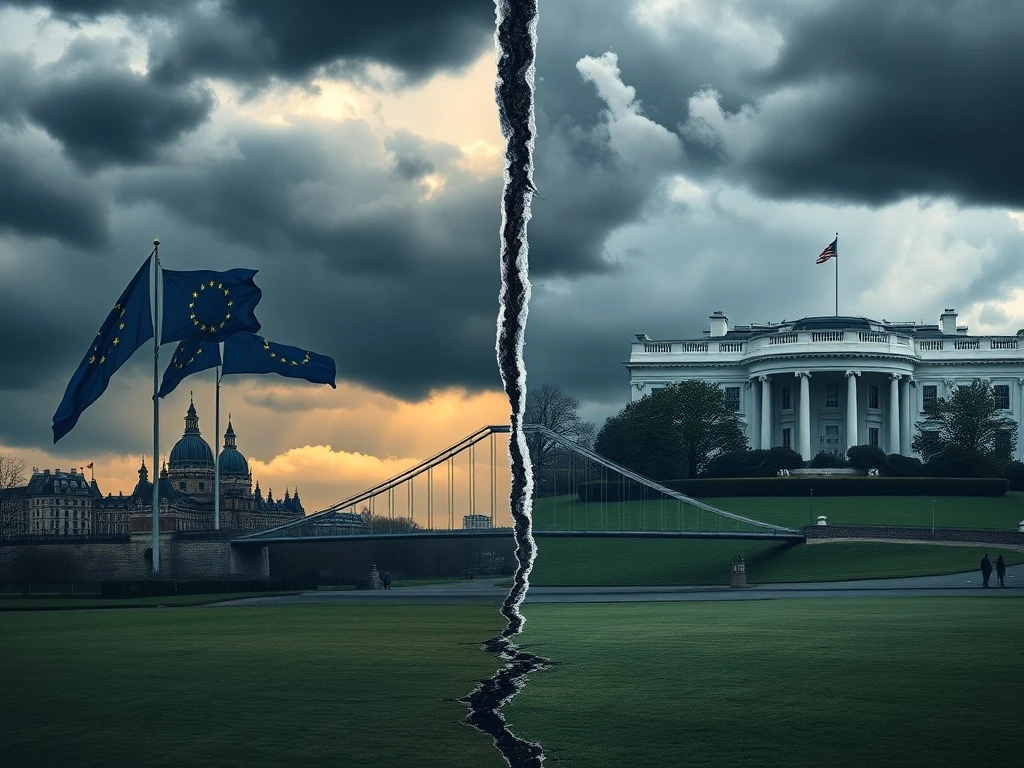
European capitals are experiencing a profound strategic recalibration as officials shift decisively from appeasement to confrontation with U.S. President Donald Trump following his aggressive tariff measures targeting eight nations opposing American annexation of Greenland. This dramatic policy evolution, reported by Yonhap News citing Financial Times sources on January 18, 2025, represents what multiple European diplomats describe as a necessary response to crossed red lines in transatlantic relations. Consequently, the geopolitical landscape faces immediate restructuring as European leaders acknowledge the failure of previous conciliatory approaches.
Europe’s Confrontation with Trump: The Greenland Tariff Catalyst
The Financial Times report, based on interviews with approximately ten senior European officials and diplomats, reveals a unanimous assessment that Trump’s latest economic measures constitute an unacceptable escalation. Specifically, the U.S. administration imposed substantial tariffs on eight countries that publicly opposed the controversial U.S. annexation of Greenland. This move follows years of diplomatic tension regarding Arctic sovereignty and strategic resources. Moreover, European leaders now recognize that their extensive efforts to maintain alliance cohesion through compromise have yielded minimal results. Therefore, a fundamental reassessment of engagement strategy has become imperative for European foreign policy coordination.
European Union trade data illustrates the immediate economic impact of these measures. For instance, preliminary estimates suggest targeted sectors could face disruptions exceeding €15 billion annually. Additionally, supply chains across technology, automotive, and agricultural industries require urgent contingency planning. Meanwhile, diplomatic channels report unprecedented strain during emergency consultations held in Brussels and Berlin. The European External Action Service has consequently initiated scenario analyses examining long-term decoupling possibilities. These developments underscore the severity of the current diplomatic impasse.
The Historical Context: From Appeasement to Strategic Realignment
Transatlantic relations have experienced gradual deterioration since 2021, marked by periodic trade disputes and divergent geopolitical priorities. However, the Greenland annexation proposal in late 2024 created an unprecedented fracture. European nations, including traditional U.S. allies like Denmark and Germany, uniformly rejected the sovereignty violation under international law frameworks. Subsequently, the Trump administration’s tariff retaliation targeted both EU members and non-member European states. This collective punishment approach fundamentally altered European threat perceptions regarding U.S. reliability.
Comparative analysis reveals significant policy evolution across recent administrations:
| Time Period | European Approach | U.S. Response | Alliance Status |
|---|---|---|---|
| 2021-2023 | Strategic patience & dialogue | Selective tariffs & negotiations | Strained but functional |
| 2024 (Pre-Greenland) | Targeted appeasement & concessions | Increased pressure tactics | Deteriorating cooperation |
| 2025 (Post-tariffs) | Confrontational preparedness | Economic coercion | Strategic divergence |
This timeline demonstrates the accelerating breakdown of diplomatic norms. Furthermore, European security analysts note parallel developments in defense cooperation reviews. Several NATO members have quietly initiated capability assessments reducing dependency on U.S. systems. Simultaneously, EU institutions are fast-tracking legislation enhancing trade autonomy mechanisms. These coordinated responses indicate systemic rather than reactive policy shifts.
Diplomatic Fallout and Economic Implications
The tariff measures specifically target nations representing approximately 22% of U.S.-European trade volume. Affected countries immediately activated WTO dispute settlement procedures while coordinating retaliatory measures. Key economic sectors facing disruption include:
- Aerospace components – Supply chains spanning France, Germany, and Italy
- Pharmaceutical precursors – Critical materials from Belgium and Ireland
- Automotive electronics – German and Swedish manufacturing networks
- Agricultural products – French and Spanish export commodities
European Central Bank analysts project potential GDP impacts ranging from 0.3% to 1.2% across member states if tariffs persist through 2025. Meanwhile, European Commission trade representatives have prepared countermeasures targeting strategically sensitive U.S. exports. These include potential restrictions on:
- Digital service providers operating in EU markets
- Energy technology transfers and licensing agreements
- Defense-related intellectual property protections
Financial markets have reacted with notable volatility. The euro-dollar exchange rate experienced its largest single-day fluctuation in eighteen months following the tariff announcement. Additionally, European stock indices declined across industrial and export-focused sectors. Consequently, business confidence surveys show deteriorating investment intentions among multinational corporations with transatlantic operations.
Expert Analysis: The Strategic Calculus Behind Europe’s Shift
Geopolitical analysts emphasize that European confrontation with Trump represents a calculated response rather than emotional reaction. Senior fellows at the European Council on Foreign Relations note three primary strategic considerations driving this policy evolution:
First, the Greenland annexation dispute touches fundamental principles of territorial integrity and international law. European consensus views U.S. actions as establishing dangerous precedents for great power behavior. Second, the tariff retaliation demonstrates weaponization of economic interdependence beyond previous boundaries. Third, European leaders perceive diminishing returns from conciliatory approaches given consistent U.S. escalation patterns.
International relations scholars further highlight the systemic implications. Professor Annette Schmidt of the Berlin Institute for Security Studies observes, “The transatlantic relationship has entered uncharted territory where traditional alliance management frameworks no longer apply. European strategic autonomy discussions have transitioned from theoretical exercise to operational imperative.” This assessment reflects growing academic consensus regarding structural realignment in Western alliance architecture.
Regional Responses and Global Repercussions
European confrontation with Trump has generated varied responses across global capitals. Asian allies including Japan and South Korea have expressed concern regarding alliance fragmentation. Meanwhile, Chinese state media has extensively covered the diplomatic rift, framing it as evidence of Western decline. Russian diplomatic channels have cautiously welcomed European assertions of strategic independence while monitoring economic deceleration possibilities.
Within Europe itself, notable policy divergences are emerging. Eastern European members with stronger security dependencies on the United States advocate more measured responses. Conversely, Western European nations favor assertive countermeasures. This internal debate complicates unified EU position formulation. Nevertheless, preliminary voting patterns in the European Parliament suggest growing support for autonomous action capabilities across trade and security domains.
The global trading system faces particular stress. WTO Director-General Ngozi Okonjo-Iweala has convened emergency consultations regarding dispute settlement mechanisms. Many developing nations worry about collateral damage from great power economic conflicts. Furthermore, climate cooperation frameworks may experience disruption given previously coordinated U.S.-European leadership. These secondary effects demonstrate the extensive ripple consequences of current tensions.
Conclusion
Europe’s strategic shift toward confrontation with Trump following Greenland-related tariff threats represents a watershed moment in transatlantic relations. The Financial Times report documenting this policy evolution reveals fundamental reassessments across European capitals regarding alliance management approaches. Consequently, the international system faces substantial realignment as economic and diplomatic frameworks undergo stress testing. This European confrontation with Trump will likely define geopolitical dynamics throughout 2025 and beyond, with implications extending across trade, security, and global governance architectures. The coming months will determine whether this strategic divergence becomes permanent or whether diplomatic channels can restore cooperative foundations.
FAQs
Q1: What triggered Europe’s shift toward confrontation with Trump?
The immediate catalyst was Trump’s imposition of tariffs on eight countries opposing U.S. annexation of Greenland. European officials viewed this economic coercion as crossing diplomatic red lines, demonstrating the failure of previous appeasement strategies.
Q2: Which European countries are most affected by the tariff measures?
While the Financial Times report didn’t specify all eight nations, analysis suggests they include EU members like Germany, France, Denmark, and Sweden, along with other European states that publicly opposed the Greenland annexation.
Q3: How might this confrontation impact global trade?
The dispute threatens to fragment Western economic coordination, potentially weakening WTO dispute resolution mechanisms and encouraging regional trade bloc formation. Supply chains across aerospace, automotive, and technology sectors face particular disruption risks.
Q4: What are the security implications of this diplomatic rift?
European nations may accelerate strategic autonomy initiatives, including enhanced defense cooperation outside NATO frameworks and reduced dependency on U.S. military systems. This could reshape transatlantic security architecture long-term.
Q5: Could this confrontation affect climate change cooperation?
Yes, previously coordinated U.S.-European leadership on climate initiatives may face disruption. European nations might pursue independent partnerships with other global actors if transatlantic coordination deteriorates further.
Related News
- Lighter Trading Volume Plummets: Startling Post-Airdrop Decline Reshapes PerpDEX Landscape
- Crypto Regulation Bill Talks Deemed ‘Super Constructive’ as Coinbase Defiantly Disputes White House Hostility Claims
- Bitcoin Plunges: Trump’s Shocking Greenland Tariff Threats Trigger $860M Crypto Liquidation