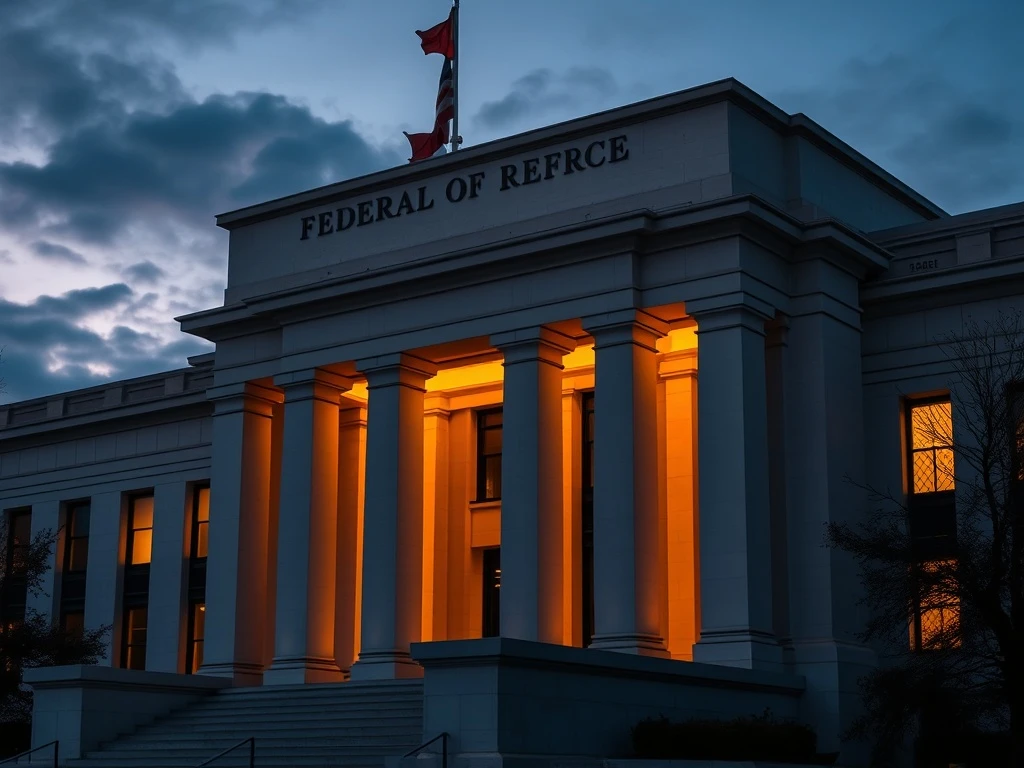
WASHINGTON, D.C. — In a pivotal decision that reverberated through global financial markets today, the Federal Reserve maintained its benchmark interest rate at the current target range of 5.25% to 5.50%. However, the Federal Reserve’s steady stance revealed significant internal division, as two voting members of the Federal Open Market Committee (FOMC) formally dissented, advocating for an immediate rate reduction. This development marks the first notable split within the committee since the current tightening cycle began, signaling potential shifts in the central bank’s approach to monetary policy amid evolving economic conditions.
Federal Reserve Maintains Current Interest Rate Policy
The Federal Reserve announced its decision following the conclusion of its two-day policy meeting on Wednesday. Consequently, the central bank will keep the federal funds rate at its highest level in over two decades. Furthermore, the committee reiterated its commitment to achieving maximum employment and price stability. The statement noted that “the Committee does not expect it will be appropriate to reduce the target range until it has gained greater confidence that inflation is moving sustainably toward 2 percent.”
Recent economic data shows inflation has moderated from its peak but remains above the Fed’s target. Specifically, the Personal Consumption Expenditures price index, the Fed’s preferred inflation gauge, registered 2.6% year-over-year in the latest reading. Meanwhile, the labor market continues to demonstrate resilience with unemployment holding steady at 4.0%. These mixed signals present complex challenges for policymakers balancing growth and price stability objectives.
Dissenting Voices Call for Policy Adjustment
The meeting’s minutes revealed that two Federal Reserve officials advocated for a quarter-percentage point rate cut. These dissenting policymakers expressed concerns about several economic indicators. First, they pointed to slowing consumer spending growth in recent months. Second, they highlighted weakening manufacturing activity across multiple regions. Third, they noted tightening credit conditions affecting small businesses.
Historically, dissents within the FOMC often precede broader policy shifts. For instance, similar divisions emerged before the Fed paused its rate-hiking cycle in 2023. The current dissenters likely base their position on forward-looking economic projections. They may anticipate that maintaining restrictive policy for too long could unnecessarily slow economic growth.
Expert Analysis of the Policy Divide
Former Federal Reserve economist Dr. Sarah Chen explains the significance of this development. “When two policymakers dissent in favor of easing, it signals genuine concern about economic momentum,” she states. “Their position likely reflects data showing moderating inflation alongside emerging softness in certain economic sectors.” Chen emphasizes that such dissents typically indicate evolving committee dynamics that may influence future decisions.
Market analysts immediately noted the implications of this division. “The dissent creates uncertainty about the timing of future rate cuts,” observes Michael Rodriguez of Global Financial Insights. “While the majority favors patience, the minority view suggests some policymakers see sufficient progress on inflation to warrant gradual easing.” This tension between caution and action will likely define upcoming policy discussions.
Economic Context and Historical Comparisons
The current policy stance follows the most aggressive tightening cycle since the 1980s. Beginning in March 2022, the Federal Reserve raised rates eleven times to combat surging inflation. These increases totaled 5.25 percentage points over sixteen months. The current pause, now extending through multiple meetings, represents a deliberate assessment period.
Comparing current conditions to previous cycles provides valuable perspective. The following table illustrates key differences:
| Period | Inflation Peak | Unemployment Rate | Policy Response |
|---|---|---|---|
| 2022-2024 Cycle | 9.1% (June 2022) | 3.4%-4.0% | Fast hikes, then pause |
| 2004-2006 Cycle | 4.7% (Sept 2005) | 4.4%-5.0% | Gradual increases |
| 2015-2018 Cycle | 2.9% (July 2018) | 3.7%-4.7% | Slow, predictable hikes |
Several factors distinguish the current situation. First, the post-pandemic economic recovery created unique supply-demand imbalances. Second, geopolitical tensions continue affecting global supply chains. Third, fiscal stimulus measures have created different conditions than previous cycles. These elements complicate traditional policy approaches.
Market Reactions and Financial Implications
Financial markets responded with mixed signals following the announcement. Initially, equity markets showed modest gains as investors interpreted the steady policy as confidence in economic stability. However, bond markets reflected more nuanced expectations. The yield on the 10-year Treasury note declined slightly, suggesting some anticipation of future easing.
The Federal Reserve’s decision affects various economic sectors differently:
- Housing Market: Mortgage rates remain elevated, continuing pressure on affordability
- Business Investment: Capital spending decisions face higher financing costs
- Consumer Credit: Interest rates on loans and credit cards stay at multi-year highs
- Banking Sector: Net interest margins remain favorable but face deposit competition
International implications also merit consideration. Many global central banks monitor Federal Reserve actions closely. The European Central Bank and Bank of England face similar policy dilemmas. Their upcoming decisions may create coordinated or divergent monetary policy paths across major economies.
Forward Guidance and Economic Projections
The Federal Reserve released updated economic projections alongside its policy statement. These “dot plot” forecasts show committee members’ expectations for future rates. The median projection now suggests fewer rate cuts in 2025 than previously anticipated. Specifically, most policymakers expect two or three reductions rather than the three or four forecasted earlier.
Chair Jerome Powell emphasized data dependence in his post-meeting press conference. “We will make decisions meeting by meeting,” he stated. “We’re looking for more good data to bolster our confidence that inflation is moving sustainably down to 2 percent.” This cautious approach reflects lessons from previous cycles when premature easing led to resurgent inflation.
Regional Economic Impacts and Sector Analysis
The policy decision affects different regions unevenly. Manufacturing-heavy areas experience greater sensitivity to interest rates than service-oriented economies. For example, the Midwest faces challenges from reduced equipment purchasing. Meanwhile, technology hubs benefit from stable financing conditions for innovation investments.
Small businesses report particular concerns about credit availability. A National Federation of Independent Business survey indicates that 25% of owners cite financing as their top problem. This represents the highest percentage since 2012. The Federal Reserve’s decision maintains pressure on this segment while controlling inflation.
Labor market conditions remain central to policy considerations. Wage growth has moderated but continues above pre-pandemic trends. The Federal Reserve monitors this metric closely since sustained high wage increases could fuel persistent inflation. Current data shows average hourly earnings growing at 4.1% year-over-year, down from peaks but above the 3-3.5% range consistent with 2% inflation.
Conclusion
The Federal Reserve’s decision to hold interest rates steady while facing internal dissent reflects the complex economic landscape of 2025. The central bank balances competing priorities of inflation control and economic support. Two policymakers advocating for rate cuts signal emerging concerns about growth momentum. Consequently, future meetings will likely feature vigorous debate about appropriate policy timing. Market participants should prepare for potential shifts as new economic data emerges. The Federal Reserve’s careful navigation of these challenges will significantly influence economic outcomes in coming quarters.
FAQs
Q1: Why did the Federal Reserve keep interest rates unchanged?
The Federal Open Market Committee maintained rates because inflation remains above the 2% target. Most members want more confidence that price increases are sustainably moderating before considering reductions.
Q2: Which policymakers dissented and why?
While the official names won’t be confirmed until minutes release, regional Fed presidents typically represent the dissenting views. They likely see sufficient progress on inflation alongside emerging economic softness warranting gradual easing.
Q3: How does this decision affect mortgage rates?
The Federal Reserve’s steady policy means mortgage rates will likely remain near current levels. However, long-term mortgage rates respond more to bond market expectations of future Fed actions than immediate decisions.
Q4: What economic indicators will the Fed watch most closely?
Policymakers will monitor core inflation measures, employment data, wage growth, consumer spending, and business investment. Particularly important will be services inflation excluding housing, which has been stubborn.
Q5: When might the Federal Reserve consider cutting rates?
Most analysts project potential rate cuts beginning in late 2025 or early 2026, depending on inflation progress. The dissenting votes suggest some members believe earlier action might be appropriate.
Related News
- Bitcoin Miners Achieve Stunning 150% Profit Surge by Halting Operations During US Winter Storm
- FXRP Revolution: Flare Network’s Strategic Move Positions XRP as Hyperliquid’s Premier Cross-Chain Asset
- Optimism Governance Approves Revolutionary OP Token Buyback Plan to Boost Value