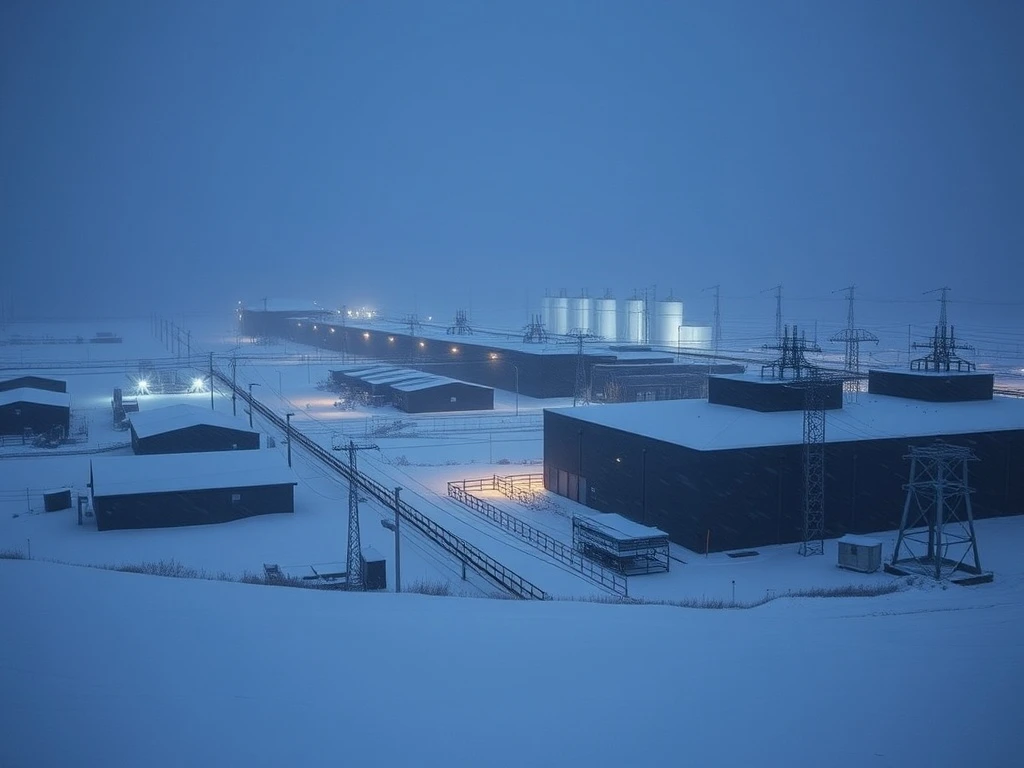
A severe winter storm has delivered a devastating blow to North American Bitcoin mining, with Foundry USA’s hashrate plummeting by approximately 60% as extreme weather conditions forced widespread operational shutdowns across multiple states. The dramatic reduction in computational power represents one of the most significant weather-related disruptions to cryptocurrency mining infrastructure in recent years, temporarily extending Bitcoin’s average block time and highlighting the industry’s complex relationship with regional power grids.
Foundry USA Hashrate Collapse During Winter Storm Fern
Winter Storm Fern swept across the United States last week, bringing unprecedented cold temperatures and widespread power disruptions that directly impacted Bitcoin mining operations. According to data reported by Cointelegraph, Foundry USA’s Bitcoin hashrate fell by approximately 60% since Friday as the storm intensified. The mining pool, which represents one of North America’s largest Bitcoin mining operations, saw approximately 200 exahashes per second (EH/s) of computational power go offline during the peak of the weather emergency.
This substantial reduction in hashrate created immediate consequences for the Bitcoin network. Average block generation time temporarily extended to approximately 12 minutes, significantly longer than the protocol’s target of 10 minutes. Network analysts observed the difficulty adjustment mechanism would require several days to respond to this sudden change in computational power. Meanwhile, mining firms across affected regions voluntarily halted operations to alleviate strain on already compromised power grids serving over one million households.
Winter Storm Fern’s Impact on Cryptocurrency Mining Infrastructure
The relationship between cryptocurrency mining and regional power infrastructure has become increasingly visible during extreme weather events. Winter Storm Fern affected multiple states with significant mining operations, including Texas, Kentucky, and New York. Mining facilities in these regions implemented emergency shutdown procedures as temperatures plummeted and power demand surged for residential heating. These voluntary curtailments represent a strategic response to grid stability concerns rather than mandatory directives from utility providers.
Several key factors contributed to the mining disruption:
- Power Grid Stability: Mining operations reduced load to prevent widespread blackouts
- Equipment Protection: Extreme cold risks damage to specialized mining hardware
- Transportation Issues: Staff couldn’t access remote facilities due to road closures
- Energy Price Volatility: Spot electricity prices surged during peak demand periods
Industry analysts note that mining operations have developed sophisticated response protocols for such events over recent years. Many facilities maintain backup power systems, but operators typically reserve these for critical infrastructure protection rather than continuous mining during grid emergencies. The coordinated response demonstrates the industry’s evolving maturity in managing its relationship with regional energy providers and communities.
Historical Context of Weather-Related Mining Disruptions
Weather events have periodically affected cryptocurrency mining operations since the industry’s geographic concentration in specific regions began. The 2021 Texas winter storm caused similar disruptions, though with less dramatic hashrate reductions due to the industry’s smaller scale at that time. Since then, mining companies have implemented more robust contingency plans while expanding operations across diverse geographic regions to mitigate concentration risk.
Comparative analysis reveals interesting patterns in disruption responses:
| Weather Event | Year | Primary Region | Estimated Hashrate Reduction | Recovery Time |
|---|---|---|---|---|
| Winter Storm Uri | 2021 | Texas, USA | ~35% | 5-7 days |
| Heat Wave | 2022 | Sichuan, China | ~40% | 10-14 days |
| Flooding | 2023 | Montana, USA | ~25% | 3-5 days |
| Winter Storm Fern | 2025 | Multiple US States | ~60% (Foundry USA) | Projected 7-10 days |
This historical perspective illustrates both the increasing scale of weather-related disruptions and the industry’s improving resilience mechanisms. The concentration of mining power in specific geographic regions creates vulnerability to localized events, while distributed operations provide natural hedging against such risks.
Network Security Implications of Sudden Hashrate Reductions
Bitcoin’s security model relies fundamentally on distributed computational power. Consequently, sudden reductions in hashrate raise legitimate concerns about network vulnerability. When approximately 200 EH/s disappears from a major pool like Foundry USA, the Bitcoin network’s overall security temporarily decreases. However, the protocol’s difficulty adjustment mechanism provides inherent protection against sustained attacks during such periods.
Network security analysts emphasize several important considerations:
- The reduction represents a percentage of one pool’s contribution, not the entire network
- Bitcoin’s decentralized nature means other global miners continue operations unaffected
- The difficulty adjustment will eventually rebalance mining economics after the event
- Short-term reductions don’t compromise the cryptographic security of existing transactions
Blockchain data shows that transaction processing continued throughout the event, albeit with slightly longer confirmation times. The network’s fundamental properties remained intact despite the weather-related disruption. This resilience demonstrates Bitcoin’s robustness against localized infrastructure failures, a design feature that has proven valuable repeatedly throughout its history.
Energy Infrastructure and Mining’s Evolving Relationship
The voluntary shutdown of mining operations during Winter Storm Fern highlights an evolving dynamic between cryptocurrency mining and energy infrastructure. Mining facilities increasingly position themselves as flexible load resources that can rapidly reduce consumption during grid emergencies. This capability provides value to utility operators managing supply-demand imbalances during extreme weather events.
Energy analysts note several developments in this relationship:
- Mining operations now frequently participate in demand response programs
- Some facilities incorporate behind-the-meter generation for grid support
- Location decisions increasingly consider grid stability contributions
- Regulatory frameworks are evolving to recognize mining’s grid services potential
This symbiotic relationship represents a significant evolution from earlier perceptions of mining as purely extractive of energy resources. The industry’s maturation includes recognizing its role within broader energy ecosystems and developing operational practices that benefit both mining profitability and community energy security.
Economic Consequences for Mining Operations
Weather-related shutdowns create immediate economic impacts for mining companies. When operations cease, revenue generation stops while fixed costs continue. However, sophisticated operations employ various strategies to mitigate these financial consequences. Many mining firms participate in energy markets that provide compensation for demand response actions during grid emergencies.
The economic calculus involves several factors:
- Lost mining revenue during shutdown periods
- Potential payments from grid operators for load reduction
- Equipment maintenance considerations during extreme temperatures
- Long-term relationship benefits with utility providers and communities
Industry financial analysts suggest that well-managed mining operations can partially offset revenue losses through grid service payments. Additionally, the reputational benefits of supporting community energy security during emergencies may yield long-term regulatory and relationship advantages. These considerations increasingly factor into mining companies’ operational decisions and geographic expansion strategies.
Conclusion
Winter Storm Fern’s impact on Foundry USA’s Bitcoin hashrate demonstrates both the vulnerability and resilience of cryptocurrency mining infrastructure to extreme weather events. The approximately 60% reduction in computational power highlights the industry’s geographic concentration in specific regions while simultaneously showcasing its evolving relationship with energy infrastructure. As mining operations mature, their role as flexible grid resources during emergencies becomes increasingly valuable. The Bitcoin network itself demonstrated robust performance despite the temporary reduction in hashrate, with transaction processing continuing and security fundamentals remaining intact. This event will likely accelerate several industry trends, including geographic diversification, enhanced contingency planning, and deeper integration with energy grid management systems. The Foundry USA hashrate disruption serves as a case study in cryptocurrency mining’s complex intersection with infrastructure, economics, and environmental factors.
FAQs
Q1: How long will it take for Foundry USA’s hashrate to recover?
Industry analysts project a 7-10 day recovery period as weather conditions improve and mining operations gradually restart. The exact timeline depends on regional power grid stabilization and safe access to facilities.
Q2: Does this hashrate reduction make Bitcoin less secure?
While temporary reductions decrease the network’s overall computational power, Bitcoin’s decentralized nature and difficulty adjustment mechanism maintain security fundamentals. The reduction affected one major pool rather than the entire global network.
Q3: Why do mining companies voluntarily shut down during storms?
Mining operations reduce load to prevent broader blackouts and maintain grid stability. This voluntary action supports community energy security and often qualifies for compensation through demand response programs.
Q4: How does this compare to previous weather-related mining disruptions?
Winter Storm Fern’s impact appears more significant than 2021’s Winter Storm Uri, affecting multiple regions simultaneously. However, the industry has developed more sophisticated response protocols since earlier events.
Q5: Will this event change where mining companies locate operations?
While extreme weather occurs in many regions, this event may accelerate existing trends toward geographic diversification and enhanced contingency planning. Mining companies increasingly consider multiple factors beyond electricity cost alone.
Related News
- Quantum Computing Cryptocurrency Threat: A16z Researcher Exposes Shocking Reality About Bitcoin and Ethereum Vulnerabilities
- 2026 Crypto Market Outlook: LBank Labs Unveils Critical Report on Seven Transformative Trends
- Crypto Liquidation Crisis: Long Positions Dominate $478M Market Shakeout