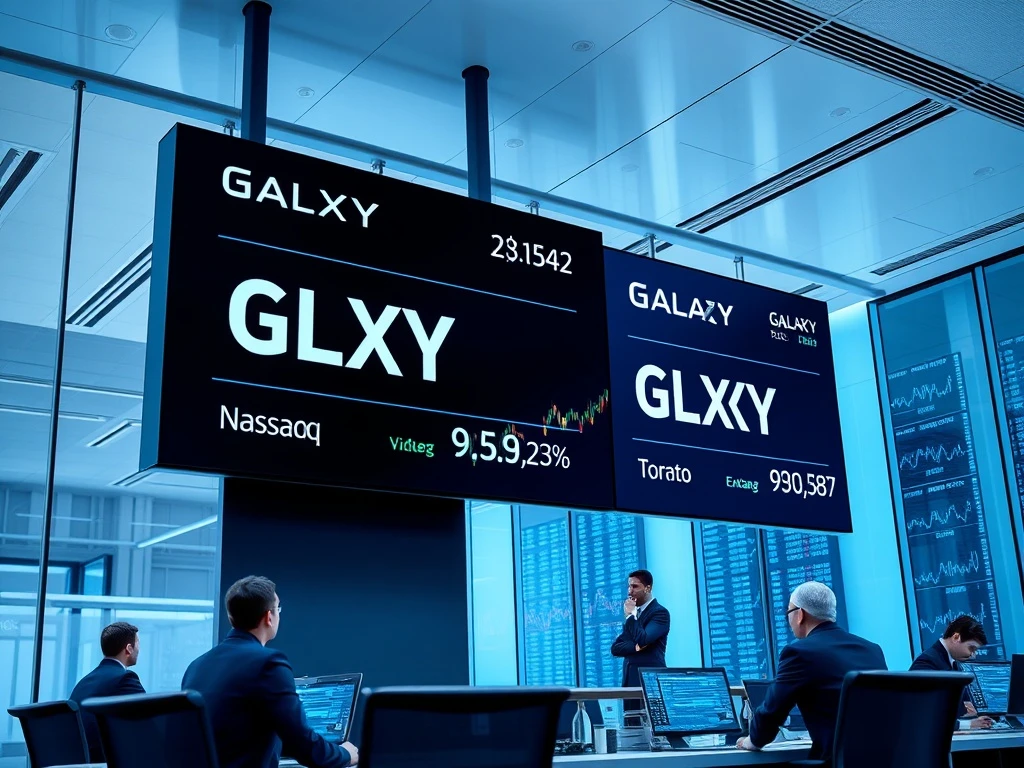
NEW YORK & TORONTO, March 2025 – Galaxy Digital Holdings Ltd. has announced a substantial $200 million share repurchase authorization, marking a significant strategic move that demonstrates the cryptocurrency investment firm’s confidence in its financial trajectory and the broader digital asset ecosystem. This aggressive buyback program, approved by the company’s board of directors, authorizes purchases of Class A common shares over the next twelve months across both Nasdaq and Toronto Stock Exchange platforms, potentially reshaping shareholder value and market perception of the publicly-traded crypto firm.
Galaxy Digital’s $200 Million Share Buyback Program Details
Galaxy Digital’s board has formally approved a share repurchase program totaling up to $200 million, according to regulatory filings and company announcements. The program specifically authorizes the company to buy back its own Class A common shares through open market transactions or privately negotiated deals. Importantly, the timing and exact amounts of purchases will depend on market conditions, share prices, and regulatory requirements. The company maintains flexibility in executing this program while adhering to securities regulations in both the United States and Canada.
Notably, the implementation differs between exchanges. On the Nasdaq Global Select Market, where Galaxy Digital trades under ticker symbol GLXY, the company faces a purchase volume limitation of 5% of its total issued shares at the program’s commencement. Conversely, any buyback activity on the Toronto Stock Exchange requires specific regulatory approval from Canadian authorities. This dual-exchange approach reflects Galaxy Digital’s unique position as one of the few cryptocurrency-focused firms with listings on major North American exchanges.
Strategic Implications for Cryptocurrency Investment Firms
Share buyback programs traditionally signal management’s belief that company shares are undervalued in the market. For Galaxy Digital, this $200 million authorization represents approximately 5-7% of its current market capitalization, depending on recent trading prices. The move follows similar actions by traditional financial institutions during periods of perceived market undervaluation. However, within the cryptocurrency sector, such substantial buyback programs remain relatively uncommon, making Galaxy Digital’s announcement particularly noteworthy for industry observers.
Several factors typically motivate share repurchase programs. First, companies often initiate buybacks to return excess capital to shareholders efficiently. Second, reducing the number of outstanding shares increases earnings per share metrics, potentially making the stock more attractive to investors. Third, buybacks demonstrate confidence in future cash flows and business stability. For Galaxy Digital, which operates across trading, asset management, investment banking, and mining in the digital asset space, this program suggests management’s optimism about sustained revenue generation despite cryptocurrency market volatility.
Financial Context and Market Positioning
Galaxy Digital’s decision arrives amid evolving cryptocurrency market conditions in early 2025. The company has consistently reported strengthening financial metrics throughout 2024, including improved trading volumes, expanding asset management services, and growing institutional adoption of digital assets. Furthermore, the firm maintains a robust balance sheet with substantial liquid assets, enabling strategic moves like share repurchases without compromising operational capabilities. Industry analysts note that successful execution of this buyback could enhance shareholder returns while signaling maturity within the still-evolving cryptocurrency investment sector.
Comparatively, traditional financial firms frequently utilize share buybacks as capital management tools. For instance, major banks and asset managers often announce multi-billion dollar repurchase programs following stress tests and capital planning exercises. Galaxy Digital’s $200 million program, while smaller in absolute terms relative to traditional finance giants, represents a meaningful percentage of its market value and establishes a precedent for cryptocurrency-native firms adopting conventional corporate finance strategies.
Regulatory Considerations and Exchange Requirements
The execution of Galaxy Digital’s share buyback involves navigating distinct regulatory frameworks. In the United States, the Securities and Exchange Commission governs repurchase activities under Rule 10b-18, which provides a safe harbor for companies when they meet specific conditions regarding timing, price, and volume of purchases. The 5% limitation on Nasdaq purchases aligns with standard exchange rules designed to prevent market manipulation and ensure orderly trading. Company executives must carefully coordinate purchases to remain within these guidelines while maximizing program effectiveness.
In Canada, the Toronto Stock Exchange imposes its own requirements through Policy 5.6, which mandates regulatory pre-approval for normal course issuer bids exceeding certain thresholds. Galaxy Digital’s dual-listed status necessitates careful compliance coordination between jurisdictions. Legal experts emphasize that cryptocurrency companies face heightened regulatory scrutiny, making precise adherence to securities laws particularly crucial for maintaining market credibility and investor trust during such corporate actions.
Historical Performance and Shareholder Value
Galaxy Digital’s share price has experienced significant volatility since its public listings, reflecting broader cryptocurrency market movements. The company went public through a reverse takeover in 2018 and subsequently listed on Canadian and U.S. exchanges. Throughout 2023-2024, the stock demonstrated recovery from previous downturns, coinciding with improved cryptocurrency valuations and expanding institutional participation in digital assets. The buyback announcement follows several quarters of reported profitability, suggesting management’s view that current share prices may not fully reflect underlying business fundamentals and growth prospects.
Share repurchase programs historically influence market perceptions through multiple channels. Academics have documented both signaling effects (communicating confidence) and distribution effects (returning capital). For Galaxy Digital, which operates in an industry frequently questioned about sustainability and profitability, a successfully executed buyback could strengthen investor confidence in the company’s financial discipline and long-term viability. Moreover, reducing share count increases existing shareholders’ proportional ownership, potentially aligning management interests more closely with investor returns.
Industry Impact and Cryptocurrency Sector Maturation
Galaxy Digital’s substantial buyback authorization represents a milestone in cryptocurrency industry maturation. Previously, most publicly-traded crypto companies focused primarily on growth investments and expansion initiatives. The shift toward shareholder return mechanisms like buybacks indicates evolving corporate priorities as the sector stabilizes. Other digital asset firms may observe Galaxy Digital’s experience with this program when considering their own capital allocation strategies, potentially influencing broader industry practices regarding profit distribution and value creation for public market investors.
The cryptocurrency investment landscape continues developing institutional infrastructure and governance standards. Traditional finance principles increasingly intersect with digital asset innovation as the sector matures. Galaxy Digital, founded by former Goldman Sachs partner Michael Novogratz, has consistently positioned itself at this intersection. The $200 million buyback program further solidifies this positioning by employing conventional corporate finance tools within the digital asset ecosystem, potentially attracting additional institutional investors who value familiar capital return mechanisms alongside cryptocurrency exposure.
Execution Timeline and Market Monitoring
Galaxy Digital has not disclosed specific timing for its share repurchase activities, maintaining flexibility to respond to market conditions. The twelve-month authorization period allows management to execute purchases opportunistically, potentially during periods of share price weakness or market uncertainty. Investors will monitor quarterly financial statements for details about program execution, including shares repurchased, average prices paid, and remaining authorization amounts. Such transparency will provide insights into management’s valuation perspective and capital allocation priorities throughout 2025.
Market analysts emphasize that successful buyback programs require disciplined execution. Companies must balance repurchase activities with other capital needs, including operational investments, debt management, and strategic acquisitions. For Galaxy Digital, which continues expanding its cryptocurrency prime brokerage, asset management, and mining operations, maintaining this balance remains crucial. The company’s ability to execute the buyback while funding growth initiatives will test its financial management capabilities and provide valuable data points about cryptocurrency business models’ cash flow generation potential.
Conclusion
Galaxy Digital’s approval of a $200 million share buyback program represents a strategic inflection point for the cryptocurrency investment firm and the broader digital asset industry. This substantial authorization signals management’s confidence in the company’s financial position, future prospects, and current share valuation. As one of the few publicly-traded cryptocurrency firms with dual North American listings, Galaxy Digital’s adoption of conventional corporate finance tools like share repurchases demonstrates sector maturation and evolving investor relations practices. The program’s execution throughout 2025 will provide valuable insights into cryptocurrency companies’ capital allocation strategies, regulatory navigation capabilities, and commitment to shareholder value creation amid ongoing digital asset market evolution.
FAQs
Q1: What exactly is Galaxy Digital’s share buyback program?
Galaxy Digital has authorized the repurchase of up to $200 million worth of its Class A common shares over the next twelve months through open market transactions or private deals, subject to regulatory requirements on both Nasdaq and Toronto Stock Exchange.
Q2: Why would a company like Galaxy Digital buy back its own shares?
Companies typically initiate share buybacks to return capital to shareholders, signal confidence in undervalued shares, increase earnings per share metrics, and optimize their capital structure based on current market conditions and business prospects.
Q3: How does the buyback differ between Nasdaq and Toronto Stock Exchange?
On Nasdaq, purchases are limited to 5% of total issued shares when the program begins. On the Toronto Stock Exchange, the buyback requires specific regulatory approval from Canadian authorities before execution.
Q4: What does this buyback indicate about Galaxy Digital’s financial health?
The $200 million authorization suggests management believes the company has sufficient liquidity and future cash flow prospects to return capital while maintaining operations, typically indicating confidence in financial stability and growth trajectory.
Q5: How might this buyback affect Galaxy Digital’s stock price?
Buybacks can support share prices through increased demand and reduced supply, while also signaling management’s confidence. However, actual price impact depends on execution size, timing, market conditions, and broader cryptocurrency sector performance.
Related News
- Brazil Prepares to Tax Cryptocurrency Flows: A Comprehensive Guide to the 2025 Regulatory Shift
- US Government Bitcoin Losses Approach $5 Billion: Strategic Holdings Tested by Market Volatility
- Bitcoin Price Analysis: Expert Reveals Why Current Market Pain Signals Maturation, Not Collapse