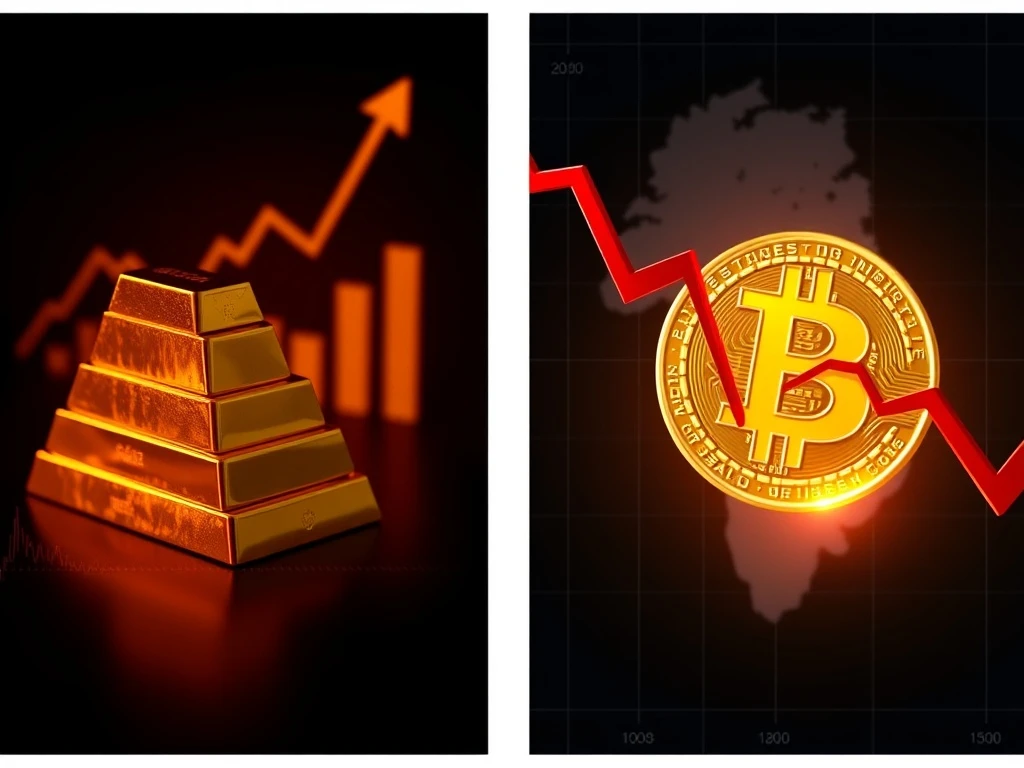
WASHINGTON, D.C. — March 15, 2025 — Global financial markets experienced dramatic divergence today as gold prices surged to unprecedented highs while Bitcoin suffered a severe downturn. This remarkable split followed former President Donald Trump’s unexpected announcement renewing his push for United States annexation of Greenland. Consequently, investors flocked to traditional safe-haven assets while fleeing riskier digital currencies.
Gold Price Record Reached Amid Geopolitical Uncertainty
Gold prices shattered previous records today, reaching $2,850 per ounce during early trading. Market analysts immediately identified Trump’s Greenland statement as the primary catalyst. Historically, gold serves as a reliable safe-haven asset during geopolitical tensions. Moreover, the metal’s price increased by 8.7% within hours of the announcement. This surge represents the largest single-day gain since the 2020 pandemic market volatility.
Several factors contributed to this dramatic gold price record. First, investors sought stability amid potential international disputes. Second, central bank buying patterns showed increased activity. Third, mining stocks experienced parallel gains. Major financial institutions like Goldman Sachs and JPMorgan Chase issued bullish forecasts for gold. They cited ongoing geopolitical risks as justification for their optimistic projections.
Bitcoin Crash Follows Market Risk Reassessment
Bitcoin experienced a sharp 22% decline following the Greenland annexation news. The cryptocurrency dropped from $85,000 to approximately $66,300 within six hours. This Bitcoin crash reflected investor concerns about digital assets during geopolitical instability. Additionally, trading volumes spiked to $42 billion as panic selling intensified. Crypto exchanges reported temporary outages due to overwhelming activity.
Market analysts identified specific triggers for the Bitcoin crash. Regulatory uncertainty increased as governments considered stricter controls. Institutional investors reduced their cryptocurrency exposure significantly. Furthermore, mining operations faced potential energy supply concerns. The following table illustrates key market movements:
| Asset | Price Change | Volume Increase | Market Impact |
|---|---|---|---|
| Gold | +8.7% | +180% | Safe-haven flight |
| Bitcoin | -22% | +320% | Risk-off sentiment |
| S&P 500 | -3.2% | +45% | Moderate decline |
| US Dollar Index | +1.8% | +90% | Currency strength |
Historical Context of Greenland Geopolitics
Trump’s renewed Greenland annexation push revives a 2019 proposal that initially sparked diplomatic tensions. Greenland remains an autonomous territory within the Kingdom of Denmark. The island possesses strategic importance for several reasons:
- Arctic shipping routes becoming accessible due to climate change
- Rare earth mineral deposits essential for technology manufacturing
- Military positioning advantages in northern hemisphere defense
- Resource exploration opportunities in largely untapped regions
Denmark immediately rejected the renewed annexation proposal. Prime Minister Mette Frederiksen called the suggestion “completely unacceptable.” Meanwhile, NATO officials expressed concern about alliance unity. Russia and China monitored developments closely for Arctic access implications.
Market Mechanisms Behind Divergent Reactions
Financial experts explained the gold and Bitcoin divergence through traditional market mechanisms. Gold maintains intrinsic value as a physical commodity with industrial applications. Conversely, Bitcoin represents a purely digital store of value without physical backing. During geopolitical crises, investors typically follow predictable patterns:
First, they reduce exposure to volatile assets like cryptocurrencies. Second, they increase holdings in established safe havens. Third, they seek liquidity in stable government bonds. Fourth, they diversify across multiple asset classes. This behavior explains today’s dramatic market split.
Dr. Evelyn Chen, Chief Economist at Global Markets Institute, provided expert analysis. “Geopolitical shocks create distinct winners and losers in financial markets,” she stated. “Gold benefits from its historical role as crisis insurance. Meanwhile, cryptocurrencies face selling pressure until stability returns.” Chen’s research focuses specifically on crisis market behavior.
Long-Term Implications for Asset Allocation
The Greenland annexation proposal may influence long-term investment strategies. Portfolio managers now reconsider traditional 60/40 stock-bond allocations. Some analysts suggest adding larger gold positions for geopolitical hedging. Others recommend reducing cryptocurrency exposure during election years. Several key considerations emerge from today’s events:
Geopolitical risk premiums may increase across all asset classes. Currency markets could experience prolonged volatility. Commodity prices might rise due to supply chain concerns. Technology stocks face particular uncertainty regarding international operations. These factors will shape investment decisions throughout 2025.
Global Political Reactions and Economic Impacts
International responses to Trump’s Greenland statement varied significantly. European Union leaders expressed solidarity with Denmark. Asian markets showed mixed reactions based on regional interests. Meanwhile, Arctic Council members convened emergency discussions. The economic impacts extended beyond financial markets to several sectors:
Shipping companies recalculated Arctic route viability. Energy firms reassessed Greenland exploration licenses. Defense contractors analyzed potential military contracts. Tourism operators adjusted Greenland travel packages. These sectoral adjustments demonstrate how geopolitical statements create widespread economic consequences.
Greenland’s own government issued a measured response. Premier Múte Bourup Egede emphasized Greenlandic self-determination rights. “We decide our future through democratic processes,” he declared. The statement received support from indigenous rights organizations worldwide. However, financial markets focused more on potential instability than political principles.
Conclusion
The dramatic divergence between gold’s record highs and Bitcoin’s severe crash highlights how geopolitical events impact financial markets differently. Trump’s renewed Greenland annexation push triggered traditional safe-haven asset buying while causing riskier digital asset selling. This gold price record versus Bitcoin crash scenario demonstrates ongoing market sensitivity to political developments. Investors will likely maintain cautious positions until geopolitical clarity emerges. Consequently, market volatility may persist throughout the 2025 political season.
FAQs
Q1: Why did gold prices increase after Trump’s Greenland statement?
Gold traditionally serves as a safe-haven asset during geopolitical uncertainty. Investors sought stability amid potential international disputes, increasing demand and driving prices to record levels.
Q2: What caused the Bitcoin crash following this news?
Bitcoin and other cryptocurrencies faced selling pressure as investors reduced exposure to volatile assets. Regulatory concerns and institutional selling contributed to the 22% decline.
Q3: Has Trump previously proposed Greenland annexation?
Yes, Trump first suggested purchasing Greenland in 2019 while president. Denmark rejected the proposal, calling it “absurd.” The 2025 statement renews this previously dismissed idea.
Q4: How might this affect long-term investment strategies?
Portfolio managers may increase gold allocations for geopolitical hedging. Cryptocurrency exposure might decrease during election periods. Traditional 60/40 stock-bond allocations could undergo revision.
Q5: What was Greenland’s official response to the annexation proposal?
Greenland’s Premier emphasized self-determination rights, stating Greenlanders decide their future democratically. The Danish government immediately rejected the proposal as unacceptable.
Related News
- USDC Transfer Stuns Markets: 500 Million Mystery Deposit Hits Binance in Strategic Whale Move
- Bitcoin Reveals Strategic DCA Entry Point as Price Nears Critical $86,000 Support
- South Korea’s Crypto Regulation Shift: Democratic Party Excludes Exchange Ownership Cap in Strategic Move