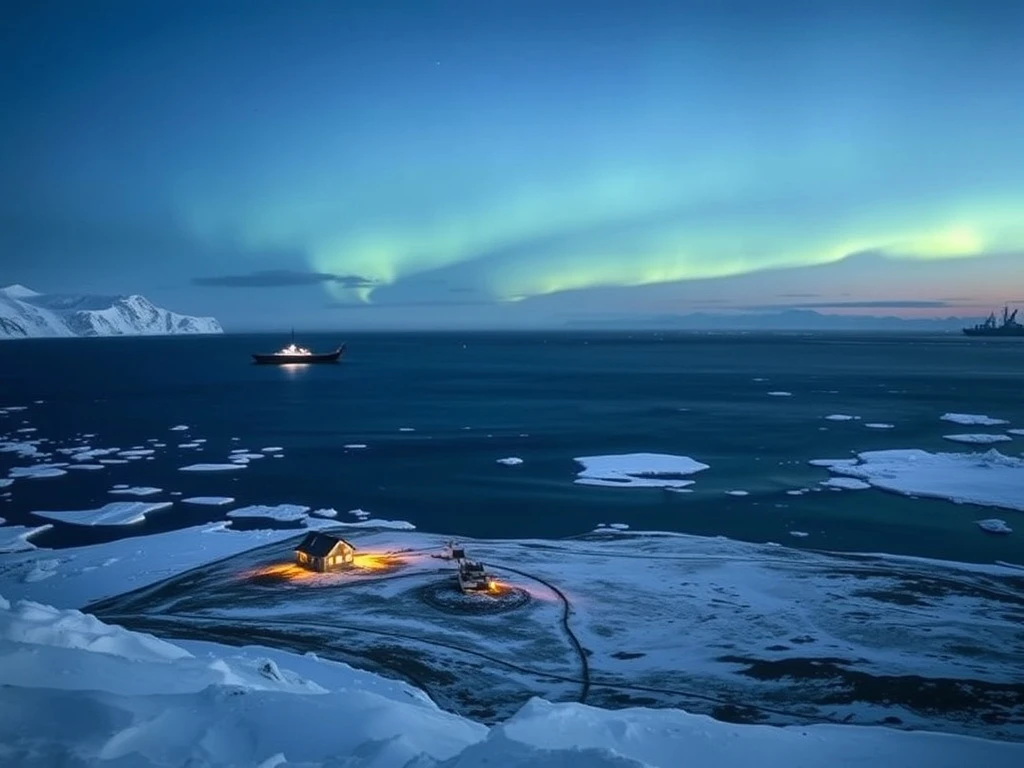
NUUK, Greenland – In a startling declaration that has reverberated through diplomatic circles, Greenland’s Prime Minister Múte Bourup Egede has issued an alarming warning about potential military invasion threats, specifically highlighting concerns about United States aggression amid escalating Arctic tensions. This unprecedented statement, first reported by Walter Bloomberg on November 15, 2024, represents a significant shift in Greenland’s security posture and reflects growing anxieties about sovereignty in the rapidly changing polar region. The Greenlandic government is now implementing comprehensive emergency protocols while Denmark and allied nations reinforce their Arctic defense capabilities.
Greenland Invasion Threat: Analyzing the Prime Minister’s Warning
Prime Minister Egede delivered his cautionary statement during a closed parliamentary security briefing that subsequently leaked to international media. He emphasized that while an actual invasion remains statistically improbable, the geopolitical pressure from Washington cannot be dismissed entirely. Consequently, the Greenlandic administration has established a dedicated emergency task force to coordinate national preparedness efforts. This task force will develop detailed guidelines for citizens, including specific instructions to stockpile essential supplies sufficient for several days of isolation. Furthermore, the government plans to conduct public awareness campaigns about emergency procedures throughout 2025.
The historical context of Greenland’s relationship with the United States adds crucial perspective to this development. During World War II, the United States established several military bases in Greenland under agreement with Denmark, including the strategically vital Thule Air Base in 1943. The 1951 Greenland Defense Agreement formalized American military presence, creating what many analysts describe as a “permanent conditional occupation.” Today, Thremains America’s northernmost military installation, hosting early-warning radar systems critical to national missile defense. This historical military footprint creates inherent tensions regarding sovereignty and control.
Arctic Geopolitical Tensions and Strategic Calculations
The Arctic region has transformed into a significant geopolitical flashpoint as climate change dramatically alters the strategic landscape. Melting ice caps have opened previously inaccessible shipping routes and revealed substantial untapped natural resources. According to the United States Geological Survey, the Arctic Circle may contain approximately 13% of the world’s undiscovered oil and 30% of its natural gas reserves. Additionally, rare earth mineral deposits essential for modern technology abound in Greenland’s geology. These economic incentives have intensified international competition, particularly between Arctic Council members including the United States, Russia, Canada, Norway, and Denmark.
Recent military developments underscore the growing strategic importance of the region. Russia has significantly modernized its Northern Fleet and reopened numerous Soviet-era Arctic bases. Meanwhile, NATO has increased its Arctic exercises and surveillance operations. The United States reestablished its Second Fleet in 2018 specifically for North Atlantic and Arctic operations. China, though not an Arctic state, has declared itself a “near-Arctic state” and invested heavily in polar research and infrastructure projects. This complex multipolar competition creates precisely the conditions where miscalculation or escalation becomes increasingly possible.
Defense Posture Reinforcement: Denmark’s Response
Denmark, which maintains control over Greenland’s foreign and defense policy despite the territory’s extensive self-rule, has responded decisively to the perceived threats. The Danish government announced immediate reinforcement of its Arctic defense capabilities through the Joint Arctic Command headquartered in Nuuk. Specific measures include increased surveillance flights by Royal Danish Air Force aircraft, enhanced naval patrols in Greenlandic waters, and accelerated modernization of the Sirius Dog Sled Patrol that monitors remote northeastern regions. Denmark has also committed to establishing a new Arctic military training center in Greenland during 2025.
Allied coordination forms another critical component of the response strategy. Denmark participates actively in NATO’s Enhanced Forward Presence in the Baltic region and has requested reciprocal security assurances for its Arctic territories. The Nordic Defense Cooperation (NORDEFCO) framework facilitates intelligence sharing and joint exercises among Scandinavian nations. Additionally, Denmark and Canada recently signed a renewed defense agreement specifically addressing Arctic security challenges. These multilateral efforts aim to create deterrence through collective security while avoiding unilateral escalation.
Emergency Preparedness: Practical Measures for Greenlandic Residents
The Greenlandic government’s emergency guidelines focus on practical resilience measures for its 56,000 residents scattered across vast, often isolated communities. The preparedness framework emphasizes three core principles: self-sufficiency, communication, and community coordination. Residents receive specific instructions to maintain emergency supplies including non-perishable food, water purification systems, medical kits, alternative heating sources, and backup communication devices. Municipal authorities will conduct vulnerability assessments for each settlement, identifying critical infrastructure and potential evacuation routes.
Key emergency preparedness recommendations include:
- Seven-day supply kits: Each household should maintain provisions sufficient for one week without external assistance
- Communication protocols: Designated community radio frequencies and satellite phone access points
- Medical readiness: Expanded first-aid training and emergency medical supply caches in remote areas
- Transportation planning: Fuel reserves and alternative transportation options for evacuation scenarios
- Information dissemination: Multi-language emergency broadcasting systems and community alert networks
These measures align with international best practices for remote community resilience while accounting for Greenland’s unique environmental challenges. The government emphasizes that preparedness benefits extend beyond potential conflict scenarios to natural disasters, climate emergencies, and infrastructure failures.
Historical Precedents and Sovereignty Considerations
Greenland’s current situation echoes historical sovereignty challenges that have shaped its political development. The United States made a serious offer to purchase Greenland in 1946 for $100 million, a proposal Denmark rejected. In 2019, then-President Donald Trump confirmed his administration had discussed purchasing the territory, generating diplomatic friction and highlighting continued American strategic interest. Greenland achieved home rule in 1979 and expanded self-government in 2009, controlling most domestic affairs while Denmark manages defense and foreign policy. This arrangement creates inherent tensions regarding security decisions affecting Greenlandic territory.
The legal framework governing military activities in Greenland remains complex. The 1951 Defense Agreement permits American military operations but requires consultation with Danish authorities. However, interpretations of consultation requirements have caused periodic disputes. Environmental concerns about military activities, particularly regarding the cleanup of abandoned Cold War-era bases, further complicate bilateral relations. Many Greenlanders view foreign military presence through the lens of colonial history, creating domestic political pressure for greater sovereignty over defense matters.
Economic Dimensions and Resource Competition
Economic factors significantly influence the geopolitical calculus surrounding Greenland. The territory possesses substantial mineral resources including rare earth elements, uranium, iron ore, and gemstones. Chinese companies have shown particular interest in mining investments, prompting concerns in Western capitals about strategic dependency. Greenland’s fishing industry represents its primary economic sector, accounting for approximately 90% of exports. Control over exclusive economic zones therefore carries significant economic and nutritional importance for the population.
Climate change presents both challenges and opportunities that intersect with security concerns. While thawing permafrost damages infrastructure, reduced ice cover improves maritime access and extends fishing seasons. The opening of trans-Arctic shipping routes could transform Greenland’s strategic position from peripheral to central in global trade networks. These economic transformations increase the stakes of sovereignty and control, explaining why major powers demonstrate such sustained interest in this sparsely populated territory.
International Law and Conflict Prevention Mechanisms
The United Nations Convention on the Law of the Sea (UNCLOS) provides the primary legal framework for Arctic governance, though the United States has not ratified the treaty. UNCLOS establishes rules for territorial waters, exclusive economic zones, and continental shelf claims. Denmark has submitted extensive scientific data to the UN Commission on the Limits of the Continental Shelf supporting claims to seabed resources north of Greenland. These legal processes offer peaceful mechanisms for resolving territorial disputes, though they proceed slowly over decades.
Diplomatic channels remain active despite the heightened rhetoric. The Arctic Council, comprising eight circumpolar nations including the United States and Denmark, continues its work on environmental protection and sustainable development. While military security falls outside its mandate, the council provides valuable dialogue forums that help prevent misunderstandings. Track II diplomacy involving academic institutions and non-governmental organizations further facilitates communication between stakeholders. These multilateral mechanisms collectively reduce the likelihood of direct conflict despite increasing competition.
| Country | Major Bases | Recent Investments | Primary Capabilities |
|---|---|---|---|
| United States | Thule Air Base (Greenland) Eielson AFB (Alaska) | $4.3B polar security cutter program B-1B bomber Arctic deployments | Strategic early warning Power projection Undersea surveillance |
| Russia | Nagurskoye (Franz Josef Land) Temp (Kotelny Island) | Northern Fleet modernization Arctic brigade equipment upgrades | Anti-access/area denial Coastal defense systems Icebreaker fleet |
| Denmark/Greenland | Station Nord Thule Air Base (shared) | Joint Arctic Command expansion Air surveillance radar upgrades | Domain awareness Sovereignty patrols Search and rescue |
| Canada | Canadian Forces Station Alert Nanisivik Naval Facility | NORAD modernization Arctic offshore patrol ships | Northern surveillance Maritime sovereignty Community engagement |
Conclusion
The Greenland invasion threat warning represents a significant development in Arctic security dynamics, reflecting broader geopolitical shifts as climate change transforms the polar region. While direct military conflict remains unlikely, Prime Minister Egede’s statement accurately captures the increasing strategic competition surrounding Greenland’s vast territory and resources. The emergency preparedness measures demonstrate prudent governance in an uncertain security environment, balancing realistic risk assessment with practical resilience building. Denmark’s reinforced defense posture, combined with allied coordination through NATO and Nordic frameworks, aims to deter aggression while maintaining stability. Ultimately, the situation underscores the complex intersection of sovereignty, resources, and security in the rapidly changing Arctic, where historical patterns of influence confront emerging geopolitical realities. The Greenland invasion threat conversation will likely continue evolving as environmental transformations and strategic calculations progress through 2025 and beyond.
FAQs
Q1: Why would the United States consider invading Greenland?
The United States has shown consistent strategic interest in Greenland since World War II due to its geographic position for early warning systems, potential natural resources, and control over emerging Arctic shipping routes. While actual invasion remains highly improbable, the theoretical motivations include securing strategic minerals, denying access to adversaries, and controlling navigation corridors.
Q2: What emergency supplies should Greenland residents stockpile?
The Greenlandic government recommends maintaining at least seven days of provisions including non-perishable food, water purification systems, medical supplies, alternative heating sources, backup communication devices, and necessary medications. Specific requirements vary by community based on isolation levels and existing infrastructure.
Q3: How does Denmark’s defense relationship with Greenland work?
Denmark controls Greenland’s foreign and defense policy under the Self-Government Act of 2009. The Danish military operates the Joint Arctic Command from Nuuk and maintains several installations across Greenland. Denmark consults with Greenland’s government on defense matters affecting the territory, though ultimate authority rests with Copenhagen.
Q4: What role does climate change play in Arctic security tensions?
Climate change dramatically reduces Arctic ice cover, opening previously inaccessible shipping routes and revealing untapped resources. This accessibility transformation increases economic and strategic competition among Arctic and near-Arctic states, fundamentally altering the region’s geopolitical significance and security calculations.
Q5: Are other Arctic nations preparing for potential conflict?
Yes, multiple Arctic states have significantly enhanced their polar military capabilities in recent years. Russia has modernized its Northern Fleet and reopened Soviet-era bases. Canada is expanding its Arctic offshore patrol vessel fleet. Norway has established new intelligence facilities near the Russian border. These developments reflect broader regional militarization trends.
Related News
- US Senate Crypto Bill Faces Critical Second Delay as Political Priorities Shift
- RLUSD Stablecoin Launch: Binance’s Strategic Listing as Ethereum Integration Goes Live, XRP Ledger Next
- Stablecoin Interest Payments Spark Fierce Clash Between Coinbase CEO and Top Central Banker