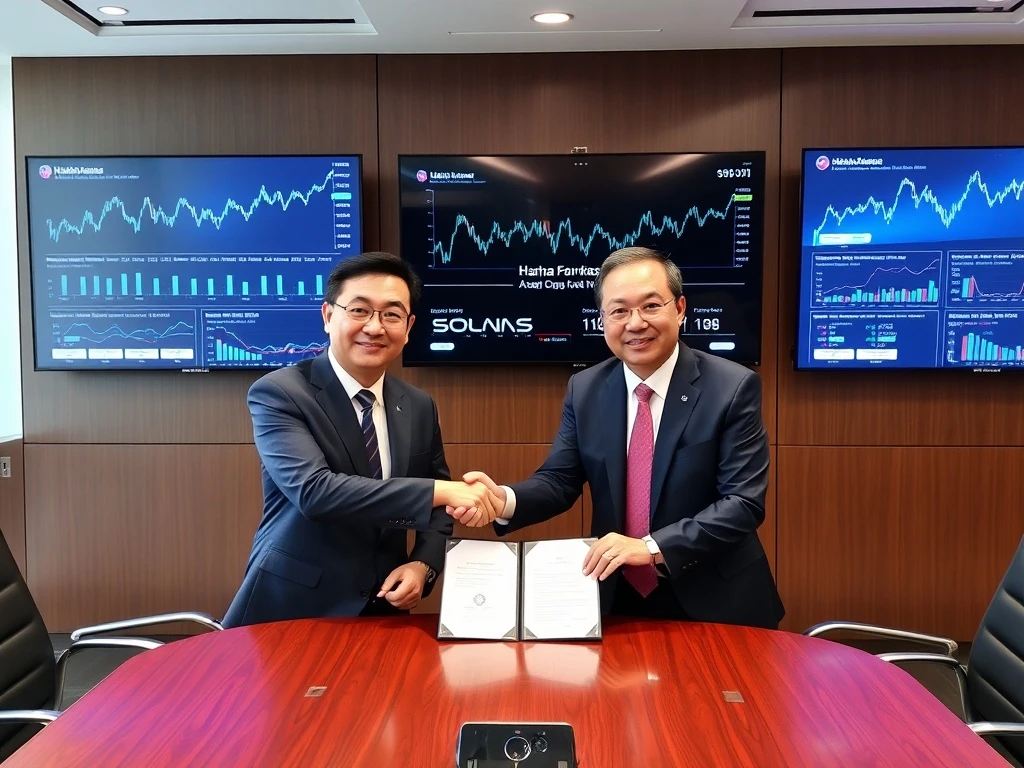
SEOUL, South Korea – In a significant development for Asia’s digital asset landscape, Hanwha Asset Management has forged a strategic Memorandum of Understanding (MOU) with the Solana Foundation, marking a pivotal moment for institutional blockchain adoption in the region. This partnership, announced through Yonhap Infomax, represents a calculated move by one of South Korea’s largest financial institutions to expand its digital asset ecosystem through structured collaboration with a leading blockchain protocol. The agreement specifically targets three core initiatives: comprehensive education on Solana’s technological framework, joint development of Solana-based exchange-traded products (ETPs), and the creation of institutional-grade custody solution guidelines.
Hanwha Asset Management and Solana Foundation Partnership Details
Hanwha Asset Management, a subsidiary of the massive Hanwha Group conglomerate, has formally committed to expanding its digital asset offerings through this Solana Foundation collaboration. The memorandum outlines specific cooperative measures that will unfold over the coming months. First, both organizations will develop educational programs focused on Solana’s developer tools and broader ecosystem. Second, they will jointly research and launch Solana-based exchange-traded products tailored for the Korean market. Third, they will publish comprehensive guidelines addressing custody solutions suitable for the Solana network’s architecture.
This partnership emerges during a period of increasing regulatory clarity in South Korea’s cryptocurrency sector. Financial authorities have recently established more defined frameworks for digital asset management. Consequently, traditional financial institutions like Hanwha are strategically positioning themselves within this evolving landscape. The collaboration signals a maturation in how established asset managers approach blockchain technology, moving beyond speculative trading toward infrastructure development and product creation.
Institutional Blockchain Adoption in Asian Markets
The Hanwha-Solana agreement reflects broader trends across Asian financial markets. Traditional institutions are increasingly exploring blockchain integration through structured partnerships. For instance, several Japanese and Singaporean banks have launched similar initiatives with various blockchain foundations. However, Hanwha’s specific focus on education, ETP development, and custody solutions represents a particularly comprehensive approach.
South Korea’s digital asset market has demonstrated remarkable retail participation for years. Now, institutional players are entering the space with more sophisticated strategies. The Solana Foundation partnership provides Hanwha with direct access to technical expertise and ecosystem connections. Meanwhile, Solana gains a credible institutional partner with extensive distribution channels and regulatory experience in one of Asia’s most dynamic financial markets.
Exchange-Traded Products and Regulatory Considerations
The planned development of Solana-based exchange-traded products represents perhaps the most consequential aspect of this MOU. ETPs would provide Korean investors with regulated, accessible exposure to Solana’s ecosystem without requiring direct cryptocurrency ownership. This product category has gained substantial traction in Europe and Canada but remains under development in many Asian jurisdictions.
Hanwha’s extensive experience with traditional ETP structures positions the firm well for this innovation. However, regulatory approval processes in South Korea remain rigorous. The partnership will need to navigate the Financial Services Commission’s requirements for digital asset products. Success could establish a blueprint for similar products tied to other blockchain networks in the Korean market.
Educational Initiatives and Ecosystem Development
The educational component of this partnership addresses a critical need within institutional finance. Many traditional asset managers lack deep technical understanding of blockchain architectures. Hanwha and Solana Foundation plan to create programs that bridge this knowledge gap. These initiatives will likely target both Hanwha’s internal teams and potentially external financial professionals.
Educational efforts will focus on several key areas:
- Solana’s Technical Architecture: Understanding its proof-of-history consensus mechanism and high-throughput capabilities
- Developer Tools and SDKs: Practical training for financial application development
- Ecosystem Projects: Overview of decentralized applications building on Solana
- Security Best Practices: Institutional-grade security protocols for blockchain operations
This educational foundation supports the longer-term goal of developing sophisticated financial products. It also enhances Hanwha’s ability to evaluate other blockchain opportunities beyond the immediate partnership.
Custody Solutions and Security Frameworks
The custody solution guidelines represent another crucial institutional consideration. Digital asset custody presents unique challenges compared to traditional securities custody. The partnership will research and document appropriate custody models for Solana-based assets, considering both technical and regulatory requirements.
These guidelines will likely examine multiple custody approaches:
| Custody Model | Key Characteristics | Institutional Considerations |
|---|---|---|
| Self-Custody | Direct private key management | Highest control, maximum security responsibility |
| Third-Party Custodians | Specialized digital asset custodians | Regulatory compliance, insurance options |
| Hybrid Solutions | Multi-signature arrangements | Balance of control and professional management |
The resulting publication will contribute to industry standards for institutional digital asset management. It may influence how other Korean financial institutions approach blockchain integration.
Market Impact and Competitive Landscape
This partnership arrives during a period of intensified competition among blockchain foundations for institutional partnerships. Solana has actively pursued collaborations with traditional finance entities across multiple regions. Meanwhile, other major blockchain ecosystems have announced similar institutional initiatives throughout 2024 and early 2025.
The Hanwha collaboration provides Solana with several strategic advantages in the Asian market. First, it establishes credibility through association with a major financial conglomerate. Second, it creates potential distribution channels for Solana-based financial products. Third, it demonstrates practical utility beyond cryptocurrency trading and decentralized finance applications.
For Hanwha, the partnership represents a forward-looking investment in digital asset infrastructure. The asset manager gains early-mover advantages in what many analysts believe will become a significant asset class. Additionally, the collaboration enhances Hanwha’s innovation profile among younger investors who increasingly value technological sophistication in financial services.
Conclusion
The Hanwha Asset Management and Solana Foundation MOU represents a substantial step toward institutional blockchain integration in South Korea’s financial sector. This partnership strategically addresses education, product development, and custody solutions—three critical barriers to institutional adoption. As traditional finance increasingly intersects with blockchain technology, collaborations like this one provide valuable models for balanced, regulated innovation. The success of their planned initiatives could significantly influence how other Asian asset managers approach digital asset ecosystems, potentially accelerating institutional participation across the region’s financial markets.
FAQs
Q1: What does the MOU between Hanwha Asset Management and Solana Foundation involve?
The memorandum outlines collaboration on three main initiatives: educational programs about Solana’s ecosystem, joint development of Solana-based exchange-traded products, and creation of custody solution guidelines for the network.
Q2: Why is this partnership significant for South Korea’s financial market?
It represents one of the most comprehensive institutional blockchain partnerships in Korea, combining a major traditional asset manager with a leading blockchain foundation to develop regulated digital asset products and infrastructure.
Q3: What are exchange-traded products (ETPs) in this context?
ETPs would be regulated investment products that provide exposure to Solana’s ecosystem without requiring direct cryptocurrency ownership, similar to how traditional ETPs track stock indices or commodities.
Q4: How does this partnership address security concerns with digital assets?
The custody solution guidelines component will research and document institutional-grade security frameworks specifically designed for Solana-based assets, addressing a major concern for traditional financial institutions.
Q5: What broader trend does this partnership reflect?
It reflects increasing institutional adoption of blockchain technology across Asian financial markets, with traditional firms moving beyond trading to develop infrastructure, educational programs, and regulated products.
Related News
- AI Infrastructure Inherits Bitcoin Mining’s Critical Lesson: Community Engagement Matters
- Binance Expands Aggressively with SPACE and FIGHT Perpetual Futures Listings
- Sui’s Strategic Partnership with Nansen Revolutionizes On-Chain Data Access for Developers