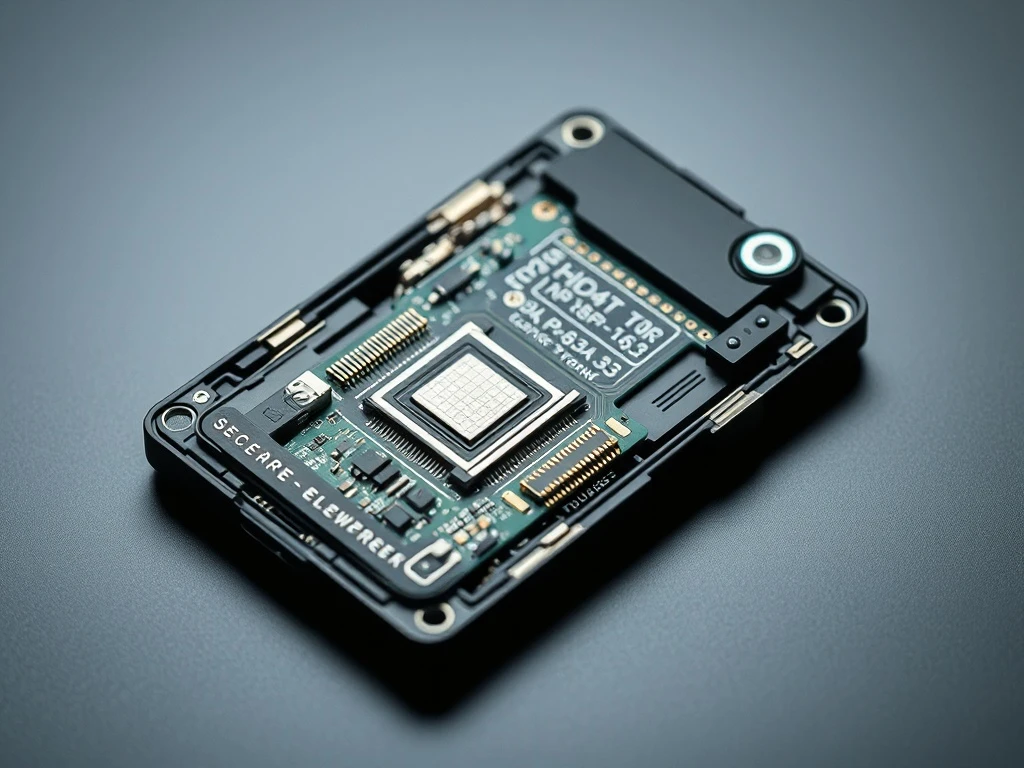
As cryptocurrency adoption accelerates globally in 2025, investors face increasingly sophisticated security threats targeting digital assets worth trillions. Hardware wallets and their embedded secure elements represent the frontline defense against these threats, yet few users truly understand what they’re trusting with their financial sovereignty. The fundamental question remains: when you store cryptocurrency on these devices, what security mechanisms are actually protecting your assets?
Hardware Wallets: The Foundation of Cryptocurrency Security
Hardware wallets emerged as specialized devices designed specifically for storing cryptocurrency private keys offline. These devices create an isolated environment where sensitive operations occur, completely separate from internet-connected computers and smartphones. Manufacturers developed these solutions in response to numerous exchange hacks and software wallet vulnerabilities that plagued early cryptocurrency adoption. Today, leading models from companies like Ledger, Trezor, and newer entrants dominate the market, each implementing different security architectures.
The primary security principle behind hardware wallets involves keeping private keys within a protected environment. This environment prevents exposure even when connected to compromised computers. Consequently, transactions require physical confirmation through device buttons or touchscreens. This approach significantly reduces attack surfaces compared to software wallets or exchange storage. However, the actual security varies dramatically between different hardware wallet implementations and their secure element choices.
Understanding Secure Element Technology
Secure elements represent specialized microcontrollers or chips designed specifically for protecting sensitive data. These chips implement multiple physical and logical security layers that resist various attack vectors. Originally developed for banking cards, passports, and payment systems, secure elements now serve as the cornerstone of hardware wallet security. They provide tamper-resistant storage for cryptographic keys and execute cryptographic operations in isolation.
Several types of secure elements exist in the market today. Common Secure Element (SE) chips come from manufacturers like STMicroelectronics, NXP Semiconductors, and Infineon Technologies. These chips typically achieve Common Criteria EAL5+ or higher certification levels. Additionally, some hardware wallets utilize custom secure elements or alternative security architectures. Each approach presents different trade-offs between security, cost, and functionality that users should understand before making purchasing decisions.
The Certification and Standards Landscape
Secure element certifications provide crucial indicators of security robustness. The Common Criteria framework establishes international standards for computer security certification. Within this framework, Evaluation Assurance Levels (EAL) range from 1 to 7, with higher numbers indicating more rigorous testing. Most commercial secure elements achieve EAL5+ certification, which involves formal design verification and testing against sophisticated attack methods.
Other relevant certifications include EMVCo for payment systems and FIPS 140-2 for cryptographic modules. These standards ensure secure elements withstand specific attack scenarios relevant to financial applications. However, certification alone doesn’t guarantee absolute security. The implementation quality, supply chain integrity, and ongoing firmware updates significantly impact real-world protection levels. Users must consider both certified security features and practical implementation factors when evaluating hardware wallet security.
Security Architecture Comparison
Different hardware wallet manufacturers implement varying security architectures that significantly impact protection levels. Some utilize dedicated secure element chips with certified security features, while others employ alternative approaches like secure microcontrollers or custom security solutions. Understanding these differences helps users make informed decisions about which devices best match their security requirements and threat models.
The table below compares common security architectures in popular hardware wallets:
| Architecture Type | Security Features | Common Implementations | Key Considerations |
|---|---|---|---|
| Dedicated Secure Element | Tamper resistance, side-channel attack protection, certified cryptography | Ledger devices with ST31/ST33 chips | Higher cost, proven security track record |
| Secure Microcontroller | Integrated security features, custom security implementations | Trezor Model T with STM32 chip | Flexible firmware, open-source verification |
| Custom Security Chip | Proprietary security features, specialized for cryptocurrency | Some newer wallet manufacturers | Limited public testing, potential innovation |
Attack Vectors and Real-World Threats
Hardware wallets face numerous sophisticated attack vectors despite their security features. Physical attacks represent significant concerns for devices that might be stolen or accessed by malicious actors. These attacks include side-channel analysis, fault injection, and microprobing techniques that attempt to extract keys from secure elements. Additionally, supply chain attacks present growing concerns, where compromised components or manufacturing processes introduce vulnerabilities before devices reach consumers.
Software and firmware attacks constitute another major threat category. Malicious firmware updates, compromised computer connections, and interface vulnerabilities can potentially bypass hardware protections. The 2023 Ledger Connect Kit incident demonstrated how supply chain compromises could affect even well-established hardware wallet ecosystems. Consequently, users must implement proper operational security alongside hardware protections to achieve comprehensive asset security.
Expert Perspectives on Hardware Wallet Security
Security researchers emphasize that hardware wallets provide essential protection layers but aren’t invulnerable. Dr. Sarah Chen, a cryptography researcher at Stanford University, notes: “Hardware wallets significantly raise the cost and complexity of attacks compared to software solutions. However, users should understand that security exists on a spectrum rather than as absolute protection.” This perspective highlights the importance of realistic security expectations and complementary protective measures.
Industry experts also stress the evolving nature of hardware wallet threats. As cryptocurrency values increase, attackers invest more resources into developing sophisticated attack methods. Consequently, hardware wallet manufacturers must continuously update their security implementations to address newly discovered vulnerabilities. This ongoing security maintenance represents a critical aspect of long-term hardware wallet protection that users often overlook when making purchasing decisions.
The Trust Equation: What You’re Actually Relying On
When using hardware wallets, users place trust in multiple interconnected systems and entities. The trust foundation begins with secure element manufacturers who design and produce the core security chips. Users must trust that these manufacturers properly implement security features and maintain supply chain integrity. Additionally, hardware wallet companies must correctly integrate these secure elements into their devices without introducing vulnerabilities through design flaws or implementation errors.
Software and firmware represent additional trust layers. The wallet’s operating system, applications, and update mechanisms must maintain security throughout their lifecycle. Open-source implementations potentially allow community verification, while closed-source approaches rely on company transparency and security practices. Furthermore, users must trust their own operational security practices, including proper backup procedures, physical device protection, and cautious interaction with connected devices and networks.
Future Security Developments and Trends
Hardware wallet security continues evolving to address emerging threats and technological advancements. Multi-party computation (MPC) represents one significant development gaining traction in 2025. This approach distributes private keys across multiple devices or parties, requiring collaboration to authorize transactions. Consequently, MPC reduces single points of failure while maintaining security even if individual components become compromised.
Other emerging trends include biometric authentication integration, quantum-resistant cryptography implementation, and improved user experience without security compromises. Additionally, regulatory developments increasingly influence hardware wallet security standards as governments establish requirements for cryptocurrency storage solutions. These evolving factors will shape hardware wallet security approaches throughout the coming years, potentially changing what users trust for asset protection.
Conclusion
Hardware wallets and their secure elements provide essential security layers for cryptocurrency storage, but understanding what you’re actually trusting requires examining multiple interconnected systems. The security foundation relies on certified secure elements, proper implementation by wallet manufacturers, secure firmware and software, and responsible user practices. As cryptocurrency adoption continues growing in 2025, informed decisions about hardware wallet security become increasingly crucial for protecting valuable digital assets against evolving threats.
FAQs
Q1: What exactly is a secure element in a hardware wallet?
A secure element is a specialized microprocessor chip designed specifically for protecting sensitive cryptographic data. It provides tamper-resistant storage for private keys and executes cryptographic operations in an isolated, protected environment separate from the main device processor.
Q2: Are hardware wallets with secure elements completely unhackable?
No security solution is completely invulnerable. Hardware wallets with secure elements significantly raise the difficulty and cost of attacks compared to software wallets, but they can still potentially be compromised through sophisticated physical attacks, supply chain vulnerabilities, or implementation flaws.
Q3: How do I know if a hardware wallet’s secure element is properly certified?
Reputable manufacturers typically provide certification information in their technical documentation. Look for Common Criteria EAL certifications (usually EAL5+ or higher), EMVCo certification for payment systems, or FIPS 140-2 validation for cryptographic modules. Independent security audits also provide valuable verification.
Q4: Can hardware wallet manufacturers access my private keys?
Properly implemented hardware wallets should never expose private keys outside the secure element. However, firmware vulnerabilities or malicious updates could potentially compromise this protection. Choosing devices from reputable manufacturers with transparent security practices reduces this risk significantly.
Q5: What additional security measures should I use with hardware wallets?
Always use the original packaging and purchase from authorized retailers to avoid supply chain compromises. Implement strong PIN codes, keep recovery phrases physically secure and offline, verify transaction details on the device screen before confirming, and regularly update firmware to address security vulnerabilities.
Related News
- XRP’s Revolutionary Leap: How Ripple’s XRPL Strategy Transforms It Into a Premier Institutional Settlement Asset
- Altcoin Season Index Plummets to 23, Signaling a Stark Bitcoin Dominance Era
- China’s Digital Yuan: Scott Bessent’s Dire Warning About Gold-Backed Financial Revolution