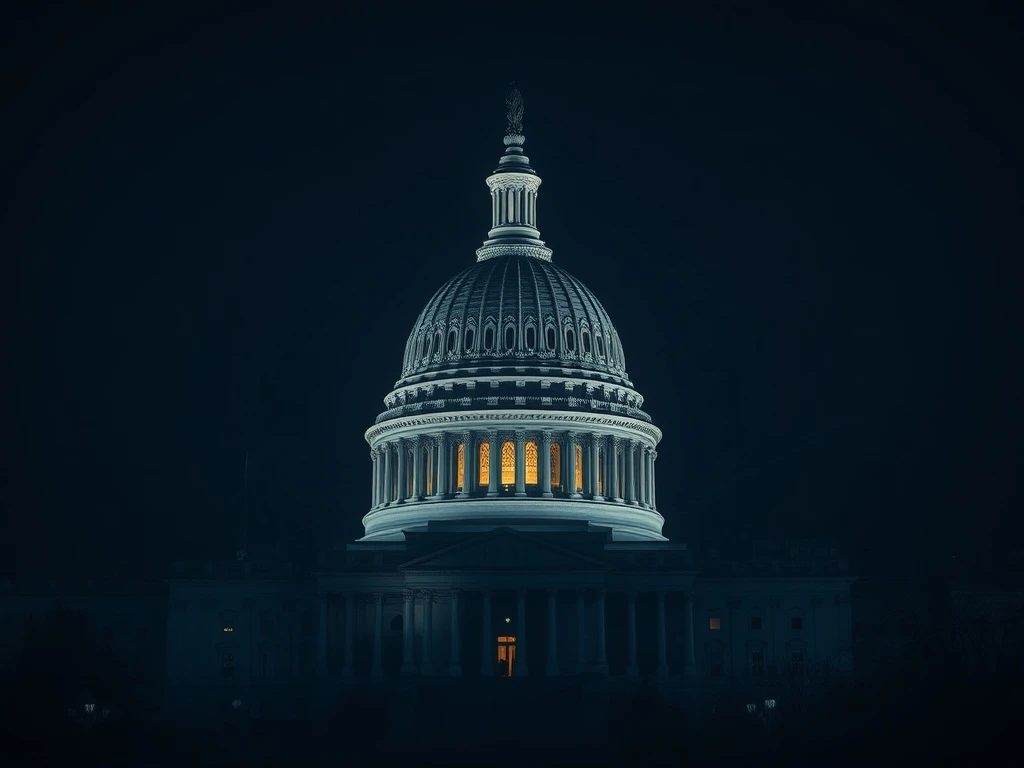
WASHINGTON, D.C. – In a pivotal development for the nation’s capital, the U.S. House of Representatives will hold a decisive vote on legislation to end the ongoing federal government shutdown. House Majority Leader Steve Scalise announced the chamber will convene for this critical vote at approximately 12:00 a.m. UTC on Thursday. This scheduled action represents a significant breakthrough in a protracted political stalemate that has frozen federal operations and impacted millions of Americans. The impending House vote on the government shutdown bill now moves the process to a crucial phase, with the nation’s attention fixed on Capitol Hill.
House Vote on Government Shutdown Bill Marks Critical Juncture
Majority Leader Steve Scalise’s announcement signals a potential end to the funding impasse. Consequently, legislative staff prepared the bill text for immediate review. The House Rules Committee will first convene to set the parameters for debate. Following this procedural step, lawmakers will proceed to a final passage vote. This legislative sequence adheres to standard House protocols for major appropriations measures. Furthermore, the timing indicates intense negotiations occurred behind the scenes. Both political parties reportedly made concessions to reach this point. The bill’s details remain under scrutiny, but its core purpose is clear: to restore full funding to shuttered agencies and departments. This process underscores the complex machinery of American governance in action.
The Path to a Midnight Vote
The decision for a late-night session is not unusual for high-stakes legislation. Historically, Congress has frequently resolved major budgetary conflicts during extended hours. For instance, the 2013 and 2018 shutdowns both ended with late-night voting marathons. This tradition reflects the pressure to resolve crises before financial markets open or before another pay period for federal workers lapses. The 12 a.m. UTC timing translates to 8 p.m. Eastern Time on Wednesday, allowing for final negotiations throughout the day. Parliamentary experts note this schedule provides maximum flexibility for last-minute amendments and whip counts.
Understanding the Government Shutdown’s Real-World Impact
A government shutdown suspends all non-essential federal functions. This current lapse in appropriations has created widespread disruption. For example, hundreds of thousands of federal employees face furloughs or work without immediate pay. Moreover, critical public services experience significant slowdowns. National parks partially closed, passport processing faced delays, and regulatory inspections reduced in frequency. The economic consequences are equally severe. Standard & Poor’s estimated the 2018-2019 shutdown cost the U.S. economy approximately $11 billion. While most of that growth eventually returned, $3 billion was permanently lost. This context makes the impending House vote on the government shutdown bill an economic imperative as much as a political one.
Key agencies and services affected include:
- Transportation Security Administration (TSA): Increased airport security wait times due to absenteeism.
- Internal Revenue Service (IRS): Delayed tax refund processing and taxpayer assistance.
- Food and Drug Administration (FDA): Reduced food safety inspections and drug application reviews.
- Small Business Administration (SBA): Halted approval of new business loans.
- National Institutes of Health (NIH): Paused clinical trials and new patient admissions for research.
Expert Analysis on the Legislative Process
Dr. Eleanor Vance, a senior fellow in governance at the Brookings Institution, provided context on the procedural hurdles. “A House vote to end a shutdown is only the first legislative step,” Vance explained. “The bill must then pass the Senate, where unanimous consent is often required for swift passage. Any single senator can object and delay the process by several days.” She further noted that the bill’s contents are paramount. “It must be a clean continuing resolution or an omnibus package that both chambers can accept. If it contains partisan policy riders, it will likely fail in the Senate, prolonging the crisis.” This expert insight highlights the fragility of the announced breakthrough.
Historical Context of U.S. Government Shutdowns
Since the modern budget process began in 1976, the U.S. has experienced over 20 funding gaps. However, only a subset caused full-scale shutdowns. The longest occurred from December 2018 to January 2019, lasting 35 days. That stalemate centered on funding for a southern border wall. Previously, a 16-day shutdown in 2013 related to the Affordable Care Act. Each event follows a similar pattern: missed deadlines, political brinksmanship, and last-minute negotiations. The table below compares key recent shutdowns:
| Year | Duration | Primary Cause | Estimated Cost |
|---|---|---|---|
| 2013 | 16 days | Affordable Care Act funding | $24 billion |
| 2018-2019 | 35 days | Border wall funding | $11 billion |
| 2023 (Brief) | Near-miss | Debt ceiling dispute | Minimal |
This historical perspective shows that shutdowns, while disruptive, are a recurrent feature of U.S. political conflict. The announcement of a House vote to end the current impasse fits the historical pattern of resolution under intense public and economic pressure.
The Role of Leadership and Whip Counts
Majority Leader Scalise’s announcement indicates Republican leadership believes they have the votes for passage. The House Republican majority is narrow, meaning nearly full party unity is required. Democratic support may also be necessary depending on defections. The Whip Office, led by Rep. Tom Emmer, has likely spent days conducting confidential vote counts. These counts assess member support and identify holdouts needing persuasion. Leadership can then tailor the bill’s provisions or make specific promises to secure a majority. This vote-counting process is a critical, unseen component of moving major legislation like the government shutdown bill to the floor.
What Happens After the House Vote?
Assuming the House passes the bill, attention will immediately shift to the Senate. Senate Majority Leader Chuck Schumer will need to secure agreement from all 100 senators to expedite the bill’s consideration. Any senator can block this fast-track process, potentially delaying a final vote for days. If the Senate amends the bill, it must return to the House for another vote, creating further delay. Once both chambers pass identical legislation, it goes to the President for signature. Upon signing, the Office of Management and Budget (OMB) directs agencies to resume normal operations. This reactivation is not instantaneous; it often takes agencies 24-48 hours to recall staff and restore full services. Therefore, the House vote on the government shutdown bill is the start of the end, not the end itself.
Conclusion
The scheduled House vote to end the government shutdown at 12 a.m. UTC Thursday represents a critical turning point in a damaging political standoff. While the procedural path forward remains complex, the announcement by Leader Scalise provides the first concrete hope for a resolution. The impacts of the shutdown on federal workers, government services, and the broader economy have created immense pressure for a solution. As lawmakers prepare for this late-night session, the nation watches, awaiting the outcome of this pivotal House vote on the government shutdown bill that will determine the immediate future of federal operations.
FAQs
Q1: What time is the House vote in my local time zone?
A1: The vote is scheduled for 12:00 a.m. Coordinated Universal Time (UTC) on Thursday. This translates to 8:00 p.m. Eastern Time (ET) and 5:00 p.m. Pacific Time (PT) on Wednesday evening.
Q2: What exactly is the House voting on?
A2: The House is voting on a bill to provide appropriations, or funding, to federal agencies whose budgets have lapsed. This is typically a “continuing resolution” (CR) to extend existing funding levels or a new omnibus spending package.
Q3: If the House passes the bill, is the shutdown over immediately?
A3: No. The bill must also pass the U.S. Senate and be signed by the President. Only then does the shutdown legally end. Agencies will then begin the process of reopening, which can take one to two days.
Q4: Why are they voting at midnight?
A4: Late-night votes are common in Congress to meet deadlines or conclude intense negotiations. This timing allows for final discussions throughout Wednesday and aligns with the desire to resolve the issue before another day of a shutdown begins.
Q5: Will federal employees receive back pay after the shutdown ends?
A5: Historically, Congress has passed separate legislation to provide back pay for furloughed federal employees after a shutdown ends. This has become standard practice, but it requires congressional action.
Related News
- Thailand Crypto Travel Rule: Government Unveils Aggressive Crackdown on Gray Money
- US Treasury 2026 Refunds Spark Bitcoin Frenzy: Investors Anticipate Massive Stimulus Wave
- US Major Indices Open Higher: Bullish Momentum Signals Market Confidence