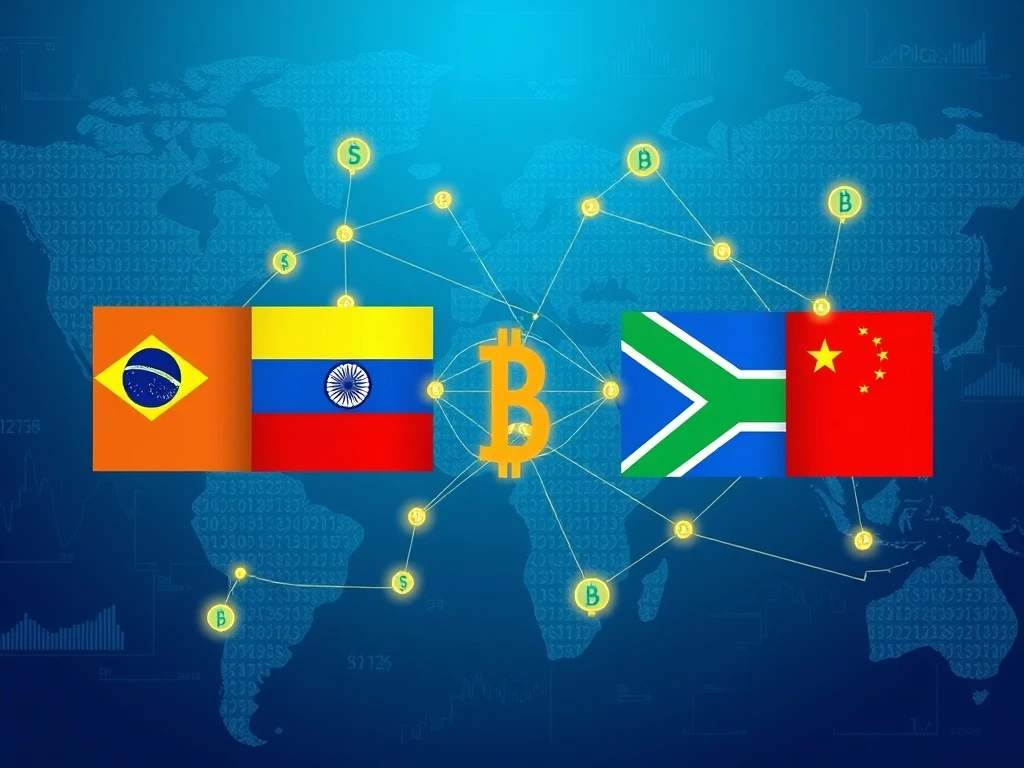
NEW DELHI, India – The Reserve Bank of India has unveiled a groundbreaking proposal to interconnect the central bank digital currencies of BRICS nations, potentially reshaping global finance and accelerating de-dollarization efforts. This strategic initiative, reported by CoinDesk and confirmed by banking sources, aims to simplify cross-border transactions dramatically while reducing dependence on traditional settlement systems. Consequently, the proposal represents one of the most significant multilateral digital currency developments since China launched its digital yuan pilot.
BRICS CBDC Interconnection Proposal Details
The Reserve Bank of India formally submitted its proposal to the Indian government this week. Specifically, the central bank requested placement of the CBDC linkage framework on the official agenda for the 2026 BRICS summit. This timeline allows member nations to conduct technical assessments and regulatory alignment. The proposed system would create a shared technical infrastructure enabling direct digital currency transfers between BRICS central banks.
Currently, cross-border payments between BRICS nations typically involve multiple correspondent banks and currency conversions. These processes often take several days and incur substantial fees. The proposed CBDC network would bypass these intermediaries entirely. Transactions could settle in minutes with significantly reduced costs. This efficiency gain particularly benefits trade and tourism sectors where payment delays create operational friction.
Technical and Operational Framework
Implementing a multinational CBDC network requires substantial technical coordination. Each BRICS member has pursued different digital currency architectures. China’s digital yuan (e-CNY) operates on a centralized ledger system. Meanwhile, India’s digital rupee (e₹) incorporates some distributed ledger elements. Brazil’s Drex and South Africa’s Project Khokha represent additional technical approaches. The RBI proposal likely suggests creating interoperability protocols rather than a unified currency.
Technical experts identify several possible implementation models:
- Interledger Protocol: Creating standardized APIs allowing different CBDC systems to communicate
- Common Settlement Layer: Establishing a shared blockchain for final settlement between central banks
- Currency Bridge: Developing conversion mechanisms with real-time exchange rates
- Regulatory Gateway: Implementing compliance checks at the interconnection points
These approaches balance sovereignty with efficiency. Each nation maintains control over its domestic monetary policy. However, they gain seamless international payment capabilities. The technical working groups must address cybersecurity, transaction finality, and liquidity management concerns.
Global De-Dollarization Context
The RBI proposal emerges amid broader BRICS efforts to reduce dollar dependence. BRICS nations accounted for 31.5% of global GDP in 2023 according to IMF data. Despite this economic weight, approximately 85% of their mutual trade still settles in U.S. dollars. This dependency creates currency risk and subjects transactions to U.S. financial surveillance. A connected CBDC network offers a potential alternative settlement mechanism.
Recent developments highlight this strategic shift. Russia and China already conduct substantial bilateral trade in national currencies. South Africa has increased local currency settlements with trading partners. Brazil and India have discussed rupee-real direct exchange mechanisms. The CBDC proposal represents a technological acceleration of these existing trends. It provides the infrastructure for more extensive local currency usage.
| Country | CBDC Name | Development Stage | Primary Technology |
|---|---|---|---|
| China | Digital Yuan (e-CNY) | National rollout | Centralized ledger |
| India | Digital Rupee (e₹) | Retail & wholesale pilots | Hybrid DLT |
| Brazil | Drex | Pilot phase | Distributed ledger |
| South Africa | Project Khokha | Wholesale testing | Quorum blockchain |
| Russia | Digital Ruble | Legislation passed | Not specified |
Economic and Geopolitical Implications
A successful BRICS CBDC network would create substantial economic benefits. Cross-border transaction costs could decrease by 40-60% according to Bank for International Settlements research. Settlement times might reduce from days to minutes. These improvements particularly help small and medium enterprises engaged in international trade. Tourism sectors would gain from simplified currency exchange processes.
Geopolitically, the proposal strengthens BRICS financial cooperation. It provides tangible infrastructure for the bloc’s long-discussed payment system alternatives. However, implementation faces significant challenges. Member nations have differing regulatory standards and financial priorities. Technical compatibility requires substantial investment in interoperability solutions. Political consensus must overcome individual national interests.
The international community watches this development closely. Western central banks continue their own CBDC research. The European Central Bank advances its digital euro project. The Federal Reserve researches a potential digital dollar. A functional BRICS network might accelerate these Western initiatives. Alternatively, it could create competing financial ecosystems with different technical standards.
Implementation Timeline and Challenges
The 2026 BRICS summit provides a realistic timeline for initial framework agreement. Technical working groups would likely form immediately after summit approval. Pilot testing between two or three member nations might begin by 2027. Full implementation across all five members could require until 2030 given the complexity involved.
Major implementation challenges include:
- Regulatory harmonization: Anti-money laundering and counter-terrorism financing standards vary between jurisdictions
- Technical interoperability: Different blockchain architectures and security protocols require bridging solutions
- Monetary policy coordination: Central banks must manage cross-border liquidity without compromising domestic objectives
- Cybersecurity: Interconnected systems create broader attack surfaces requiring robust protection
- Adoption incentives: Businesses and individuals need compelling reasons to use the new system
Despite these challenges, the potential benefits justify the effort. The COVID-19 pandemic highlighted vulnerabilities in global supply chains and payment systems. Digital infrastructure improvements address these vulnerabilities directly. They create more resilient economic connections between trading partners.
Broader Digital Currency Landscape
The RBI proposal occurs within rapid global CBDC development. Over 130 countries now explore digital currency options according to Atlantic Council data. This represents 98% of global GDP. Major economies recognize digital currency’s potential to modernize financial systems. They seek to maintain monetary sovereignty in an increasingly digital economy.
International organizations support these developments. The Bank for International Settlements coordinates multiple CBDC research projects. Its Project mBridge explores multi-CBDC arrangements for cross-border payments. The International Monetary Fund provides technical assistance to member countries. These efforts aim to ensure global financial stability during the digital transition.
Private sector innovations complement central bank initiatives. Stablecoins and tokenized deposits offer alternative digital payment solutions. However, these private instruments lack sovereign backing and deposit insurance. Central bank digital currencies provide public sector alternatives with full government guarantee. They maintain central banks’ role in the digital payment ecosystem.
Conclusion
The Reserve Bank of India’s BRICS CBDC linkage proposal represents a strategic advancement in global financial architecture. This initiative addresses genuine pain points in cross-border payments while supporting broader de-dollarization efforts. The 2026 summit timeline allows for thorough technical preparation and political consensus building. Successful implementation would demonstrate multilateral cooperation’s potential in the digital age. Furthermore, it would establish important precedents for future international payment systems. The proposal’s ultimate impact depends on member nations’ commitment to overcoming technical and regulatory hurdles. Nevertheless, it signals accelerating transformation in how nations conceptualize monetary sovereignty and international economic cooperation.
FAQs
Q1: What exactly is the Reserve Bank of India proposing regarding BRICS CBDCs?
The RBI proposes creating a technical system to interconnect the central bank digital currencies of BRICS nations (Brazil, Russia, India, China, South Africa). This system would enable direct cross-border payments between these countries’ digital currencies, simplifying transactions and reducing dollar dependence.
Q2: How would a linked BRICS CBDC system benefit ordinary people and businesses?
Businesses engaged in international trade would experience faster settlement times (minutes instead of days) and lower transaction costs. Tourists could make direct digital payments without currency exchange fees. Remittance senders would benefit from reduced transfer costs between BRICS countries.
Q3: What are the main challenges to implementing this CBDC interconnection?
Major challenges include harmonizing different regulatory standards, ensuring technical compatibility between different CBDC architectures, managing cross-border liquidity, maintaining robust cybersecurity, and creating sufficient adoption incentives for users.
Q4: How does this proposal relate to broader de-dollarization efforts?
The CBDC network would provide infrastructure for settling BRICS trade in national digital currencies rather than U.S. dollars. This reduces dollar dependency and associated currency risks while potentially creating an alternative international payment ecosystem outside traditional dollar-based systems.
Q5: What is the expected timeline for this BRICS CBDC proposal?
The RBI has requested placement on the 2026 BRICS summit agenda. If approved, technical working groups would form shortly after, with pilot testing potentially beginning by 2027. Full implementation across all five members might require until 2030 given the complexity involved.
Related News
- Cardano Founder Blasts Ripple CEO Over Controversial Crypto Market Structure Bill Support
- Trump Tariff Shock: Global Markets Plunge as EU Weighs Retaliatory Trade Measures
- Bitcoin’s Alarming Retreat: Will the $91,000 Support Level Hold Amid Market Turbulence?