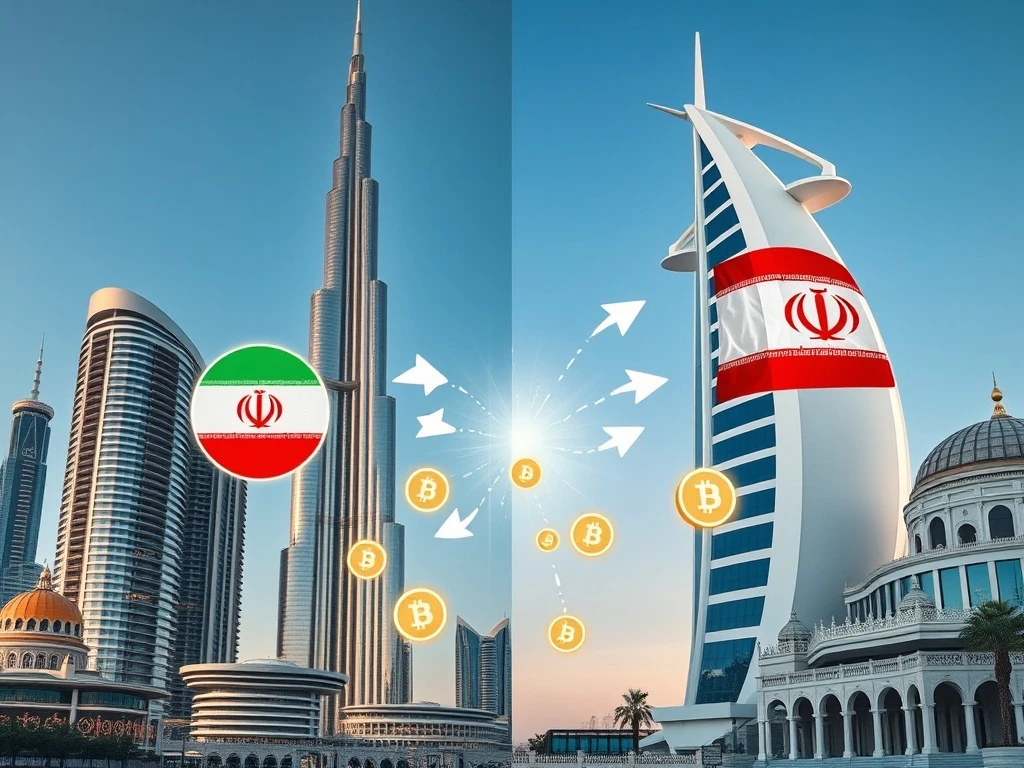
DUBAI, UAE – February 2025: A confidential financial intelligence report has uncovered a massive $1.5 billion capital movement from Iran to Dubai, orchestrated by Iranian elites utilizing both traditional banking networks and sophisticated cryptocurrency channels. This substantial Iranian elite capital flight coincides with escalating domestic strike fears and mounting economic pressure on Tehran’s regime. Financial analysts confirm this represents one of the largest documented wealth transfers from Iran in recent years, highlighting deepening concerns about Iran’s economic stability.
Iranian Elite Capital Flight: The $1.5 Billion Dubai Transfer
According to verified intelligence documents obtained from multiple Gulf financial monitoring agencies, Iranian business leaders, political figures, and wealthy families initiated coordinated capital transfers beginning in late 2024. These transfers accelerated dramatically throughout January 2025 as labor strike threats intensified across Iran’s energy and transportation sectors. The movement involved complex layering through intermediary jurisdictions before final settlement in Dubai’s financial institutions and cryptocurrency exchanges.
Financial forensic experts identified three primary transfer methods employed simultaneously. Traditional banking channels accounted for approximately 60% of the total, utilizing correspondent banking relationships with institutions in Turkey, Armenia, and Oman. Cryptocurrency transactions comprised roughly 30%, with stablecoins like USDT and USDC serving as preferred digital assets. The remaining 10% involved alternative value transfer mechanisms including trade-based money laundering through over-invoiced exports.
Cryptocurrency Dubai Transfers: The Digital Escape Route
The cryptocurrency component of these transfers reveals sophisticated operational planning by Iranian elites. Analysis shows predominant use of privacy-focused cryptocurrencies initially, followed by conversion to dollar-pegged stablecoins upon reaching intermediary wallets. These digital assets then moved through decentralized exchanges before conversion to fiat currency in Dubai-regulated crypto exchanges. This method effectively bypassed traditional financial monitoring systems that track cross-border bank transfers.
Dubai’s progressive cryptocurrency regulations have positioned the emirate as a regional hub for digital asset transactions. The Dubai Virtual Assets Regulatory Authority (VARA) oversees licensed exchanges that processed significant portions of these Iranian-origin transfers. While VARA maintains strict anti-money laundering protocols, the layered nature of these transactions presented substantial compliance challenges for monitoring systems.
Expert Analysis: Financial Implications and Regional Impact
Dr. Amina Al-Mansoori, a Gulf financial compliance specialist with 15 years of experience monitoring cross-border capital flows, provided critical context. “The scale and timing of these transfers indicate coordinated action rather than isolated decisions,” she explained. “The simultaneous use of banking and cryptocurrency channels suggests involvement of financial professionals with expertise in both traditional and digital finance systems.”
This capital movement carries significant implications for Iran’s domestic economy. The $1.5 billion outflow represents approximately 0.3% of Iran’s estimated foreign exchange reserves, creating additional pressure on the already strained Iranian rial. Meanwhile, Dubai’s property market and financial sector stand to benefit from this influx of capital, potentially driving further real estate price appreciation in premium segments.
Strike Fears and Economic Context Driving Capital Flight
The timing of these transfers directly correlates with escalating labor unrest across Iran. Energy sector workers threatened nationwide strikes in response to unpaid wages and deteriorating working conditions. Transportation unions simultaneously organized coordinated action plans, creating concerns about potential economic paralysis. These developments followed months of inflationary pressure that saw Iran’s annual inflation rate exceed 45% in 2024.
Historical context reveals patterns in Iranian elite behavior during periods of domestic instability. Previous episodes of capital flight occurred during the 2018-2019 U.S. sanction implementation and the 2022 nationwide protests. However, the current transfer volume exceeds previous movements by approximately 40%, according to comparative data from regional financial intelligence units.
Banking Channels and Regulatory Challenges
The traditional banking component of these transfers utilized established relationships between Iranian and foreign financial institutions. Correspondent banking arrangements with third-country banks enabled initial transfers out of Iran, followed by secondary movements to Dubai. This multi-jurisdictional approach complicated regulatory oversight and delayed detection by any single nation’s financial intelligence unit.
International banking compliance standards require enhanced due diligence for Iranian-connected transactions under Financial Action Task Force (FATF) guidelines. However, the layered nature of these transfers, combined with legitimate business front operations, created substantial challenges for compliance screening systems. Banking analysts note that identifying ultimate beneficial ownership in such complex transactions often requires weeks of investigation.
Comparative Analysis: Transfer Methods and Detection Rates
| Transfer Method | Percentage of Total | Average Detection Time | Regulatory Oversight Level |
|---|---|---|---|
| Traditional Banking | 60% | 3-7 days | High |
| Cryptocurrency | 30% | 7-14 days | Medium |
| Trade-Based | 10% | 14-30 days | Low |
This comparative data illustrates why Iranian elites employed mixed transfer methods. The varied detection timelines across different channels created operational advantages, while the distributed approach reduced concentration risk in any single transfer method.
Regional Economic Impact and Future Projections
The $1.5 billion inflow represents approximately 1.2% of Dubai’s annual foreign direct investment, creating measurable economic impact. Real estate analysts project increased activity in Dubai’s luxury property market, particularly in districts popular with Iranian investors. Financial services sectors may experience expanded demand for wealth management and investment advisory services catering to new high-net-worth clients.
Conversely, Iran faces continued capital outflow pressures that could exacerbate existing economic challenges. The Central Bank of Iran maintains strict capital controls, but sophisticated transfer mechanisms continue to enable wealth preservation strategies for elites. Future monitoring will focus on whether this represents a singular event or the beginning of sustained capital flight trends.
Conclusion
The documented $1.5 billion Iranian elite capital flight to Dubai reveals sophisticated financial maneuvering during periods of domestic instability. The coordinated use of banking and cryptocurrency channels demonstrates evolving wealth preservation strategies among Iranian elites facing economic uncertainty and strike fears. This substantial transfer highlights ongoing challenges in international financial monitoring while underscoring Dubai’s continued role as a regional safe haven for capital. Future developments will depend on Iran’s domestic stability and the effectiveness of enhanced regulatory cooperation between Gulf financial intelligence units.
FAQs
Q1: How did Iranian elites transfer $1.5 billion to Dubai?
They utilized three primary methods: traditional banking channels (60%), cryptocurrency transactions (30%), and trade-based money laundering (10%). The transfers involved layered movements through intermediary jurisdictions before final settlement in Dubai.
Q2: Why are strike fears driving capital flight from Iran?
Escalating labor unrest in Iran’s energy and transportation sectors threatens economic disruption. Iranian elites historically move capital abroad during periods of domestic instability to preserve wealth against currency devaluation and potential asset freezes.
Q3: What role does cryptocurrency play in these transfers?
Cryptocurrency, particularly stablecoins, provides a digital transfer mechanism that bypasses some traditional financial monitoring systems. Iranian elites used privacy coins initially, converted to stablecoins, then to fiat currency through Dubai-regulated exchanges.
Q4: How does this capital flight impact Iran’s economy?
The $1.5 billion outflow represents approximately 0.3% of Iran’s foreign exchange reserves, creating additional pressure on the Iranian rial and potentially exacerbating existing inflationary pressures and economic challenges.
Q5: What makes Dubai an attractive destination for these transfers?
Dubai offers political stability, established financial infrastructure, progressive cryptocurrency regulations, geographic proximity, cultural familiarity, and a history of Iranian business presence, making it a preferred destination for Iranian capital preservation.
Related News
- US December PPI Jumps 0.5%, Shattering Forecasts and Complicating Fed’s Inflation Battle
- Falcon Finance Launches Ambitious $50M Ecosystem Fund to Revolutionize Real-World Asset Tokenization
- OKX ZAMA Listing: Strategic Expansion into Privacy-Focused Cryptocurrency Trading