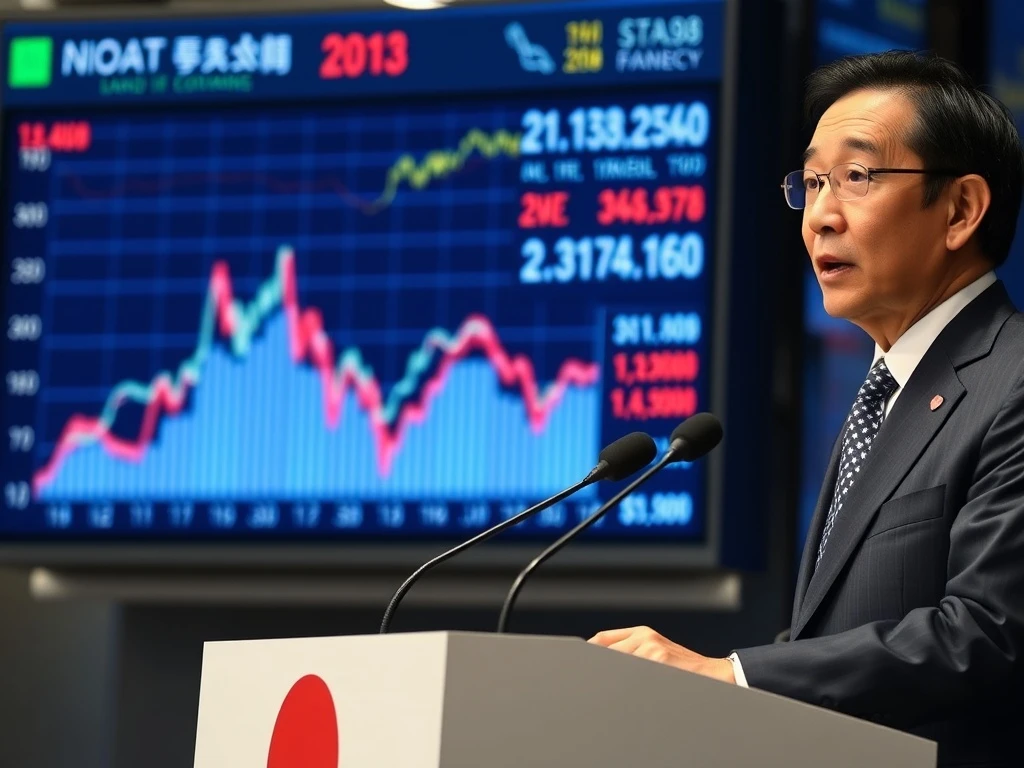
TOKYO, Japan – Finance Minister Satsuki Katayama has issued a critical call for market stability as Japanese government bond yields surge to their highest levels in decades, creating ripple effects across global financial markets and potentially threatening cryptocurrency investments tied to the yen carry trade.
Japan’s Bond Market Faces Historic Pressure
Japanese government bond yields have reached multi-decade highs, according to Bloomberg reports. Consequently, this development signals a substantial sell-off in the country’s debt market. The 10-year Japanese Government Bond yield recently surpassed 2.5%, marking its highest level since 2013. Meanwhile, longer-dated bonds have experienced even more dramatic movements.
Finance Minister Katayama addressed these concerns directly. She emphasized Japan’s improved fiscal position despite the market turmoil. Specifically, she noted that Japan’s debt dependency has reached a 30-year low. Additionally, the country’s fiscal deficit now stands as the smallest among all G7 nations. These statements aim to reassure international investors about Japan’s economic fundamentals.
The Mechanics of Bond Yield Movements
Bond yields move inversely to bond prices. Therefore, rising yields indicate falling bond prices. This relationship creates significant pressure on existing bondholders. Market analysts attribute the current sell-off to several factors. First, shifting expectations about Bank of Japan policy have emerged. Second, global inflation concerns persist. Third, international capital flows have changed direction.
The following table illustrates recent yield movements across key Japanese government bond maturities:
| Bond Maturity | Current Yield | Change (Basis Points) | Multi-Year High |
|---|---|---|---|
| 10-Year JGB | 2.52% | +18 | Since 2013 |
| 20-Year JGB | 2.85% | +22 | Since 2011 |
| 30-Year JGB | 3.02% | +25 | Since 2010 |
Global Financial Markets Experience Contagion Effects
The Japanese bond sell-off has created immediate spillover effects. Particularly, U.S. Treasury yields have risen in tandem. This parallel movement suggests interconnected global debt markets. Moreover, European sovereign bonds have shown similar pressure. Financial institutions worldwide monitor these developments closely.
Several key factors drive this international correlation:
- International capital flows – Investors rebalance global portfolios
- Currency hedge adjustments – Institutions modify their foreign exchange exposure
- Risk reassessment – Market participants reconsider sovereign debt risks
- Policy divergence concerns – Different central bank approaches create uncertainty
The Yen Carry Trade Faces Unwinding Pressure
Rising Japanese bond yields threaten the decades-old yen carry trade. This strategy involves borrowing Japanese yen at low interest rates. Investors then convert these funds into higher-yielding assets. Traditionally, these assets include U.S. Treasury bonds and equities. Recently, however, cryptocurrency markets have become popular destinations.
The carry trade depends on stable or declining Japanese interest rates. Rising yields increase borrowing costs dramatically. Consequently, investors face margin calls and position liquidations. Market analysts estimate the total size of yen carry trade positions exceeds $1 trillion globally.
Cryptocurrency Markets Face Potential Downward Pressure
Bitcoin and other cryptocurrencies have benefited from yen carry trade flows. Japanese investors seeking higher returns have allocated significant capital to digital assets. Furthermore, international hedge funds using yen financing have entered crypto markets. A sudden unwinding of these positions could create substantial selling pressure.
Historical data shows correlation patterns between yen movements and cryptocurrency prices. Typically, yen weakness corresponds with cryptocurrency strength. This relationship reflects carry trade dynamics. However, rising Japanese yields could reverse this pattern. Market participants should monitor several indicators:
- USD/JPY exchange rate – Key carry trade profitability metric
- Japanese bond yield volatility – Measures market stress levels
- Crypto exchange inflows from Japan – Tracks capital movement patterns
- Margin lending rates in Japan – Indicates borrowing cost changes
Finance Minister’s Currency Intervention Stance
Minister Katayama addressed currency market concerns directly. She stated that “all options remain on the table” regarding yen weakness. This declaration follows consultations with U.S. Treasury officials. Historically, Japan has intervened in currency markets during extreme movements. The last major intervention occurred in 2022.
Currency intervention could stabilize the yen temporarily. However, fundamental factors ultimately determine exchange rates. Japan’s monetary policy divergence from other major economies creates persistent yen weakness. The Bank of Japan maintains ultra-loose policies while other central banks tighten.
Historical Context and Market Comparisons
The current bond market situation resembles previous episodes of Japanese financial stress. The 2003 JGB volatility spike created similar concerns. Additionally, the 2013 “Abenomics” transition period saw bond market turbulence. However, current yields exceed both historical precedents.
International comparisons provide useful perspective. Japanese government debt-to-GDP ratios remain the highest among developed nations. Nevertheless, domestic ownership patterns differ significantly. Japanese households and institutions hold approximately 90% of JGBs. This domestic ownership provides stability during international sell-offs.
Expert Analysis and Market Forecasts
Financial analysts offer varying perspectives on the situation. Morgan Stanley researchers suggest the sell-off may continue. They cite changing inflation expectations in Japan. Conversely, Goldman Sachs analysts predict stabilization. They emphasize the Bank of Japan’s commitment to yield curve control.
Cryptocurrency market specialists express particular concern. They note that Bitcoin’s recent correlation with traditional markets has increased. Therefore, Japanese financial instability could affect digital assets disproportionately. Market participants should prepare for potential volatility across asset classes.
Conclusion
Japan’s finance minister has issued a critical call for market stability amid historic bond yield movements. These developments threaten global financial markets through multiple channels. Particularly, the yen carry trade unwinding could impact cryptocurrency investments significantly. Market participants must monitor Japanese bond yields closely. Furthermore, they should assess their exposure to yen-funded positions. The situation remains fluid, with potential implications across global asset classes.
FAQs
Q1: What causes Japanese government bond yields to rise?
Japanese bond yields rise when bond prices fall. This typically occurs when investors sell bonds due to inflation concerns, expectations of interest rate increases, or seeking higher returns elsewhere. Recently, changing expectations about Bank of Japan policy have driven the sell-off.
Q2: How does the yen carry trade affect cryptocurrency markets?
The yen carry trade involves borrowing cheap yen to invest in higher-yielding assets like cryptocurrencies. When Japanese yields rise, borrowing costs increase, potentially forcing investors to sell their cryptocurrency holdings to repay loans, creating downward price pressure.
Q3: What did Japan’s finance minister say about currency intervention?
Finance Minister Satsuki Katayama stated that “all options are on the table” regarding yen weakness, based on consultations with U.S. officials. This suggests Japan might intervene in currency markets if the yen’s decline becomes disorderly or threatens financial stability.
Q4: Why are rising Japanese bond yields affecting U.S. Treasury markets?
Global bond markets are interconnected through international capital flows. When Japanese bonds become less attractive, investors may shift to U.S. Treasuries, but rising Japanese yields also increase global borrowing costs and risk perceptions, affecting all sovereign debt markets.
Q5: How significant is Japan’s current fiscal position according to the finance minister?
Minister Katayama emphasized that Japan’s debt dependency is at a 30-year low and its fiscal deficit is the smallest among G7 nations. These statements aim to reassure markets about Japan’s fundamental economic strength despite bond market volatility.
Related News
- Bitcoin Whale’s Stunning Daily Accumulation: Bitfinex Address Buys 450 BTC Matching Entire Mining Output
- CFTC Crypto Oversight Faces Alarming Capacity Crisis as Staff Cuts Collide with Expanding Mandate
- CFTC’s ‘Future-Proof’ Initiative Sparks Unprecedented Bullish Momentum for Digital Assets