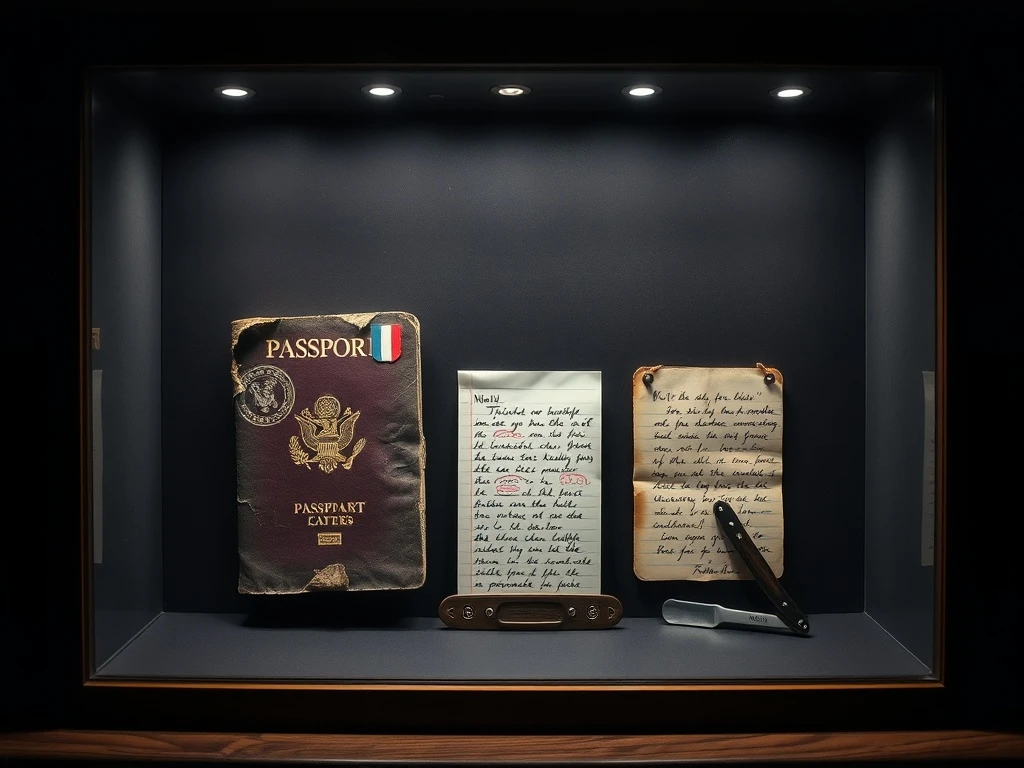
In a remarkable turn of events that bridges digital innovation and physical legacy, the personal effects of cybersecurity pioneer John McAfee have surfaced for public auction this month, offering unprecedented insight into the controversial figure’s tumultuous life through artifacts ranging from prison survival tools to international travel documents. The John McAfee auction represents more than mere memorabilia collection; it provides tangible connections to one of technology’s most enigmatic personalities, whose influence spanned antivirus software development, cryptocurrency advocacy, and international legal battles. These items, meticulously cataloged by estate handlers, tell a fragmented story of innovation, paranoia, and rebellion that continues to shape discussions about digital privacy and personal freedom in 2025.
John McAfee Auction Reveals Bizarre Personal Collection
The auction catalog, reviewed by technology historians, contains approximately 47 lots of personal items recovered from McAfee’s various residences and storage facilities. Notably, the collection includes practical survival items from his 2021 incarceration in Spain’s Brians 2 prison, where authorities held him pending extradition to the United States on tax evasion charges. Among these prison artifacts, a standard-issue safety razor modified for personal use stands out as particularly symbolic. Correctional facility experts confirm that inmates often personalize such items, transforming utilitarian objects into expressions of individuality within restrictive environments. Meanwhile, multiple passports bearing different names but featuring McAfee’s photograph document his extensive international movements between 2012 and 2020, particularly throughout Central America, Eastern Europe, and the Caribbean.
Furthermore, the auction includes technological artifacts that bridge McAfee’s professional and personal worlds. A custom-configured laptop containing encrypted partitions represents his ongoing commitment to digital privacy, while handwritten notebooks filled with cryptographic algorithms and blockchain concepts demonstrate his later-career focus on cryptocurrency systems. Auction house specialists have verified the authenticity of all items through provenance documentation and forensic examination. They employed digital fingerprint analysis on electronic devices and consulted with former associates who could confirm specific items’ origins. This verification process ensures collectors receive genuine artifacts connected to McAfee’s multifaceted life.
The Historical Context Behind the Artifacts
To understand the significance of these items, one must examine McAfee’s trajectory from respected software entrepreneur to international fugitive. After founding McAfee Associates in 1987 and revolutionizing computer security with his antivirus software, he sold his company to Intel in 2011 for $7.68 billion. Subsequently, McAfee relocated to Belize, where his behavior grew increasingly erratic amid police investigations and neighbor disputes. His 2012 flight from Belizean authorities, following the death of his neighbor Gregory Faull, marked the beginning of his nomadic existence across multiple jurisdictions. During this period, McAfee became a vocal cryptocurrency advocate, launching his own digital currency projects while frequently criticizing government surveillance and financial regulations.
The prison artifacts specifically reference his final legal chapter. Spanish authorities arrested McAfee at Barcelona’s El Prat Airport in October 2020 at the request of U.S. officials. The U.S. Department of Justice had indicted him for tax evasion, alleging he failed to report income from cryptocurrency promotions, consulting work, and speaking engagements between 2014 and 2018. While imprisoned, McAfee continued communicating with followers through social media until his death in June 2021, which Spanish authorities ruled a suicide. Forensic technology analysts note that the timing and circumstances surrounding his death remain subjects of speculation within cryptocurrency communities, adding layers of mystery to the artifacts now available.
Cryptocurrency Community Reacts to Memorabilia Sale
The announcement of the John McAfee auction has generated significant discussion within blockchain and digital currency circles. Many cryptocurrency enthusiasts view McAfee as a foundational figure who brought mainstream attention to Bitcoin and alternative coins during their formative years. His famously bullish Bitcoin price predictions, though increasingly unrealistic toward the end of his life, nevertheless stimulated public interest in digital assets. Consequently, collectors specializing in technology history have expressed strong interest in items related to his cryptocurrency advocacy. Auction house representatives report particular demand for devices containing his cryptocurrency wallet information or development notes, despite ethical questions about accessing such materials.
Simultaneously, cybersecurity professionals approach the auction with more measured interest. They recognize McAfee’s early contributions to antivirus technology while acknowledging his later descent into controversy. Industry veterans emphasize that his personal artifacts should be contextualized within the broader history of digital security development. The auction coincides with renewed academic interest in McAfee’s psychological profile and its relationship to technological innovation. Researchers from Stanford University’s Center for Internet and Society recently published a paper analyzing how McAfee’s personal struggles mirrored larger tensions between individual privacy and institutional oversight in the digital age. Their findings suggest his artifacts represent physical manifestations of these ongoing conflicts.
Key items generating auction interest include:
- Modified prison razor with engraved cryptographic symbols
- Three passports showing extensive travel stamps from 2015-2019
- Encrypted laptop containing unpublished writings
- Hand-drawn diagrams of blockchain architectures
- Personal journals documenting cryptocurrency development ideas
- Custom wearable devices designed for privacy protection
Legal and Ethical Considerations for Collectors
The sale of McAfee’s personal effects raises several legal and ethical questions that auction houses must navigate carefully. International law regarding the transfer of potentially sensitive digital information remains ambiguous, particularly when devices may contain encrypted data. Privacy advocates have expressed concerns that personal communications or financial information could become accessible to purchasers, potentially violating posthumous privacy rights. In response, auction organizers have implemented protocols to wipe personal data from electronic devices while preserving their historical significance. They work with digital forensic experts who create forensic images of storage media for archival purposes before securely erasing private information.
Additionally, intellectual property considerations surround McAfee’s unpublished writings and technical diagrams. His estate retains copyright to original creative works, meaning purchasers acquire physical artifacts but not reproduction rights. Auction terms explicitly prohibit commercial exploitation of any intellectual property contained within the items. Meanwhile, museums and educational institutions have shown interest in acquiring select pieces for historical preservation. The Computer History Museum in Mountain View, California, has expressed particular interest in items demonstrating McAfee’s early antivirus development work, viewing them as important artifacts in the evolution of cybersecurity.
The Market for Technology Pioneer Memorabilia
The John McAfee auction occurs within a growing market for technology-related historical artifacts. Over the past decade, collectors have increasingly sought items connected to digital innovation pioneers, creating a niche but expanding memorabilia category. Previous notable sales include Steve Jobs’ personal computers, early Apple prototypes, and Satoshi Nakamoto’s alleged Bitcoin development hardware. Auction analysts note that McAfee items occupy a unique position within this market due to their connection to both cybersecurity and cryptocurrency history. Preliminary estimates suggest high-value lots could reach six-figure sums, particularly for items with clear provenance and historical significance.
Market dynamics reveal interesting patterns in technology memorabilia collecting. Items associated with controversial figures often attract premium prices due to their narrative value and rarity. Furthermore, the physical nature of these artifacts provides tangible connections to digital phenomena that otherwise exist only in virtual spaces. Collectors appreciate how McAfee’s modified razor or travel-worn passports represent physical manifestations of his digital-focused life. Auction houses have responded to this interest by developing specialized authentication procedures for technology artifacts, including component analysis, software verification, and provenance documentation through chain-of-custody records.
| Item | Year | Sale Price | Significance |
|---|---|---|---|
| Steve Jobs’ “Apple I” prototype | 2023 | $677,000 | Early personal computer development |
| Satoshi-era Bitcoin mining rig | 2022 | $384,000 | Cryptocurrency origins |
| Tim Berners-Lee WWW source code NFT | 2021 | $5.4 million | Internet foundation |
| Ada Lovelace mathematical notes | 2020 | $125,000 | Early computing concepts |
Preserving Digital History Through Physical Artifacts
Historians of technology emphasize the importance of preserving physical artifacts from digital pioneers, arguing that these items provide crucial context often missing from purely digital records. McAfee’s personal effects offer insights into the material conditions surrounding his work, from the tools he used in prison to the documents facilitating his international movements. These artifacts help researchers understand how digital innovators interacted with physical realities, balancing virtual creations with tangible necessities. Museums increasingly recognize the value of such collections for educating future generations about technology’s human dimensions.
Preservation efforts face particular challenges with digital-era artifacts. Electronic devices degrade over time, storage media becomes obsolete, and software dependencies disappear. Conservation specialists must develop new techniques for maintaining functional access to historical digital artifacts while preserving their original states. The McAfee collection presents these challenges in concentrated form, containing everything from paper documents to custom electronic devices. Conservation teams employ climate-controlled storage, digital migration strategies, and detailed documentation to ensure the artifacts remain accessible for future study. Their work ensures that McAfee’s complex legacy receives balanced preservation beyond sensationalized media narratives.
Conclusion
The John McAfee auction provides unprecedented access to the physical remnants of a digital pioneer’s chaotic journey through cybersecurity innovation, cryptocurrency advocacy, and international legal battles. These personal artifacts—from prison survival tools to extensively stamped passports—offer tangible connections to McAfee’s multifaceted legacy that continues influencing discussions about privacy, technology, and personal freedom. As collectors and institutions evaluate these items, they contribute to preserving an important chapter in digital history that bridges technological innovation and human complexity. The John McAfee auction ultimately serves as a reminder that even our most digital lives leave physical traces, and these material remnants often tell stories that virtual records cannot capture alone.
FAQs
Q1: What are the most valuable items in the John McAfee auction?
The most valuable items likely include his encrypted laptop containing unpublished writings, early cryptocurrency development notes, and personalized items from his prison period. Auction estimates suggest some lots may reach six-figure values due to their historical significance and connection to cybersecurity history.
Q2: How did authorities verify the authenticity of McAfee’s personal effects?
Auction houses employed multiple verification methods including forensic analysis of digital devices, provenance documentation tracing item history, consultation with former associates, and comparison with known photographs of McAfee using specific items during his lifetime.
Q3: What ethical concerns surround the sale of McAfee’s personal artifacts?
Primary ethical concerns include potential privacy violations if personal data remains accessible on devices, respectful treatment of items connected to sensitive life events, and appropriate contextualization of artifacts within McAfee’s complex legacy rather than sensationalized presentation.
Q4: How does this auction compare to other technology memorabilia sales?
The McAfee auction occupies a unique position combining cybersecurity and cryptocurrency history. While less commercially valuable than some Apple or early internet artifacts, it offers distinctive insights into digital privacy advocacy and the personal dimensions of technological innovation.
Q5: Will museums acquire any items from the McAfee auction?
Several technology museums have expressed interest, particularly in items demonstrating early antivirus development or cryptocurrency advocacy. Museums face budget constraints but recognize the historical importance of preserving artifacts from influential digital pioneers.
Related News
- Bitcoin Options: $1.9 Billion Expiration Event Today Creates Critical Market Crossroads
- Crypto Fear & Greed Index Climbs to 24, Yet Lingers in Daunting Extreme Fear Zone
- Bitmine’s Monumental $500 Million ETH Stake Signals Unwavering Institutional Confidence in Ethereum