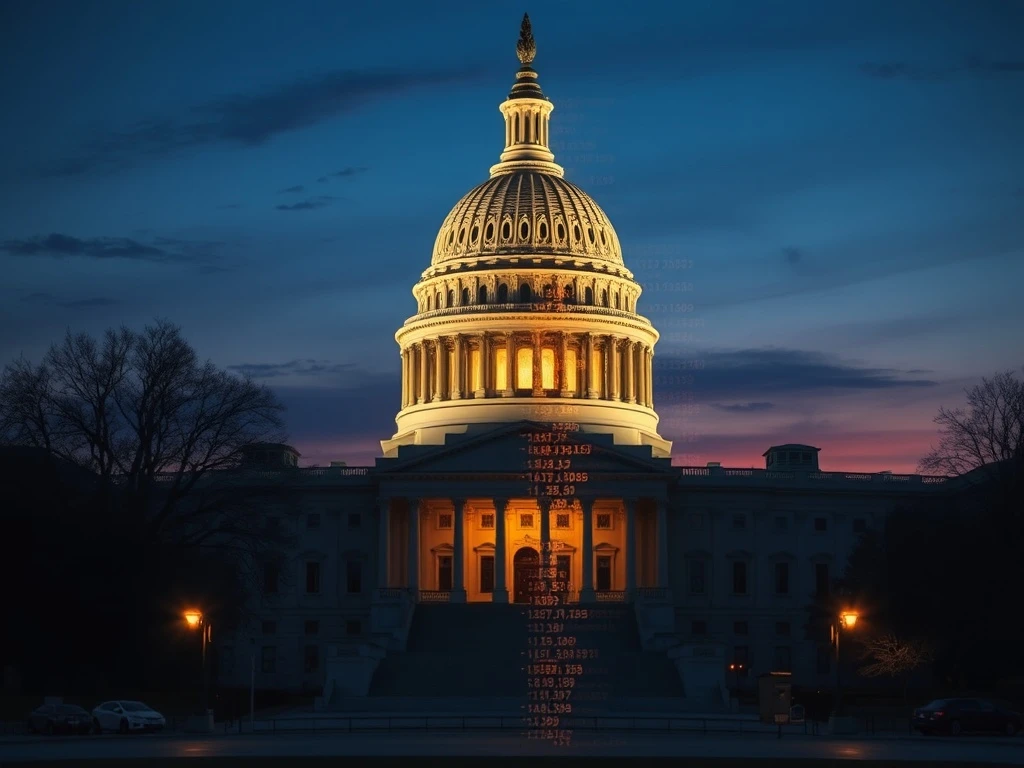
WASHINGTON, D.C. — March 2025 — Prediction market platform Kalshi now assigns a striking 60% probability to the passage of landmark legislation that would ban stock trading by members of the U.S. Congress this year. This congressional stock ban represents one of the most significant ethics reforms in decades, with market data suggesting growing political momentum behind the controversial measure. The Kalshi prediction market data provides a quantitative, real-time gauge of legislative probability that traditional polls cannot match.
Congressional Stock Ban Gains Momentum Through Prediction Markets
Kalshi’s prediction markets have emerged as a sophisticated tool for forecasting political outcomes. The platform allows users to trade contracts based on whether specific events will occur. Consequently, the current 60% probability reflects aggregated market sentiment from thousands of participants. This data point suggests traders see substantial movement toward restricting lawmakers’ financial activities. The congressional stock trading ban has evolved from a niche proposal to mainstream legislation over several sessions.
Historical context reveals this issue’s persistence. For instance, the STOCK Act of 2012 aimed to curb insider trading but left significant loopholes. Multiple bills have since sought to close these gaps, including the Ban Conflicted Trading Act and the TRUST in Congress Act. However, previous efforts stalled despite bipartisan public support. The current 60% probability on Kalshi represents the highest market confidence in passage since tracking began. Market participants clearly weigh recent committee advancements and shifting political calculations.
Understanding Prediction Market Methodology and Accuracy
Prediction markets like Kalshi operate on the wisdom-of-crowds principle. Essentially, they aggregate diverse information from participants who risk real money on outcomes. Research consistently shows these markets often outperform expert polls for forecasting. The 60% congressional stock ban probability derives from actual trading volume and price movements. This methodology contrasts with traditional surveys that merely measure stated opinions.
Kalshi’s regulatory status as a CFTC-designated contract market adds credibility. The platform must maintain strict compliance and transparency standards. Market probabilities update continuously as new information emerges. Recent hearings, sponsor announcements, and committee votes directly influence trading activity. Therefore, the current 60% figure reflects real-time assessment of legislative viability. This dynamic measurement provides advantages over static polling data.
Legislative Timeline and Key Provisions
The proposed congressional stock ban legislation typically includes several core components. Most bills would prohibit members of Congress, their spouses, and dependent children from trading individual stocks. Lawmakers would generally need to place their investments in qualified blind trusts or broad-based funds like mutual ETFs. Enforcement mechanisms and disclosure requirements vary between proposals. The timeline for potential passage remains aggressive, with sponsors targeting the current legislative session.
Recent developments have significantly increased the probability of success. Committee markups in both chambers have advanced cleaner versions of the legislation. Furthermore, leadership in both parties has expressed renewed commitment to ethics reform. Public pressure continues mounting through advocacy groups and media coverage. These factors collectively explain the upward movement in prediction market odds. The 60% probability suggests traders see a slightly better than even chance of enactment.
Comparative Analysis of Congressional Trading Restrictions
International precedents provide useful context for the proposed congressional stock ban. Many democracies already restrict parliamentarian trading activities. For example, the United Kingdom maintains strict rules for MP financial disclosures. Canada requires ministers to place assets in blind trusts. Australia prohibits parliamentarians from trading in companies they officially oversee. The United States currently has comparatively lenient regulations despite recent scandals.
| Country | Restriction Level | Enforcement Mechanism |
|---|---|---|
| United States (Current) | Moderate | STOCK Act disclosures |
| United Kingdom | High | Parliamentary Commissioner |
| Canada | High | Conflict of Interest Act |
| Australia | Medium-High | Ministerial Code |
The table illustrates America’s regulatory position relative to peer nations. A successful congressional stock ban would align U.S. standards with international norms. Proponents argue this alignment would restore public trust in governmental institutions. Opponents counter that existing disclosure requirements already provide sufficient transparency. The prediction market probability suggests the proponents’ arguments currently hold more sway.
Economic and Political Impacts of a Trading Ban
A congressional stock trading ban would create immediate and long-term effects. Financially, it would redirect lawmakers’ investment strategies toward blind trusts and diversified funds. Politically, it could reduce perceived conflicts of interest during legislative deliberations. The ban might also influence corporate lobbying approaches and campaign finance dynamics. These potential impacts contribute to the vigorous debate surrounding the legislation.
Key considerations include:
- Conflict Reduction: Eliminating personal financial stakes in legislative outcomes
- Public Trust: Potentially improving confidence in congressional integrity
- Implementation Challenges: Establishing effective compliance monitoring systems
- Financial Planning: Adjusting retirement and investment strategies for lawmakers
Market analysts note that prediction markets efficiently incorporate these complex factors. The 60% probability reflects weighted consideration of all variables. As new information emerges, the probability will adjust accordingly. This dynamic responsiveness makes prediction markets valuable for tracking legislative momentum.
Expert Perspectives on Market-Based Forecasting
Political scientists increasingly recognize prediction markets as valuable forecasting tools. Dr. Emily Rosen, a governance researcher at Georgetown University, explains their utility. “Prediction markets aggregate dispersed information more effectively than surveys,” she notes. “Participants have financial incentives to research thoroughly and update positions quickly.” This mechanism explains why Kalshi’s 60% probability carries significant analytical weight.
Financial ethics professor David Chen from Stanford University highlights the congressional stock ban’s symbolic importance. “This legislation addresses fundamental questions about public service and private gain,” Chen observes. “The prediction market probability reflects not just legislative math but shifting normative expectations.” Both experts emphasize that while markets provide probabilities, they don’t guarantee outcomes. The 60% figure represents informed estimation, not certainty.
Historical Performance of Political Prediction Markets
Prediction markets have established a credible track record in political forecasting. During the 2020 and 2022 election cycles, Kalshi and similar platforms demonstrated notable accuracy. They frequently identified momentum shifts before traditional media narratives emerged. This historical performance lends credibility to the current 60% probability for the congressional stock ban. Market-based forecasting has evolved substantially since early experiments like the Iowa Electronic Markets.
Several factors contribute to prediction market accuracy:
- Incentive Alignment: Traders profit from correct predictions
- Information Aggregation: Diverse knowledge pools combine efficiently
- Real-Time Updating: Prices adjust immediately to new information
- Anonymity: Reduces social desirability bias in responses
These characteristics help explain why many analysts monitor prediction markets alongside traditional polling. The congressional stock ban probability represents a synthesis of numerous information streams. Market participants continuously evaluate legislative procedures, whip counts, and external pressures.
Conclusion
Kalshi prediction market data indicating a 60% probability of a congressional stock ban passing this year provides a compelling quantitative measure of legislative momentum. This congressional stock trading prohibition represents a substantial ethics reform with significant implications for government transparency. The prediction market methodology offers unique insights into the bill’s prospects, synthesizing diverse information through market mechanisms. While the 60% probability suggests better than even odds, final passage remains uncertain and dependent on continued political will. Monitoring these prediction markets will provide early indicators of shifting legislative dynamics as the congressional stock ban advances through the legislative process.
FAQs
Q1: What exactly does Kalshi’s 60% probability mean for the congressional stock ban?
A1: The 60% probability indicates that prediction market traders collectively believe there is a 60% chance that legislation banning stock trading by members of Congress will pass during the current legislative session. This figure derives from actual trading activity on Kalshi’s regulated platform.
Q2: How accurate have prediction markets been in forecasting previous congressional actions?
A2: Prediction markets have demonstrated reasonable accuracy in forecasting legislative outcomes, often identifying momentum shifts before traditional media coverage. However, like all forecasting tools, they are not infallible and should be considered alongside other analytical methods.
Q3: What would a congressional stock trading ban actually prohibit?
A3: Most proposed bills would prohibit members of Congress, their spouses, and dependent children from trading individual stocks. Lawmakers would typically need to place investments in qualified blind trusts or diversified funds like index funds and ETFs.
Q4: Why has this legislation gained momentum now after previous failures?
A4: Increased public scrutiny of congressional trading activities, several high-profile cases, bipartisan advocacy, and leadership support in both chambers have created more favorable conditions for passage than in previous sessions.
Q5: How do prediction markets differ from traditional political polling?
A5: Prediction markets involve participants risking real money on outcomes, creating financial incentives for accurate forecasting. They aggregate information continuously and anonymously, often capturing nuances that traditional polls might miss due to sampling limitations or social desirability bias.
Related News
- Alphabet Shatters Records with $4 Trillion Valuation After Revolutionary Apple AI Partnership
- Bitcoin’s Public Ledger Paradox: The Critical Barrier Preventing Central Bank Adoption
- Strategic Expansion: H100 Group’s Ambitious Acquisition of Future Holdings to Conquer Swiss Market