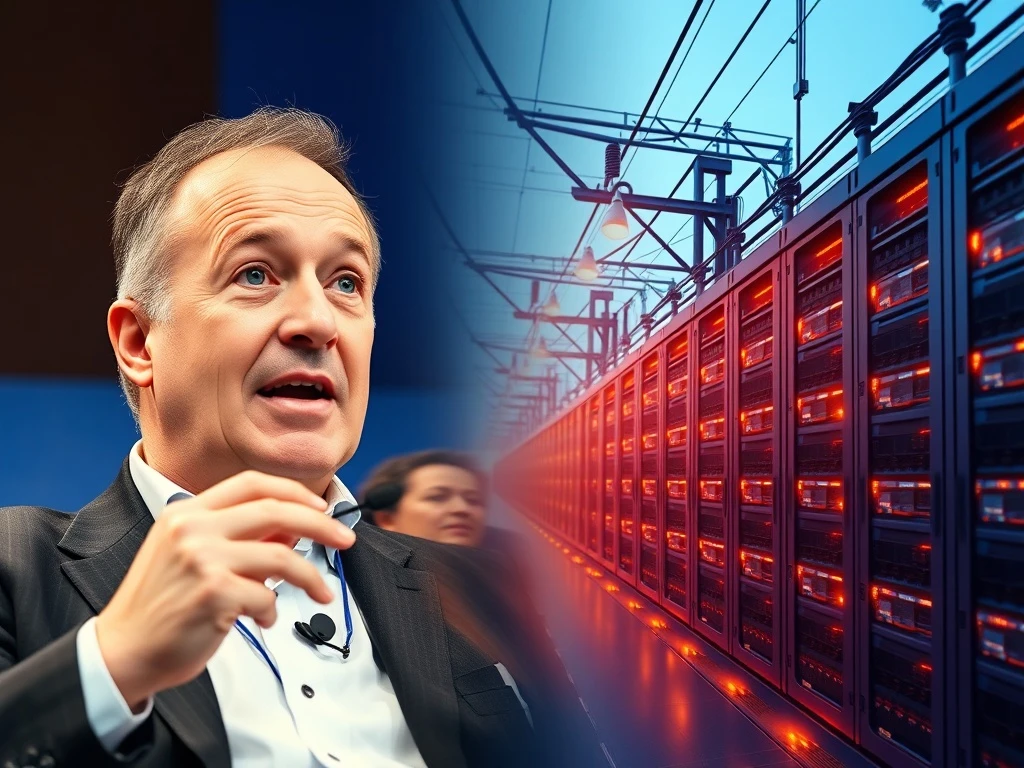
Prominent investor Kevin O’Leary has delivered a pivotal message for 2025 portfolios: prioritize energy infrastructure assets over direct Bitcoin exposure for superior near-term value. This analysis, reported by CoinDesk, arrives as global markets grapple with unprecedented electricity demands from artificial intelligence and cryptocurrency mining. Consequently, O’Leary’s perspective signals a broader investment thesis focusing on foundational technological enablers.
Kevin O’Leary’s Bitcoin and Energy Investment Thesis
Kevin O’Leary, the billionaire venture capitalist and “Shark Tank” star, advocates for a strategic pivot. He identifies the immense energy required for Bitcoin mining and AI development as the critical bottleneck and, therefore, the prime investment opportunity. “The infrastructure that supports this demand is the best asset to own,” O’Leary stated, framing energy not as a commodity but as the essential fuel for the digital economy’s next growth phase. This view contrasts with direct cryptocurrency speculation, suggesting a more foundational approach to capturing value from technological trends.
Market data supports this energy-centric outlook. The Cambridge Bitcoin Electricity Consumption Index estimates global Bitcoin mining uses over 120 Terawatt-hours annually, rivaling the consumption of entire nations. Simultaneously, research firm SemiAnalysis projects AI data center power demand could surge from 15 Gigawatts in 2023 to over 75 Gigawatts by 2025. This convergence creates a tangible supply constraint, making energy generation, transmission, and efficient data center operations highly valuable. Investors now scrutinize power purchase agreements (PPAs) and grid stability with renewed intensity.
The Infrastructure Play: Beyond Simple Utilities
O’Leary’s recommendation extends beyond traditional utility stocks. It encompasses a full stack of enabling infrastructure. This includes renewable energy projects, next-generation nuclear, grid modernization technology, and advanced cooling systems for data centers. For instance, companies specializing in liquid immersion cooling for mining rigs and AI servers have seen increased investor interest. The thesis is clear: as computational demands explode, the physical and logistical systems delivering reliable, scalable, and often sustainable power will capture significant economic value.
Spotlight on Crypto Infrastructure Stocks: Coinbase and Robinhood
While cautious on Bitcoin itself, O’Leary highlights specific public equities for gaining exposure to the cryptocurrency ecosystem’s growth. He specifically endorsed Coinbase (COIN) and Robinhood (HOOD) as noteworthy stocks representing “crypto infrastructure.” His analysis provides a nuanced layer to the energy-first argument, identifying secondary beneficiaries within the digital asset space.
O’Leary described Robinhood as “the best bridge” for managing traditional equities and cryptocurrencies on a single, user-friendly platform. This positioning capitalizes on the gradual merging of conventional and digital finance, appealing to a younger demographic of investors who prefer unified access. The platform’s simplicity acts as a major onboarding tool, potentially driving future adoption.
Regarding Coinbase, O’Leary projected significant upside tied to regulatory clarity. He suggested that once a clear U.S. regulatory framework for digital assets is established, Coinbase could attract a “large number of corporate clients” seeking a compliant, institutional-grade custodian and trading venue. This perspective views Coinbase not merely as an exchange but as the potential backbone for corporate treasury diversification and institutional crypto services.
- Robinhood’s Advantage: Unified platform for stocks and crypto, targeting mainstream adoption.
- Coinbase’s Potential: Institutional and corporate gateway pending regulatory resolution.
- Common Thread: Both are infrastructure plays, facilitating access rather than being the volatile asset itself.
The Broader Market Context and Expert Counterpoints
O’Leary’s comments occur within a complex financial landscape. Major asset managers like BlackRock and Fidelity have launched spot Bitcoin ETFs, increasing institutional accessibility. Meanwhile, the Ethereum network’s transition to Proof-of-Stake significantly reduced its energy footprint, highlighting divergent paths within crypto. Some analysts, therefore, argue that focusing on energy-efficient blockchain protocols might offer a different route for sustainable crypto investment.
Other financial experts offer complementary views. Cathie Wood of ARK Invest maintains a long-term bullish stance on Bitcoin’s price, citing its role as a digital store of value. However, she also emphasizes investments in AI and genomic revolution platforms. This creates a parallel, though not contradictory, narrative where disruptive technologies and their enabling infrastructures are both seen as compelling. The debate often centers on risk-adjusted returns and time horizon.
Historical Precedents and the “Picks and Shovels” Strategy
O’Leary’s approach echoes the historic “picks and shovels” strategy from gold rushes, where selling tools to miners proved more reliable than prospecting. The current digital gold rush, comprising both AI and crypto, demands computational power and electricity. Investing in the “picks and shovels” of this era—energy grids, data centers, and financial rails—aims to generate returns regardless of which specific AI model or cryptocurrency ultimately dominates. This strategy often appeals to investors seeking exposure to a megatrend with potentially lower volatility than the underlying speculative assets.
Regulatory Environment and Future Implications
The regulatory landscape remains a decisive factor for both energy and crypto markets. Government policies on energy subsidies, carbon credits, and grid investment directly impact infrastructure profitability. For crypto, the awaited U.S. regulatory framework will determine the operational clarity for firms like Coinbase. O’Leary’s thesis partially depends on these policies evolving to support infrastructure development and provide clear rules for digital assets. Investors must monitor legislative developments in both domains closely.
Geopolitical factors also influence this investment thesis. Energy security and technological sovereignty have become national priorities for many governments, leading to significant public funding for infrastructure. This tailwind could benefit companies involved in building resilient energy and data networks. Conversely, geopolitical tensions can disrupt supply chains for critical components like semiconductors and transformers, presenting a risk to the timeline of infrastructure expansion.
Conclusion
Kevin O’Leary’s advice to invest in energy over Bitcoin for now presents a calculated, infrastructure-focused strategy for 2025. It redirects attention from the volatile end-products of the digital revolution—like Bitcoin—to its fundamental engine: reliable, scalable power. His simultaneous endorsement of crypto infrastructure stocks like Coinbase and Robinhood offers a complementary path for exposure to the ecosystem’s growth. Ultimately, this perspective underscores a critical investment theme: as AI and blockchain technologies advance, the real-world systems that power and facilitate them may offer compelling, foundational opportunities. The market will now watch how energy demands evolve and whether this infrastructure-first approach delivers superior risk-adjusted returns.
FAQs
Q1: Why does Kevin O’Leary favor energy over Bitcoin currently?
O’Leary believes the massive, growing energy demands from Bitcoin mining and artificial intelligence create a supply constraint. Consequently, he views the physical and financial infrastructure that generates and delivers this power as a more valuable and foundational asset class than the cryptocurrency itself.
Q2: What are “crypto infrastructure stocks” according to O’Leary?
He specifically cites Coinbase and Robinhood. These are public companies that provide the platforms, custody, and trading services enabling access to cryptocurrencies, rather than being cryptocurrencies. They represent the financial rails of the ecosystem.
Q3: How does AI factor into this energy investment thesis?
Training and running advanced AI models, especially large language models, require enormous computational power in data centers. This surge in AI-driven electricity consumption compounds the demand already created by cryptocurrency mining, intensifying the strain on global energy grids and increasing the value of reliable power sources.
Q4: Is O’Leary bearish on Bitcoin long-term?
His comments suggest a tactical shift rather than a permanent bearish stance. He emphasizes “for now,” indicating that current market dynamics make energy infrastructure more attractive. His view on Bitcoin’s long-term potential may evolve with market conditions and regulatory developments.
Q5: What are the risks of following this infrastructure investment strategy?
Key risks include regulatory changes affecting energy projects or crypto platforms, slower-than-expected adoption of AI or crypto, technological breakthroughs that drastically reduce energy consumption, and macroeconomic factors like interest rates that impact infrastructure financing and development timelines.
Related News
- Crypto Fear & Greed Index Climbs to 25, Revealing Persistent Market Anxiety in Cryptocurrency Sector
- Presidential Crypto Ban Sparks Controversy: Democrats Target Trump’s $1.4B Digital Asset Earnings in CLARITY Act Amendment
- Coinbase Listing Roadmap Unveils Strategic Pivot with Doodles (DOOD) and Moonbirds (BIRB) Additions