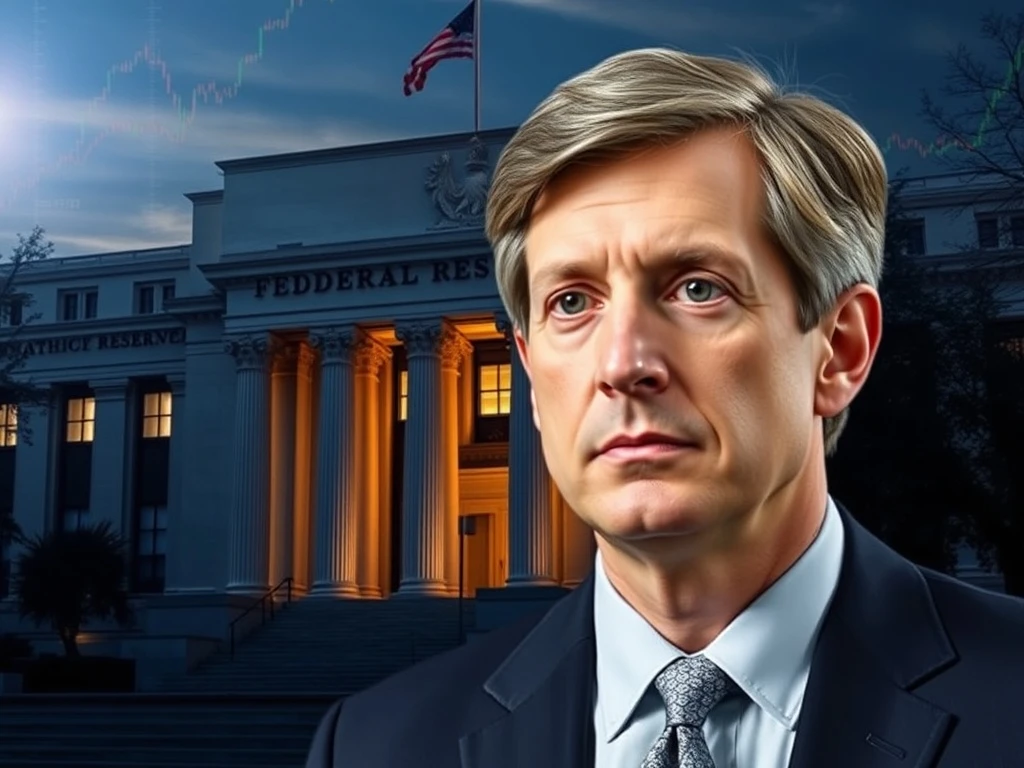
WASHINGTON, D.C. – In a move that could reshape American monetary policy for years to come, former President Donald Trump has nominated Kevin Warsh, a former Federal Reserve Governor, to lead the central bank. This pivotal nomination, announced via Truth Social, immediately ignited intense discussions among economists, policymakers, and financial market participants worldwide. Warsh’s reputation as a staunch advocate for hawkish monetary policy and central bank independence now places him at the center of a critical debate about inflation, interest rates, and the future trajectory of the U.S. economy.
Kevin Warsh Federal Reserve Nomination: Background and Immediate Reaction
The nomination of Kevin Warsh represents a significant shift in leadership philosophy for the world’s most influential central bank. Warsh served as a Governor of the Federal Reserve Board from 2006 to 2011, a period encompassing the 2008 financial crisis. Consequently, his experience during that turbulent era profoundly shaped his views on financial stability and regulatory oversight. Market analysts quickly parsed Trump’s social media statement, which praised Warsh’s “extensive research background” and predicted he would become “one of the greatest Fed Chairs in history.”
Financial markets exhibited immediate volatility following the announcement. Treasury yields experienced an upward spike, reflecting investor anticipation of tighter monetary conditions. Conversely, major equity indices showed mixed reactions, with sectors sensitive to borrowing costs facing downward pressure. The nomination now proceeds to the Senate Banking Committee for confirmation hearings, a process experts predict will involve rigorous scrutiny of Warsh’s policy positions and past statements.
Warsh’s Policy Philosophy and Historical Context
Kevin Warsh has consistently articulated a philosophy centered on three core principles: central bank independence, monetary policy discipline, and a preference for higher real interest rates. His academic and professional record reveals a deep skepticism of prolonged periods of ultra-loose monetary policy. During his previous tenure at the Fed, Warsh often expressed concerns about the long-term consequences of quantitative easing and near-zero interest rates. He has publicly argued that such policies can distort asset prices, encourage excessive risk-taking, and ultimately threaten financial stability.
Historically, Warsh’s views align more closely with the “hawkish” wing of the Federal Open Market Committee (FOMC), which prioritizes inflation containment over maximum employment in certain economic conditions. This stance contrasts with the more “dovish” approaches seen in the post-2008 and post-2020 eras, where the Fed utilized aggressive stimulus to combat economic crises. A Warsh-led Fed would likely signal a faster pace of balance sheet normalization and a higher terminal federal funds rate compared to current projections.
Implications for Monetary Policy and Financial Markets
The potential confirmation of Kevin Warsh carries profound implications for the direction of U.S. monetary policy. Analysts from major investment banks have begun publishing detailed reports modeling various policy paths under his leadership. A consensus is emerging around several key expectations:
- Accelerated Quantitative Tightening (QT): The Fed’s balance sheet reduction program would likely proceed at a more aggressive pace.
- Higher Terminal Rate: The peak of the interest rate hiking cycle could be higher than previously anticipated to ensure inflation returns decisively to the 2% target.
- Forward Guidance Shift: Communication from the Fed would probably become more data-dependent and less pre-committal, reducing market reliance on explicit policy promises.
Furthermore, the global impact of a hawkish Fed Chair cannot be overstated. Many emerging market economies and central banks often adjust their policies in response to U.S. monetary tightening cycles. A stronger U.S. dollar and higher global borrowing costs could create challenging conditions for indebted nations and corporations worldwide.
Cryptocurrency and Digital Asset Sector Response
The cryptocurrency community has reacted with notable concern to Warsh’s nomination. This apprehension stems from his previously reported views, which characterize digital assets primarily as speculative instruments. Warsh has suggested that cryptocurrencies flourished largely due to the prolonged low-interest-rate environment, implying they might struggle as monetary policy tightens and real yields rise. His advocacy for “reduced liquidity” directly contradicts the high-liquidity conditions that many argue have supported risk-on assets, including crypto.
Industry leaders and analysts are now debating the potential secondary effects. Some argue that a hawkish Fed could strengthen the narrative for decentralized, non-sovereign stores of value like Bitcoin. Others contend that reduced market liquidity and higher opportunity costs for holding volatile assets would present significant headwinds for the entire digital asset class. Regulatory clarity, another critical issue for crypto, might also see a different approach under a Warsh-led Fed, potentially focusing more on systemic risk than innovation promotion.
Expert Analysis and Confirmation Process Outlook
Economic experts are providing nuanced perspectives on the nomination. Dr. Janet Yellen, former Fed Chair and Treasury Secretary, emphasized the importance of the Senate’s “thorough and non-partisan” review process in a recent interview. Meanwhile, analysts from the Brookings Institution have published a comparative study of Warsh’s past writings versus the current economic landscape, highlighting potential areas of questioning during his confirmation hearings.
The Senate confirmation process will serve as the next critical stage. Key topics will undoubtedly include:
- His interpretation of the Fed’s dual mandate of maximum employment and price stability.
- His strategy for managing the tension between fighting inflation and avoiding a recession.
- His views on regulatory oversight of non-bank financial institutions and fintech.
- His commitment to the Fed’s operational independence from political influence.
Historical precedent shows that Fed Chair nominees often moderate their stated views during confirmation to secure broad support. However, Warsh’s extensive written record provides a clear benchmark against which his testimony will be measured.
Conclusion
The nomination of Kevin Warsh to chair the Federal Reserve marks a potential inflection point for U.S. and global economic policy. His established hawkish credentials suggest a decisive shift toward prioritizing inflation control and monetary discipline, with significant ramifications for interest rates, financial markets, and the cryptocurrency sector. As the Senate prepares for confirmation hearings, the financial world will closely monitor every development, understanding that the leadership of the Federal Reserve profoundly influences economic stability and growth for years to come. The debate surrounding this Kevin Warsh Federal Reserve nomination ultimately centers on the appropriate long-term path for monetary policy in a complex post-pandemic economic environment.
FAQs
Q1: Who is Kevin Warsh and what is his background?
Kevin Warsh is a former investment banker and served as a Governor on the Federal Reserve Board from 2006 to 2011. He was a key advisor during the 2008 financial crisis and is known for his research-focused, hawkish views on monetary policy.
Q2: What does a “hawkish” Federal Reserve Chair mean for interest rates?
A hawkish Fed Chair typically prioritizes controlling inflation and may advocate for higher interest rates or a faster reduction of the Fed’s balance sheet to tighten financial conditions, which can increase borrowing costs for consumers and businesses.
Q3: How could Warsh’s nomination affect the stock and bond markets?
Markets generally anticipate tighter monetary policy under a hawkish chair, which can lead to higher bond yields and pressure on stock valuations, particularly for growth-oriented companies sensitive to interest rate changes.
Q4: Why is the cryptocurrency community concerned about this nomination?
Warsh has historically viewed digital assets as speculative instruments dependent on low-interest-rate environments. His policy preference for higher rates and reduced market liquidity could create challenging conditions for crypto asset prices.
Q5: What is the next step in the process for Kevin Warsh to become Fed Chair?
The nomination must be reviewed and voted on by the Senate Banking Committee before proceeding to a confirmation vote by the full U.S. Senate. This process involves public hearings where Warsh’s policy views will be extensively questioned.
Related News
- Shocking Capital Flight: Iranian Elite Move $1.5 Billion to Dubai Using Banks and Crypto Amid Strike Fears
- Nubank OCC Approval: A Strategic Leap for Crypto Custody and U.S. Banking Expansion
- Hong Kong Stablecoin Licensing: Pioneering Comprehensive Crypto Regulation Framework for 2025