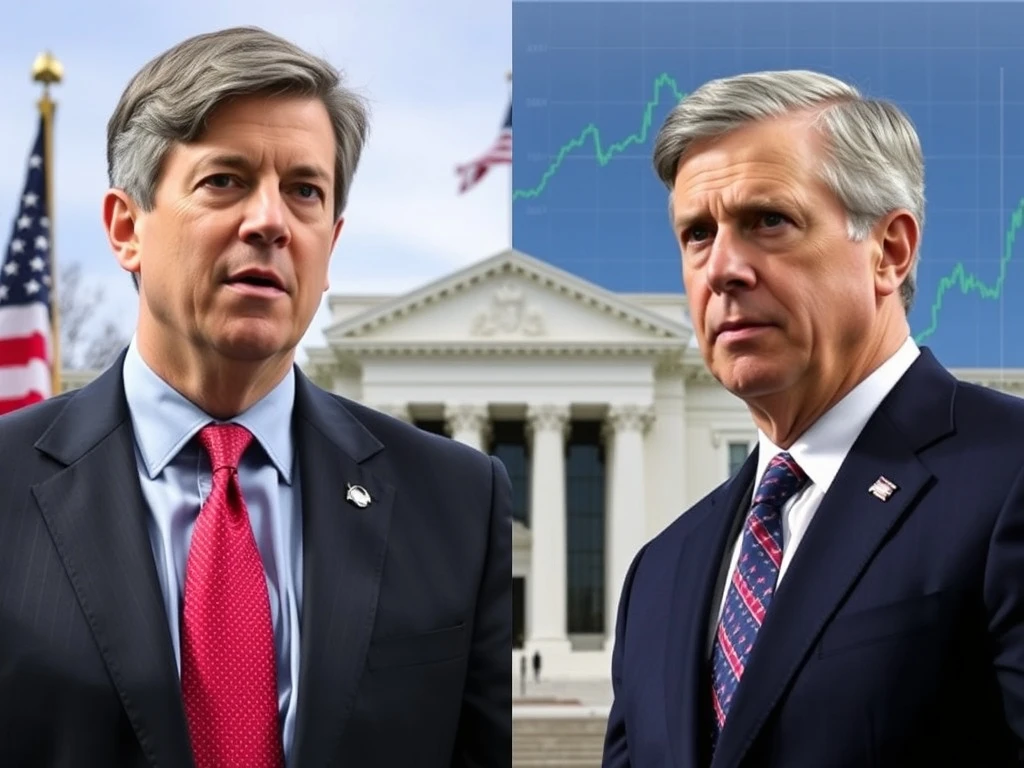
WASHINGTON, D.C., March 15, 2025 – In a move that has sent shockwaves through global financial markets, President Donald Trump has officially nominated former Federal Reserve Governor Kevin Warsh to succeed Jerome Powell as Chair of the Federal Reserve, marking one of the most significant central banking transitions in recent American history and potentially reshaping monetary policy for years to come.
Kevin Warsh’s Appointment as Federal Reserve Chair
The White House confirmed Kevin Warsh’s nomination this morning, ending months of speculation about Federal Reserve leadership. Consequently, this decision represents a dramatic shift in monetary policy philosophy. Moreover, Warsh brings a distinct perspective shaped by his previous Federal Reserve service from 2006 to 2011. During that period, he witnessed both the 2008 financial crisis and the initial quantitative easing programs.
Kevin Warsh currently serves as a distinguished visiting fellow at the Hoover Institution. Additionally, he maintains a lecturer position at Stanford University’s Graduate School of Business. Previously, he worked as a special assistant to President George W. Bush for economic policy. Furthermore, his Wall Street experience includes mergers and acquisitions at Morgan Stanley.
Background and Qualifications of the New Fed Nominee
Kevin Warsh’s professional background combines academic, governmental, and private sector experience. Born in 0, he graduated from Stanford University with honors in 1992. Subsequently, he earned his J.D. from Harvard Law School in 1995. President George W. Bush appointed him to the Federal Reserve Board in 2006. At 35, he became the youngest person ever to join the Board of Governors.
During his Federal Reserve tenure, Warsh served as the Board’s liaison to financial markets. He played a crucial role during the 2008 financial crisis. Specifically, he helped design and implement emergency lending facilities. However, he occasionally expressed reservations about quantitative easing’s long-term consequences. His 2011 resignation letter highlighted concerns about central bank independence.
Monetary Policy Philosophy and Historical Positions
Analysts immediately began examining Warsh’s published writings and past speeches. Generally, he advocates for rules-based monetary policy frameworks. He has criticized discretionary approaches as potentially destabilizing. In multiple public statements, he emphasized the importance of central bank transparency. Furthermore, he has expressed concerns about prolonged low interest rate environments.
Warsh’s 2014 Wall Street Journal op-ed outlined his monetary policy views. He argued that forward guidance had become excessively complex. Additionally, he suggested that quantitative easing’s benefits diminished over time. His academic papers frequently reference the Taylor Rule. This mathematical formula guides interest rate decisions based on inflation and economic output.
Comparison with Jerome Powell’s Federal Reserve Leadership
The transition from Jerome Powell to Kevin Warsh signals substantial philosophical differences. Powell, appointed by President Trump in 2018, generally maintained continuity with his predecessors. He presided over interest rate normalization until 2019. Subsequently, he implemented emergency measures during the COVID-19 pandemic. His approach emphasized data dependency and gradual policy adjustments.
Conversely, Warsh has been more critical of unconventional monetary policies. He questioned the Federal Reserve’s expanding balance sheet. Moreover, he advocated for clearer communication frameworks. The table below highlights key differences between their approaches:
| Policy Area | Jerome Powell’s Approach | Kevin Warsh’s Historical Position |
|---|---|---|
| Interest Rate Policy | Data-dependent, gradual adjustments | Rules-based, potentially faster normalization |
| Balance Sheet Management | Gradual reduction, then expansion during crises | Faster normalization, concerns about size |
| Forward Guidance | Detailed, conditional on economic outcomes | Simpler, more rules-oriented communication |
| Financial Stability Role | Integrated with monetary policy | Clear separation, potentially more aggressive |
Potential Impacts on Financial Markets and Economy
Financial markets reacted immediately to the Federal Reserve leadership announcement. Initially, Treasury yields increased across most maturities. Simultaneously, the U.S. dollar strengthened against major currencies. Equity markets showed mixed responses by sector. Banking stocks generally rose on expectations of higher interest rates. Conversely, technology shares experienced some pressure.
Market analysts identified several key areas of potential impact:
- Interest Rate Trajectory: Expectations shifted toward faster normalization
- Balance Sheet Policy: Potential for more aggressive reduction
- Regulatory Approach: Possible revisions to stress testing and capital requirements
- International Coordination: Changes in global central bank relationships
Federal Reserve leadership transitions historically create market volatility. The 2018 transition from Janet Yellen to Jerome Powell caused similar adjustments. However, this change occurs during different economic conditions. Currently, inflation remains above the Federal Reserve’s 2% target. Additionally, employment levels have reached historical highs.
Expert Analysis and Institutional Responses
Prominent economists and former policymakers offered immediate reactions. Former Federal Reserve Chair Ben Bernanke acknowledged Warsh’s qualifications. He noted the nominee’s crisis experience would prove valuable. However, he cautioned against dramatic policy shifts. Similarly, Janet Yellen emphasized continuity’s importance for market stability.
Congressional responses followed predictable partisan lines. Senate Banking Committee Republicans praised the selection. They highlighted Warsh’s rule-based approach to monetary policy. Meanwhile, Democratic committee members expressed concerns. They questioned his Wall Street background and regulatory views. Confirmation hearings will likely explore these issues extensively.
Confirmation Process and Timeline Expectations
The Senate Banking Committee will conduct confirmation hearings within weeks. Committee staff will review Warsh’s extensive writings and past statements. Historically, Federal Reserve chair nominees receive thorough examination. The process typically takes several months from nomination to confirmation.
Key confirmation considerations include:
- Monetary policy philosophy and independence commitment
- Financial regulation and supervision approach
- Views on employment and inflation mandate balance
- International economic relationship management
- Climate risk and financial stability integration
Jerome Powell’s current term officially ends in February 2026. However, transitions typically begin earlier. The Federal Reserve announced Powell will remain as chair until confirmation. He will then serve as a Board governor until his term expires in 2028. This overlap ensures institutional knowledge preservation.
Historical Context of Federal Reserve Leadership Changes
Federal Reserve chair transitions always carry significant implications. Paul Volcker’s 1979 appointment marked a turning point against inflation. Alan Greenspan’s 1987 tenure began just before the Black Monday crash. Ben Bernanke guided the Federal Reserve through the 2008 financial crisis. Jerome Powell managed the unprecedented COVID-19 economic response.
Kevin Warsh’s potential leadership comes during another complex period. Global economic conditions present multiple challenges. Geopolitical tensions affect supply chains and energy markets. Technological transformation continues disrupting traditional industries. Demographic shifts influence labor markets and productivity growth.
Conclusion
President Trump’s selection of Kevin Warsh as Federal Reserve Chair represents a pivotal moment for U.S. monetary policy. The transition from Jerome Powell’s leadership signals potential philosophical shifts toward rules-based frameworks and balance sheet normalization. Financial markets will closely monitor confirmation hearings and early policy signals. Ultimately, this Federal Reserve leadership change will influence economic conditions for millions of Americans and global financial stability for years to come.
FAQs
Q1: Who is Kevin Warsh and what is his background?
Kevin Warsh is a former Federal Reserve Governor who served from 2006 to 2011. He currently works at Stanford University’s Hoover Institution and previously worked at Morgan Stanley and in the George W. Bush administration.
Q2: How does Kevin Warsh’s monetary policy approach differ from Jerome Powell’s?
Warsh generally advocates for more rules-based monetary policy, has expressed concerns about prolonged low interest rates and large balance sheets, and favors simpler communication compared to Powell’s more discretionary, data-dependent approach.
Q3: What is the timeline for the Federal Reserve leadership transition?
Jerome Powell’s term ends in February 2026, but the transition process begins with Senate confirmation hearings expected within weeks, with the full process typically taking several months.
Q4: How have financial markets reacted to this Federal Reserve chair announcement?
Initial market reactions included higher Treasury yields, a stronger U.S. dollar, and mixed equity responses with banking stocks generally rising on expectations of potentially higher interest rates.
Q5: What are the main issues likely to be discussed during confirmation hearings?
Key confirmation topics will include monetary policy philosophy, financial regulation approach, central bank independence, balance sheet management, and views on the Federal Reserve’s dual mandate of maximum employment and price stability.
Related News
- Crypto Market Structure Bill Faces Critical Delay: Citibank Warns CLARITY Act May Stall Past 2026
- XRP Plummets: Stark Risk-Off Wave Triggers Widespread Crypto Market Exodus
- US Stock Market Plummets: Major Indices Open Lower Amid Economic Uncertainty