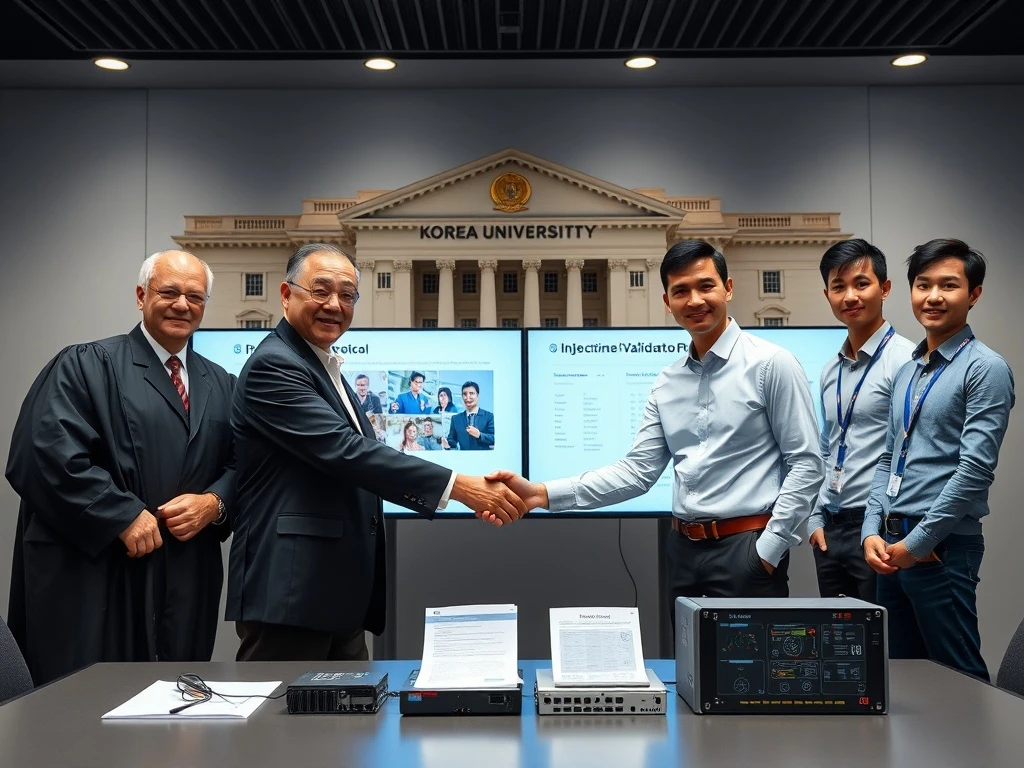
SEOUL, South Korea – December 2024: In a significant development for blockchain education and infrastructure, Korea University Blockchain Institute has officially partnered with Injective Protocol to become a validator within the rapidly expanding decentralized finance ecosystem. This strategic collaboration represents a major convergence of academic research and practical blockchain implementation, potentially reshaping how educational institutions engage with Web3 technologies globally.
Korea University Blockchain Institute Validator Role Explained
The Korea University Blockchain Institute will now operate as an active validator node on the Injective Protocol network. Consequently, the institute will participate directly in network consensus, transaction validation, and governance processes. This validator role requires maintaining specialized infrastructure and technical expertise. Moreover, it represents a substantial commitment to hands-on blockchain research and development.
Validators on the Injective network perform several critical functions. First, they verify and validate transactions across the protocol. Second, they participate in governance decisions through voting mechanisms. Third, they help secure the network against potential attacks. Finally, they earn staking rewards for their contributions to network security and operations.
This partnership follows a growing trend of academic institutions entering blockchain validation. Previously, universities like Stanford and MIT have explored similar roles. However, Korea University’s formal institutional commitment through its dedicated Blockchain Institute represents a particularly structured approach.
Academic-Industry Collaboration in Blockchain Infrastructure
The collaboration between Korea University Blockchain Institute and Injective Protocol creates multiple synergistic opportunities. Primarily, it provides students and researchers with direct access to live blockchain infrastructure. Additionally, it offers Injective access to cutting-edge academic research and talent development pipelines.
Professor Kim Min-jun, Director of the Korea University Blockchain Institute, explained the partnership’s significance. “Our validator role represents more than technical participation,” he stated. “It creates a living laboratory for blockchain research. Students can study real-world network dynamics. Researchers can test novel consensus mechanisms. Industry partners benefit from academic rigor.”
The institute plans to integrate this validator role into multiple academic programs. Undergraduate courses will incorporate network monitoring. Graduate research will analyze validator performance metrics. Doctoral candidates may develop new validation algorithms. This comprehensive approach distinguishes Korea University’s initiative from simpler technical partnerships.
Technical Implementation and Research Opportunities
The Korea University Blockchain Institute will deploy specialized hardware for its validator operations. This infrastructure includes enterprise-grade servers, redundant power systems, and advanced security measures. Furthermore, the institute will develop custom monitoring and analysis tools.
Research opportunities emerging from this partnership include several key areas:
- Network Security Analysis: Studying attack vectors and defense mechanisms
- Consensus Algorithm Optimization: Improving validation efficiency and speed
- Governance Mechanism Research: Analyzing voting patterns and proposal outcomes
- Economic Model Development: Creating sustainable validator economics
- Cross-Chain Interoperability: Researching connections between different blockchain networks
These research areas align with both academic interests and industry needs. They demonstrate how practical implementation can drive theoretical advancement.
Impact on Blockchain Education and Industry Development
This partnership significantly impacts blockchain education in South Korea and beyond. It establishes a new model for academic-industry collaboration. Students gain practical experience with enterprise blockchain systems. Researchers access real-time network data. Industry partners benefit from academic insights and talent pipelines.
The Korea University Blockchain Institute has already developed specialized curriculum components. These include validator operations courses, consensus mechanism seminars, and network security workshops. Additionally, the institute plans internship programs with Injective and related ecosystem projects.
Industry experts have welcomed this development. “Academic validators bring rigorous methodology to network operations,” noted blockchain analyst Sarah Chen. “They prioritize research over profit. They document processes thoroughly. They publish findings transparently. These qualities strengthen overall network resilience.”
Comparative Analysis of Academic Validators
| Institution | Network | Primary Focus | Research Output |
|---|---|---|---|
| Korea University Blockchain Institute | Injective Protocol | Education & Infrastructure | Network Security, Governance |
| Stanford University | Ethereum | Cryptography Research | Zero-Knowledge Proofs |
| Massachusetts Institute of Technology | Multiple Networks | Protocol Development | Consensus Algorithms |
| National University of Singapore | Various DeFi Protocols | Financial Applications | DeFi Economics |
This table illustrates how different academic institutions approach blockchain validation. Each brings unique strengths and research priorities. Korea University’s comprehensive institutional approach through its dedicated Blockchain Institute represents a particularly structured model.
Future Developments and Long-Term Implications
The Korea University-Injective partnership may influence broader trends in blockchain development. Other universities might establish similar validator programs. Industry protocols could develop formal academic partnership frameworks. Regulatory bodies might reference academic validators in governance discussions.
Several specific developments are anticipated. First, joint research publications will document findings. Second, standardized validator education programs may emerge. Third, cross-institutional collaborations could develop. Fourth, policy recommendations might influence regulatory approaches.
Long-term implications extend beyond technical validation. They include talent development, research advancement, and industry maturation. Students educated through this program will enter the blockchain workforce with unique practical experience. Research findings will inform protocol development across multiple networks. Industry standards may incorporate academic validation best practices.
Conclusion
The Korea University Blockchain Institute partnership with Injective Protocol as a validator represents a significant advancement in blockchain education and infrastructure development. This collaboration bridges academic research and practical implementation. It creates new educational opportunities for students. It provides valuable research data for scholars. It strengthens network security for Injective Protocol. Ultimately, this partnership demonstrates how academic institutions can contribute meaningfully to blockchain ecosystems while advancing their educational missions. The Korea University Blockchain Institute validator role may inspire similar collaborations globally, potentially accelerating blockchain adoption and innovation through structured academic-industry partnerships.
FAQs
Q1: What exactly does a validator do on the Injective Protocol?
A1: Validators on Injective Protocol perform several critical functions. They verify and validate transactions across the network. They participate in consensus mechanisms to secure the blockchain. They vote on governance proposals. They maintain network infrastructure. They earn staking rewards for their contributions to network operations and security.
Q2: How will this partnership benefit Korea University students?
A2: Students will gain multiple benefits from this partnership. They will access hands-on experience with live blockchain infrastructure. They can study real network data for research projects. They may participate in internship programs with Injective. They will learn validator operations through specialized courses. They can contribute to cutting-edge blockchain research through the institute’s programs.
Q3: What makes academic validators different from commercial validators?
A3: Academic validators typically prioritize different objectives than commercial operators. They focus on research and education rather than profit maximization. They often publish findings transparently. They maintain detailed documentation for academic purposes. They may experiment with novel approaches that commercial validators avoid due to risk considerations. They contribute to talent development through student involvement.
Q4: How does this partnership align with South Korea’s blockchain strategy?
A4: This partnership supports multiple aspects of South Korea’s blockchain strategy. It develops domestic blockchain expertise through education. It strengthens industry-academic collaboration. It positions Korean institutions as blockchain innovation leaders. It contributes to the national digital transformation agenda. It aligns with government initiatives promoting blockchain technology adoption across various sectors.
Q5: What research areas will the Korea University Blockchain Institute focus on through this partnership?
A5: The institute will focus on several key research areas. These include network security analysis and improvement. Consensus algorithm optimization and development. Governance mechanism research and design. Economic model analysis for sustainable validation. Cross-chain interoperability solutions. These research areas combine theoretical inquiry with practical application, leveraging the institute’s unique position as both researcher and network participant.
Related News
- Artemis Crypto Cards Surge to Rival P2P Stablecoin Payments in Revolutionary Shift
- New York’s CRYPTO Act: Landmark Legislation Imposes Criminal Penalties on Unlicensed Crypto Firms
- Binance Perpetual Futures Expansion: Strategic Listings of SPORTFUN and AIA Tokens with 20x Leverage