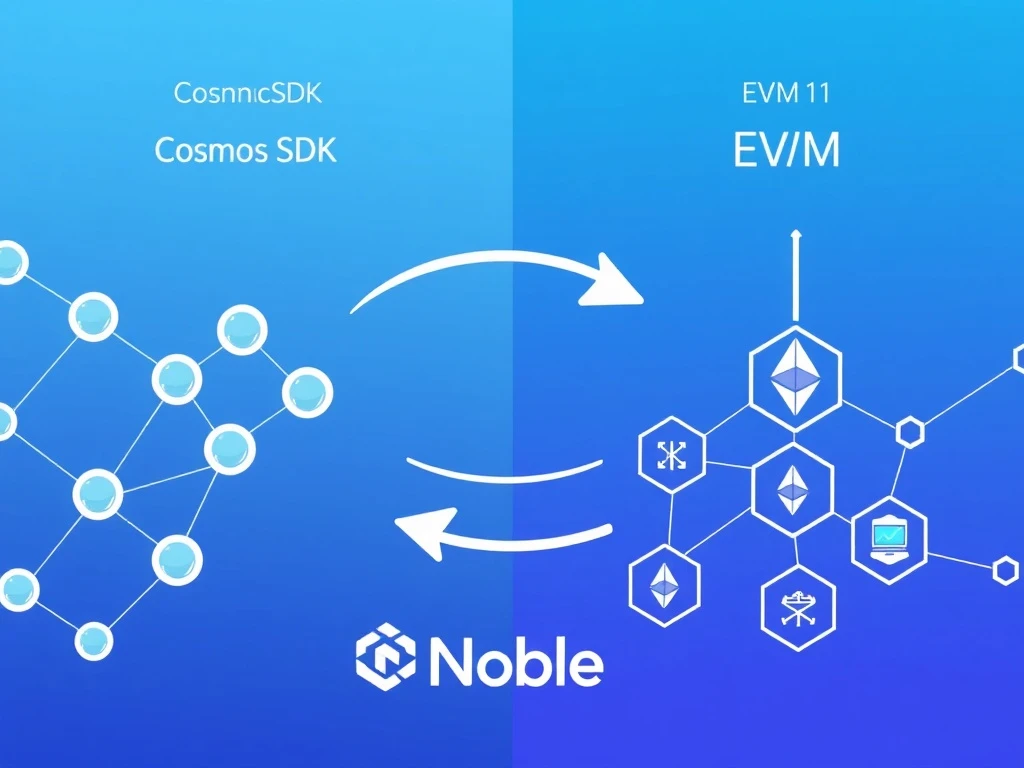
In a significant architectural shift for decentralized finance, the stablecoin-focused blockchain Noble has announced its pivotal transition from the Cosmos ecosystem to a standalone, Ethereum Virtual Machine-compatible Layer 1 network. This strategic move, first reported by The Block and confirmed for a March 18, 2025 launch, marks a major evolution in the project’s three-year history. Consequently, the decision underscores a broader industry trend where specialized application chains reassess their foundational technology to maximize developer reach and network performance. The Noble EVM launch promises to deliver a high-performance stack specifically engineered for the next generation of stablecoin and monetary applications.
Noble EVM Launch: Decoding the Strategic Migration
The Noble blockchain, originally built using the Cosmos SDK, has served as a dedicated hub for native asset issuance, particularly for stablecoins like USDC. Over the past few years, the Cosmos Inter-Blockchain Communication (IBC) protocol enabled robust cross-chain transfers. However, project leaders have now determined that future growth necessitates a more independent and widely compatible foundation. Therefore, the migration to a standalone EVM Layer 1 represents a calculated step to unlock new capabilities.
This transition is not merely a technical upgrade but a fundamental repositioning. By becoming an EVM-compatible chain, Noble immediately taps into the largest and most active developer ecosystem in Web3. Developers familiar with Solidity and Ethereum tooling can now build on Noble without learning new programming paradigms. Moreover, the move allows Noble to design its own consensus mechanism and fee market, optimizing specifically for high-throughput, low-cost stablecoin transactions—a core need that generic Layer 1s or shared Cosmos appchains sometimes struggle to address perfectly.
Cosmos to EVM: Analyzing the Technical and Ecosystem Drivers
Understanding this shift requires examining the distinct advantages of each blockchain architecture. The Cosmos ecosystem excels at sovereignty and interoperability through IBC. Conversely, the Ethereum ecosystem dominates in terms of developer mindshare, tooling maturity, and overall liquidity. Noble’s statement acknowledged Cosmos’s benefits while emphasizing the need to “advance to the next stage.” This suggests a prioritization of developer adoption and product layer robustness over certain forms of interoperability.
Key technical drivers for the Noble EVM migration include:
- Developer Accessibility: EVM compatibility grants immediate access to millions of developers and thousands of existing dApps.
- Performance Customization: As a standalone Layer 1, Noble can fine-tune its blockchain parameters—like block time and gas limits—exclusively for stablecoin and monetary use cases.
- Tooling and Infrastructure: The project can leverage battle-tested Ethereum infrastructure like MetaMask, The Graph, and various oracle networks from day one.
- Enhanced Composability: A native EVM environment can foster more complex DeFi applications built directly around Noble’s native stablecoin assets.
Expert Analysis: The Rationale Behind Leaving a Successful Ecosystem
Blockchain architects often face the “build versus integrate” dilemma. Industry analysts note that while Cosmos provides an excellent launchpad, projects reaching a certain scale sometimes seek full control over their tech stack. A standalone Layer 1 allows Noble to capture maximal value from its network activity and tailor its economic security model. Furthermore, this transition mirrors a pattern where application-specific chains evolve into full-fledged ecosystems. The move could potentially increase transaction speed and reduce costs for end-users, directly benefiting stablecoin transactors and developers building payment solutions.
The timeline is critical. With a launch date set for March 18, 2025, the team has a clear runway for testing and migration. Existing assets and applications on the Cosmos-based Noble chain will require a carefully managed bridge or migration process. Historical data from similar migrations shows that clear communication and robust technical support are vital for maintaining user trust during such transitions.
The Impact on Stablecoins and the Broader DeFi Landscape
Noble’s primary function is as a premier issuance hub for native digital assets. Its pivot to an EVM Layer 1 could significantly influence the stablecoin landscape. Currently, many stablecoins are issued on general-purpose chains where they compete for block space with NFTs, memecoins, and other dApps. A dedicated, high-performance EVM chain for stablecoins could offer unparalleled reliability and low latency for settlements and cross-border payments.
This development arrives amid increasing regulatory scrutiny of stablecoins globally. A chain like Noble EVM, focused purely on compliant digital currency issuance and transfer, could position itself as infrastructure for regulated financial institutions. The project’s success will hinge on its ability to attract both institutional issuers and the developers who build applications for end-users. Ultimately, the network effect within the Ethereum ecosystem could accelerate adoption far faster than within a niche ecosystem.
Conclusion
The launch of the Noble EVM on March 18 marks a definitive strategic pivot from its Cosmos origins to a standalone Ethereum-compatible Layer 1 blockchain. This transition is driven by the imperative to build a more robust foundational product layer and to harness the vast Ethereum developer ecosystem. For the stablecoin industry, the move promises a dedicated, high-performance chain optimized for digital currency transactions. While the Cosmos ecosystem provided a strong foundation, Noble’s evolution into an EVM Layer 1 reflects a mature project seeking greater control, customization, and market reach. The success of this migration will be closely watched as a case study in blockchain infrastructure evolution.
FAQs
Q1: What is the Noble EVM?
The Noble EVM is a new, standalone Ethereum Virtual Machine-compatible Layer 1 blockchain. It is the evolved version of the former Cosmos-based Noble chain, specifically optimized for stablecoin issuance and high-performance decentralized finance applications.
Q2: Why is Noble transitioning from Cosmos to EVM?
Noble is transitioning to tap into the larger Ethereum developer ecosystem and tooling. The move allows for greater customization of the blockchain’s performance parameters and aims to create a more robust foundational layer for developers building monetary applications.
Q3: When will the Noble EVM launch?
The official launch of the Noble EVM mainnet is scheduled for March 18, 2025.
Q4: What happens to assets on the old Cosmos-based Noble chain?
Typically, such migrations involve a bridging or token migration process. Users will likely need to move their assets from the old chain to the new EVM chain via an official bridge. The project is expected to release detailed migration guides ahead of the launch.
Q5: How does this affect developers building on Noble?
Developers familiar with Solidity and Ethereum tools (like Hardhat, Foundry, or Remix) will find it easier to build on the new Noble EVM. The shift opens the platform to the vast library of existing EVM smart contracts and development frameworks.
Related News
- Trump’s Shrewd Greenland Gambit Sends Prediction Markets into Frenzy: Arctic Territory Odds Shift Dramatically
- Bitcoin Price Plummets Below $88,000: Analyzing the Sudden Market Shift
- Benjamin Cowen’s Critical 2025 Forecast: Why Precious Metals May Again Outperform Cryptocurrency