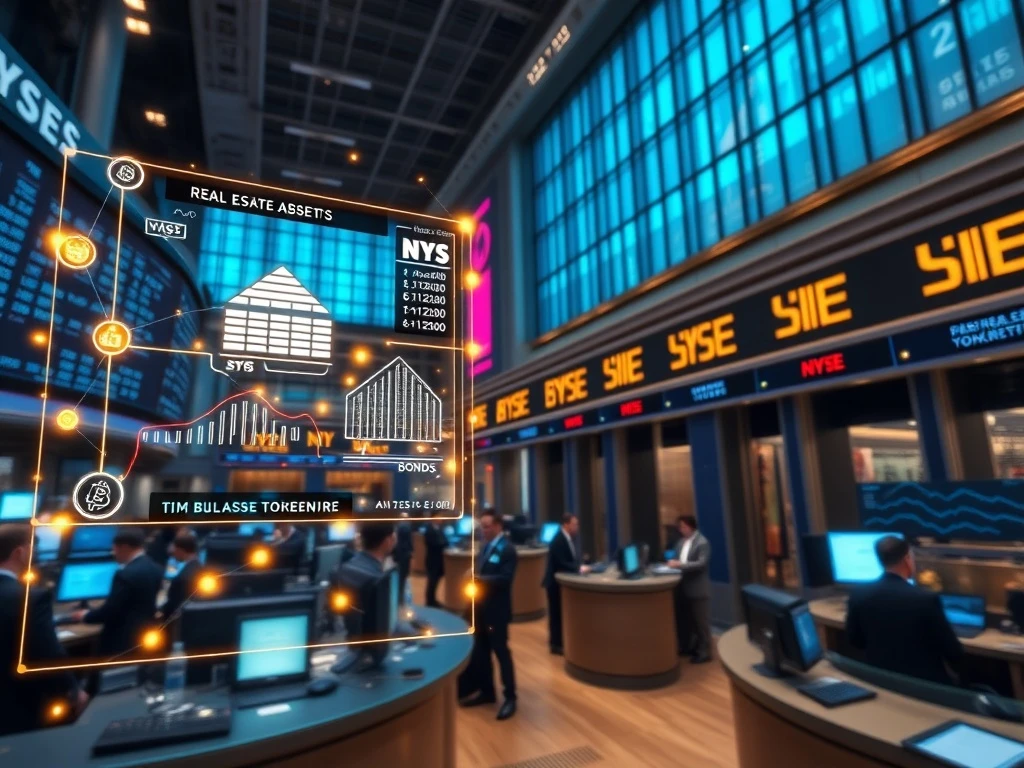
In a landmark move for global finance, the New York Stock Exchange (NYSE) announced on March 15, 2025, the launch of a proprietary digital trading venue dedicated to asset tokenization, directly entering the competitive race to bridge traditional markets with blockchain infrastructure.
NYSE Digital Trading Venue: A Strategic Pivot
The New York Stock Exchange’s new platform represents a strategic pivot for the 232-year-old institution. Consequently, this initiative aims to facilitate the trading of tokenized versions of traditional assets. These assets notably include equities, bonds, and real estate investment trusts (REITs). Furthermore, the venue will operate alongside the NYSE’s existing equities markets. It will leverage a permissioned blockchain network specifically designed for institutional-grade speed, security, and regulatory compliance.
This development follows similar explorations by other global exchanges. For instance, the Deutsche Börse and the Singapore Exchange (SGX) have launched pilot programs. However, the NYSE’s full-scale commercial venue signals a deeper commitment. Analysts view this as a response to growing client demand for fractional ownership, enhanced liquidity, and 24/7 settlement cycles that blockchain-based systems can potentially offer.
The Expanding Landscape of Asset Tokenization
Asset tokenization involves creating digital tokens on a blockchain that represent ownership of a real-world asset. The process fragments ownership, thereby increasing accessibility. The market for tokenized assets is experiencing rapid growth. A recent report from Boston Consulting Group projects the tokenization of global illiquid assets could become a $16 trillion business opportunity by 2030.
Key drivers for this shift include:
- Operational Efficiency: Automated compliance and near-instant settlement (T+0) reduce costs and counterparty risk.
- Market Accessibility: Fractional shares of high-value assets like commercial real estate or fine art open markets to smaller investors.
- Enhanced Liquidity: Tokenized assets can trade on digital venues potentially around the clock, unlike traditional markets.
- Transparency and Auditability: Blockchain provides an immutable record of ownership and transaction history.
Institutional Endorsement and Regulatory Framework
The NYSE’s entry is widely seen as a major endorsement of the underlying technology’s maturity. Importantly, the venue has been developed in close consultation with U.S. regulators, including the Securities and Exchange Commission (SEC). The platform will enforce existing securities laws, with Know Your Customer (KYC) and Anti-Money Laundering (AML) checks integrated directly into the trading protocol. This regulatory-first approach distinguishes it from earlier, purely crypto-native exchanges and aims to provide institutional investors with the necessary legal certainty.
“The NYSE isn’t just adopting a new technology; it’s systematically adapting its century-old governance model to a digital future,” noted Dr. Alisha Chen, a fintech professor at MIT. “Their focus on interoperability with existing market infrastructure—like central securities depositories—is crucial for widespread adoption.”
Comparative Analysis: Traditional vs. Tokenized Trading
The new digital venue will differ significantly from the NYSE’s main listing platform. The table below outlines key operational distinctions.
| Feature | Traditional NYSE Listing | NYSE Digital Tokenized Venue |
|---|---|---|
| Settlement Cycle | T+2 (Trade date plus two days) | Near real-time (T+0 or T+1) |
| Trading Hours | 9:30 AM – 4:00 PM ET, weekdays | Potential for 24/7/365 operation |
| Asset Divisibility | Full shares (or fixed lot sizes) | High fractionalization (e.g., 0.001 of a share) |
| <strongPrimary Record of Ownership | Centralized ledger (DTCC) | Distributed ledger (Permissioned Blockchain) |
| Initial Target Assets | Corporate equities, ETFs | Tokenized versions of equities, bonds, funds, real estate |
Potential Impact on Broader Financial Markets
The long-term implications of this move are profound. Initially, the venue will likely attract asset managers and issuers looking to modernize fund structures. For example, a private equity firm could tokenize a fund, enabling secondary trading for its investors long before a traditional exit event. Subsequently, this could pressure other asset classes, like real estate and private debt, to adopt similar models to remain competitive.
Market infrastructure providers are also watching closely. Companies like Broadridge and Citigroup have already developed significant tokenization and digital custody services. The NYSE’s platform could act as a powerful catalyst, accelerating investment in compatible post-trade infrastructure across Wall Street. Conversely, some analysts caution that success hinges on achieving critical mass and liquidity, which may take several years to develop fully.
Conclusion
The launch of the NYSE’s digital trading venue marks a definitive moment in the convergence of traditional finance and blockchain technology. By entering the tokenization race with a regulated, institutional-grade platform, the exchange provides a credible pathway for trillions of dollars in assets to transition onto digital rails. This move validates the tokenization thesis and sets a new benchmark for security, compliance, and integration within mainstream capital markets. The success of this NYSE tokenization initiative will likely determine the pace at which the entire financial ecosystem embraces a digital future.
FAQs
Q1: What exactly is the NYSE’s new digital trading venue?
The NYSE’s new digital trading venue is a separate, blockchain-based platform for buying and selling tokenized traditional assets like stocks, bonds, and real estate. It is designed for speed, fractional ownership, and operates under existing U.S. securities regulations.
Q2: How does asset tokenization on the NYSE platform differ from buying cryptocurrency?
While both use blockchain, tokenized assets on the NYSE venue are digital representations of regulated, real-world securities. They are backed by legal claims to underlying assets and subject to the same investor protections as traditional stocks, unlike most cryptocurrencies which are often unbacked digital commodities.
Q3: Can retail investors access the NYSE’s tokenization venue?
Initially, access will likely be limited to accredited and institutional investors due to regulatory complexities and the novel nature of the platform. However, the long-term goal of fractionalization is to increase accessibility for a broader range of investors.
Q4: What are the main benefits of trading tokenized assets?
Key potential benefits include faster settlement times (reducing risk), the ability to buy small fractions of expensive assets, increased liquidity for traditionally illiquid holdings, and reduced operational costs through automation.
Q5: Does this mean the NYSE is moving away from its traditional trading floor?
No. The digital venue is a complementary platform, not a replacement. The iconic physical trading floor and the existing T+2 settlement system for mainstream equities will continue to operate for the foreseeable future, serving different market segments and needs.
Related News
- OpenAI Physical AI Device: Groundbreaking 2026 Rollout Confirmed by Company Leadership
- Injective Community Makes Historic Move: Approves Radical Proposal to Slash INJ Token Supply
- Bitcoin Price Analysis: Strategic Dip Eases Critical Leverage, But Sustained Buying Pressure Holds the Key