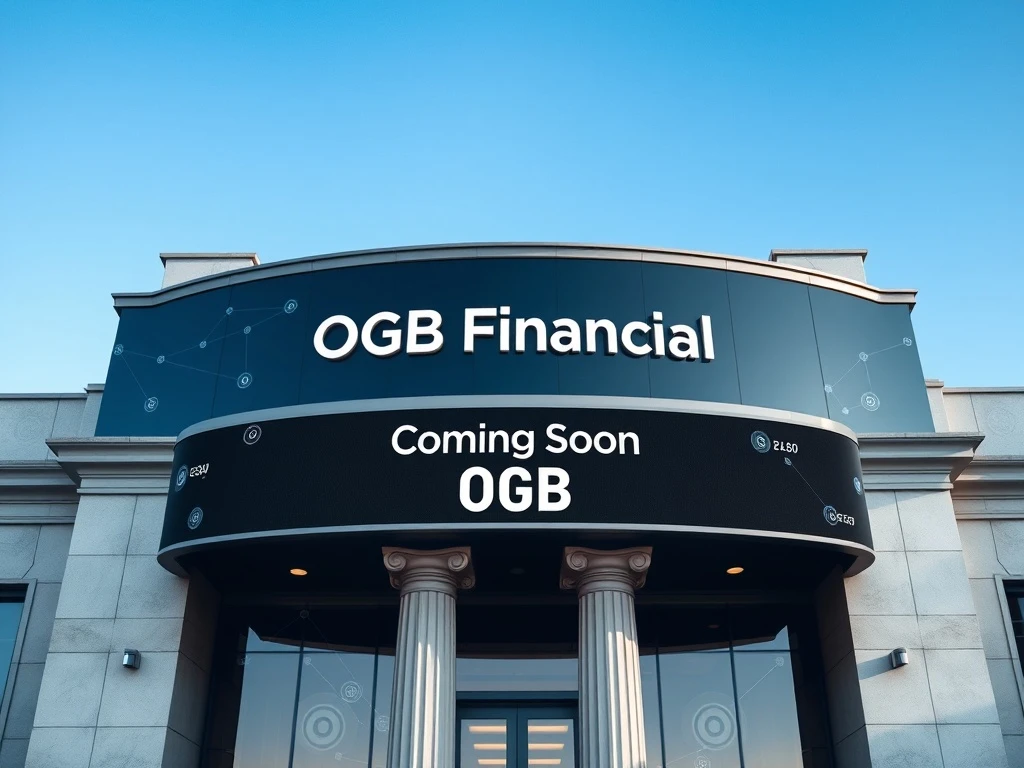
In a landmark move for the digital asset sector, Oklahoma-based Old Glory Bank has confirmed its intent to become a publicly traded entity through a definitive merger agreement with special purpose acquisition company Digital Asset Acquisition Corp, a strategic decision poised to reshape the landscape of crypto-friendly financial services in the United States as of early 2025.
Old Glory Bank SPAC Merger: The Core Transaction
Bloomberg first reported the significant financial maneuver, revealing that Old Glory Bank will combine with the blank-check company Digital Asset Acquisition Corp. Consequently, the merged entity will adopt the new corporate identity of OGB Financial. Furthermore, it plans to list on a major U.S. stock exchange under the ticker symbol ‘OGB’. This transaction represents a critical pathway to public capital markets, bypassing the traditional and often protracted initial public offering (IPO) process. SPAC mergers, therefore, have become a popular mechanism for fintech and crypto-adjacent companies seeking accelerated access to public investment.
The structure of such a deal typically involves the SPAC, which is already a publicly listed shell company with raised capital, merging with a private operating company. Upon completion, the private company inherits the public listing. For Old Glory Bank, this method provides immediate liquidity and a war chest for expansion. Importantly, the bank’s leadership has signaled that the proceeds will fuel technological development and broader service offerings for the digital asset economy.
The Evolution from Regional to Crypto-Focused Bank
Understanding the significance of this SPAC merger requires examining Old Glory Bank’s transformative journey. Originally established as a traditional community bank serving Oklahoma, the institution undertook a deliberate strategic pivot in 2022. It then repositioned itself to cater explicitly to businesses and individuals operating within the cryptocurrency and blockchain ecosystem. This shift involved developing specialized compliance frameworks, custody solutions, and payment rails capable of interacting with digital assets.
This evolution mirrors a broader, albeit cautious, trend among U.S. financial institutions. Notably, a handful of banks have sought to serve the underserved crypto sector, which often faces challenges with mainstream banking access. Old Glory Bank’s transition placed it in a niche but growing category of financial intermediaries that bridge conventional finance and decentralized digital currencies. The bank’s management likely recognized that deepening this specialization would require substantial capital, thereby motivating the move to go public.
Expert Analysis on Banking and Digital Assets
Financial regulatory experts point to the increasing institutionalization of cryptocurrency as a key driver for such mergers. “A public listing via a SPAC provides more than just capital; it imposes a layer of regulatory scrutiny and corporate governance that can enhance credibility,” notes a former compliance officer for a federal banking agency, who spoke on the condition of anonymity. “For a bank dealing with crypto, demonstrating this level of transparency and structure is paramount to gaining trust from both regulators and a wider investor base.”
Moreover, market analysts highlight the timing. Following a period of market consolidation and increased regulatory clarity in 2024, 2025 appears ripe for mature crypto-native and crypto-friendly businesses to access public markets. The performance of similar fintech SPAC mergers in recent years provides a mixed but educational backdrop, informing the due diligence processes for deals like the Old Glory Bank merger.
Implications for the Crypto Banking Sector
The successful public debut of OGB Financial could set a powerful precedent. Firstly, it may validate the business model of dedicated crypto-friendly banks, encouraging further investment and competition in the space. Secondly, it provides a benchmark for valuation methodologies for similar institutions, which often have unique asset structures compared to traditional banks.
- Enhanced Service Capacity: Public capital allows for investment in robust cybersecurity, scalable blockchain infrastructure, and expanded legal and compliance teams.
- Regulatory Dialogue: As a public company, OGB Financial will engage more directly with national regulators like the SEC and OCC, potentially helping to shape clearer guidelines for the entire industry.
- Mainstream Adoption: A publicly traded bank focused on crypto could act as a trusted gateway for traditional investors and corporations seeking exposure to digital asset services.
However, the path carries inherent risks. The bank operates in a regulatory environment that remains in flux. Additionally, its fortunes are indirectly tied to the volatility of the cryptocurrency markets, which could affect investor sentiment toward its stock. The management team’s ability to navigate these dual challenges—traditional banking stewardship and crypto innovation—will be closely watched.
The SPAC Process and Expected Timeline
The merger announcement is merely the first step in a multi-stage process. Next, Digital Asset Acquisition Corp. and Old Glory Bank will file a detailed registration statement (S-4 or F-4) with the U.S. Securities and Exchange Commission (SEC). This document will contain exhaustive financial disclosures, business descriptions, and risk factors related to the combined company. Subsequently, shareholders of the SPAC must vote to approve the merger. Assuming regulatory and shareholder approvals are secured, the deal would then close, and OGB Financial shares would begin trading.
Industry observers anticipate this process could take several quarters to complete, placing a potential debut on the public markets in late 2025 or early 2026. The timeline hinges significantly on the SEC’s review process, which scrutinizes the disclosures related to the bank’s crypto-related activities with particular attention.
Conclusion
The proposed Old Glory Bank SPAC merger with Digital Asset Acquisition Corp marks a definitive milestone in the maturation of cryptocurrency-focused financial services. By transitioning to a public entity as OGB Financial, the bank seeks the capital and credibility required to scale its operations and solidify its role as a crucial bridge between traditional finance and the digital asset economy. This move not only reflects the growing institutional acceptance of cryptocurrency but also tests the market’s appetite for publicly traded vehicles that specialize in this dynamic and evolving sector. The success of this SPAC merger will undoubtedly influence the strategies of other niche financial institutions for years to come.
FAQs
Q1: What is a SPAC merger?
A SPAC merger occurs when a Special Purpose Acquisition Company—a publicly traded shell company formed to acquire a private firm—combines with that private company. The private company thereby becomes public without undergoing a traditional IPO.
Q2: Why would Old Glory Bank choose a SPAC to go public?
A SPAC merger can be faster and provide more certainty on valuation and capital raised compared to a traditional IPO, which is advantageous for a bank in a rapidly evolving sector like cryptocurrency.
Q3: What will change for Old Glory Bank customers after the merger?
Operationally, customer services should continue uninterrupted. The merger is primarily a change in corporate ownership and capital structure. Long-term, customers may benefit from enhanced products and services funded by the new capital.
Q4: What are the risks associated with this SPAC merger?
Key risks include regulatory approval delays, shareholder vote rejection, and the ongoing challenge of operating a crypto-focused bank within a shifting U.S. regulatory framework. Market volatility in crypto assets could also impact the public company’s stock performance.
Q5: How does this affect the broader cryptocurrency industry?
A successful public listing for a crypto-friendly bank like OGB Financial lends legitimacy to the sector, potentially attracting more institutional capital and encouraging other traditional financial players to develop or deepen their digital asset offerings.
Related News
- Ethereum Wallet Creation Shatters Records with 327,000 Daily Surge, Fueled by Game-Changing Upgrade
- Upexi Raises $36M in Strategic Deal to Expand SOL Holdings, Signaling Major Corporate Crypto Confidence
- Solana Prediction Market Platform Fors Launches Transformative Beta Service for Global Forecasting