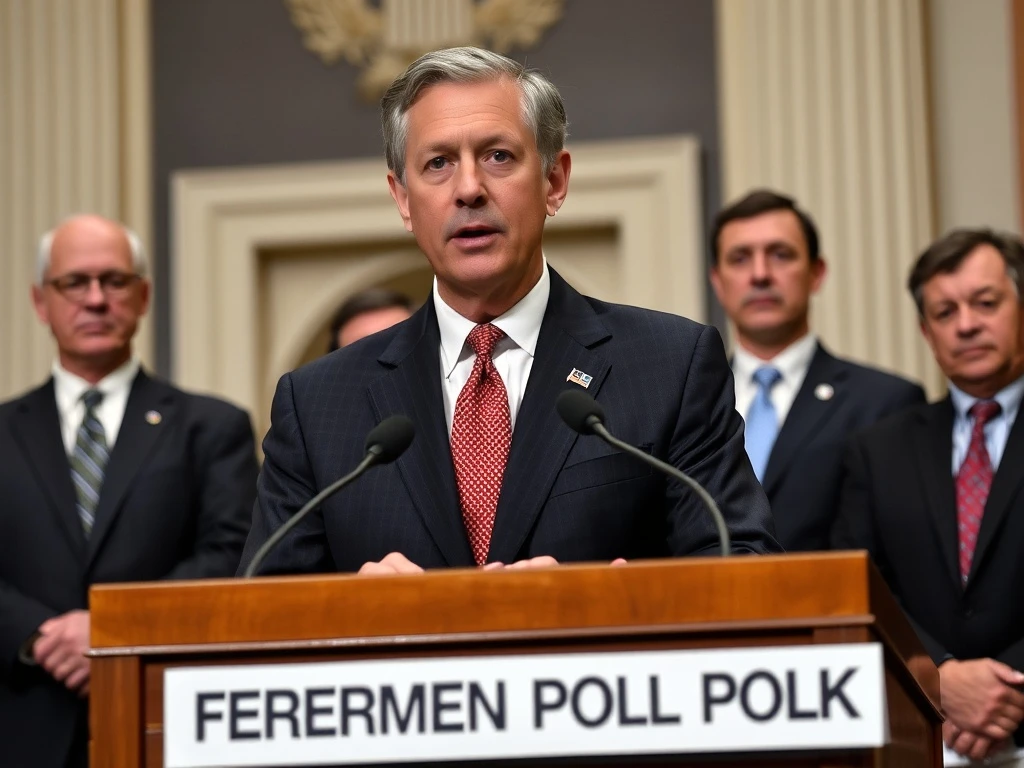
WASHINGTON, D.C. – Federal Reserve Chair Jerome Powell delivered a significant statement today that immediately captured financial market attention. He revealed that no decision has been made regarding whether he will remain on the Board of Governors after his term as chair expires. This announcement comes at a critical juncture for U.S. monetary policy and economic stability. Powell’s current term as a board member extends until 2028, creating a complex leadership scenario for the nation’s central bank. Meanwhile, he declined to answer questions about a subpoena, adding another layer of institutional intrigue. When journalists pressed him about the U.S. dollar’s value, Powell firmly stated that currency matters fall under Treasury Department responsibility. The Federal Reserve, he emphasized, does not comment on dollar valuation.
Federal Reserve Leadership Enters Uncertain Phase
Jerome Powell’s ambiguous statement about his future role creates immediate questions about Federal Reserve continuity. His current term as chair concludes in 2026, while his board membership extends two years longer. This unusual timing presents several possible scenarios for the central bank’s leadership structure. Historically, Fed chairs typically maintain their board positions after concluding their chairmanship. However, Powell’s non-committal response breaks from this tradition. Consequently, financial analysts now speculate about potential succession planning. The Federal Reserve faces numerous economic challenges requiring stable leadership. These include ongoing inflation management, employment goals, and financial system oversight. Powell’s potential departure from the board could create significant institutional knowledge gaps. The central bank’s credibility depends heavily on consistent policy direction. Therefore, leadership uncertainty introduces potential market volatility risks.
Historical Context of Fed Leadership Transitions
Federal Reserve leadership transitions follow established historical patterns worth examining. Previous chairs like Ben Bernanke and Janet Yellen maintained board positions after their chairmanships concluded. This continuity provided valuable institutional memory during policy shifts. The Federal Reserve Act governs board member terms and appointment processes. Board governors serve staggered fourteen-year terms to ensure independence from political cycles. However, most governors resign before completing full terms. Powell’s situation presents a rare scenario where a chair’s board term extends beyond their leadership tenure. This creates potential complications for presidential appointment timing. The White House must consider nomination strategies for multiple positions simultaneously. Congressional confirmation processes add further complexity to leadership transitions. Historical precedent shows that smooth Fed transitions support economic stability. Conversely, abrupt changes can create market uncertainty and policy discontinuity.
Understanding the Federal Reserve’s Dual Role Structure
The Federal Reserve System operates through two distinct but interconnected leadership roles. The Board of Governors provides centralized oversight and regulatory authority. Meanwhile, regional Federal Reserve Banks implement policies locally. This structure creates a checks-and-balances system within the central bank. Board governors participate in all major monetary policy decisions through the Federal Open Market Committee. They also supervise banking institutions and maintain financial system stability. The chair leads both the board and FOMC meetings while representing the Fed publicly. However, board membership provides continued voting power on critical decisions. A governor leaving the board loses direct policy influence despite retaining expertise. This explains why Powell’s potential board departure carries significant implications. The Federal Reserve currently navigates complex economic conditions requiring experienced leadership. Policy consistency depends heavily on institutional knowledge retention. Leadership changes during economic transitions can affect market confidence substantially.
Key Federal Reserve Leadership Components:
- Board of Governors: Seven members overseeing national monetary policy
- Federal Open Market Committee: Twelve members setting interest rates
- Regional Banks: Twelve institutions implementing policies locally
- Chair Position: Leading both board and public communications
Economic Implications of Leadership Uncertainty
Financial markets react sensitively to Federal Reserve leadership signals. Powell’s ambiguous statement about his future immediately affected Treasury yields and dollar valuations. Investors seek predictability in monetary policy direction above all else. Leadership uncertainty can increase market volatility and risk premiums. The Federal Reserve’s forward guidance becomes less effective during transition periods. Economic actors may delay investment decisions awaiting clarity. Historical data shows that Fed transition periods correlate with increased market uncertainty. However, established institutional processes typically ensure smooth operational continuity. The Federal Reserve System maintains deep bench strength across its leadership ranks. Multiple governors and regional bank presidents contribute to policy decisions. This distributed leadership model mitigates individual departure risks. Nevertheless, Powell’s extensive crisis management experience remains particularly valuable. His leadership during the pandemic response established significant credibility. Markets therefore watch his future intentions closely for policy direction signals.
The Subpoena Question and Institutional Independence
Jerome Powell’s refusal to address subpoena questions adds another dimension to today’s developments. Federal Reserve chairs historically avoid commenting on legal matters publicly. This tradition protects the institution’s operational independence from political pressures. The central bank’s credibility depends on perceived neutrality regarding legal proceedings. Congressional oversight represents a normal aspect of Federal Reserve accountability. However, legal challenges during leadership transitions create additional complexity. Powell’s non-response follows established protocol for sitting chairs facing inquiries. Previous Fed leaders have maintained similar positions when addressing legal matters. The Federal Reserve’s independence remains crucial for effective monetary policy. Political interference in central banking decisions typically produces suboptimal economic outcomes. Institutional safeguards protect against such interference through various mechanisms. These include fixed governor terms and budgetary autonomy from Congress. Legal proceedings against sitting chairs remain relatively rare in Fed history. Most cases involve policy disagreements rather than personal conduct allegations. The current situation’s specifics remain unclear due to Powell’s appropriate non-comment.
Dollar Policy: Clear Division Between Fed and Treasury
Jerome Powell’s dollar comments today reinforced long-standing institutional boundaries. He correctly noted that currency valuation falls under Treasury Department jurisdiction. The Federal Reserve focuses exclusively on domestic monetary policy objectives. These include maximum employment and price stability mandates. Exchange rate management represents an explicit Treasury responsibility under existing law. This division prevents conflicting policy signals between institutions. However, monetary policy decisions inevitably affect currency valuations indirectly. Interest rate changes influence capital flows and exchange rates substantially. The Federal Reserve acknowledges these secondary effects while avoiding direct commentary. Powell’s response today maintained this careful institutional balance perfectly. Global currency markets watch Fed-Treasury coordination closely for policy signals. Consistent messaging supports dollar stability in international markets. The U.S. dollar serves as global reserve currency, increasing policy importance. Major economies coordinate currency policies through established international forums. The Federal Reserve participates in these discussions while respecting jurisdictional boundaries. Today’s clarification reinforces proper institutional roles during volatile market conditions.
Potential Scenarios for Powell’s Federal Reserve Future
Financial analysts currently evaluate several plausible scenarios following Powell’s statement. Each possibility carries distinct implications for monetary policy continuity. Scenario analysis helps markets prepare for potential leadership changes.
| Scenario | Description | Probability | Market Impact |
|---|---|---|---|
| Full Continuation | Powell remains as both chair and governor through 2028 | 40% | Minimal volatility, policy consistency |
| Chair Departure Only | Powell steps down as chair in 2026 but stays as governor | 35% | Moderate uncertainty during chair transition |
| Complete Departure | Powell leaves both positions simultaneously in 2026 | 20% | Significant uncertainty, potential policy shift |
| Early Resignation | Powell leaves before 2026 for personal or political reasons | 5% | Major disruption, emergency succession needed |
Market participants currently price in the first two scenarios as most likely. However, Powell’s non-committal statement increases uncertainty premiums slightly. The Federal Reserve’s institutional resilience should manage any transition smoothly. Historical precedent supports this optimistic assessment strongly.
Expert Perspectives on Fed Leadership Stability
Former Federal Reserve officials and central banking experts emphasize institutional strength. They note that the Federal Reserve System withstands leadership transitions regularly. Policy continuity mechanisms include detailed meeting minutes and forward guidance. The Federal Open Market Committee operates through consensus-building processes. No single member dominates decision-making completely. This structure prevents abrupt policy shifts during leadership changes. However, communication styles and priorities inevitably vary between chairs. Powell established particular emphasis on labor market outcomes and inflation symmetry. Future chairs might adjust these priorities based on economic conditions. Expert consensus suggests maintaining current policy direction regardless of leadership. The Federal Reserve’s dual mandate remains unchanged by personnel decisions. Institutional processes ensure consistent application of established frameworks. Therefore, markets should avoid overreacting to potential leadership changes. The Federal Reserve’s century-long history demonstrates remarkable institutional continuity. This track record supports confidence during transition periods.
Conclusion
Federal Reserve Chair Jerome Powell’s ambiguous statement about his future role creates legitimate questions. However, the Federal Reserve’s institutional strength ensures policy continuity regardless of personnel decisions. Powell correctly noted the Treasury Department’s dollar responsibility while avoiding legal commentary. These responses maintain proper institutional boundaries during uncertain times. The central bank’s leadership structure contains sufficient depth for smooth transitions. Markets should monitor developments while avoiding excessive speculation. The Federal Reserve’s proven resilience supports economic stability through various scenarios. Powell’s eventual decision will follow established processes without disrupting monetary policy. The institution’s century of experience guides such transitions effectively. Therefore, today’s news warrants attention but not alarm among economic participants.
FAQs
Q1: When does Jerome Powell’s term as Federal Reserve chair end?
Jerome Powell’s current term as Federal Reserve chair concludes in 2026, though his board membership extends until 2028 unless he resigns earlier.
Q2: Can a Federal Reserve chair remain on the Board of Governors after their chairmanship ends?
Yes, historically many Fed chairs have maintained their board positions after concluding their chairmanships, providing valuable continuity during leadership transitions.
Q3: Who determines U.S. dollar policy according to Jerome Powell?
Powell stated clearly that dollar policy falls under Treasury Department jurisdiction, while the Federal Reserve focuses on domestic monetary policy objectives like inflation and employment.
Q4: Why did Powell decline to answer questions about a subpoena?
Federal Reserve chairs typically avoid commenting on legal matters publicly to maintain the institution’s independence and follow established protocols for addressing legal inquiries.
Q5: How might Powell’s potential departure affect Federal Reserve policy?
The Federal Reserve’s institutional processes and committee structure ensure policy continuity regardless of leadership changes, though communication styles and priorities might shift moderately with new leadership.
Related News
- Gold and Silver Rally: A Chilling 2008 Repeat Looms as Strategist Warns of Parallel Patterns
- OpenAI Social Media Platform: A Revolutionary Step Toward Secure Digital Identity with Worldcoin
- Doppler Secures $9M Seed Funding in Strategic Round Led by Pantera Capital