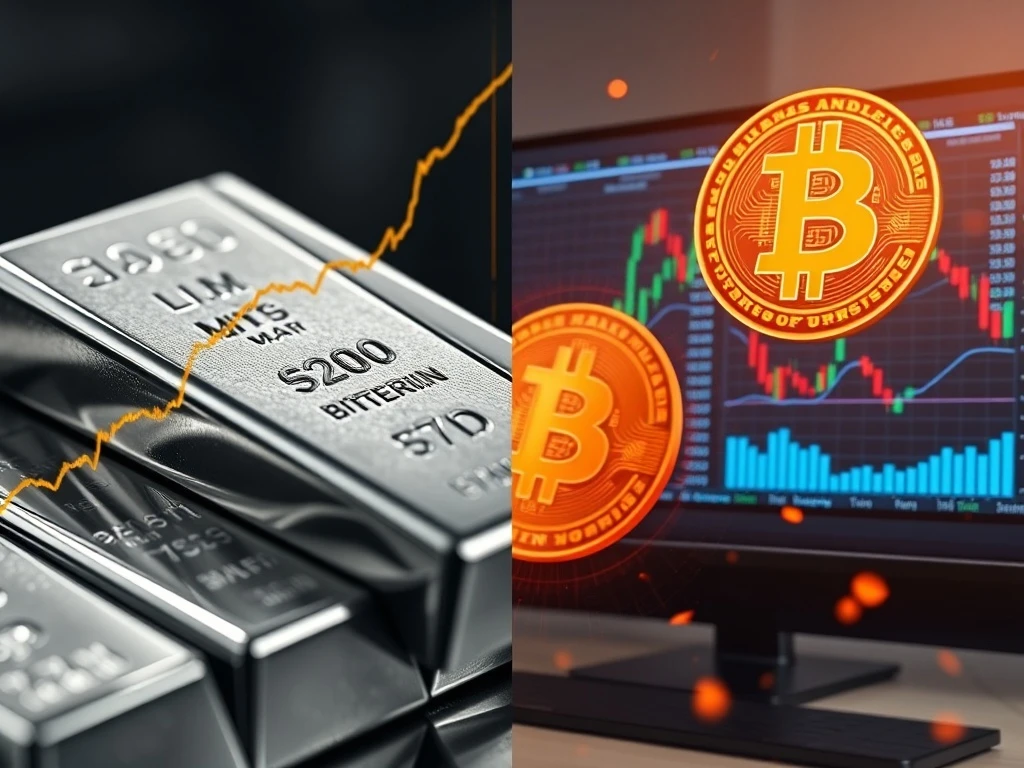
Prominent investor and author Robert Kiyosaki has issued a striking forecast, predicting the price of silver will surge to $200 per ounce, a statement made concurrently with his continued public acquisition of Bitcoin. This dual-asset strategy from the “Rich Dad Poor Dad” author spotlights a significant narrative in modern portfolio theory, blending traditional precious metals with digital currency. Financial analysts globally are now scrutinizing the fundamental and macroeconomic drivers that could validate such a bold projection for silver, a metal currently trading significantly lower, while also assessing the strategic rationale behind diversifying into the world’s leading cryptocurrency. The announcement, made via social media on April 2, 2025, immediately reverberated through commodity and digital asset markets, prompting renewed debate on inflation hedges and store-of-value assets.
Analyzing Robert Kiyosaki’s $200 Silver Forecast
Robert Kiyosaki’s prediction places silver’s target price at a level approximately fifteen times its early-2025 trading range. Historically, Kiyosaki has advocated for tangible assets like gold and silver as hedges against currency devaluation and systemic financial risk. His latest forecast, however, represents one of his most aggressive public price targets. To contextualize this prediction, analysts are examining several concurrent market factors. Firstly, industrial demand for silver, particularly from the solar photovoltaic and electric vehicle sectors, continues to establish record highs. The Silver Institute’s 2024 report indicated a sustained structural deficit in the physical silver market. Secondly, monetary policy and currency dynamics play a crucial role. Periods of high inflation and expansive central bank balance sheets have historically correlated with strong performance in precious metals. Kiyosaki’s thesis likely hinges on a prolonged environment of fiscal stimulus and declining confidence in fiat currencies.
The Macroeconomic Backdrop for Precious Metals
For silver to approach $200, a paradigm shift in its monetary and industrial valuation would be necessary. Experts point to historical precedents for extreme commodity revaluations during periods of hyperinflation or currency crisis. However, most mainstream institutions offer more conservative mid-term forecasts. For instance, a recent survey of major bank commodities desks projected an average silver price target of $32 for 2025. The disparity between conventional analysis and Kiyosaki’s prediction underscores a fundamental debate: is the current financial system facing a gradual adjustment or a more radical transformation? Kiyosaki’s public stance clearly aligns with the latter perspective, positioning silver not merely as a commodity but as a critical monetary metal poised for rediscovery.
Kiyosaki’s Parallel Bitcoin Accumulation Strategy
While advocating for silver, Robert Kiyosaki has simultaneously and vocally increased his Bitcoin holdings. This dual-track approach reflects a nuanced investment philosophy that recognizes distinct roles for different asset classes. Kiyosaki frequently refers to Bitcoin as “people’s gold,” highlighting its attributes as a decentralized, borderless, and finite store of value. His ongoing purchases signal a long-term conviction in cryptocurrency’s role within a diversified asset portfolio. Importantly, this strategy does not frame Bitcoin and silver as direct competitors. Instead, it presents them as complementary hedges against a common adversary: the potential devaluation of traditional fiat currency systems. Data from blockchain analytics firms, while not revealing personal holdings, confirms a consistent trend of large-scale accumulation by long-term holders, a cohort with which Kiyosaki publicly aligns himself.
The table below contrasts the key characteristics of silver and Bitcoin as framed by this investment thesis:
| Attribute | Silver | Bitcoin |
|---|---|---|
| Primary Role in Thesis | Industrial & Monetary Metal Hedge | Digital Gold & Decentralized Asset |
| Supply Dynamics | Limited annual mine supply, industrial consumption | Algorithmically capped at 21 million, predictable issuance |
| Market Drivers | Industrial demand, monetary demand, inflation | Adoption cycles, regulatory clarity, macroeconomic liquidity |
| Storage & Custody | Physical vaulting or ETF shares | Digital wallets (hot/cold) or custodial services |
Expert Perspectives on the Dual-Asset Approach
Portfolio managers and financial theorists have weighed in on the logic of combining precious metals with cryptocurrency. Dr. Elena Torres, a professor of financial economics at Stanford University, notes, “The correlation between digital assets and commodities like silver has been historically low. Including both in a portfolio can potentially reduce overall volatility if the thesis is a broad decline in fiat currency purchasing power. However, the risk profiles and regulatory environments are vastly different.” Other analysts caution that both markets are susceptible to high volatility and speculative flows. Nevertheless, Kiyosaki’s public moves have undeniably drawn mainstream attention to the concept of alternative asset allocation, moving the discussion beyond traditional stocks and bonds.
Market Impact and Investor Sentiment
The immediate market reaction to Kiyosaki’s prediction was measurable. Silver futures experienced a noticeable uptick in trading volume, and premiums on certain retail silver products widened slightly. In cryptocurrency markets, the news was absorbed into a broader mix of drivers, though it reinforced the narrative of Bitcoin as a legitimate institutional asset. More significantly, the event impacted retail investor sentiment. Online brokerage platforms reported increased search queries and discussion forum activity related to both silver ETFs and Bitcoin purchase methods. This phenomenon demonstrates the enduring influence of high-profile financial commentators on public market participation. Regulatory bodies, including the Securities and Exchange Commission, consistently advise investors to conduct independent research beyond celebrity endorsements, emphasizing the inherent risks in both commodity and digital asset speculation.
Key considerations for investors evaluating this thesis include:
- Volatility: Both silver and Bitcoin exhibit price swings far exceeding those of major equity indices.
- Liquidity: While large Bitcoin markets are highly liquid, physical silver can involve higher transaction costs.
- Regulatory Landscape: Cryptocurrency regulation remains in flux across major economies, posing a potential risk.
- Macroeconomic Dependency: The thesis heavily depends on specific inflation and currency devaluation outcomes.
Conclusion
Robert Kiyosaki’s prediction of silver reaching $200, paired with his ongoing Bitcoin accumulation, presents a provocative vision of the future of money and value. It is a strategy rooted in skepticism toward traditional financial systems and confidence in alternative, non-sovereign assets. While the $200 silver forecast sits at the extreme end of market expectations, it successfully ignites critical discussion about currency debasement, commodity scarcity, and the evolving role of digital stores of value. Whether or not the specific price target is realized, Kiyosaki’s dual focus on silver and Bitcoin underscores a growing trend among investors to seek portfolio resilience outside conventional boundaries. As macroeconomic conditions evolve, the performance of these asset classes will provide a real-time test of this influential investment thesis.
FAQs
Q1: What is Robert Kiyosaki’s main argument for buying silver and Bitcoin?
Kiyosaki argues that both assets serve as critical hedges against what he perceives as inevitable inflation and devaluation of government-issued fiat currencies. He views silver as an undervalued monetary metal and Bitcoin as “digital gold.”
Q2: How realistic is a $200 per ounce price target for silver?
Most mainstream financial institutions consider a $200 target for silver highly speculative in the near to medium term. It would require a seismic shift in monetary demand or extreme currency instability, far beyond current consensus forecasts.
Q3: Does investing in both silver and Bitcoin provide diversification?
Yes, to an extent. Their price drivers have historically shown low correlation. Silver is heavily influenced by industrial demand and traditional inflation metrics, while Bitcoin reacts more to adoption cycles, technological developments, and liquidity flows. However, both can be volatile.
Q4: What are the primary risks of following this investment strategy?
Key risks include extreme price volatility, liquidity constraints (for physical silver), regulatory changes (especially for Bitcoin), and the potential that the core macroeconomic thesis of hyper-inflation does not materialize as predicted.
Q5: Where does Kiyosaki’s prediction fit within broader commodity market analysis?
It represents a minority, ultra-bullish viewpoint. While analysts universally acknowledge strong industrial demand for silver, the $200 price prediction is based almost entirely on a forecast for unprecedented monetary demand, which is not the base case for most commodity research houses.
Related News
- Ethereum Emerges as Undeniable Winner in BlackRock’s Stablecoin Adoption Analysis
- XRP Price Pattern Repeats Historical Signal That Sparked Previous Major Moves
- Jim Rickards Gold Analysis: Why Wall Street’s Debasement Trade Narrative Is Dangerous Nonsense