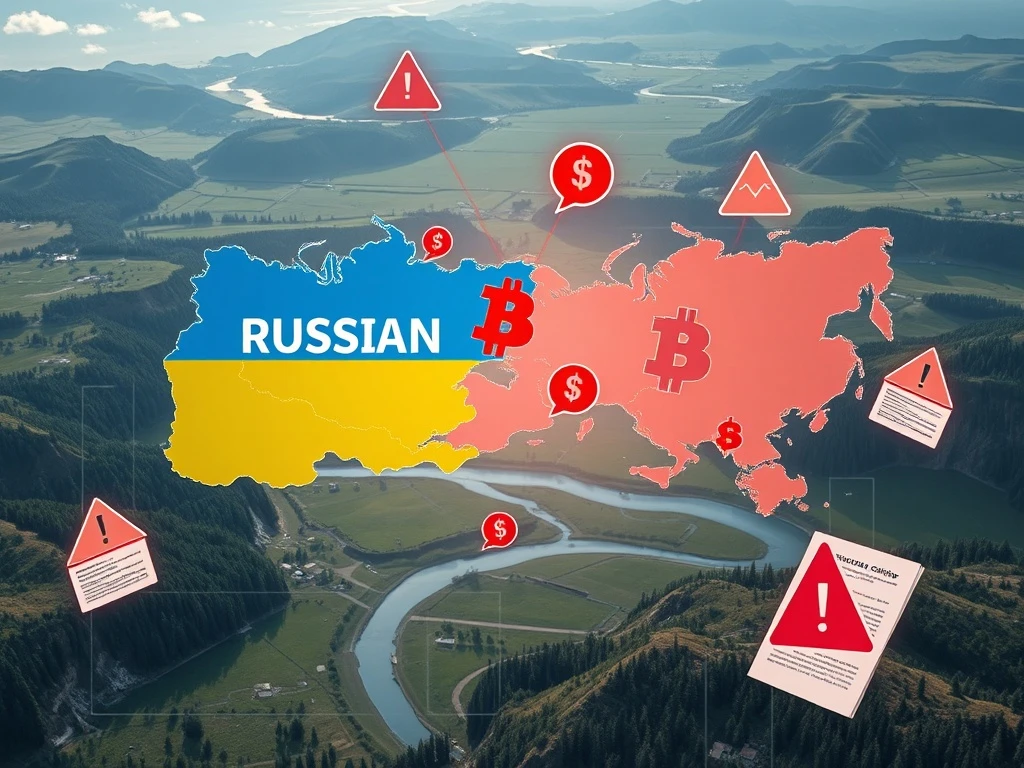
MOSCOW, March 2025 – In a significant escalation of financial measures, Russian authorities have officially designated a major Ukrainian cryptocurrency exchange as an ‘undesirable organization,’ marking a pivotal moment in the intersection of digital assets and international conflict. This unprecedented move represents Moscow’s latest attempt to control financial flows amid ongoing tensions, potentially setting new precedents for how nations weaponize cryptocurrency regulations during geopolitical disputes. The designation carries severe legal consequences under Russian law, effectively criminalizing any cooperation with the exchange and signaling a new frontier in economic warfare tactics.
Russian Crypto Sanctions Target Ukrainian Financial Infrastructure
The Russian Prosecutor General’s Office announced the designation on Tuesday, citing national security concerns. According to official statements, the Ukrainian exchange allegedly facilitated transactions that could undermine Russia’s financial stability. This action follows months of increasing regulatory pressure on cryptocurrency operations with Ukrainian connections. Russian authorities claim the exchange operated without proper licensing while enabling questionable financial activities. Consequently, the designation triggers automatic legal consequences under Russia’s ‘undesirable organizations’ law, originally designed to restrict foreign NGOs.
Legal experts note this represents the first application of such legislation to a cryptocurrency entity. The 2015 law allows Russian authorities to ban organizations deemed threatening to state security. Previously, authorities primarily targeted human rights groups and media outlets. Now, cryptocurrency platforms face similar restrictions. This expansion demonstrates Moscow’s evolving approach to financial control mechanisms. The designation prohibits Russian citizens and organizations from conducting any transactions with the exchange. Violators risk substantial fines and potential criminal prosecution under Russian federal law.
Ukrainian Cryptocurrency Exchange Operations and Response
The targeted exchange, which operates primarily from Kyiv, has served Ukrainian users since 2018. Platform representatives report handling thousands of daily transactions before the designation. Company officials immediately issued a statement condemning the Russian action as politically motivated. They emphasized their compliance with Ukrainian financial regulations and international standards. Furthermore, the exchange highlighted its role in supporting Ukraine’s digital economy during challenging times. The platform continues operations outside Russian jurisdiction, though the designation complicates international banking relationships.
Industry analysts observe that Ukrainian cryptocurrency exchanges have gained importance since 2022. These platforms facilitate remittances and international trade amid conventional banking disruptions. Many Ukrainians now rely on digital assets for cross-border transactions. The targeted exchange reportedly processed significant volumes between Ukraine and European partners. Its designation may disrupt these financial channels. However, Ukrainian regulators have pledged support for domestic cryptocurrency businesses facing foreign pressure. The National Bank of Ukraine continues developing its digital asset framework despite the conflict.
Expert Analysis: Financial Warfare Evolution
Dr. Elena Petrova, a senior fellow at the Center for Financial Security Studies, explains this development’s significance. “We’re witnessing the natural evolution of economic sanctions in the digital age,” she states. “Traditional financial warfare tactics now extend to cryptocurrency ecosystems. This Russian designation represents a strategic attempt to isolate Ukrainian digital finance. However, cryptocurrency’s decentralized nature presents unique challenges for such measures.” Petrova notes that previous sanctions primarily targeted traditional banking institutions. Cryptocurrency exchanges introduce new complexities for regulators attempting financial isolation.
Comparative analysis reveals interesting patterns. Russia previously focused on controlling domestic cryptocurrency mining and trading. Recent measures show expanding attention to international platforms. The ‘undesirable’ designation creates legal risks for Russians using the exchange. It also pressures international partners to reconsider relationships with the platform. This approach mirrors tactics used against traditional financial institutions but adapts them for digital assets. The effectiveness remains uncertain given cryptocurrency’s borderless nature. Nevertheless, the symbolic impact may influence other nations considering similar measures.
Global Cryptocurrency Regulation Implications
This development occurs amid broader cryptocurrency regulatory discussions worldwide. Multiple nations currently debate appropriate frameworks for digital asset oversight. Russia’s action provides a case study in geopolitical application of such regulations. Financial authorities globally monitor how cryptocurrency tools function during conflicts. The Ukrainian exchange designation demonstrates one approach to controlling cross-border digital finance. Other nations may consider similar mechanisms for national security purposes.
The international community faces complex questions about cryptocurrency in conflict zones. Humanitarian organizations increasingly use digital assets for aid delivery. Simultaneously, governments worry about potential misuse. Russia’s move highlights tensions between financial sovereignty and global connectivity. Cryptocurrency’s decentralized architecture challenges traditional regulatory approaches. This incident may accelerate discussions about international cryptocurrency governance. Particularly, nations may seek coordinated approaches to prevent regulatory fragmentation.
| Country | Primary Approach | Key Measures | Effectiveness Assessment |
|---|---|---|---|
| Russia | Restrictive designation | ‘Undesirable organization’ label, transaction bans | Moderate (limits formal channels) |
| Ukraine | Adaptive integration | Legal recognition, tax framework, military donations | High (harnesses for national needs) |
| United States | Targeted sanctions | OFAC listings, exchange prohibitions | Variable (depends on jurisdiction) |
| European Union | Regulatory alignment | MiCA implementation, transaction monitoring | Developing (framework in progress) |
Technical and Operational Challenges
Implementing such designations presents technical difficulties for regulators. Cryptocurrency transactions often bypass traditional financial monitoring systems. Russian authorities must develop new detection methods for exchange interactions. The decentralized nature of blockchain technology complicates enforcement efforts. Users might employ privacy tools or decentralized exchanges to circumvent restrictions. These technical realities limit the practical impact of formal designations. However, the legal consequences remain significant for identifiable users and businesses.
The targeted exchange employs various operational safeguards. These include enhanced verification procedures and transaction monitoring. Company representatives emphasize their commitment to legal compliance. They implement know-your-customer (KYC) and anti-money laundering (AML) protocols. These measures align with international financial standards. Despite these precautions, geopolitical factors override operational considerations. The exchange now faces reputation challenges beyond technical issues. Potential partners may hesitate to engage with a designated organization, regardless of its actual operations.
Historical Context: Financial Measures Evolution
This development continues historical patterns of financial conflict. Nations have long used economic tools as warfare alternatives. Traditional methods included trade embargoes and asset freezes. Cryptocurrency introduces new dimensions to these established practices. The current situation reflects adaptation to technological change. Previous conflicts saw similar evolution with earlier financial technologies. For instance, telegraph and wire transfer systems faced restrictions during 20th-century wars. Each technological advancement prompts corresponding regulatory responses.
Russia’s approach combines traditional and innovative elements. The ‘undesirable organization’ concept predates cryptocurrency. Its application to digital asset exchanges represents novel adaptation. This blending of old and new mechanisms characterizes modern financial conflict. Observers note similar patterns in other jurisdictions. As cryptocurrency adoption grows, regulatory frameworks inevitably address security concerns. The Russian-Ukrainian context provides an accelerated case study in this process. Other nations likely study these developments for their own policy formulation.
Market Reactions and Economic Impact
Initial market responses showed limited cryptocurrency price movements. Major digital assets like Bitcoin and Ethereum experienced minor fluctuations. This suggests investors view the development as geographically specific rather than systemic. However, regional cryptocurrency markets demonstrated more noticeable effects. Ukrainian exchange volumes showed temporary increases following the announcement. Some analysts interpret this as users anticipating further restrictions. Others see normal volatility amid ongoing uncertainty.
The economic impact extends beyond cryptocurrency markets. Traditional financial institutions monitoring digital asset developments may adjust risk assessments. International businesses operating in both Russia and Ukraine face new compliance challenges. Banking relationships require careful evaluation of cryptocurrency exposure. These secondary effects demonstrate how digital asset regulations influence broader economic relationships. The interconnected nature of modern finance means localized measures create ripple effects. Companies worldwide now consider cryptocurrency dimensions in their risk management frameworks.
Legal Framework and International Law Considerations
Legal experts debate the designation’s consistency with international norms. Russia cites sovereign rights to regulate financial activities. Critics question the political motivations behind the specific targeting. International law provides limited guidance for cryptocurrency in conflict situations. Existing frameworks primarily address traditional financial instruments. This regulatory gap creates uncertainty for all stakeholders. Nations exercise discretion within this undefined space. Russia’s action tests boundaries of acceptable financial measures during tensions.
The designation raises jurisdictional questions about cryptocurrency regulation. Digital assets operate across borders by design. National measures inevitably have extraterritorial implications. Other nations must decide whether to recognize Russia’s designation. Their decisions will influence future cryptocurrency governance approaches. This incident may prompt calls for clearer international standards. Without such frameworks, conflicting national regulations could fragment the digital asset ecosystem. Market participants increasingly seek predictable legal environments for cryptocurrency operations.
Conclusion
Russia’s designation of a Ukrainian cryptocurrency exchange as an ‘undesirable organization’ represents a significant development in financial warfare and digital asset regulation. This action demonstrates how nations adapt traditional economic measures to cryptocurrency ecosystems. The move carries immediate consequences for the targeted exchange and its users. Furthermore, it establishes precedents for future regulatory actions during geopolitical conflicts. The international community closely watches these developments as cryptocurrency integration continues globally. This incident highlights growing intersections between digital finance, national security, and international relations. As technological evolution progresses, regulatory frameworks must balance innovation with stability concerns. The Russian crypto sanctions against Ukrainian exchanges illustrate these complex challenges in practice.
FAQs
Q1: What does ‘undesirable organization’ designation mean under Russian law?
The designation prohibits Russian citizens and organizations from any cooperation with the entity. Violators face administrative fines up to 500,000 rubles for individuals and 5 million rubles for organizations. Criminal charges may follow repeated violations.
Q2: How does this affect cryptocurrency users outside Russia?
International users can continue accessing the exchange unless their jurisdictions impose similar restrictions. However, banking partners might reconsider relationships due to compliance concerns, potentially affecting deposit and withdrawal options.
Q3: Can Russian citizens still access cryptocurrency through other means?
Yes, Russians can use virtual private networks (VPNs) or decentralized exchanges (DEXs) to access cryptocurrency services. However, these methods carry legal risks and technical complexities for average users.
Q4: How have Ukrainian authorities responded to this designation?
Ukrainian regulators condemned the action as politically motivated. They reaffirmed support for domestic cryptocurrency businesses and continued developing the national digital asset framework despite external pressures.
Q5: Does this affect cryptocurrency prices globally?
Initial market reactions showed limited impact on major cryptocurrencies like Bitcoin. The development appears specific to regional dynamics rather than systemic concerns about cryptocurrency infrastructure or adoption trends.
Related News
- Bybit Delisting Shakes Crypto Market: SERAPH, XO, PSTAKE, MASA Pairs to Be Removed
- Matcha Meta Exploit: Devastating $16.8M DEX Aggregator Hack Exposes SwapNet Vulnerability
- Bermuda’s Onchain Transformation: A Revolutionary Blueprint or Regulatory Gamble?