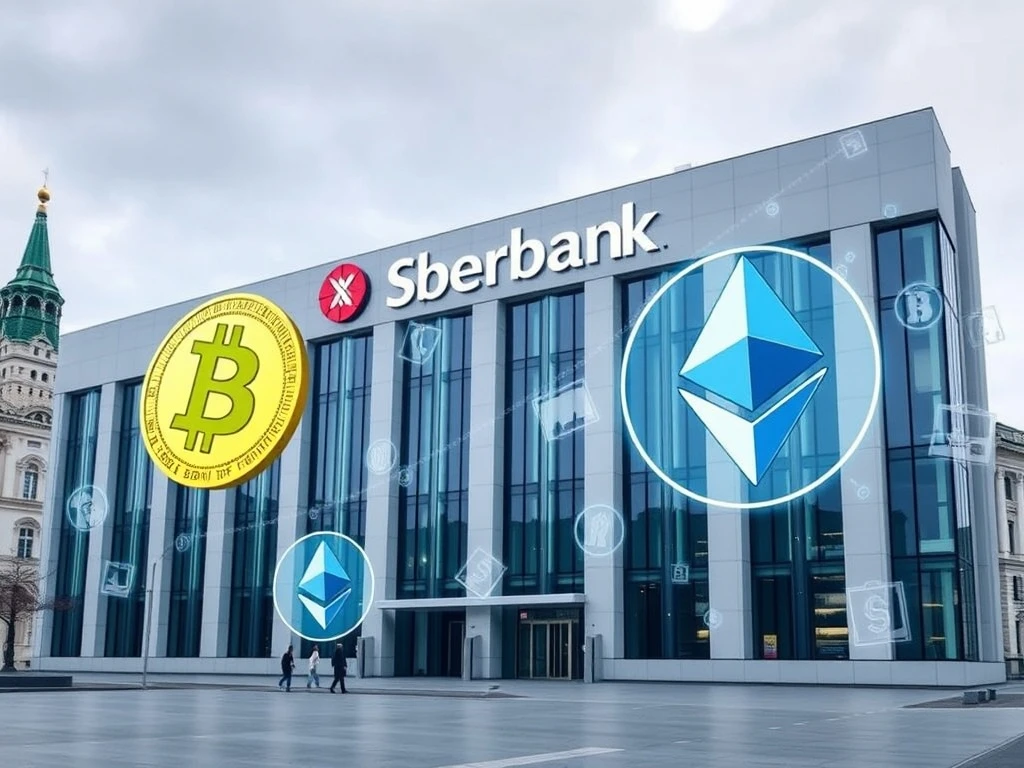
MOSCOW, RUSSIA — March 2025 marks a pivotal moment in financial history as Sberbank, Russia’s largest banking institution, announces plans to issue loans backed by cryptocurrency collateral. This groundbreaking move represents the most significant institutional embrace of digital assets by a traditional banking giant to date, potentially reshaping global finance. The decision follows years of regulatory evolution and signals a dramatic shift in how major financial institutions perceive cryptocurrency’s role in mainstream banking.
Sberbank’s Crypto-Backed Loan Framework
Sberbank revealed its comprehensive framework for accepting digital assets as loan collateral during a press conference in Moscow. The program will initially accept Bitcoin (BTC) and Ethereum (ETH) as primary collateral assets, with plans to expand to other established cryptocurrencies. Bank executives emphasized that the initiative follows extensive regulatory consultations with Russia’s Central Bank and Ministry of Finance. Consequently, the program establishes clear valuation methodologies, risk management protocols, and custody solutions for digital assets.
The bank will implement a conservative loan-to-value (LTV) ratio of 50% for cryptocurrency collateral, significantly lower than traditional asset ratios. This cautious approach reflects both regulatory requirements and the inherent volatility of digital assets. Additionally, Sberbank will require daily collateral revaluation with margin calls triggered at 60% LTV thresholds. The custody solution involves a hybrid approach combining cold storage for most assets with insured hot wallet solutions for liquidity management.
Technical Implementation and Security Measures
Sberbank developed proprietary technology for real-time cryptocurrency valuation and risk monitoring. The system integrates multiple exchange feeds to establish fair market values while accounting for liquidity variations across platforms. Furthermore, the bank partnered with established blockchain security firms to implement multi-signature wallet solutions and comprehensive insurance coverage. These measures address traditional banking concerns about digital asset security and custody.
Global Context and Regulatory Evolution
Sberbank’s announcement occurs within a rapidly evolving global regulatory landscape for cryptocurrency. Several jurisdictions, including Switzerland, Singapore, and parts of the United States, have established frameworks for digital asset banking services. However, Russia’s approach represents unique characteristics shaped by its specific economic conditions and geopolitical positioning. The Central Bank of Russia has gradually shifted from outright skepticism to cautious acceptance of cryptocurrency’s role in financial innovation.
This regulatory evolution accelerated following the 2022-2023 international sanctions, which prompted Russian financial institutions to explore alternative financial technologies. While initially focused on cross-border settlements, regulatory discussions expanded to include domestic financial applications. Sberbank’s program represents the culmination of these discussions, establishing Russia as an unexpected leader in institutional cryptocurrency adoption.
| Country/Institution | Collateral Types Accepted | Maximum LTV Ratio | Regulatory Status |
|---|---|---|---|
| Sberbank (Russia) | BTC, ETH (initially) | 50% | Fully Regulated |
| Swiss Banks | Multiple cryptocurrencies | 60-70% | Regulated Framework |
| US Crypto-Native Lenders | Wide variety | Up to 90% | State-by-State Regulation |
| Asian Digital Banks | BTC, ETH, stablecoins | 40-50% | Experimental Licenses |
Economic Impacts and Market Reactions
The announcement immediately affected multiple financial markets. Russian cryptocurrency exchanges reported significant trading volume increases, particularly in BTC/RUB and ETH/RUB pairs. Traditional banking analysts noted potential impacts on several economic sectors. Small and medium enterprises (SMEs) with cryptocurrency holdings could access capital without liquidating positions, potentially stimulating business investment. Meanwhile, high-net-worth individuals might utilize the program for estate planning and wealth management strategies.
International responses varied considerably. European banking associations expressed cautious interest while monitoring regulatory developments. Chinese financial authorities maintained their prohibition on cryptocurrency transactions but acknowledged the technological innovation. American fintech companies viewed the development as validation of cryptocurrency’s growing institutional relevance. Market analysts predict that Sberbank’s move could pressure other global banks to accelerate their digital asset strategies.
Expert Perspectives on Financial Innovation
Financial technology experts highlight several implications of Sberbank’s decision. Dr. Elena Petrova, a blockchain researcher at Moscow State University, notes that “traditional banking finally recognizes cryptocurrency as legitimate collateral rather than speculative investment.” Meanwhile, banking analyst Mikhail Volkov emphasizes risk management aspects, stating that “Sberbank’s conservative LTV ratios establish important precedents for institutional cryptocurrency lending.”
International observers point to potential competitive advantages. “Russian banks could attract global cryptocurrency holders seeking regulated lending options,” suggests Singapore-based fintech consultant James Chen. However, compliance experts caution about anti-money laundering (AML) challenges, noting that cryptocurrency transactions require enhanced due diligence compared to traditional assets.
Implementation Timeline and Future Expansion
Sberbank outlined a phased implementation approach beginning with pilot programs in Moscow and St. Petersburg during Q2 2025. The initial phase will involve selected corporate clients with existing banking relationships. Subsequently, the program will expand to additional Russian regions in Q3 2025 before becoming nationally available in 2026. The bank also announced research into accepting tokenized traditional assets as collateral, potentially creating hybrid collateralization models.
Future developments might include several innovations. Sberbank researchers are exploring automated smart contract-based loan agreements that would execute margin calls and liquidations without manual intervention. Additionally, the bank is investigating cross-chain collateralization allowing borrowers to pledge assets across multiple blockchain networks. These technological advancements could further differentiate Sberbank’s offering from traditional and cryptocurrency-native lenders.
- Initial Phase (Q2 2025): Pilot programs in major cities with corporate clients
- Expansion Phase (Q3 2025): Regional rollout across Russia
- National Availability (2026): Full implementation across all branches
- Future Development: Tokenized asset acceptance and cross-chain solutions
Conclusion
Sberbank’s decision to issue crypto-backed loans represents a watershed moment for both traditional banking and digital asset markets. The program bridges two previously separate financial worlds while establishing important precedents for risk management and regulatory compliance. As Russia’s largest bank embraces cryptocurrency collateralization, global financial institutions face increasing pressure to develop their digital asset strategies. This development ultimately validates cryptocurrency’s growing role in mainstream finance while demonstrating how traditional institutions can innovate within evolving regulatory frameworks. The success of Sberbank’s crypto-backed loan program could influence banking practices worldwide, potentially accelerating institutional adoption of blockchain technologies across the financial sector.
FAQs
Q1: What cryptocurrencies will Sberbank accept as collateral initially?
Sberbank will initially accept Bitcoin (BTC) and Ethereum (ETH) as collateral, with plans to expand to other established cryptocurrencies based on market capitalization, liquidity, and regulatory approval.
Q2: How does Sberbank’s loan-to-value ratio compare to traditional collateral?
The bank established a conservative 50% LTV ratio for cryptocurrency collateral, significantly lower than the 70-80% ratios typically applied to real estate or traditional securities, reflecting digital assets’ higher volatility.
Q3: What security measures protect the cryptocurrency collateral?
Sberbank implemented multi-signature wallet solutions, cold storage for most assets, comprehensive insurance coverage, and partnerships with established blockchain security firms to ensure collateral protection.
Q4: How will this program affect Russian businesses and individuals?
Businesses and individuals holding cryptocurrency can access capital without liquidating positions, potentially stimulating investment and providing new wealth management options within Russia’s regulated banking system.
Q5: Could other global banks follow Sberbank’s example?
Financial analysts believe Sberbank’s move increases pressure on international banks to develop cryptocurrency strategies, though implementation will vary based on regional regulations and institutional risk appetites.
Related News
- South Korean Authorities Launch Sweeping Audit of All Crypto Exchanges After Alarming Bithumb Bitcoin Incident
- USDT Whale Transfer: Stunning $400 Million Move from HTX to Aave Signals Major DeFi Shift
- TrendResearch Sells Most of its ETH for a Staggering $747M Loss in Major 2025 Crypto Rebalance