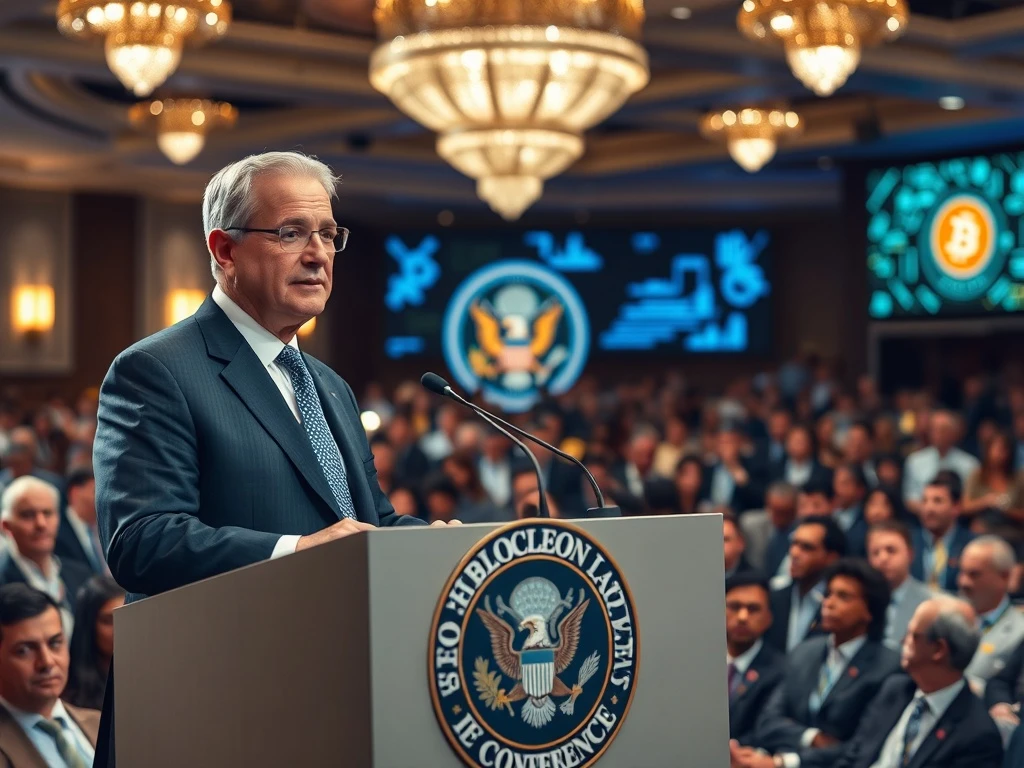
In a groundbreaking development for cryptocurrency regulation, U.S. Securities and Exchange Commission Chairman Paul Atkins will make history this April by addressing the world’s largest Bitcoin conference in Las Vegas, Nevada. This unprecedented appearance marks the first time a sitting SEC chairman will speak directly to the Bitcoin community at such a major industry event, potentially signaling a new era of regulatory engagement with digital assets.
SEC Chairman’s Historic Bitcoin Conference Appearance
Bitcoin Magazine first reported this significant development on March 15, 2025. The announcement immediately captured attention across financial markets and regulatory circles. Chairman Atkins will participate in the Bitcoin 2025 conference scheduled for April 10-12 at the Las Vegas Convention Center. This event typically attracts over 20,000 attendees from more than 100 countries. Consequently, his participation represents a major milestone in government-cryptocurrency relations.
The SEC has maintained an active regulatory posture toward cryptocurrency markets for several years. However, direct engagement at industry conferences remained limited until now. Previous SEC officials occasionally participated in blockchain events. Yet no sitting chairman has addressed a major Bitcoin-focused gathering. This development follows increasing institutional adoption of Bitcoin and growing mainstream financial interest.
Regulatory Context and Background
Paul Atkins assumed the SEC chairmanship in January 2024 after serving as a commissioner since 2022. His regulatory approach has emphasized investor protection while acknowledging technological innovation. Under his leadership, the SEC approved several Bitcoin exchange-traded products in late 2024. These approvals followed years of deliberation and legal proceedings. The commission also intensified enforcement actions against unregistered cryptocurrency offerings throughout 2024.
The cryptocurrency industry has long sought clearer regulatory guidance from U.S. authorities. Multiple legislative proposals have circulated in Congress since 2021. However, comprehensive cryptocurrency legislation remains pending. Regulatory agencies like the SEC and CFTC continue operating under existing securities and commodities laws. This framework sometimes creates jurisdictional uncertainties for digital assets.
Potential Impacts on Cryptocurrency Regulation
Industry analysts immediately recognized the symbolic importance of this announcement. Many experts view this engagement as potentially constructive for regulatory clarity. The conference appearance could facilitate direct dialogue between regulators and industry participants. Such communication might help shape future policy approaches. However, the SEC maintains its commitment to enforcing existing securities laws regardless of venue.
Several factors likely influenced this decision to engage directly:
- Market maturation: Bitcoin’s market capitalization exceeded $1.5 trillion in early 2025
- Institutional participation: Major financial institutions now offer cryptocurrency services
- Global regulatory developments: Other jurisdictions have implemented comprehensive frameworks
- Technological evolution: Blockchain applications extend beyond speculative trading
Conference organizers expressed enthusiasm about this historic participation. They emphasized the importance of regulatory dialogue for industry development. The Bitcoin 2025 conference will feature numerous other regulatory discussions alongside technical presentations.
Expert Perspectives on Regulatory Engagement
Financial regulation experts offered varied interpretations of this development. Professor Elena Rodriguez of Stanford Law School noted, “Direct engagement represents progress beyond enforcement-only approaches.” She emphasized that regulatory clarity benefits both investors and legitimate innovators. Meanwhile, former CFTC Chairman Christopher Giancarlo observed, “This reflects cryptocurrency’s transition from niche interest to mainstream financial asset.”
Industry representatives generally welcomed the announcement. The Blockchain Association issued a statement supporting constructive regulatory dialogue. Similarly, the Chamber of Digital Commerce highlighted the importance of regulatory certainty for innovation. These organizations have advocated for balanced cryptocurrency regulation for several years.
Historical Context of SEC-Cryptocurrency Relations
The SEC’s relationship with cryptocurrency has evolved significantly since Bitcoin’s emergence. Early regulatory attention focused primarily on initial coin offerings (ICOs) between 2017-2019. The commission brought numerous enforcement actions against fraudulent ICOs during this period. Subsequently, regulatory focus expanded to cryptocurrency exchanges and trading platforms. Several high-profile cases established important legal precedents.
A timeline of key SEC-cryptocurrency developments:
| Year | Development | Significance |
|---|---|---|
| 2017 | DAO Report | First major statement on token securities |
| 2018 | ICO enforcement actions | Established regulatory jurisdiction |
| 2020 | Telegram settlement | Clarified application to major projects |
| 2023 | Exchange lawsuits | Addressed trading platform regulation |
| 2024 | Bitcoin ETF approvals | Recognized institutional products |
| 2025 | Conference participation | Direct industry engagement |
This historical progression demonstrates increasing regulatory sophistication regarding digital assets. Each phase addressed different aspects of the evolving cryptocurrency ecosystem. The conference participation represents the latest development in this ongoing regulatory evolution.
International Regulatory Comparisons
Global regulatory approaches to cryptocurrency vary considerably across jurisdictions. The European Union implemented its Markets in Crypto-Assets (MiCA) regulation in 2024. This comprehensive framework provides clear rules for cryptocurrency service providers. Similarly, Singapore developed detailed regulatory guidelines through its Monetary Authority. Other jurisdictions like Japan and Switzerland also established specific cryptocurrency regulations.
By comparison, U.S. regulation has proceeded through agency actions and court decisions. This approach has created some regulatory uncertainty despite vigorous enforcement. The SEC chairman’s conference participation may signal movement toward more structured engagement. However, significant legislative action would require congressional participation beyond agency initiatives.
Conference Details and Expected Discussions
The Bitcoin 2025 conference represents the largest annual gathering of Bitcoin enthusiasts and professionals. Previous conferences featured technical developers, investors, entrepreneurs, and policymakers. The 2025 event will include over 300 speakers across multiple stages. Conference organizers anticipate particularly strong interest in regulatory sessions this year.
Chairman Atkins will participate in a main stage session on April 11. Conference programming indicates this will be a moderated discussion rather than formal testimony. The session will likely address multiple regulatory topics relevant to cryptocurrency markets. These may include exchange regulation, token classification, investor protection, and innovation considerations.
Other regulatory sessions will feature international policymakers and former officials. The conference traditionally emphasizes Bitcoin’s technological and philosophical foundations. However, regulatory discussions have gained prominence as institutional adoption increased. This year’s agenda reflects cryptocurrency’s maturation beyond early adoption phases.
Market Reactions and Implications
Financial markets showed measured responses to the announcement. Bitcoin prices experienced modest volatility following the news. Traditional financial analysts noted potential long-term implications for regulatory clarity. Several investment firms highlighted reduced regulatory uncertainty as positive for institutional adoption. However, market participants generally await specific policy signals rather than symbolic gestures.
The cryptocurrency industry faces multiple regulatory challenges beyond SEC jurisdiction. Banking access, tax treatment, and international coordination remain important issues. Comprehensive legislative solutions would address these interconnected concerns. Agency actions alone cannot resolve all regulatory uncertainties facing the industry.
Conclusion
SEC Chairman Paul Atkins’ scheduled appearance at the Bitcoin 2025 conference represents a historic moment in cryptocurrency regulation. This engagement marks the first time a sitting SEC chairman will address a major Bitcoin industry event directly. The development reflects cryptocurrency’s growing importance within mainstream finance. It also suggests potential evolution in regulatory approaches to digital assets. Market participants will closely monitor this Bitcoin conference appearance for signals about future regulatory directions. Ultimately, constructive dialogue between regulators and industry may benefit investors, innovators, and financial markets collectively.
FAQs
Q1: Why is the SEC chairman’s Bitcoin conference appearance significant?
The appearance is historically significant because no sitting SEC chairman has previously addressed a major Bitcoin industry event. This represents unprecedented direct engagement between the top U.S. securities regulator and the cryptocurrency community.
Q2: What might Chairman Atkins discuss at the Bitcoin conference?
While specific topics remain unconfirmed, likely discussion areas include cryptocurrency regulation, investor protection, market integrity, and balancing innovation with regulatory compliance. The session will probably address both current enforcement priorities and future regulatory approaches.
Q3: How does this development relate to Bitcoin ETF approvals?
The SEC approved several Bitcoin exchange-traded funds in late 2024 under Chairman Atkins’ leadership. The conference appearance continues this pattern of engagement with institutional cryptocurrency products while maintaining regulatory oversight of the broader market.
Q4: What are the potential implications for cryptocurrency regulation?
This direct engagement could facilitate better understanding between regulators and industry participants. It may contribute to more nuanced regulatory approaches that address legitimate concerns while supporting responsible innovation in digital asset markets.
Q5: How have other countries approached cryptocurrency regulation differently?
Several jurisdictions have implemented comprehensive cryptocurrency regulatory frameworks, including the European Union’s MiCA regulation. The U.S. has generally relied on existing securities laws and agency enforcement actions, creating different regulatory dynamics than more structured international approaches.
Related News
- XRP Plunges Below $1.80: Trump’s Stark Iran Warning Sparks Cryptocurrency Market Panic
- Crypto Futures Liquidated: Staggering $103 Million Wiped Out in Single Hour Amid Market Turmoil
- Crypto Market Structure Bill Passes Senate Committee in Landmark 12-11 Vote, Setting Stage for 2025 Regulatory Framework