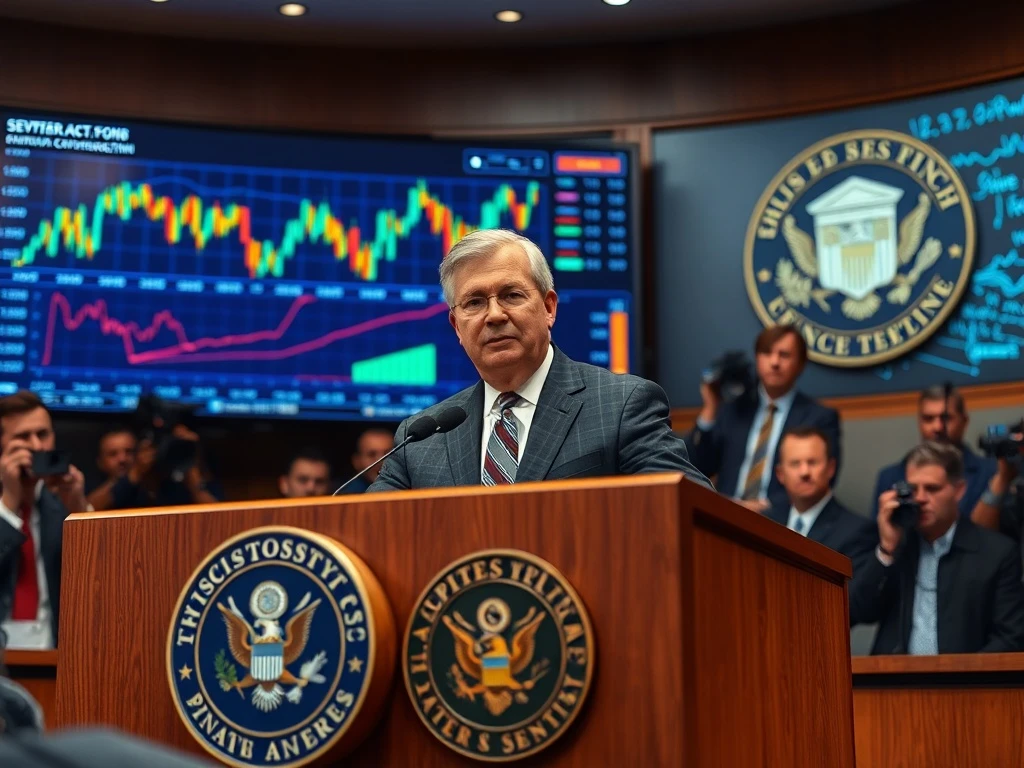
WASHINGTON, D.C., March 2025 – The cryptocurrency industry faces a potentially transformative week as U.S. Securities and Exchange Commission Chair Paul Atkins declares this period crucial for digital asset regulation. This announcement signals heightened regulatory activity that could reshape market structures, compliance requirements, and institutional participation in blockchain-based financial systems. The SEC’s forthcoming decisions may establish precedents affecting billions in digital asset valuations and investor protections across global markets.
SEC Crypto Regulation Enters Critical Phase
Chairman Atkins’ statement arrives during unprecedented regulatory scrutiny of digital assets. The SEC has consistently emphasized investor protection while grappling with classifying various cryptocurrencies. This week’s importance stems from multiple pending decisions regarding exchange-traded products, enforcement actions, and classification frameworks. Consequently, market participants anticipate clarity on longstanding regulatory ambiguities.
The Commission currently reviews several Bitcoin and Ethereum exchange-traded fund applications. Additionally, ongoing litigation involving major cryptocurrency platforms approaches critical junctures. Regulatory experts note the SEC’s recent staffing increases in its Crypto Assets and Cyber Unit. This expansion suggests intensified enforcement capabilities. Market analysts correlate these developments with Chairman Atkins’ timeline declaration.
Historical Context of SEC Digital Asset Oversight
The Securities and Exchange Commission maintains a complex history with cryptocurrency regulation. Under previous leadership, the Commission pursued numerous enforcement actions against initial coin offerings and unregistered securities. However, comprehensive regulatory frameworks remained elusive. Chairman Atkins, appointed in 2024, promised methodical yet decisive action. His background in traditional securities law informs his approach to digital assets.
Recent years witnessed significant legal developments affecting SEC authority. The 2023 Ripple Labs ruling established important precedents regarding token classification. Subsequent court decisions clarified jurisdictional boundaries between the SEC and Commodity Futures Trading Commission. These legal milestones provide context for current regulatory movements. Industry observers note increasing coordination between federal agencies.
Expert Analysis of Regulatory Implications
Financial regulation specialists identify several potential outcomes from this critical week. First, the SEC may issue definitive guidance on proof-of-stake token classification. Second, enforcement actions against decentralized finance platforms could accelerate. Third, approval of spot cryptocurrency ETFs remains possible. Each scenario carries distinct market implications.
University of Pennsylvania regulatory scholar Dr. Elena Martinez comments, “The SEC faces balancing innovation facilitation with investor protection. Chairman Atkins’ statement suggests resolution of internal deliberations. Market participants should prepare for substantive regulatory announcements.” Her research indicates regulatory clarity typically precedes institutional investment surges.
Comparative International Regulatory Approaches
United States cryptocurrency regulation develops alongside global frameworks. The European Union implemented Markets in Crypto-Assets regulation in 2024. Singapore and Switzerland established comprehensive digital asset guidelines earlier. These international approaches influence SEC considerations. However, American regulators emphasize unique investor protection concerns.
| Jurisdiction | Primary Regulator | Key Framework | Implementation Year |
|---|---|---|---|
| European Union | European Securities and Markets Authority | Markets in Crypto-Assets (MiCA) | 2024 |
| United States | Securities and Exchange Commission | Howey Test Application | Ongoing |
| Singapore | Monetary Authority of Singapore | Payment Services Act | 2020 |
| Switzerland | Swiss Financial Market Supervisory Authority | Blockchain Act | 2021 |
International coordination presents both challenges and opportunities. Cross-border cryptocurrency transactions require regulatory harmonization. The Financial Stability Board and International Organization of Securities Commissions facilitate global standard development. SEC decisions this week may influence international regulatory trajectories.
Potential Market Impacts and Industry Responses
Cryptocurrency markets historically react strongly to SEC announcements. Regulatory clarity typically reduces volatility and increases institutional participation. Conversely, restrictive measures may temporarily depress valuations. Industry participants prepare for multiple scenarios through compliance enhancements and strategic adjustments.
Major cryptocurrency exchanges recently implemented several measures:
- Enhanced compliance protocols for token listings and trading
- Increased transparency regarding asset reserves and operations
- Expanded legal teams specializing in securities regulation
- Proactive engagement with regulatory authorities through comment submissions
These preparations reflect industry maturation and recognition of regulatory inevitability. Market infrastructure providers similarly adjust services. Custody solutions, trading platforms, and analytics firms incorporate regulatory considerations into product development.
Technological Innovation Amid Regulatory Evolution
Blockchain developers continue advancing technology despite regulatory uncertainty. Recent innovations include privacy-preserving compliance tools and regulatory-friendly smart contract architectures. These technological adaptations demonstrate industry resilience. Protocol developers increasingly design systems with regulatory considerations from inception.
Massachusetts Institute of Technology researcher Dr. Kenji Tanaka observes, “Technological solutions can bridge regulatory requirements and blockchain’s decentralized nature. The most successful projects will integrate compliance into their fundamental architecture.” His team develops cryptographic techniques for transparent yet private transaction verification.
Investor Protection Considerations
The SEC’s primary mandate involves investor protection. Cryptocurrency markets present unique challenges including pseudonymous transactions, cross-border operations, and technological complexity. Chairman Atkins emphasizes these concerns in public statements. Potential regulatory actions likely prioritize several key areas.
First, disclosure requirements for cryptocurrency issuers may expand. Second, custody standards for digital assets could formalize. Third, market manipulation prevention measures might strengthen. Each area addresses specific investor risks identified through SEC enforcement experience. Retail investor education remains an additional priority.
Conclusion
SEC Chair Paul Atkins’ declaration of this week’s importance for cryptocurrency signals potential regulatory watershed moments. The Securities and Exchange Commission approaches decisions affecting digital asset classification, market structure, and investor protections. These developments occur within broader contexts of international regulatory coordination and technological innovation. Market participants should monitor SEC announcements closely while maintaining compliance preparedness. Ultimately, regulatory clarity benefits legitimate projects, protects investors, and fosters sustainable cryptocurrency ecosystem development.
FAQs
Q1: What specific decisions might the SEC announce this week?
The SEC may rule on spot cryptocurrency ETF applications, issue guidance on proof-of-stake token classification, or announce enforcement actions against specific platforms. The Commission could also release comprehensive digital asset framework proposals.
Q2: How does Chairman Atkins’ approach differ from previous SEC leadership?
Chairman Atkins emphasizes methodical regulatory development based on existing securities law principles. His approach prioritizes legal certainty over rapid innovation, contrasting with more experimental approaches considered by some predecessors.
Q3: What immediate effects might SEC announcements have on cryptocurrency markets?
Regulatory clarity typically reduces volatility and may increase institutional investment. Restrictive measures could temporarily decrease valuations. Long-term effects depend on specific regulatory content and implementation timelines.
Q4: How do international regulations affect SEC decision-making?
Global regulatory developments provide comparative frameworks and highlight coordination necessities. However, SEC decisions primarily respond to United States legal requirements and market conditions rather than international precedents.
Q5: What should cryptocurrency investors do during this regulatory period?
Investors should diversify holdings, prioritize projects with strong compliance postures, monitor official SEC communications, and consult qualified financial advisors regarding regulatory implications for specific assets.
Related News
- Trump’s Decisive 25% Iran Trade Tariff Shakes Global Markets and Foreign Policy
- Cryptocurrency Futures Liquidated: $104 Million Wiped Out in One Hour Amidst Market Turmoil
- Bitcoin Price Surge: How Federal Reserve Policy Decisions Could Trigger the Next Major Rally