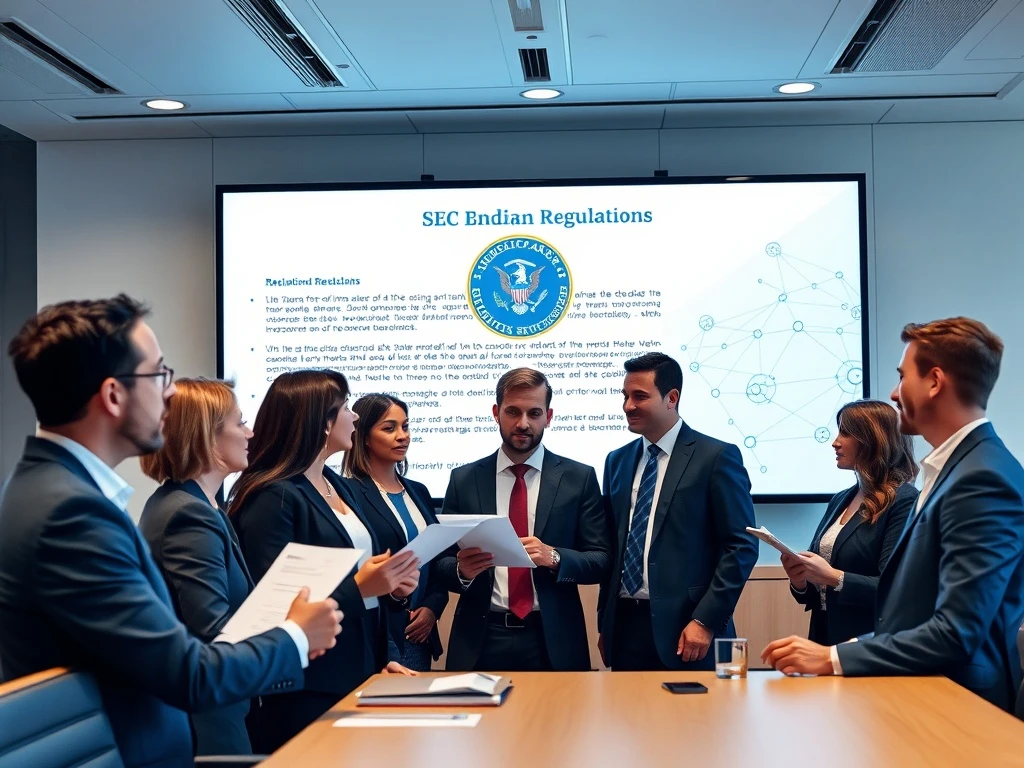
WASHINGTON, D.C., March 15, 2025 – The Securities and Exchange Commission has issued landmark guidance on tokenized securities rules, fundamentally reshaping how traditional equities will trade on blockchain networks. This regulatory clarity represents a pivotal moment for financial markets, potentially unlocking trillions in institutional capital for regulated onchain equities. The comprehensive framework addresses longstanding uncertainties that have hindered mainstream adoption of digital asset securities.
SEC Tokenized Securities Framework: Breaking Down the New Rules
The SEC’s newly clarified tokenized securities rules establish a comprehensive regulatory pathway for traditional securities to exist as digital tokens on blockchain networks. Importantly, the guidance distinguishes between utility tokens and securities tokens, providing clear criteria for classification. The framework mandates that all tokenized securities must comply with existing securities laws, including registration requirements and investor protection measures. Consequently, issuers must provide full disclosure documentation through Form S-1 or other appropriate registration statements.
Furthermore, the rules specify technical requirements for tokenized securities infrastructure. These requirements include immutable audit trails, real-time settlement capabilities, and robust cybersecurity protocols. The SEC emphasizes that blockchain networks hosting tokenized securities must maintain proper custody arrangements and segregation of client assets. Additionally, the guidance addresses cross-border considerations, establishing protocols for international securities offerings using blockchain technology.
Key Regulatory Requirements for Tokenized Securities
The SEC framework outlines several critical requirements for tokenized securities compliance:
- Registration and Disclosure: All tokenized securities must register with the SEC unless qualifying for specific exemptions
- Custody Standards: Digital asset custodians must meet enhanced safeguarding requirements
- Trading Venue Regulation: Platforms trading tokenized securities must register as national securities exchanges or alternative trading systems
- Transfer Agent Rules: Blockchain networks must comply with transfer agent regulations for accurate ownership records
- Anti-Fraud Provisions: All existing anti-fraud provisions apply equally to tokenized securities offerings
Historical Context: The Road to Regulatory Clarity
The SEC’s current guidance culminates nearly a decade of regulatory evolution concerning digital assets. Initially, the 2017 DAO Report established that certain digital assets could qualify as securities under the Howey Test. Subsequently, multiple enforcement actions against unregistered securities offerings created market uncertainty. However, recent years have seen increasing institutional demand for regulatory clarity, particularly from traditional financial institutions exploring blockchain applications.
Several factors converged to prompt this regulatory breakthrough. First, technological advancements in blockchain scalability and security addressed previous concerns about network reliability. Second, international regulatory developments, particularly in the European Union and Singapore, created competitive pressure for U.S. regulatory modernization. Third, demonstrated institutional interest in tokenized Treasury bills and money market funds proved the viability of regulated digital assets. Finally, congressional hearings and industry consultations provided the SEC with comprehensive stakeholder input.
Comparative Analysis: U.S. vs. International Approaches
| Jurisdiction | Regulatory Framework | Key Differences |
|---|---|---|
| United States (SEC) | Securities-based approach | Emphasis on investor protection, registration requirements |
| European Union | MiCA Regulation | Unified digital assets framework, passporting rights |
| Singapore | Payment Services Act | Activity-based licensing, progressive regulation |
| United Kingdom | Financial Services Act | Pro-innovation approach, sandbox environment |
Market Impact: Opening the Onchain Equities Floodgates
The clarified tokenized securities rules immediately impact multiple market segments. Traditional financial institutions now possess regulatory certainty to develop onchain equities products. Investment banks can structure tokenized equity offerings with confidence in compliance requirements. Asset managers may create new digital asset products for institutional and retail investors. Moreover, existing public companies can explore secondary offerings through tokenized structures.
Market infrastructure providers face significant opportunities and challenges. Stock exchanges must adapt their systems to accommodate tokenized securities trading. Clearing houses need to develop blockchain-compatible settlement mechanisms. Custodian banks must enhance their digital asset safeguarding capabilities. Technology providers will develop compliant tokenization platforms and regulatory reporting tools. Consequently, the entire financial ecosystem must evolve to support this new asset class.
Institutional Adoption Pathways
Major financial institutions have already announced initiatives following the regulatory clarification. Goldman Sachs revealed plans for tokenized corporate bond offerings. BlackRock confirmed development of tokenized equity ETFs. Fidelity Investments announced enhanced digital asset custody services for institutional clients. JPMorgan Chase expanded its Onyx blockchain platform to support tokenized equities. These developments signal strong institutional commitment to regulated onchain securities markets.
Technical Implementation: Building Compliant Infrastructure
Implementing tokenized securities requires sophisticated technical infrastructure meeting regulatory standards. Blockchain networks must support permissioned access controls for compliance purposes. Smart contracts must incorporate regulatory logic for transfer restrictions and ownership limits. Oracles must provide reliable price feeds and corporate action data. Additionally, interoperability protocols must enable cross-chain asset transfers while maintaining regulatory compliance.
Several technical standards emerge as critical for industry adoption. The ERC-3643 standard provides a framework for permissioned token transfers. The ERC-1400 standard supports security token functionality. ISO standards for digital asset identification and messaging facilitate institutional integration. Moreover, regulatory technology solutions must monitor transactions for compliance violations and generate required regulatory reports.
Security and Custody Considerations
Tokenized securities introduce unique security considerations beyond traditional digital assets. Multi-signature wallet structures must prevent unauthorized transfers. Hardware security modules must protect private keys from compromise. Insurance coverage must address digital asset theft and loss scenarios. Disaster recovery plans must ensure business continuity during network disruptions. Furthermore, cybersecurity protocols must exceed traditional financial system standards due to blockchain’s immutable nature.
Investor Protection and Market Integrity
The SEC framework prioritizes investor protection through multiple mechanisms. Disclosure requirements ensure investors receive material information about tokenized securities. Trading rules prevent market manipulation and insider trading in onchain markets. Custody standards safeguard investor assets against loss or theft. Surveillance systems monitor trading activity for suspicious patterns. Additionally, dispute resolution mechanisms address investor complaints and conflicts.
Market integrity measures specifically address blockchain-specific concerns. The rules prevent front-running through miner extractable value exploitation. They address wash trading across decentralized exchanges. They establish standards for oracle reliability and data integrity. They create protocols for handling blockchain forks and network upgrades. Moreover, they provide guidance on handling lost or inaccessible private keys.
Enforcement and Compliance Monitoring
The SEC will employ advanced technologies for monitoring tokenized securities compliance. Artificial intelligence systems will analyze blockchain transactions for regulatory violations. Automated reporting tools will streamline regulatory filings. Digital identity verification will prevent unauthorized trading. Smart contract auditing will ensure code compliance with regulatory requirements. Furthermore, the SEC will collaborate with international regulators for cross-border enforcement actions.
Future Developments and Industry Evolution
The clarified tokenized securities rules represent just the beginning of regulatory evolution. Future developments may include standardized tokenization protocols across asset classes. Regulatory sandboxes may test innovative compliance approaches. International harmonization may create global standards for cross-border offerings. Technological advancements may enable real-time regulatory reporting and compliance automation.
Industry evolution will likely follow several parallel paths. Traditional securities will gradually migrate to blockchain infrastructure. New financial products will emerge specifically for onchain markets. Secondary markets will develop for previously illiquid assets. Regulatory technology will become increasingly sophisticated. Moreover, decentralized finance protocols may integrate with regulated tokenized securities markets.
Conclusion
The SEC’s clarified tokenized securities rules fundamentally transform financial markets by opening regulated pathways for onchain equities. This regulatory framework balances innovation with investor protection, creating sustainable foundations for digital asset growth. Financial institutions now possess the certainty needed to develop compliant tokenized securities products. Market infrastructure must evolve to support this new asset class while maintaining market integrity. Ultimately, these developments position the United States as a leader in regulated digital asset innovation while protecting investors and maintaining fair, orderly, and efficient markets. The tokenized securities revolution has officially begun under regulatory supervision.
FAQs
Q1: What exactly are tokenized securities under the new SEC rules?
Tokenized securities are traditional financial instruments, like stocks or bonds, represented as digital tokens on blockchain networks. The SEC rules clarify that these digital representations must comply with all existing securities regulations, including registration, disclosure, and trading requirements.
Q2: How do the new rules affect existing cryptocurrency exchanges?
Cryptocurrency exchanges must register as national securities exchanges or alternative trading systems if they plan to trade tokenized securities. They must implement enhanced compliance measures, including investor protection protocols, surveillance systems, and custody standards meeting SEC requirements.
Q3: Can traditional companies now issue stock as tokenized securities?
Yes, public companies can conduct secondary offerings through tokenized structures, and private companies can raise capital through registered tokenized securities offerings. All issuers must provide full disclosure documentation and comply with securities registration requirements.
Q4: What are the main benefits of tokenized securities compared to traditional securities?
Tokenized securities offer potential benefits including 24/7 trading availability, faster settlement times, reduced intermediary costs, enhanced transparency through immutable records, and increased accessibility for global investors. However, these benefits must be balanced against regulatory compliance costs.
Q5: How will the SEC enforce compliance across decentralized blockchain networks?
The SEC will focus enforcement on identifiable parties, including issuers, trading platforms, and intermediaries operating within U.S. jurisdiction. The rules establish accountability frameworks requiring identifiable responsible parties for compliance, even on decentralized networks.
Related News
- Altcoin Season Index Reveals Crucial Market Stalemate at 32
- Federal Reserve Chair Nominee: Trump’s Crucial Decision for Monetary Policy Tomorrow
- Bitcoin Options Expire: $7.7 Billion Showdown Looms as Market Braces for Impact