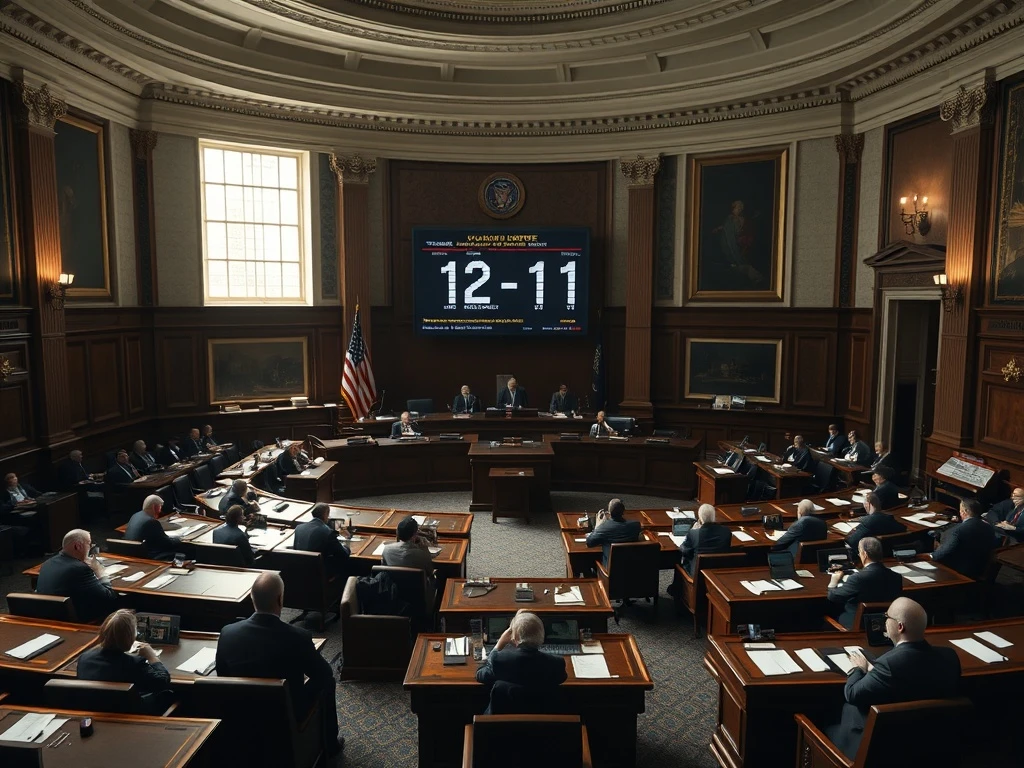
WASHINGTON, D.C. — In a pivotal development for digital asset regulation, the U.S. Senate Agriculture Committee has passed a comprehensive cryptocurrency market structure bill by a narrow 12-11 vote, marking a significant step toward establishing federal oversight for the rapidly evolving sector as we approach 2025. This legislative action represents the most substantial congressional movement on crypto regulation since the initial debates began nearly a decade ago, potentially reshaping how Americans interact with digital currencies and blockchain technologies.
Crypto Market Structure Bill Advances Through Senate Committee
The committee’s approval follows months of intensive negotiations and bipartisan discussions about how to properly regulate digital assets without stifling innovation. According to Eleanor Terrett, host of Crypto in America who first reported the development, the bill’s passage through the Agriculture Committee reflects the growing recognition that cryptocurrency markets intersect with traditional commodity markets. The legislation now moves to the full Senate for consideration, where it faces additional scrutiny and potential amendments before any floor vote.
This regulatory framework aims to address several critical issues that have plagued the cryptocurrency industry in recent years. Market manipulation, consumer protection gaps, and jurisdictional conflicts between regulatory agencies have created uncertainty for both investors and businesses. The proposed legislation seeks to establish clear guidelines for digital asset exchanges, custody providers, and trading platforms operating within the United States.
Understanding the Legislative Context and Background
The Senate Agriculture Committee’s jurisdiction over this matter stems from the Commodity Exchange Act, which grants the Commodity Futures Trading Commission (CFTC) authority over commodity derivatives markets. Since 2015, when the CFTC first declared Bitcoin a commodity, the agency has maintained that many digital assets fall under its regulatory purview. However, the Securities and Exchange Commission (SEC) has simultaneously claimed jurisdiction over numerous tokens it considers securities, creating regulatory overlap and confusion.
This legislative effort represents the third major attempt in recent years to establish comprehensive crypto regulation. Previous bills failed to gain sufficient traction amid partisan disagreements and industry lobbying. The current version appears to have broader support, though the narrow committee vote suggests significant opposition remains. Key provisions of the bill include:
- Regulatory clarity for digital asset exchanges and trading platforms
- Consumer protection measures including disclosure requirements
- Market surveillance and manipulation prevention protocols
- Clear jurisdictional boundaries between the CFTC and SEC
- Registration requirements for crypto intermediaries
Historical Perspective on Crypto Regulation Efforts
The path to this legislative moment began with the 2017 cryptocurrency boom, which first prompted serious congressional attention to digital assets. Subsequent market cycles, including the 2021 surge and 2022 downturn that saw several high-profile collapses, intensified calls for regulatory frameworks. International developments, particularly the European Union’s Markets in Crypto-Assets (MiCA) regulation finalized in 2023, created additional pressure for U.S. action to maintain competitive positioning in financial innovation.
Previous regulatory approaches have varied significantly. The SEC has pursued enforcement actions against numerous crypto projects under existing securities laws, while the CFTC has focused on derivatives markets and anti-manipulation cases. State-level regulations have created a patchwork of requirements, complicating compliance for national and international firms. This fragmented approach has drawn criticism from industry participants and consumer advocates alike.
Implications for the Digital Asset Ecosystem
The bill’s passage through committee signals potential changes for multiple stakeholders across the cryptocurrency landscape. Established exchanges and trading platforms would face new compliance requirements but would benefit from regulatory certainty. Smaller projects and startups might encounter increased barriers to entry, potentially affecting innovation in the sector. Meanwhile, traditional financial institutions considering crypto offerings would gain clearer pathways for market entry.
Consumer protections represent a central component of the proposed legislation. The bill mandates enhanced disclosure requirements for digital asset offerings, similar to those required for traditional securities. Additionally, it establishes standards for custody services, addressing concerns raised by several high-profile exchange failures in recent years. These provisions aim to reduce fraud and improve market integrity while maintaining accessibility for retail participants.
| Agency/Approach | Primary Focus | Key Concerns |
|---|---|---|
| SEC Enforcement | Securities classification | Investor protection, disclosure |
| CFTC Oversight | Commodity derivatives | Market manipulation, fraud |
| State Regulations | Money transmission | Consumer protection, licensing |
| Proposed Legislation | Comprehensive framework | Clarity, innovation balance |
Expert Perspectives on the Legislative Development
Financial regulation experts note that this legislative effort represents a compromise between competing approaches. “The narrow committee vote reflects genuine disagreements about how to balance innovation with investor protection,” explains Dr. Marcus Chen, director of the Georgetown University Center for Financial Technology Policy. “However, the mere fact that legislation is advancing through committee represents progress after years of stagnation.”
Industry reactions have been mixed but generally positive. Major cryptocurrency exchanges have expressed cautious support for regulatory clarity, while some decentralized finance proponents worry about overreach. Consumer advocacy groups have welcomed enhanced protections but question whether the legislation goes far enough to prevent the types of collapses seen in 2022. International observers are watching closely, as U.S. regulatory approaches often influence global standards.
The Road Ahead for Cryptocurrency Legislation
The bill now faces several additional hurdles before potentially becoming law. The full Senate must consider the legislation, where amendments are likely. Simultaneously, the House of Representatives is developing its own approach to digital asset regulation, requiring eventual reconciliation between the two chambers. The White House has indicated general support for crypto regulation but has not endorsed specific legislative language.
Timing presents another significant factor. With elections approaching in late 2024, the legislative calendar grows increasingly crowded. However, bipartisan interest in establishing U.S. leadership in digital finance may provide momentum. International developments, including ongoing standard-setting at the Financial Stability Board and International Organization of Securities Commissions, create additional pressure for congressional action.
Potential amendments could significantly alter the legislation’s final form. Key areas of debate include the treatment of decentralized protocols, the scope of regulatory exemptions for smaller projects, and the specific division of authority between the CFTC and SEC. These technical details will determine the legislation’s practical impact on the cryptocurrency ecosystem.
Market Reactions and Economic Implications
Financial markets have shown measured responses to the legislative development. Cryptocurrency prices exhibited modest increases following the committee vote, reflecting investor appreciation for regulatory clarity. Traditional financial institutions with crypto divisions have generally welcomed the news, as have publicly traded companies with blockchain initiatives. The legislation’s potential to attract institutional investment represents a significant economic consideration, particularly as other jurisdictions establish their own regulatory frameworks.
The bill’s provisions could influence broader economic factors including job creation in the blockchain sector, tax revenue from regulated crypto activities, and U.S. competitiveness in financial technology. States with significant crypto industry presence, particularly New York, Texas, and California, stand to benefit from regulatory certainty that could encourage business expansion and investment.
Conclusion
The Senate Agriculture Committee’s passage of the crypto market structure bill by a 12-11 vote represents a landmark moment in the evolution of digital asset regulation. This legislative action addresses longstanding uncertainties while attempting to balance innovation with necessary safeguards. As the bill progresses through additional congressional scrutiny, its final form will significantly shape the cryptocurrency landscape for 2025 and beyond. The narrow committee margin underscores the complex policy considerations involved, but the forward movement suggests growing consensus that comprehensive federal regulation is necessary for the maturing digital asset ecosystem.
FAQs
Q1: What does the Senate Agriculture Committee’s vote mean for cryptocurrency regulation?
The committee vote represents a crucial step in the legislative process, advancing the bill for consideration by the full Senate. However, it does not create law—additional votes in both chambers and presidential approval are required before any regulatory changes take effect.
Q2: Why is the Agriculture Committee handling cryptocurrency legislation?
The committee oversees the Commodity Futures Trading Commission (CFTC), which has jurisdiction over commodities and derivatives markets. Since many digital assets are classified as commodities, this committee has legislative authority over aspects of cryptocurrency regulation.
Q3: How would this legislation affect ordinary cryptocurrency users?
Most retail users would notice enhanced consumer protections, clearer disclosures from exchanges, and potentially improved market stability. However, compliance costs might lead to some service fee increases, and certain high-risk products could face restrictions.
Q4: What happens next in the legislative process?
The bill moves to the full Senate for debate and potential amendments. Simultaneously, the House of Representatives must develop and pass its own version. Both chambers would then need to reconcile differences before sending final legislation to the President.
Q5: How does this U.S. legislation compare to international crypto regulations?
The proposed framework shares similarities with the European Union’s MiCA regulations but includes distinct American approaches to regulatory jurisdiction and enforcement. The U.S. system typically involves multiple regulatory agencies, while other jurisdictions often establish single authorities for digital assets.
Related News
- SEC CFTC Crypto Regulation: Historic MOU Promises Unprecedented Oversight Clarity
- Government Shutdown Crisis: Senate Rejects House Spending Bill, Escalating Federal Funding Standoff
- Crypto Market Structure Bill: CFTC Chairman Reveals Crucial Path for Industry to Thrive