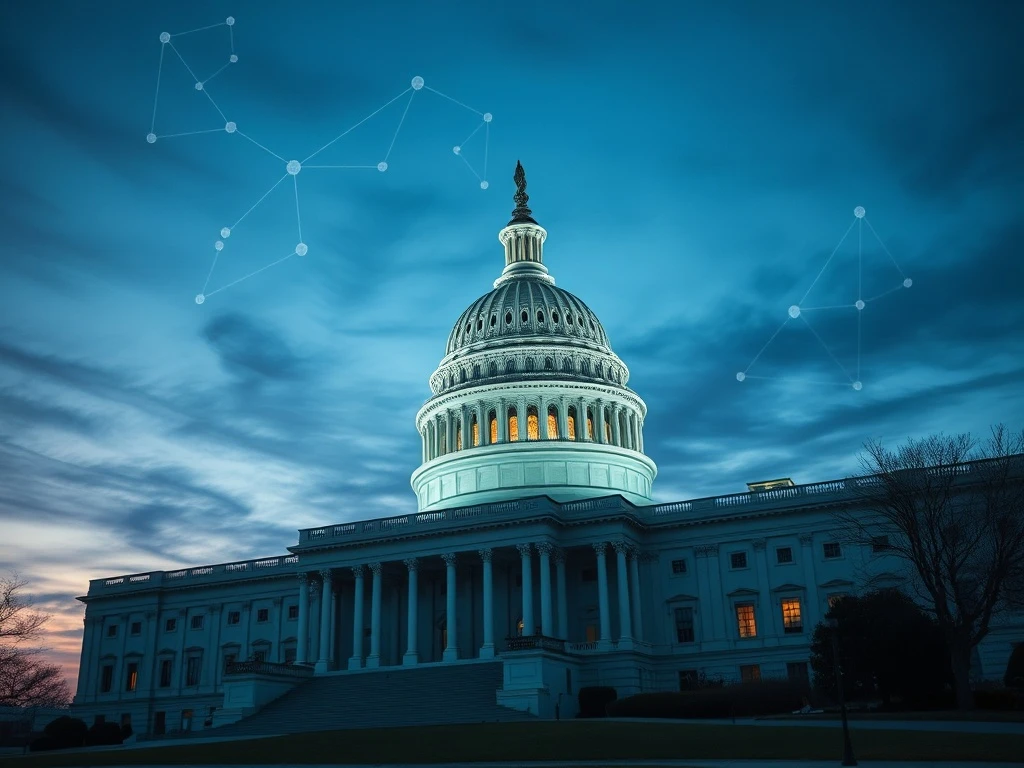
WASHINGTON, D.C. – February 2025: The United States Senate Banking Committee now faces a second potential postponement for marking up its landmark cryptocurrency market structure legislation, creating significant uncertainty for the digital asset industry. According to a Bloomberg report citing anonymous sources, the committee will likely delay consideration of the CLARITY Act until late February or March 2025. This development follows an initial postponement on January 15 and reflects shifting legislative priorities ahead of the November midterm elections. The committee has reportedly redirected its focus toward housing policy at the request of the Trump administration, leaving cryptocurrency regulation in legislative limbo.
Understanding the CLARITY Act and Its Importance
The Crypto-Asset Regulatory Transparency and Innovation Act, commonly called the CLARITY Act, represents the most comprehensive cryptocurrency market structure legislation proposed in the U.S. Senate to date. This bill aims to establish clear jurisdictional boundaries between the Securities and Exchange Commission (SEC) and the Commodity Futures Trading Commission (CFTC) regarding digital asset oversight. Furthermore, the legislation seeks to create a regulatory framework for cryptocurrency exchanges, stablecoin issuers, and decentralized finance (DeFi) protocols. Market participants have eagerly anticipated this markup session because it represents the first substantive step toward potential Senate floor consideration. The delay consequently pushes back the entire legislative timeline for cryptocurrency regulation during the current congressional session.
Political Dynamics Behind the Regulatory Delay
The postponement stems directly from shifting political priorities within the Senate Banking Committee. According to the Bloomberg report, committee leadership has temporarily deprioritized cryptocurrency legislation to address housing policy concerns raised by the Trump administration. This strategic shift occurs against the backdrop of the approaching November midterm elections, where economic issues like housing affordability and inflation are expected to dominate voter concerns. Consequently, cryptocurrency regulation, while important to the financial technology sector, has taken a backseat to more immediately pressing political matters. Committee staff members have reportedly continued technical work on the CLARITY Act, but the formal markup process requires committee members’ focused attention and time, which is now allocated elsewhere.
Historical Context of Crypto Legislation Delays
This delay marks a recurring pattern in U.S. cryptocurrency regulation efforts. Over the past five years, multiple legislative initiatives have faced similar postponements due to competing priorities, jurisdictional disputes, and technical complexities. For instance, the Lummis-Gillibrand Responsible Financial Innovation Act, introduced in 2022, underwent numerous revisions and committee reassignments before stalling. Similarly, House-passed cryptocurrency bills from the 118th Congress faced Senate inertia. The current delay suggests that despite growing market capitalization and institutional adoption of digital assets, cryptocurrency regulation remains a secondary priority compared to traditional economic issues in congressional scheduling. This pattern creates regulatory uncertainty that industry participants consistently identify as their primary concern.
Immediate Impacts on Cryptocurrency Markets and Industry
The postponement announcement immediately affected cryptocurrency market sentiment and industry planning. Market analysts observed increased volatility in major digital assets following the Bloomberg report, reflecting investor uncertainty about the U.S. regulatory timeline. Industry stakeholders, including cryptocurrency exchanges, blockchain developers, and institutional investors, must now adjust their compliance strategies and business projections. Many companies had anticipated clearer regulatory guidance by mid-2025 to inform expansion plans and product launches. The delay also affects state-level regulatory initiatives, as several states have awaited federal direction before finalizing their own cryptocurrency frameworks. Furthermore, international regulatory developments continue advancing while U.S. legislation stalls, potentially affecting America’s competitive position in the global digital asset ecosystem.
Expert Perspectives on Regulatory Uncertainty
Financial regulation experts emphasize that delayed legislation creates tangible business challenges. “When comprehensive market structure legislation gets postponed, regulatory ambiguity persists,” explains Dr. Sarah Chen, a financial technology policy researcher at Georgetown University. “This ambiguity forces companies to operate under multiple, sometimes conflicting, regulatory interpretations from different agencies.” Industry representatives echo this concern, noting that the absence of clear rules hinders innovation and consumer protection simultaneously. Blockchain Association CEO Kristin Smith stated recently, “The CLARITY Act represents a crucial step toward sensible regulation. Each delay extends the period where consumers lack comprehensive protections and businesses lack operational certainty.” These expert views underscore the real-world consequences of legislative postponements beyond mere scheduling changes.
Comparative Analysis: U.S. Versus Global Regulatory Approaches
| Jurisdiction | Regulatory Status | Market Structure Framework | Timeline |
|---|---|---|---|
| European Union | MiCA implemented | Comprehensive regime active | 2024 implementation |
| United Kingdom | Financial Services Act passed | Phase-in approach | 2023-2025 rollout |
| Singapore | PSA licensing active | Activity-based regulation | 2020 onward |
| United States | CLARITY Act pending | Agency jurisdictional approach | Potential 2025-2026 |
This comparative analysis reveals that the United States lags behind other major economies in establishing comprehensive cryptocurrency regulation. The European Union’s Markets in Crypto-Assets (MiCA) regulation became fully operational in 2024, providing clear rules for cryptocurrency issuers and service providers across 27 member states. Similarly, the United Kingdom has implemented its Financial Services and Markets Act 2023, which empowers regulators to create tailored rules for digital assets. Singapore’s Payment Services Act has regulated cryptocurrency exchanges since 2020. These international developments create competitive pressure for U.S. legislation, as companies may consider jurisdictions with clearer regulatory environments for expansion and innovation.
Potential Pathways Forward for Cryptocurrency Legislation
Despite the current delay, several potential pathways exist for advancing cryptocurrency legislation in 2025. The Senate Banking Committee could potentially:
- Combine markup sessions – Address housing and cryptocurrency legislation in extended committee meetings
- Utilize technical working groups – Continue refining bill language during the postponement period
- Coordinate with House counterparts – Align with House Financial Services Committee on parallel efforts
- Consider narrower bills – Address specific issues like stablecoin regulation separately
- Attach provisions to must-pass legislation – Include cryptocurrency measures in appropriations or defense bills
Each approach presents different advantages and challenges. Combined markups could expedite the process but might dilute attention on complex technical issues. Technical working groups allow for continued progress but lack formal committee authority. House coordination faces bicameral challenges but could create momentum. Narrower bills might pass more quickly but would leave broader market structure issues unresolved. Legislative attachments offer a path to enactment but risk controversial provisions. The committee’s eventual approach will significantly influence the substance and timing of any cryptocurrency legislation.
The Role of Midterm Elections in Legislative Timing
The November 2025 midterm elections create a compressed legislative calendar that directly affects cryptocurrency bill prospects. Historically, substantive legislation becomes increasingly difficult to advance as elections approach, particularly in a divided government. The current political landscape suggests that if the CLARITY Act markup slips beyond March, the legislation might face further delays until the post-election lame-duck session or even the next Congress. This electoral timeline creates urgency for industry advocates but competes with other legislative priorities that committee members perceive as more directly relevant to their reelection campaigns. The intersection of regulatory policy and electoral politics thus represents a fundamental constraint on cryptocurrency legislation advancement.
Conclusion
The potential second delay of the US Senate crypto bill markup represents a significant development for cryptocurrency regulation in the United States. The CLARITY Act’s postponement until late February or March 2025 reflects shifting political priorities ahead of midterm elections, particularly the committee’s increased focus on housing policy. This delay extends regulatory uncertainty for the digital asset industry while other jurisdictions advance their own frameworks. Despite this setback, multiple pathways exist for eventual legislation, though the compressed election-year calendar creates additional challenges. The coming months will reveal whether the Senate Banking Committee can balance competing priorities to address the growing need for comprehensive cryptocurrency market structure regulation through the CLARITY Act or alternative legislative approaches.
FAQs
Q1: What is the CLARITY Act?
The Crypto-Asset Regulatory Transparency and Innovation Act (CLARITY Act) is proposed U.S. Senate legislation that would establish a comprehensive regulatory framework for cryptocurrency markets. It clarifies jurisdictional boundaries between the SEC and CFTC while creating rules for exchanges, stablecoins, and DeFi protocols.
Q2: Why is the Senate Banking Committee delaying the crypto bill markup?
The committee is reportedly shifting its focus to housing policy at the request of the Trump administration ahead of the November midterm elections. This reprioritization has temporarily displaced cryptocurrency legislation on the committee’s schedule.
Q3: How does this delay affect cryptocurrency companies and investors?
The postponement extends regulatory uncertainty, forcing companies to operate under ambiguous rules and potentially hindering innovation. Investors face continued market volatility linked to regulatory developments, while consumer protections remain incomplete.
Q4: How does U.S. cryptocurrency regulation compare to other countries?
The United States lags behind several major economies, including the European Union and United Kingdom, which have implemented comprehensive cryptocurrency regulations. This delay potentially affects America’s competitive position in the global digital asset ecosystem.
Q5: Could cryptocurrency legislation still pass in 2025 despite this delay?
Yes, potential pathways include combined committee markups, technical working groups, House coordination, narrower bills, or legislative attachments. However, the approaching midterm elections create a compressed timeline that challenges substantive legislation advancement.
Related News
- Strive Seeks to Raise $150M in Strategic Move: Bitcoin Acquisition and Debt Consolidation Plan Revealed
- Crypto Market Structure Bill: US Senate Committee Unveils Crucial Revised CLARITY Act Draft
- Vietnam Crypto Exchange License Applications Open: A Transformative Regulatory Shift for Digital Assets