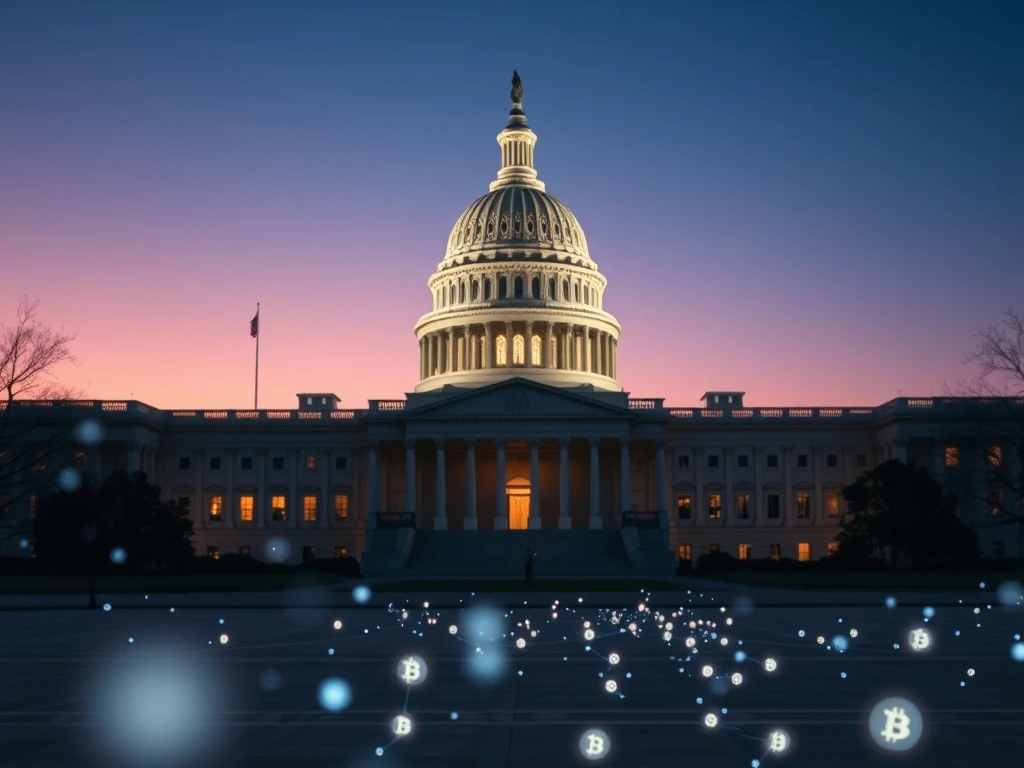
WASHINGTON, D.C. — February 2025 — In a significant development for cryptocurrency regulation, U.S. Senate Democrats have reportedly reached a positive outcome during private discussions concerning the landmark crypto market structure bill, marking a potential turning point for digital asset legislation that has languished in Congress for years. The CLARITY Act, previously considered by many observers as unpassable in the current political climate, now shows renewed signs of life following constructive negotiations among key Democratic lawmakers, including Senate Majority Leader Chuck Schumer.
US Senate Crypto Bill Gains Momentum Behind Closed Doors
According to multiple sources familiar with the discussions, Democratic senators held a private meeting this week to address the contentious issues surrounding cryptocurrency regulation. The gathering, first reported by Eleanor Terrett, host of Crypto in America, on social media platform X, included Senate Majority Leader Chuck Schumer, who emphasized the importance of constructive engagement with the cryptocurrency industry. Schumer reportedly urged colleagues to work toward the bill’s passage, signaling a shift in tone from previous legislative sessions where digital asset regulation faced significant partisan gridlock.
The CLARITY Act (Creating Legal Accountability and Responsibility in Technology and Yield) represents Congress’s most comprehensive attempt to establish clear regulatory frameworks for digital assets. The legislation aims to address several critical areas that have created uncertainty for both industry participants and consumers. These include:
- Market structure definitions clarifying which agencies regulate different types of digital assets
- Consumer protection standards for cryptocurrency exchanges and trading platforms
- Anti-money laundering requirements tailored to blockchain technology
- Tax treatment guidelines for various cryptocurrency transactions
- Interagency coordination mechanisms between the SEC, CFTC, and Treasury Department
Historical Context of Cryptocurrency Regulation Efforts
The path to comprehensive cryptocurrency legislation has been marked by numerous false starts and partisan disagreements since Bitcoin’s emergence as a significant financial asset class. Previous congressional sessions witnessed multiple bills introduced but few advancing beyond committee hearings. The 117th Congress saw the introduction of the Responsible Financial Innovation Act, which gained bipartisan support but ultimately stalled amid disagreements over jurisdictional boundaries between regulatory agencies.
Meanwhile, regulatory agencies have pursued enforcement actions under existing securities and commodities laws, creating what many industry participants describe as a “regulation by enforcement” approach. This environment has led to significant legal uncertainty, with major cryptocurrency companies facing lawsuits and enforcement actions that could establish precedent in the absence of clear legislative guidance. The table below illustrates key regulatory milestones leading to the current legislative effort:
| Year | Regulatory Development | Impact on Legislation |
|---|---|---|
| 2017 | SEC declares some ICOs as securities offerings | Increased calls for regulatory clarity |
| 2020 | CFTC approves cryptocurrency derivatives | Highlighted jurisdictional conflicts |
| 2022 | Executive Order on Digital Assets | Coordinated government approach initiated |
| 2023 | Multiple crypto bills introduced in Congress | Increased legislative activity but no passage |
| 2024 | Major exchange enforcement actions | Urgency for legislative solution increased |
Expert Analysis on the Legislative Shift
Financial regulation experts note that several factors have converged to create more favorable conditions for cryptocurrency legislation in 2025. First, the maturation of the digital asset industry has created established companies with significant lobbying presence in Washington. Second, increased retail investor participation has made cryptocurrency regulation a more mainstream political issue. Third, international regulatory developments, particularly in the European Union with MiCA (Markets in Crypto-Assets) regulation, have created pressure for the United States to establish its own comprehensive framework to maintain financial leadership.
Professor Alan Michaels of Georgetown University Law Center, who has testified before Congress on digital asset regulation, explains the significance of this development: “The reported progress on the CLARITY Act represents more than just another legislative discussion. It signals that key lawmakers recognize cryptocurrency and blockchain technology as permanent features of the financial landscape requiring tailored regulatory approaches rather than forced application of existing frameworks designed for traditional assets.”
Industry representatives have responded cautiously but optimistically to the news. Blockchain Association CEO Kristin Smith stated, “While we await specific details from the private discussions, any movement toward comprehensive, sensible digital asset legislation represents progress. The industry has consistently advocated for clear rules that protect consumers while fostering innovation.”
Political Dynamics and Bipartisan Considerations
The reported positive outcome among Senate Democrats represents only one component of the legislative equation. For the CLARITY Act or similar legislation to advance, bipartisan support will remain essential in a closely divided Congress. Republican senators have generally favored more innovation-friendly approaches to cryptocurrency regulation, while some progressive Democrats have emphasized stronger consumer protections and environmental considerations related to proof-of-work mining.
Notably, the current discussions reportedly did not include specific Democratic demands, suggesting that the meeting focused on establishing common ground rather than negotiating particular provisions. This approach may facilitate broader consensus-building when bipartisan discussions resume. Several Republican senators have previously expressed willingness to work on digital asset legislation, particularly those representing states with growing cryptocurrency and blockchain industries.
The political calculus has evolved significantly since earlier legislative efforts. Cryptocurrency ownership has become more widespread across demographic groups, making the issue relevant to constituents in both urban and rural districts. Additionally, the 2024 election cycle saw increased political engagement from cryptocurrency advocates, with several industry-focused political action committees supporting candidates from both major parties who demonstrated understanding of blockchain technology.
Potential Impacts on Markets and Innovation
Market participants have closely monitored legislative developments, as regulatory clarity represents one of the most significant factors affecting cryptocurrency valuation and institutional adoption. Historically, periods of regulatory uncertainty have correlated with increased volatility and reduced institutional investment in the digital asset space. Conversely, positive regulatory developments in other jurisdictions have typically preceded increased capital flows and product innovation.
If the CLARITY Act advances, several immediate effects could materialize. First, established cryptocurrency exchanges and service providers would gain clearer compliance guidelines, potentially reducing legal expenses associated with navigating uncertain regulatory environments. Second, traditional financial institutions that have hesitated to offer cryptocurrency services might accelerate their entry into the market. Third, innovation in areas like decentralized finance (DeFi) and tokenization of real-world assets could proceed with greater confidence about regulatory treatment.
However, experts caution that legislative progress remains fragile. Previous cryptocurrency bills have advanced through committee only to stall before floor votes. The complex nature of digital asset regulation, touching on securities law, commodities regulation, banking, and tax policy, creates numerous potential sticking points. Additionally, the rapid evolution of blockchain technology means that legislation must be sufficiently flexible to address innovations not yet conceived while providing adequate consumer protections.
Comparative International Regulatory Approaches
The United States legislative developments occur within a global context of increasing cryptocurrency regulation. The European Union’s MiCA framework, approved in 2023 and implementing in phases through 2025, represents the most comprehensive regulatory regime to date. MiCA establishes uniform rules across EU member states for cryptocurrency issuers and service providers, with particular emphasis on consumer protection, market integrity, and financial stability.
Other jurisdictions have taken varied approaches. Singapore has positioned itself as a cryptocurrency hub with clear but stringent regulations. The United Kingdom is developing its own comprehensive framework following Brexit. Meanwhile, some countries have implemented outright bans or severe restrictions on cryptocurrency activities. The United States approach will significantly influence global standards, given the country’s role in international finance and technology innovation.
International coordination presents both challenges and opportunities. Divergent regulatory approaches can create arbitrage opportunities and regulatory fragmentation. However, major economies increasingly recognize the need for some level of coordination, particularly regarding anti-money laundering standards and cross-border enforcement. The Financial Stability Board and other international bodies have begun developing recommendations for cryptocurrency regulation that may influence national approaches.
Conclusion
The reported positive outcome in US Senate crypto bill talks represents a potentially significant development for digital asset regulation. While substantial hurdles remain before the CLARITY Act or similar legislation becomes law, the engagement of Senate Democratic leadership signals growing political recognition that comprehensive cryptocurrency regulation serves both consumer protection and innovation objectives. As the 2025 legislative session progresses, stakeholders across the political spectrum, industry, and consumer advocacy groups will closely monitor whether this initial progress translates into concrete legislative action that provides the regulatory clarity the digital asset ecosystem has sought for years. The coming months will reveal whether this week’s discussions mark a genuine turning point or merely another chapter in the protracted struggle to adapt twentieth-century financial regulations to twenty-first-century technological realities.
FAQs
Q1: What is the CLARITY Act?
The CLARITY Act (Creating Legal Accountability and Responsibility in Technology and Yield) is proposed legislation that would establish comprehensive regulatory frameworks for digital assets in the United States, addressing market structure, consumer protection, and interagency coordination.
Q2: Why is Senate Democratic support significant for cryptocurrency legislation?
Senate Democratic support is crucial because Democrats currently control the Senate majority. Without support from Senate leadership, comprehensive cryptocurrency legislation would struggle to advance through committee hearings and floor votes.
Q3: How does this development compare to previous cryptocurrency regulation efforts?
This development appears more promising than previous efforts because it involves Senate Majority Leader Chuck Schumer directly urging progress, suggesting higher-level political engagement than earlier attempts that often stalled in committee.
Q4: What are the main obstacles remaining for cryptocurrency legislation?
Major obstacles include reaching bipartisan agreement on specific provisions, resolving jurisdictional questions between regulatory agencies, addressing environmental concerns about proof-of-work mining, and creating rules flexible enough to accommodate technological innovation.
Q5: How might cryptocurrency markets respond to potential regulatory progress?
Historically, cryptocurrency markets have responded positively to regulatory clarity, as it reduces uncertainty for institutional investors and established companies. However, specific provisions regarding taxation, compliance costs, and innovation restrictions could create varied impacts across different segments of the digital asset ecosystem.
Related News
- Vitalik Buterin ETH Sale: Ethereum Founder Moves 2,779 ETH in $6.2 Million Strategic Transaction
- Trend Research ETH Sale: A Staggering $426M Loss Shakes Crypto Markets
- Altcoin Season Index Surges to 31, Hinting at Potential Crypto Market Shift